PVC False Ceiling: The Honest Case For and Against
At ₹45–75 per sq ft installed, PVC is the right ceiling for bathrooms, rentals and hard budgets — and the wrong one for the living room of a home you own.
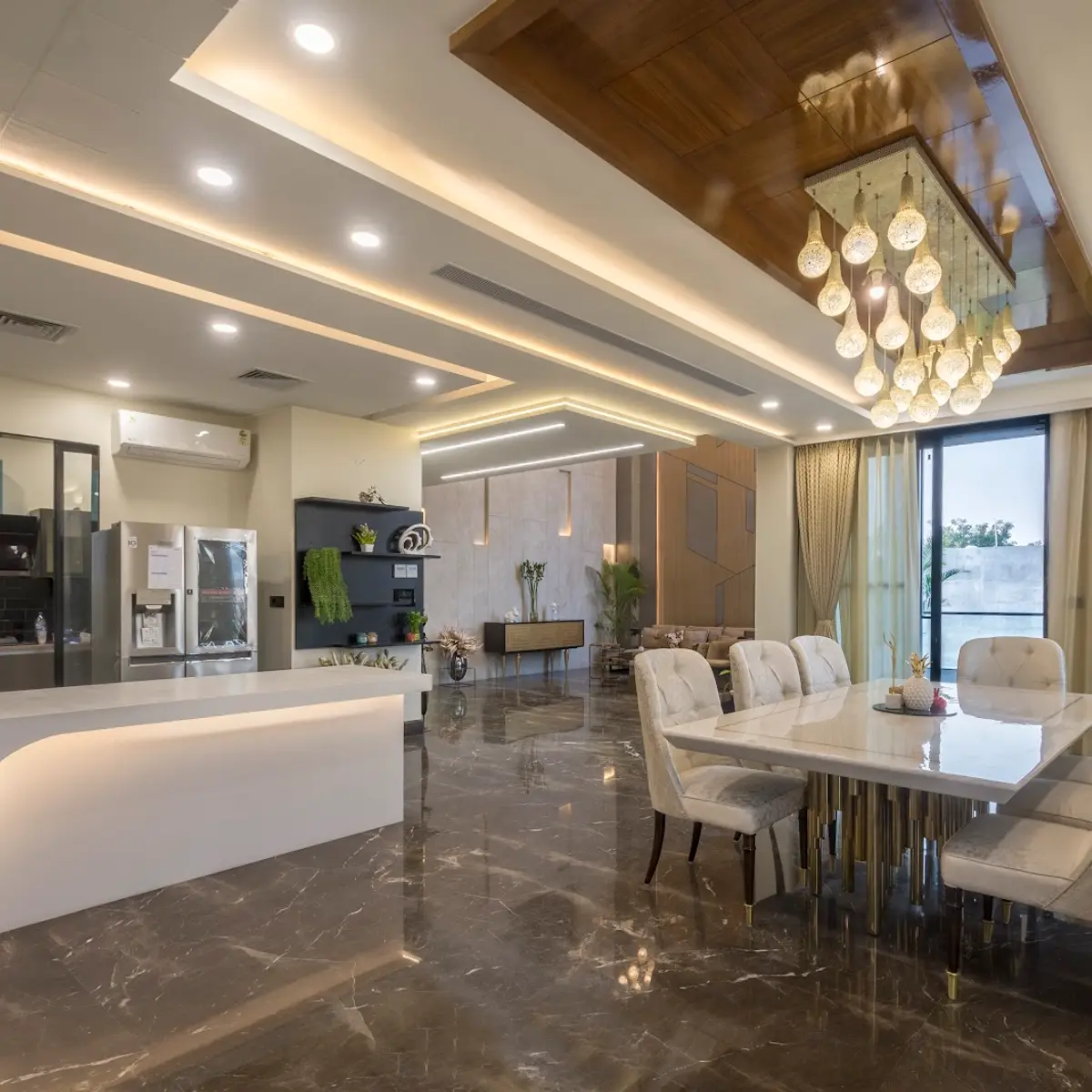
PVC false ceilings cost ₹45–75 per sq ft installed in 2026, need no painting, and are indifferent to water. That makes PVC genuinely the right call in bathrooms, utility balconies and rental homes, and on tight budgets where the ceiling must land under ₹65 per sq ft. It is usually the wrong call in the living room and bedrooms of a home you own: the joints show, the sheen reads plastic, and the fire behaviour is poor. If you can stretch ₹20–30 per sq ft more, gypsum is the step up in main rooms. The honest case for and against, room by room, is below.
One disclosure before the details. Almost every page ranking for this query is written by a company that sells PVC panels, so the disadvantages arrive pre-softened. HeyBuddy sells home design, not ceiling material; treat this as the referee's card, not a sales page.
What a PVC false ceiling costs in 2026
| Item | Typical 2026 rate |
|---|---|
| Basic white PVC panels, installed | ₹45–60 per sq ft |
| Laminated / wood-look PVC panels, installed | ₹55–75 per sq ft |
| Painting | Not needed (₹0) |
| Comparable plain gypsum, installed + painted | ₹80–110 per sq ft |
| Comparable plain POP, installed + painted | ₹70–100 per sq ft |
The no-painting line is where PVC quietly wins small rooms: on a 40 sq ft bathroom, the all-in gap versus gypsum is often ₹2,500–4,000, and the PVC ceiling goes up in a day.
Where PVC is genuinely right
Bathrooms and wet areas. Steam, splashes and the occasional leak from above do nothing to PVC. Gypsum sags and stains, POP crumbles; even moisture-resistant green board only tolerates humidity, it does not enjoy it. This is PVC's home ground.
Utility balconies and service areas. Washing machines, drying racks, dust: a scrubbable ceiling beats a painted one.
Rental properties. Landlords and tenants both want cheap, fast and replaceable. A cracked panel swaps in minutes for a few hundred rupees; nobody repaints a rental ceiling.
Hard budget caps. If the whole ceiling must come in under roughly ₹65 per sq ft with zero follow-up cost, nothing else competes honestly at that number in 2026.
Termite-prone or coastal homes. PVC does not rot, rust or feed insects, which matters in high-humidity cities.
Stretch ceilings are a different product
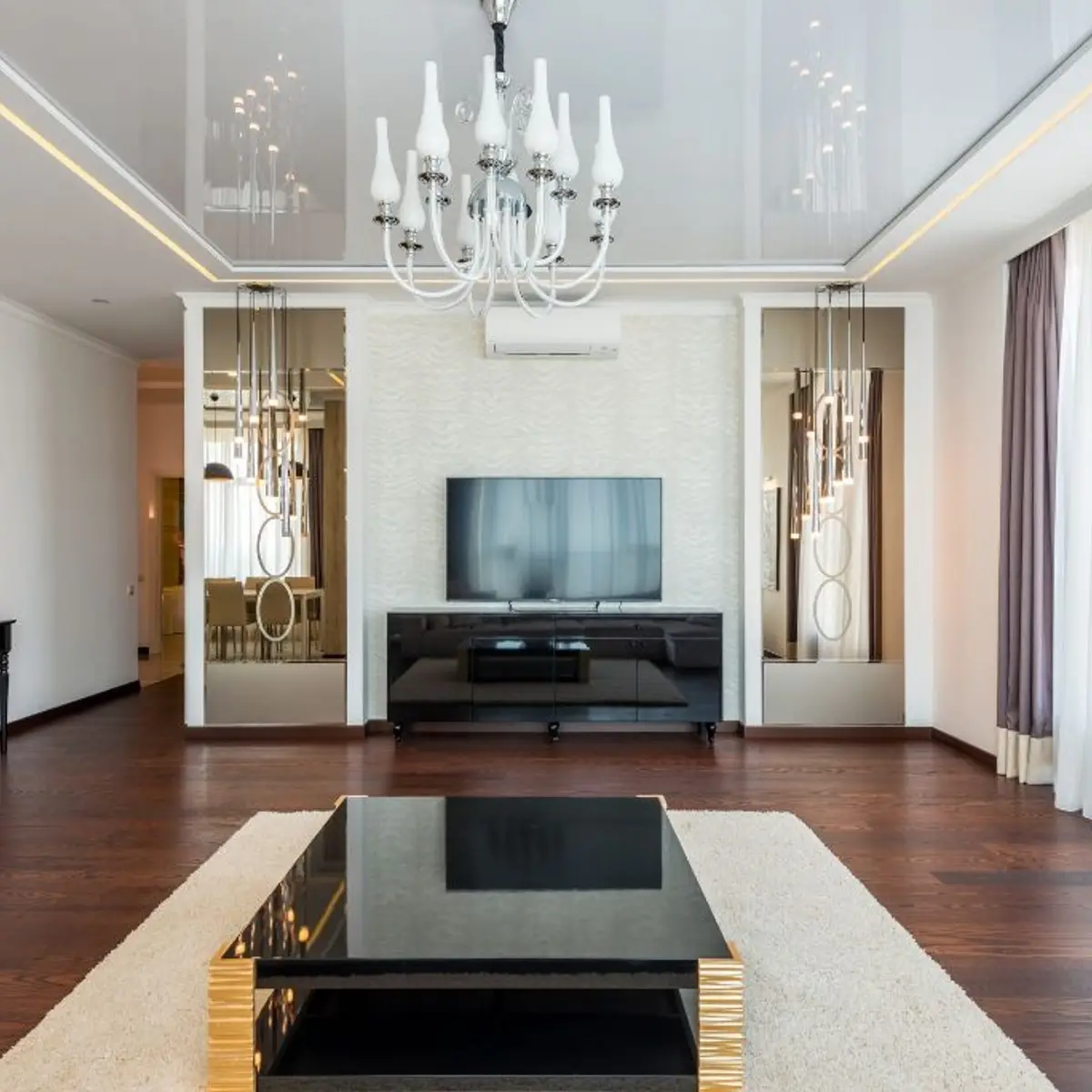
Confusingly, premium "stretch ceilings" are also PVC: a membrane tensioned across the room, seamless and often glossy or backlit. They run ₹150–350 per sq ft and belong in a different conversation entirely; nothing in this post's caution list applies to them except the fire point.
The disadvantages the ranking pages soften
The joints show. Panels interlock in 8–12 inch strips, and every joint reads as a line across the ceiling. In a small bathroom nobody notices; across a 200 sq ft living room ceiling, everybody does.
The sheen reads plastic. PVC comes glossy or semi-gloss and cannot be painted to match your walls. A ceiling is a quarter of what you see in a room; a plastic quarter cheapens the other three.
It yellows. White panels fade unevenly over 5–7 years, faster near windows. There is no refresh short of replacement, whereas a tired gypsum ceiling takes a coat of paint.
It is brittle in service. Panels flex once and clip in; pry one out for a wiring fix and there is a fair chance it cracks. Budget spare panels from the same batch, because colour matching a later batch is a lottery.
Fire behaviour is genuinely bad. Gypsum is fire-resistant; PVC softens, melts, drips and gives off toxic smoke. For a small bathroom this is a tolerable trade; across every ceiling in the house it is not.
It carries nothing. Fans, chandeliers and heavy pendant clusters must anchor to the slab through the panels, and the cutouts around them are hard to finish cleanly.
When gypsum is worth the step up
A plain gypsum ceiling, installed and painted, runs ₹80–110 per sq ft in 2026, roughly ₹25–40 more than PVC once paint is counted. For that you get a seamless surface with crisp shadow lines, paint matched exactly to your scheme, recessed spots and coves detailed cleanly, and a material that buys time in a fire instead of feeding it. In the rooms where you and your guests actually look up — living, dining, master bedroom — that premium is among the better ₹5,000–15,000 upgrades in an interiors budget. The POP vs gypsum vs PVC comparison covers the full three-way maths if you are still deciding.
The verdict, room by room
| Room | Verdict |
|---|---|
| Bathroom / toilet | PVC, without hesitation |
| Utility / service balcony | PVC |
| Kitchen | Either; PVC if budget-led, gypsum if the kitchen is open to the living area |
| Bedrooms | Gypsum; PVC acceptable in a rental |
| Living / dining | Gypsum; this is where PVC visibly cheapens the room |
| Full home on a hard budget | PVC everywhere beats an unpainted, half-done gypsum job |
The pattern is simple: PVC is a materials decision, gypsum is a design decision. Use PVC where the ceiling is plumbing infrastructure, and gypsum where the ceiling is part of the room's look.
Frequently asked questions
What are the main disadvantages of a PVC false ceiling?
Visible joint lines between panels, a plastic sheen that paint cannot fix, brittleness when panels are removed for maintenance, gradual yellowing of white panels over 5–7 years, and poor fire behaviour, since PVC melts and gives off toxic fumes. It also cannot carry heavy fixtures, so chandeliers and fans must anchor to the slab.
Is a PVC ceiling good for bedrooms and living rooms?
It works, but it reads as a budget finish in main rooms, and the panel joints and sheen are hard to miss at close range. If the room matters to you and the budget allows roughly ₹20–30 per sq ft more, gypsum gives a seamless, paint-matched ceiling that ages better. Keep PVC for bathrooms, utility areas and rentals.
How long does a PVC false ceiling last?
Physically 10 years or more, since PVC does not rot, rust or attract termites, and water does not damage it. Cosmetically, expect fading or yellowing on white glossy panels in 5–7 years, sooner with direct sunlight. Panels are cheap to swap individually, which is part of the appeal in bathrooms and rented homes.
Is PVC cheaper than gypsum?
Yes. PVC lands at ₹45–75 per sq ft installed in 2026 and needs no painting, while gypsum runs ₹65–95 plus ₹12–20 per sq ft for paint. On a 100 sq ft bathroom or balcony the total saving is real but small, ₹3,000–6,000; on a full home it compounds, which is why builders and landlords like it.
Is a PVC false ceiling safe?
Structurally yes; the panels are light and the framing is simple. The honest caveat is fire: PVC softens, melts and releases toxic smoke, while gypsum is inherently fire-resistant and buys evacuation time. That alone is a fair reason to avoid PVC across large living areas and keep it to small wet rooms.
Want a real estimate for your home?
Share your home in 2 minutes. We'll match you with designers in your city and give you a BOQ-level estimate before any work begins.
Share your home →