POP, Gypsum, or PVC — Here's What Your False Ceiling Actually Costs
A real cost, durability, and room-by-room comparison of the three most common false ceiling materials in Indian homes
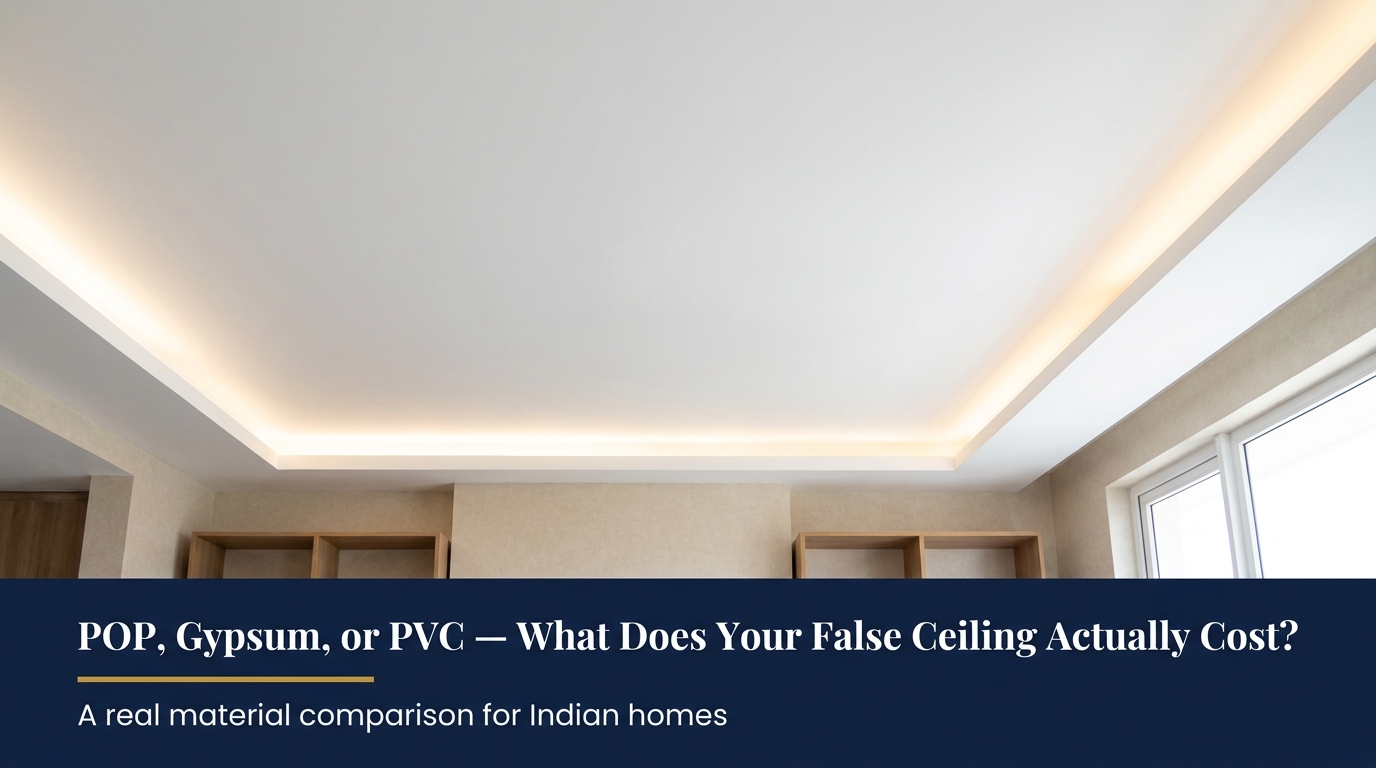
Almost every interior quote includes a line item for "false ceiling," and almost none of them specify which material until you ask. That single word covers three genuinely different products POP, gypsum board, and PVC panelling with different costs, different lifespans, and different rooms they're actually suited for. Choosing the wrong one isn't usually a disaster, but it does mean either overpaying for durability you didn't need, or under-specifying for a room where moisture or humidity will cause real problems within a couple of years. Here's what each material actually costs, how it holds up, and where it makes sense.
Quick Comparison
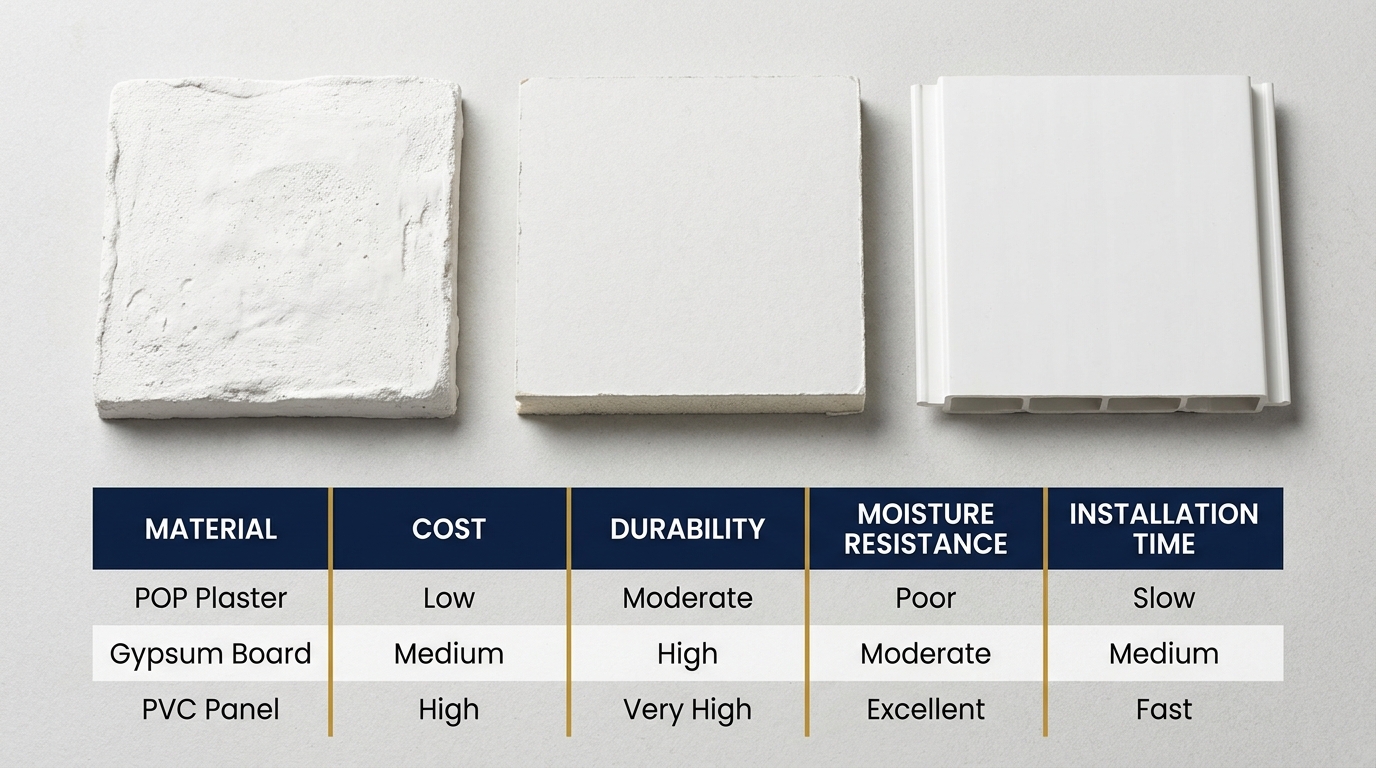
1. POP (Plaster of Paris)
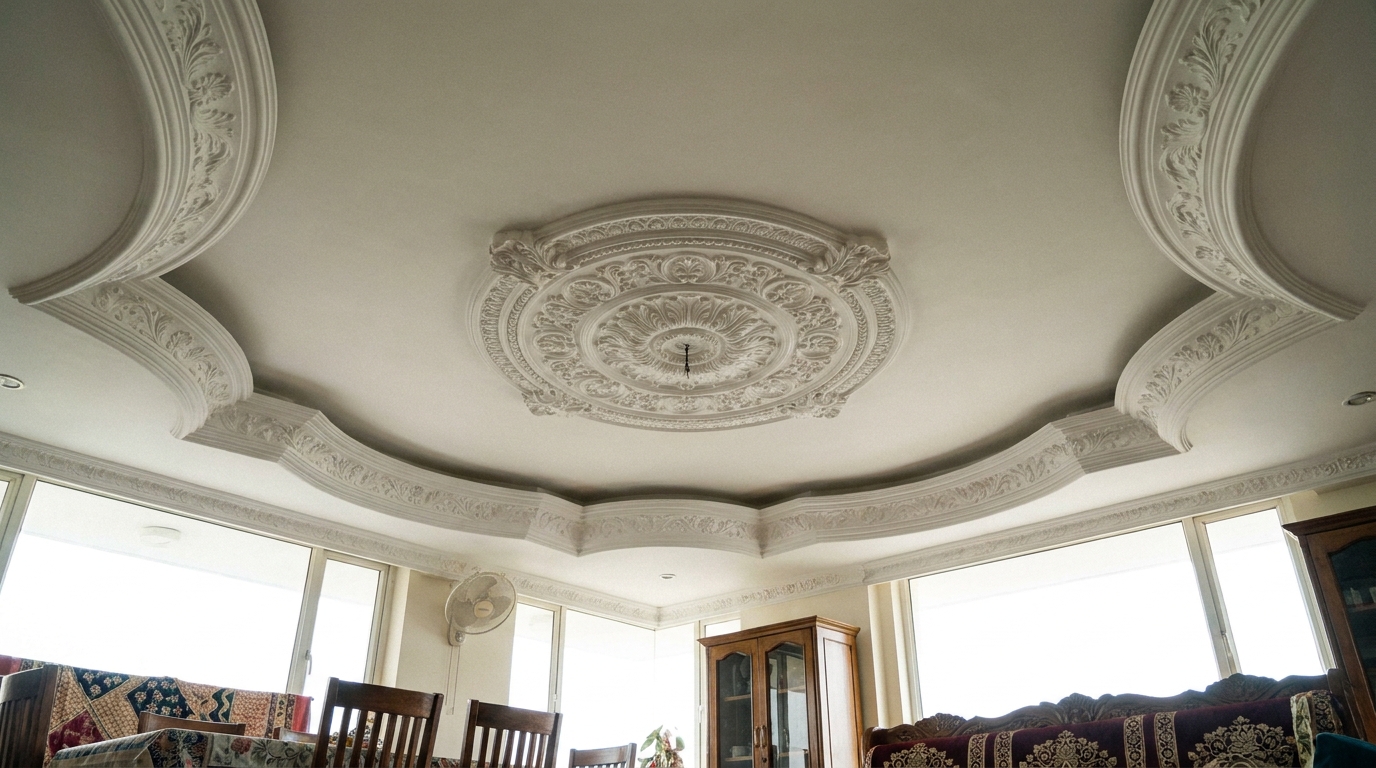
POP has been the default false ceiling material in Indian homes for decades, largely because it allows for genuinely intricate detailing cornices, medallions, and curved profiles that neither gypsum nor PVC can replicate as easily. It's applied wet directly on-site over a metal frame, which means the finish can be sculpted into custom shapes in a way factory-cut gypsum boards can't match. The trade-off is time and skill dependency: POP work is entirely reliant on the contractor's finishing skill, and a rushed job is where most of the hairline cracks that show up a few years later actually originate, usually from inadequate curing time between coats rather than the material itself failing.
POP also doesn't tolerate humidity well, which rules it out for bathrooms and is a genuine risk in kitchens near the cooking area, where steam and grease exposure over time can cause the surface to degrade faster than in a bedroom or living room. For rooms without much moisture exposure, and where an intricate or curved ceiling profile actually matters to the design, POP remains a reasonable choice it's just no longer the automatic default it used to be.
2. Gypsum Board
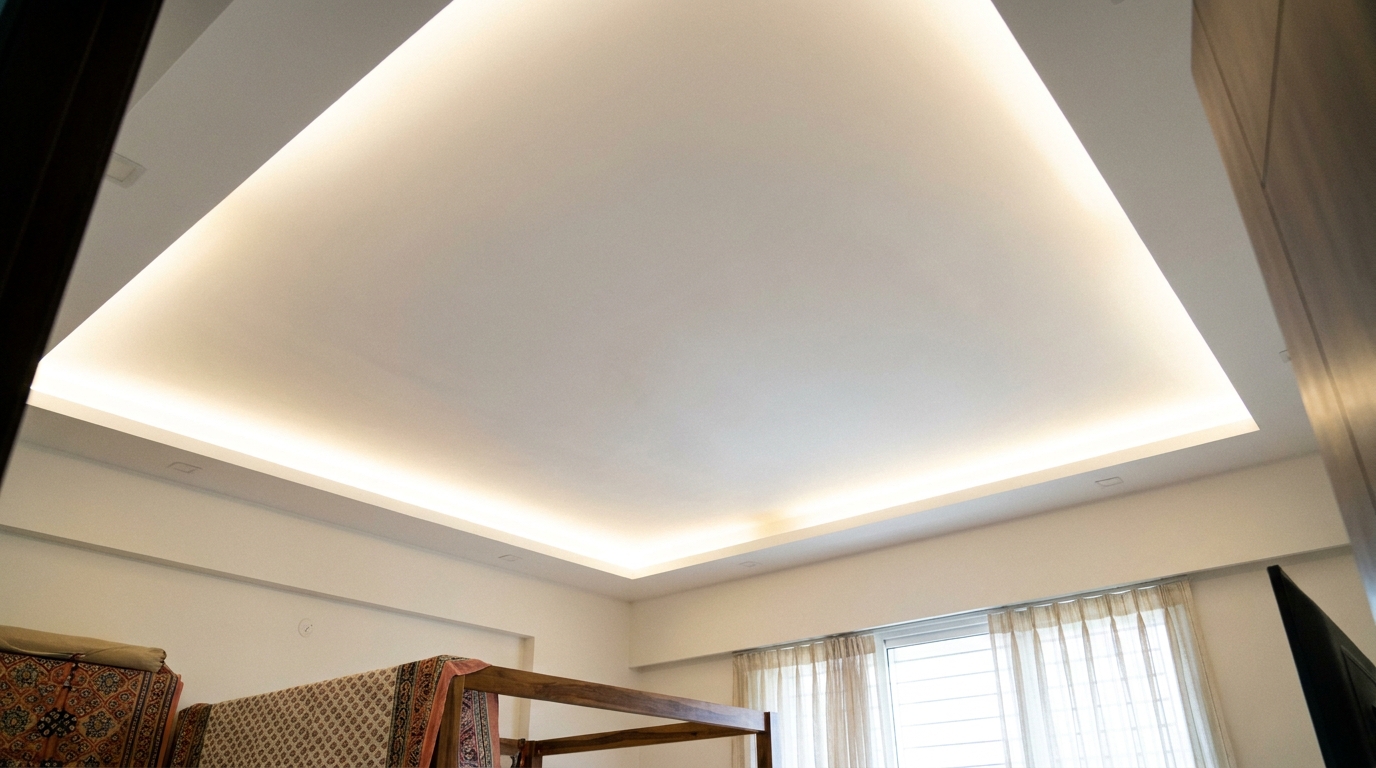
Gypsum board is a factory-manufactured panel installed dry, screwed onto a metal grid frame rather than applied wet like POP. That manufacturing consistency is its biggest advantage: because the boards are pre-formed to a uniform thickness and density, gypsum ceilings are far less prone to the cracking that affects POP over time, and they hold screws and light fixtures more reliably, which matters if you're planning to mount anything heavier than a standard light into the ceiling later. Installation is also noticeably faster than POP, since there's no wet plaster curing time built into the schedule a straightforward gypsum ceiling can often be done in two to three days.
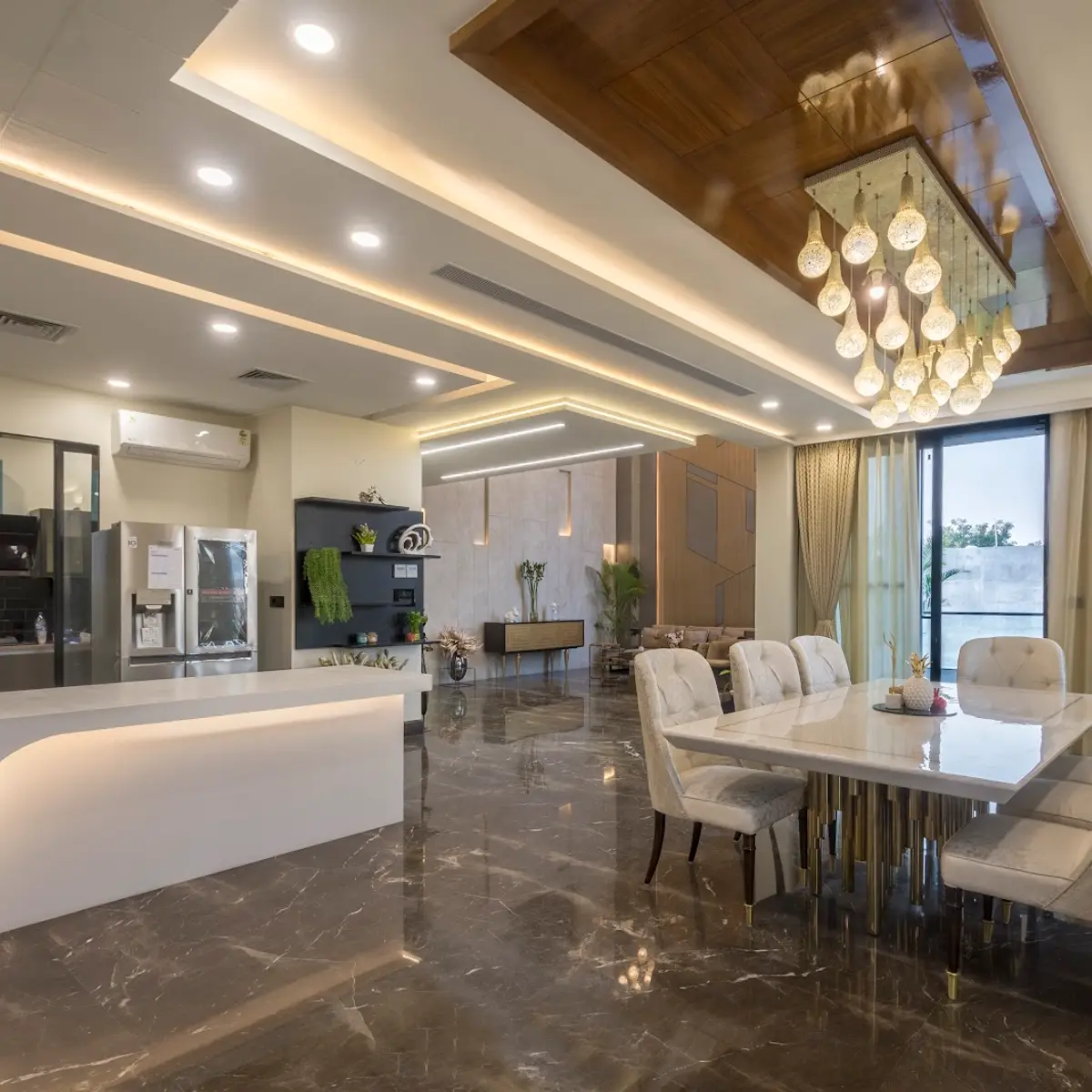
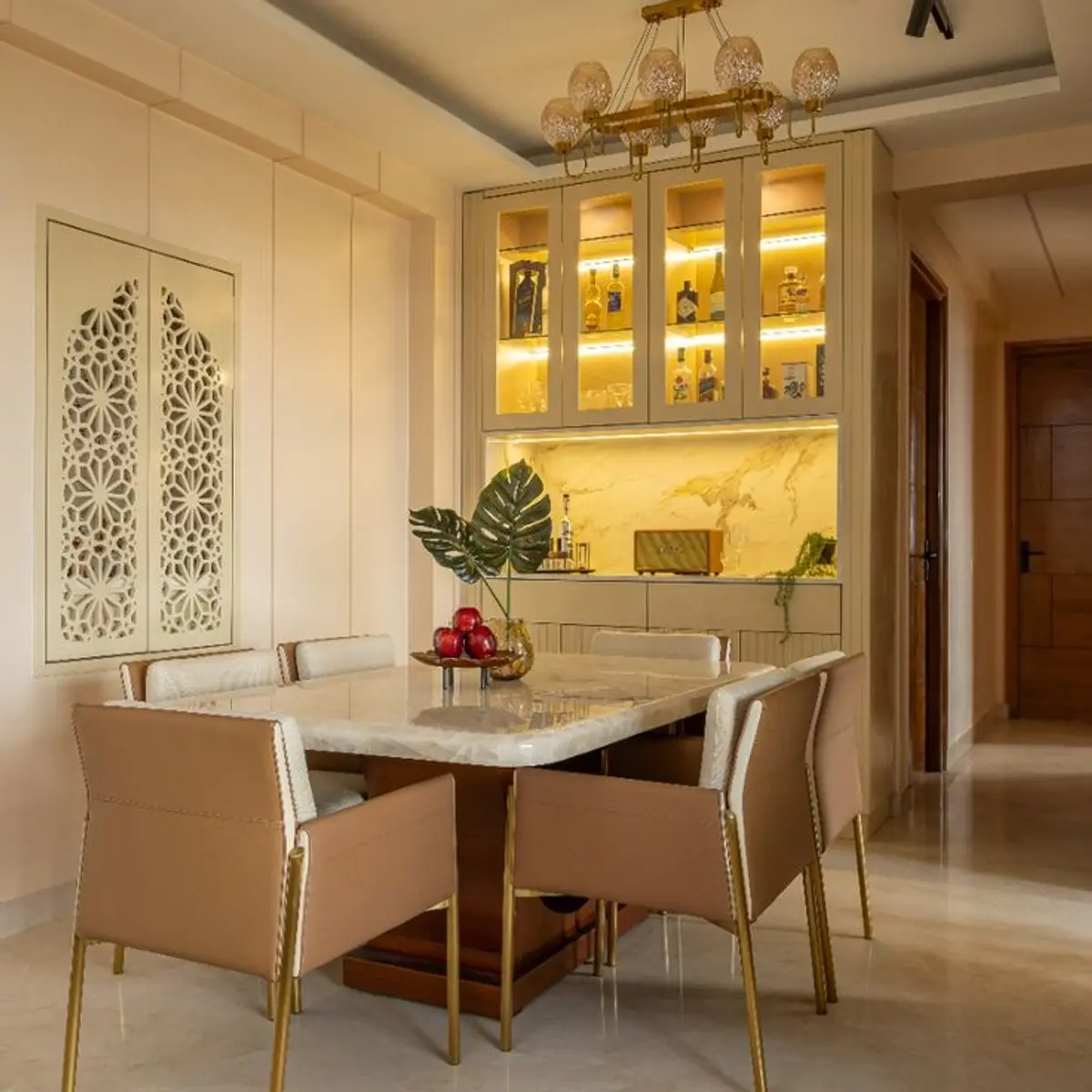
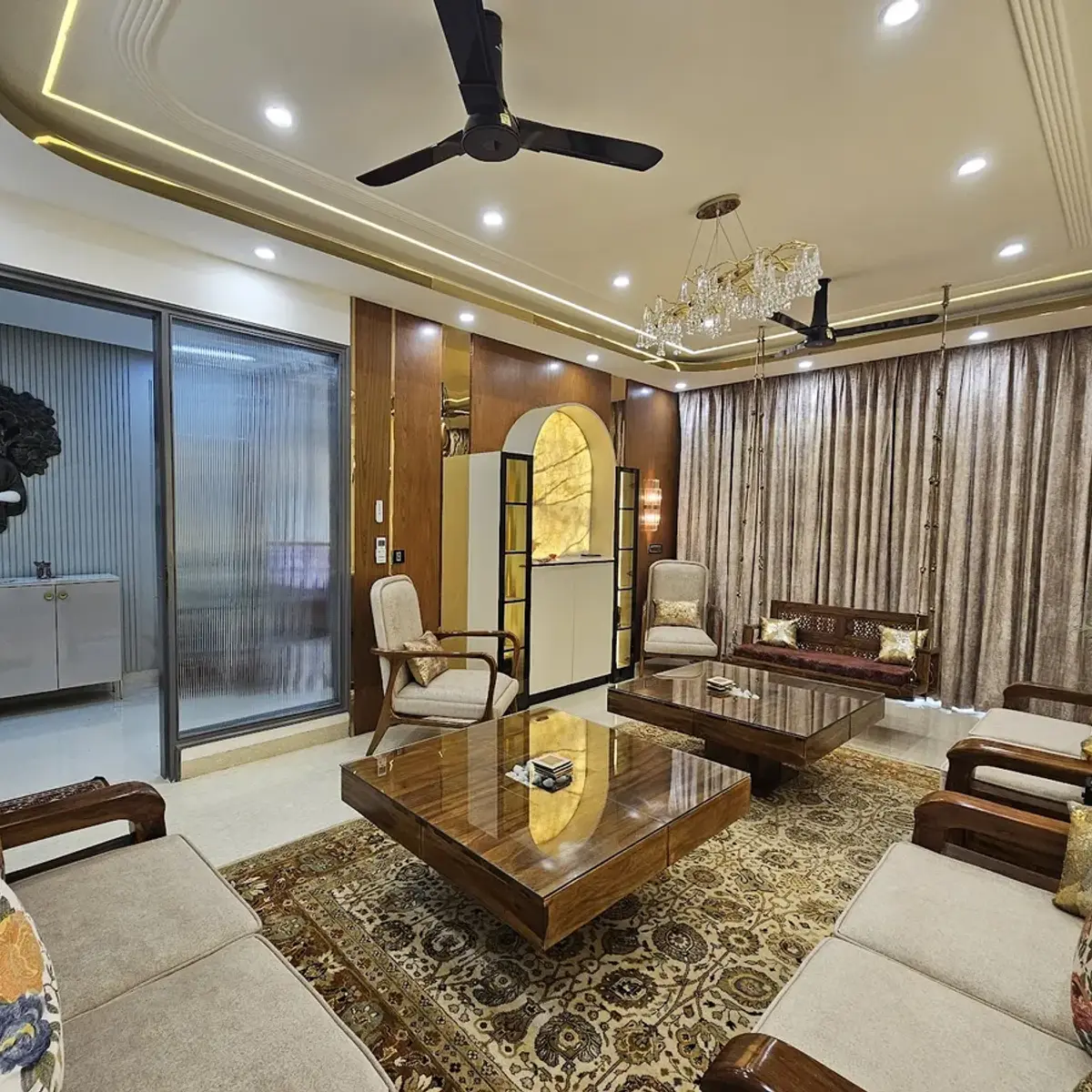
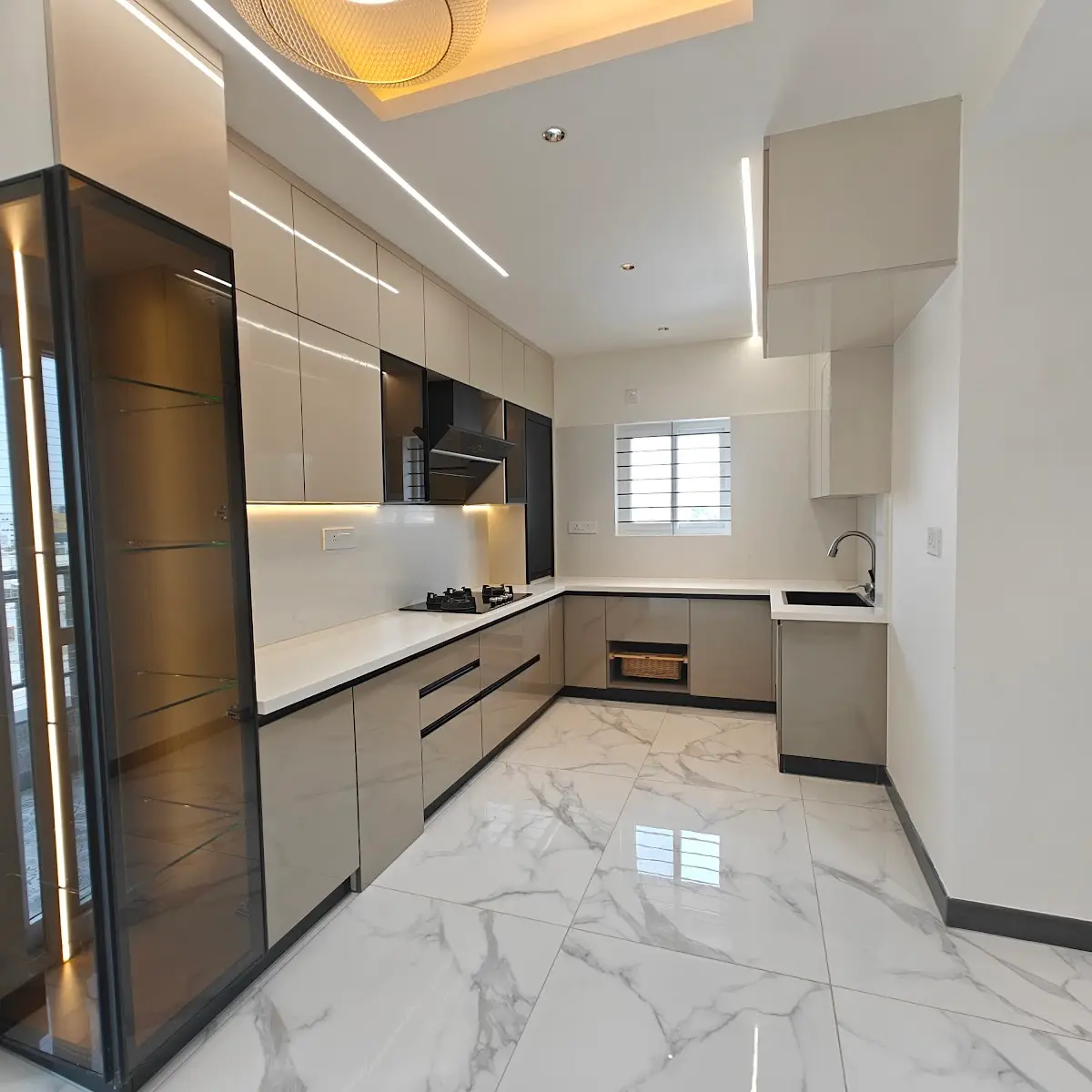
The trade-off is design flexibility. Gypsum board comes in flat panels, so while it handles straight-edged tiers, coves, and boxed sections well, it can't replicate the curved cornices or sculpted detailing that POP allows for. It also costs somewhat more than POP for an equivalent flat design, largely because the material itself and the metal framing system cost more than plaster and mesh. For bedrooms, living rooms, and home offices where a clean, modern tiered or cove design is the goal rather than ornate detailing, gypsum is generally the more durable, faster-installed choice.
3. PVC Panelling
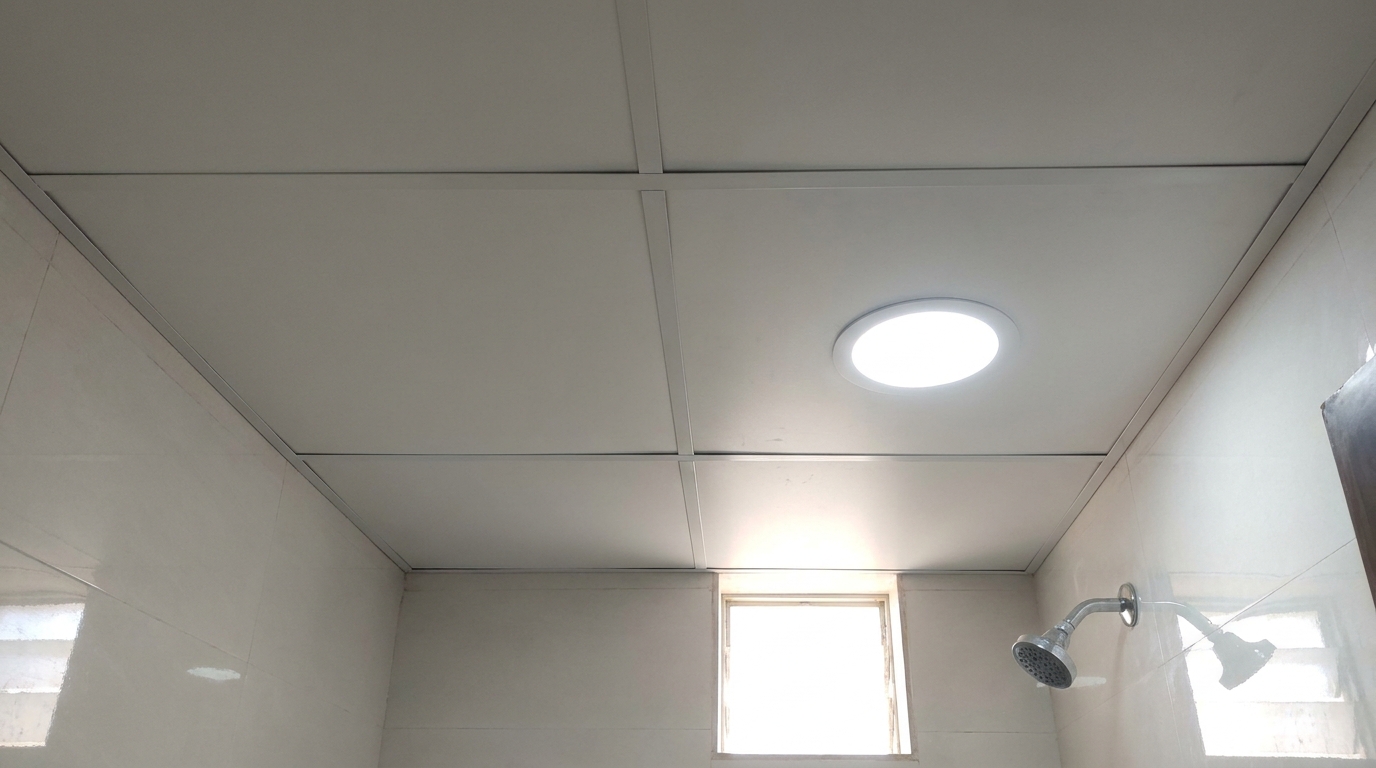
PVC panels are the newest of the three materials in widespread residential use, and the only one genuinely suited to bathrooms, kitchens, and utility areas, since the material itself is close to fully waterproof and doesn't degrade from humidity or direct moisture exposure the way POP and even moisture-resistant gypsum can over time. Installation is also the fastest of the three panels click or screw into a lightweight frame with no wet work or curing involved, which typically means a room can be done in a single day for a straightforward layout.
The main drawback is visual: up close, PVC panelling can read as slightly plasticky compared to the fully seamless, paintable finish of POP or gypsum, and the panel-to-panel seams are sometimes faintly visible depending on the lighting and finish quality chosen. It's also more limited in design complexity flat panels only, no coves or tiered detailing in the way gypsum allows. For bathrooms, kitchens, and utility or laundry areas specifically, though, it's the only one of the three that makes practical sense, and the cost is typically the lowest of the three materials as well.
Closing
There's no single "best" material here the right choice depends almost entirely on the room. POP suits spaces where intricate, curved detailing matters and moisture isn't a concern. Gypsum is the stronger all-round choice for bedrooms and living rooms where a clean, modern tiered or cove design is the goal and durability matters more than ornate detail. PVC is the only sensible option for bathrooms, kitchens, and utility spaces, full stop. The mistake isn't picking the "wrong" material in some absolute sense it's letting a quote say "false ceiling" without asking which one, and ending up with a material that wasn't suited to the room it went into.
Want a real estimate for your home?
Share your home in 2 minutes. We'll match you with verified designers in your city and give you a BOQ-level estimate before any work begins.
Share your home →