Wallpaper Isn't Just for the One Wall Behind Your Sofa
6 places to use wallpaper in an Indian home that aren't the default living room accent wall
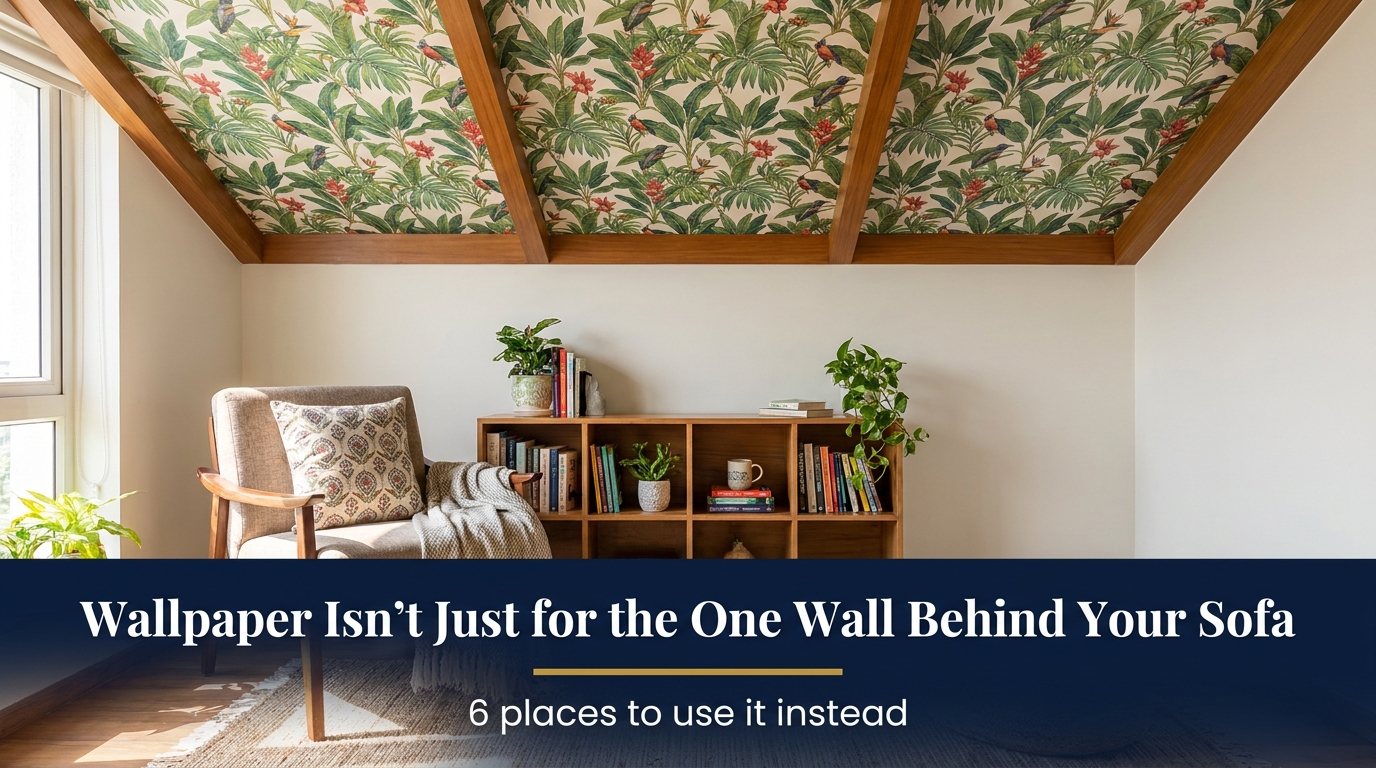
Say "wallpaper" to most Indian homeowners and the image that comes to mind is almost always the same: one wall in the living room, usually behind the sofa, usually a bold geometric or floral print, usually the single wallpapered surface in the entire home. That default isn't wrong, exactly — it's a genuinely low-risk way to add pattern to a room — but it's also left an enormous amount of ground completely unexplored. Wallpaper works on ceilings, inside wardrobes, along a staircase wall, behind open shelving, in places where the pattern gets discovered rather than announced from across the room. Here are six applications that go past the one-wall default, each with a genuinely different effect on the space.
1. A Wallpapered Ceiling in a Small Reading Nook
Ceilings are almost never wallpapered in Indian homes, which is part of what makes it work so well when it is — in a small, contained space like a reading nook or a window seat, a patterned ceiling overhead creates a canopy effect that a wall application simply can't replicate, since you're meant to look up and linger rather than glance across the room. It works best in genuinely compact spaces, where the ceiling area is small enough that a busy pattern doesn't become overwhelming, and where the nook already has a reason to make people pause and look up rather than move through quickly.
The main practical consideration is installation: ceiling wallpapering is more physically demanding than wall application, since it's applied against gravity, and it's worth specifically asking your installer whether they have ceiling experience rather than assuming a standard wall-paperer can do it equally well.
2. Along the Staircase Wall, Following the Angle of the Stairs
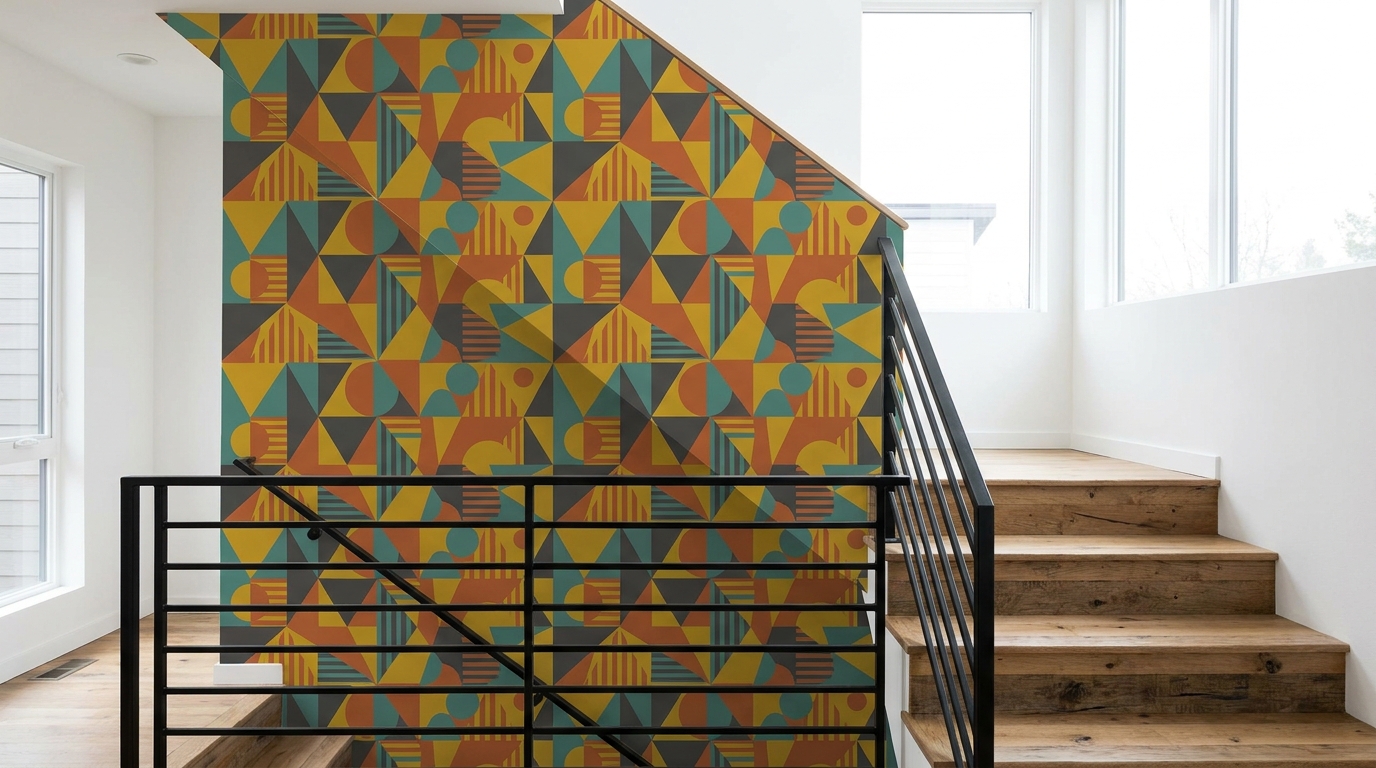
A staircase wall is one of the largest uninterrupted surfaces in a multi-floor home, and it's rarely wallpapered because the angled run of the stairs makes measuring and cutting more complex than a standard flat wall. Done well, though, a staggered or continuous pattern that follows the staircase's incline creates a genuinely striking effect as you move up or down through it — the pattern reveals itself gradually rather than all at once, which a flat living room wall can't offer.
Because the wall is viewed from a moving vantage point rather than a fixed seat, a busier or more intricate pattern tends to work better here than it would in a room where people are looking at it from the same angle for an extended period.
3. Inside Wardrobe Doors or Open Shelving Backs
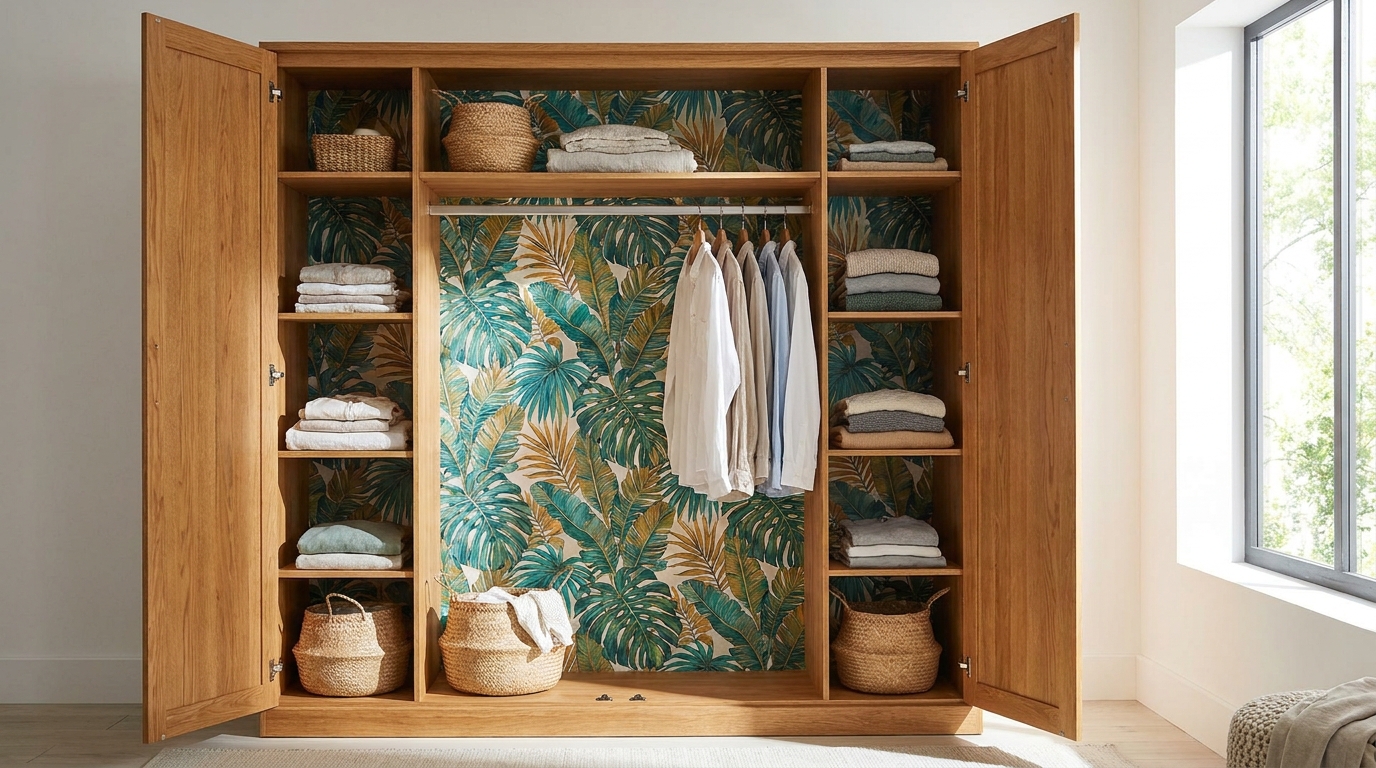
The interior back panel of open shelving, or the inside face of a wardrobe door, is surface area that's almost always left as plain painted MDF or laminate, purely functional and never considered as a design opportunity. A patterned wallpaper applied to just that interior surface adds a genuine pop of colour and personality every time the wardrobe or shelf is opened or viewed at an angle, without committing an entire room to the pattern the way a full wall would.
This is one of the lowest-risk ways to experiment with a bold or unusual print, since the material cost is minimal — it's covering a small surface, not a full wall — and if the pattern feels wrong after living with it, replacing it is a much smaller job than redoing an entire feature wall.
4. Behind Open Shelving Instead of a Plain Wall
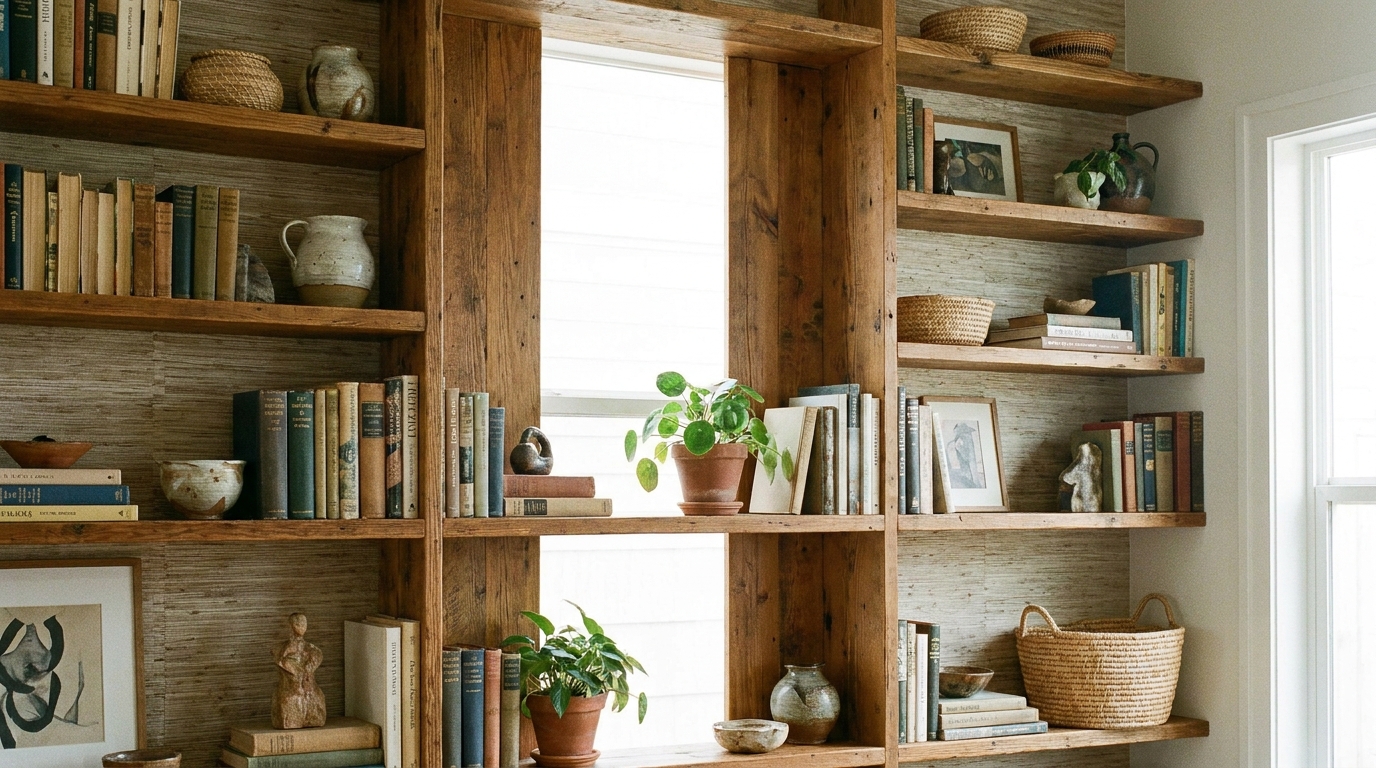
When a room has open shelving — in a living room, a home office, or a kitchen — the wall visible through and around the shelf gaps is usually left the same plain colour as the rest of the room, which means the shelving and its contents have to do all the visual work on their own. A patterned wallpaper applied specifically to that back wall, visible in the gaps between shelved items, adds depth and colour behind the objects rather than competing with them, since books and decor items sit in front of the pattern rather than against a flat, undifferentiated background.
This works particularly well with a subtler, more textural print — a grasscloth or a fine linear pattern — since a busy, high-contrast print behind shelving can end up visually competing with whatever's displayed on the shelves themselves.
5. On a Single Stair Riser Run Instead of a Full Wall
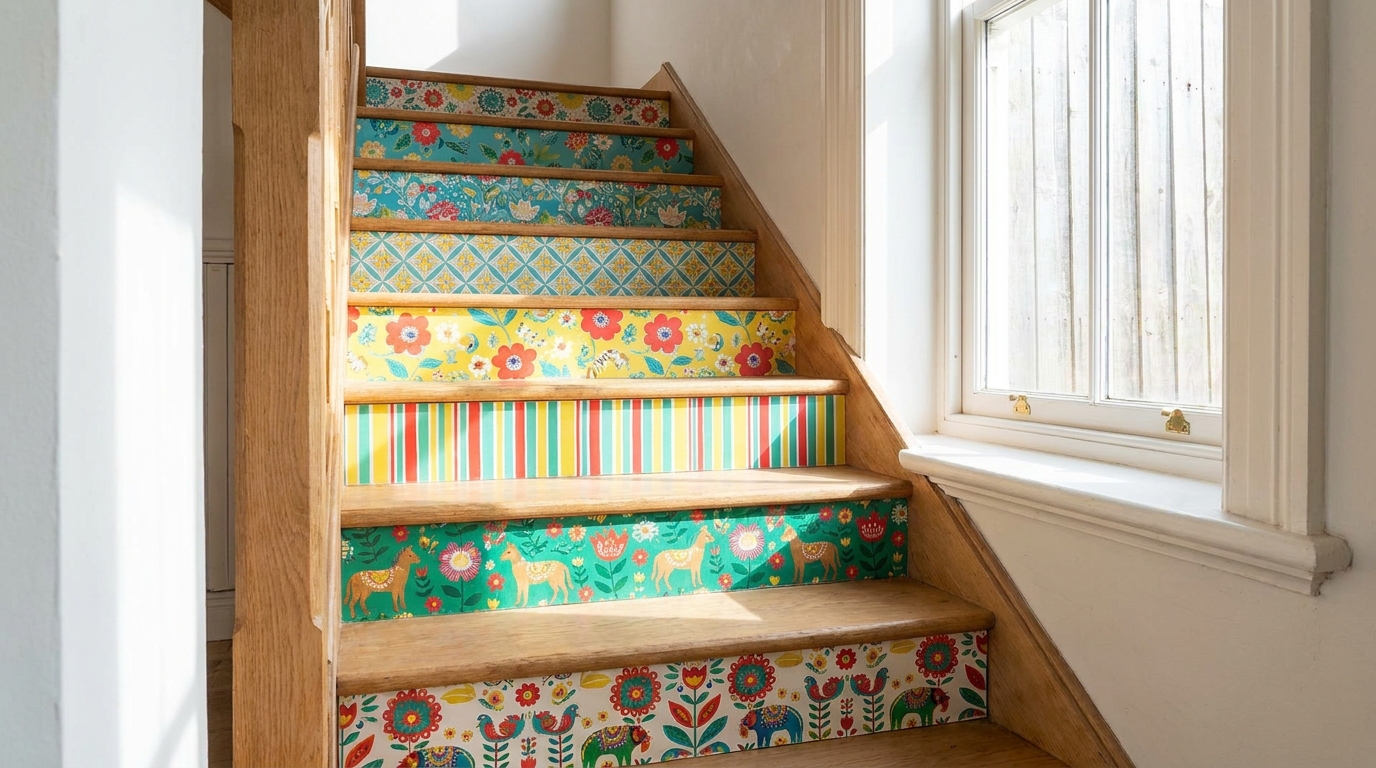
Rather than wallpapering an entire wall or surface, applying a patterned wallpaper to just the risers (the vertical faces) of a staircase — while leaving the treads themselves in wood or stone — is a considerably smaller, lower-commitment project that still reads as a deliberate design choice. Each riser can carry the same pattern for a cohesive striped effect up the staircase, or, for a bolder approach, a different colourway or pattern on each individual riser for a more playful, eclectic look.
Because risers are a genuinely small surface area per step, this is one of the more budget-friendly wallpaper applications on this list, and it's also one of the easier ones to redo later if tastes change, since replacing wallpaper on a handful of risers is a much smaller job than an entire wall.
6. As a Framed Panel Instead of a Full Wall
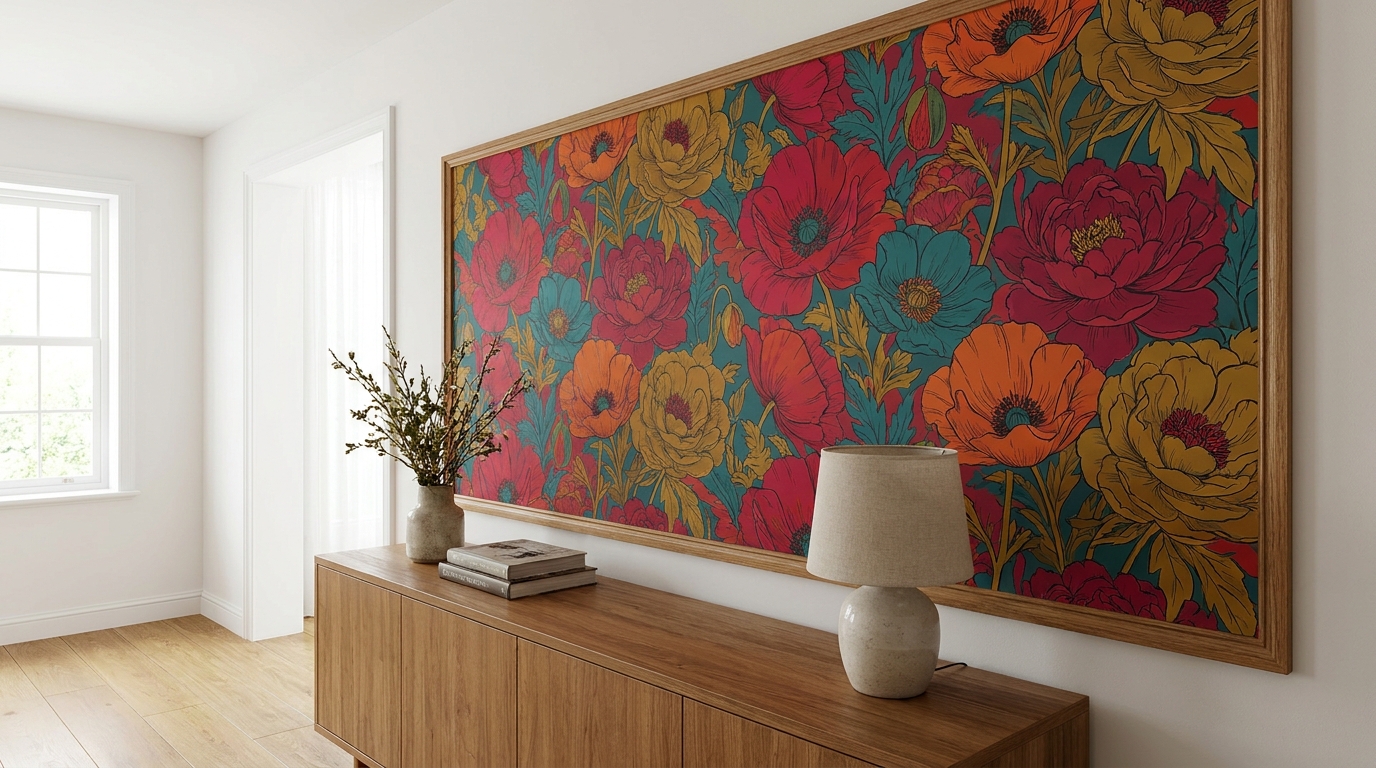
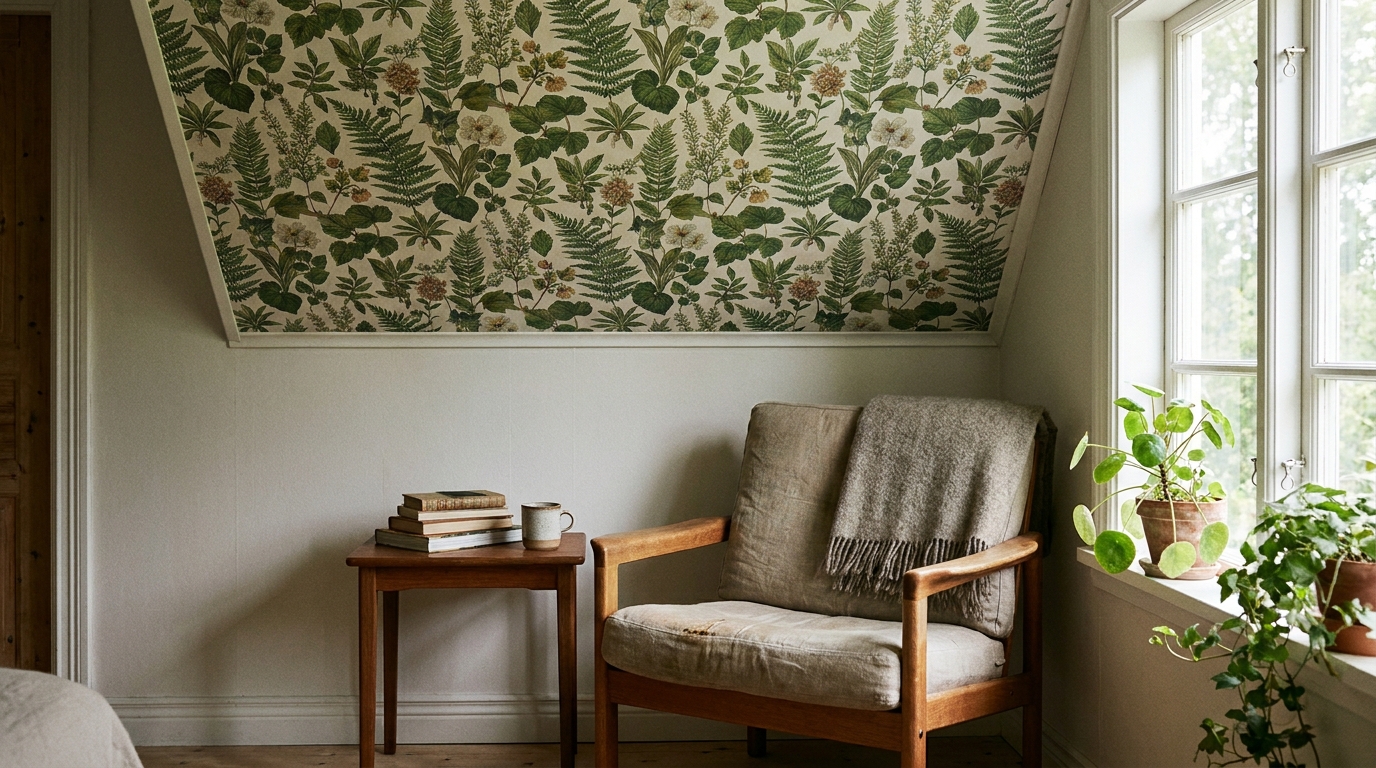
For anyone hesitant about committing to a full wall of pattern, framing a single rectangular section of wallpaper — bordered by a simple wood moulding, sized like an oversized piece of art — delivers a lot of the visual impact of a patterned wall with a fraction of the material and risk. It works particularly well in a hallway, above a console table, or as a headboard-adjacent feature in a bedroom, where a full wall of pattern might feel like too much but a contained, art-like panel feels intentional and considered.
This approach also makes it far easier to match the wallpaper to a specific spot's proportions rather than being constrained by an entire wall's dimensions, and because the moulding frame conceals the wallpaper's edges, even a slightly imperfect cut line is much less noticeable than it would be on an unframed full wall.
Closing
Wallpaper in an Indian home doesn't have to mean one wall, one room, and one decision made early and lived with for a decade. Used in smaller, more specific applications — a ceiling, a riser, the inside of a door — it becomes something closer to a design tool you can use in several places at a much lower cost and risk than a single full-wall commitment. The accent wall behind the sofa isn't wrong. It's just the least interesting place wallpaper can actually go.
Want a real estimate for your home?
Share your home in 2 minutes. We'll match you with verified designers in your city and give you a BOQ-level estimate before any work begins.
Share your home →