Quartz vs Granite Kitchen Countertop: 2026 Prices and the Staining Truth
Granite runs Rs 90-250 per sq ft, quartz Rs 350-900. Granite takes hot kadhais and hides everything; quartz takes turmeric and delivers the seamless white counter. Pick by how you cook.
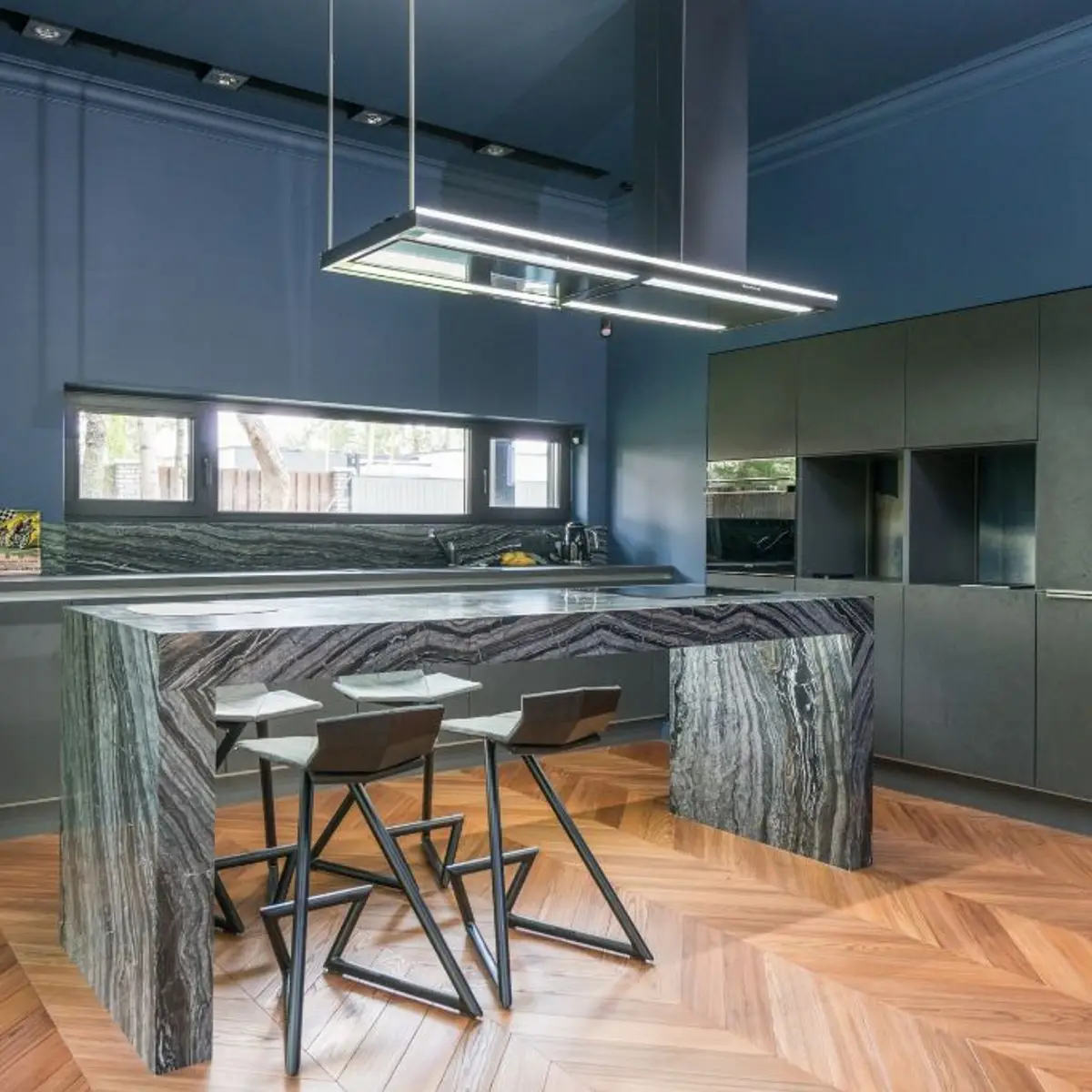
The 2026 numbers first: granite costs ₹90–250 per sq ft for the popular Indian colours and quartz ₹350–900 per sq ft installed material, so on a typical 30 sq ft kitchen counter the real gap is ₹8,000–20,000 for granite vs ₹12,000–30,000 for entry quartz and up to ₹50,000+ for premium imported quartz, before edge and cutout charges. The verdict in one line: granite for heavy Indian cooking, hot vessels and tight budgets; quartz for light colours, seamless looks and stain-free maintenance. Most pages ranking for this query are written by quartz brands or granite dealers, so what follows is the referee's version, including the turmeric test and the charges that appear only on the final bill.
What each stone is
Granite is quarried natural stone, cut into slabs and polished. India is one of the world's largest granite producers, which is why colours like Steel Grey, Black Galaxy, Tan Brown and Absolute Black are cheap here relative to anywhere else on earth. Every slab is natural, so pattern and shade vary, and the stone is porous to a degree that varies by colour.
Quartz (engineered stone) is about 90% crushed natural quartz bound in resin with pigments. It is factory-made, so slabs are consistent, non-porous and available in colours nature does not supply, including the clean whites and marble-look veining that dominate current kitchen design.
2026 price card, honestly
| Item | Granite | Quartz |
|---|---|---|
| Popular colours (per sq ft) | ₹90–180 (Steel Grey, Tan Brown, Absolute Black) | ₹350–550 (Indian brands) |
| Premium range (per sq ft) | ₹200–450 (imported, exotic colours) | ₹600–1,200 (imported brands, marble-look) |
| Typical 30 sq ft counter, material | ₹3,000–8,000 popular / ₹6,000–14,000 premium | ₹10,000–17,000 Indian / ₹18,000–36,000 imported |
| Edge profile (nosing), per running ft | ₹80–200 | ₹150–350 |
| Hob and sink cutouts, each | ₹300–800 | ₹500–1,500 |
| Installation labour, per sq ft | ₹50–120 | ₹80–150 |
Three billing surprises to watch. First, quartz is sold by the slab in many showrooms; if your counter needs 32 sq ft and slabs yield 28, you pay for two slabs, and wastage on an L-shaped counter can add 15–25% to the material bill. Second, edge profiles are quoted per running foot and a waterfall edge or a thick mitred edge can add ₹8,000–20,000 by itself. Third, undermount sink fixing, drain grooves and backsplash coving are all separate line items; ask for the counter as an all-inclusive figure with cutouts counted.
For context on where the counter sits in the whole project, the counter is usually 10–15% of a modular kitchen's cost; the modular kitchen cost per sq ft guide breaks down the rest, and the interior cost calculator lets you see the kitchen inside your full-home number.
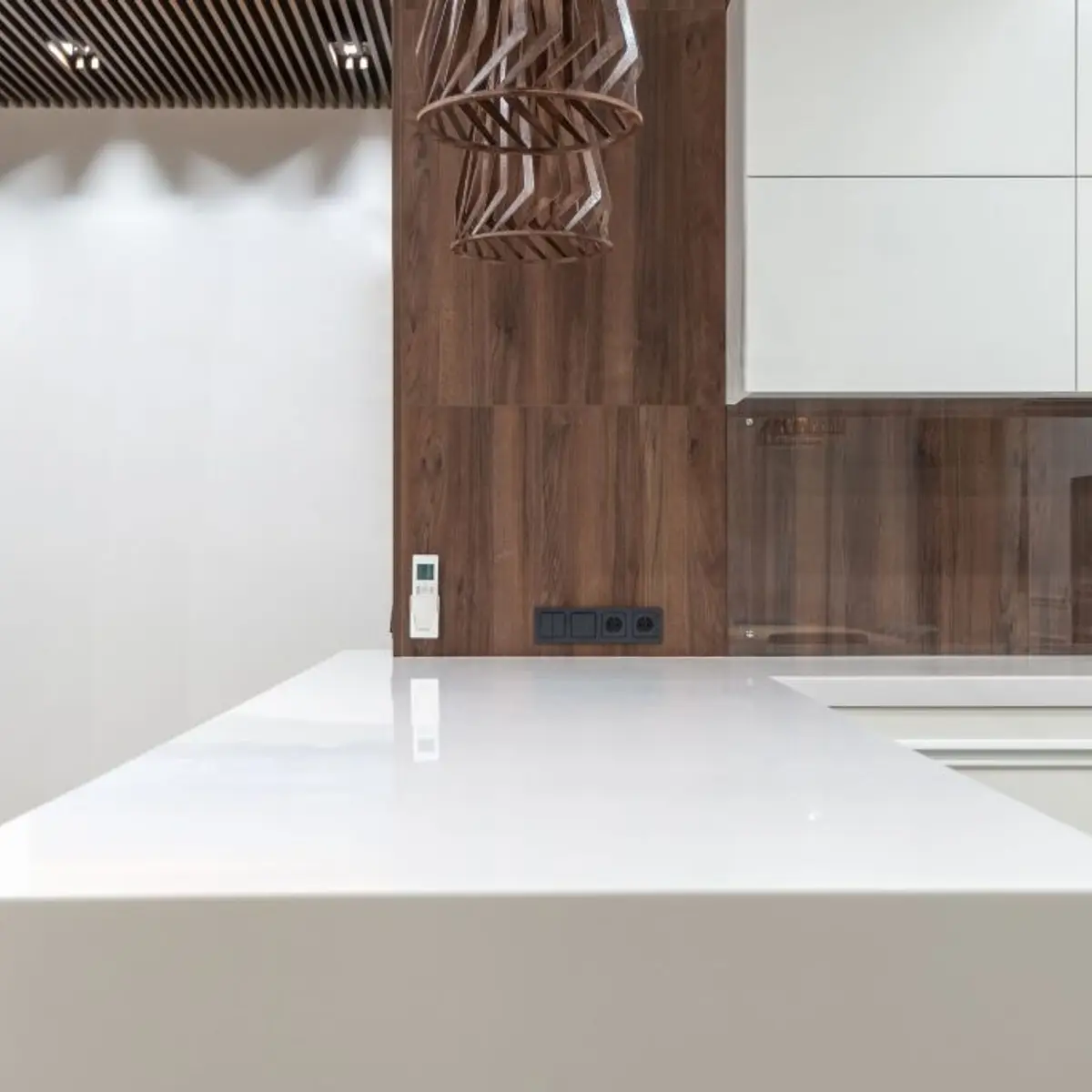
The staining truth: haldi, chai and hot kadhais
This is the section the sellers write least honestly, in both directions.
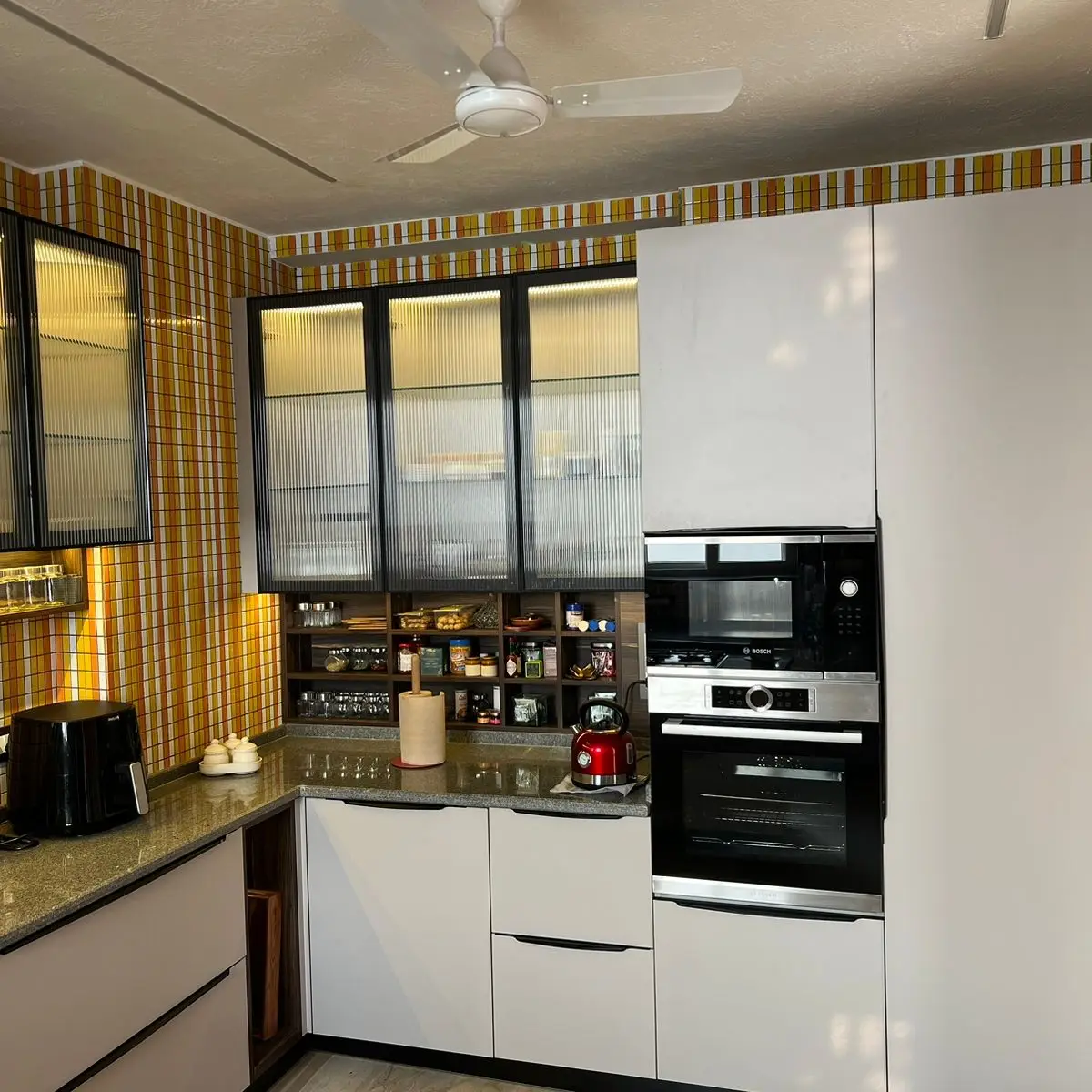
Turmeric. On quartz, a haldi or masala spill wiped within a reasonable time leaves nothing; the surface is non-porous. Left overnight, turmeric can still tint the resin on white quartz, and that ghost is hard to remove. On unsealed light granite, turmeric soaks in and stays. On dark granites like Absolute Black or Steel Grey, staining is a non-issue in practice, which is precisely why they have survived forty years of Indian kitchens.
Heat. Granite wins outright. A kadhai off the flame can sit on granite without drama. Quartz's resin scorches; a hot vessel placed directly on it can leave a permanent whitish ring, and no brand's warranty covers thermal marks. If your cooking involves regular tadka and pressure cookers moving straight off the hob, either choose granite or accept that trivets become non-negotiable.
Acids and cleaners. Lemon, tamarind and vinegar dull polished granite over years and etch marble instantly (worth knowing if you were tempted by a marble counter; do not be). Quartz shrugs off kitchen acids but harsh alkaline cleaners can dull its surface. Both want nothing stronger than dish soap.
Sealing. Light granites should be sealed at installation (₹30–60 per sq ft) and ideally re-sealed every few years; almost nobody does, which is where granite's bad staining reputation comes from. Quartz never needs sealing, and that genuinely is its headline advantage for busy households.
Looks, joints and the marble-look question
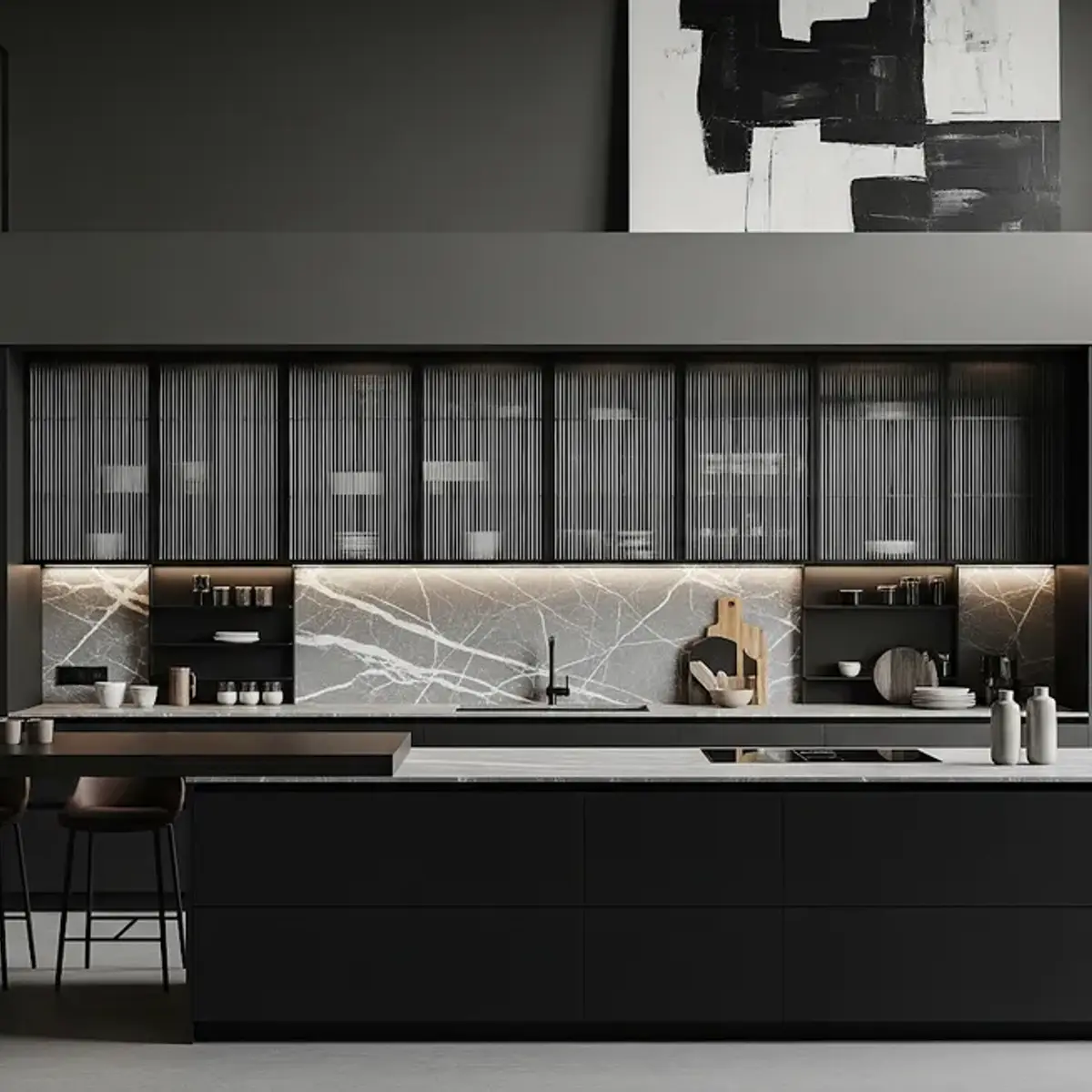
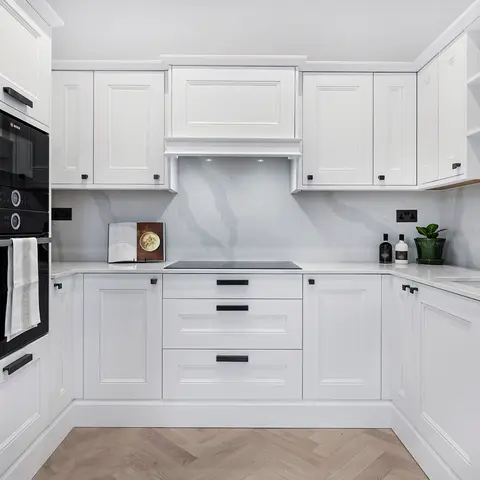
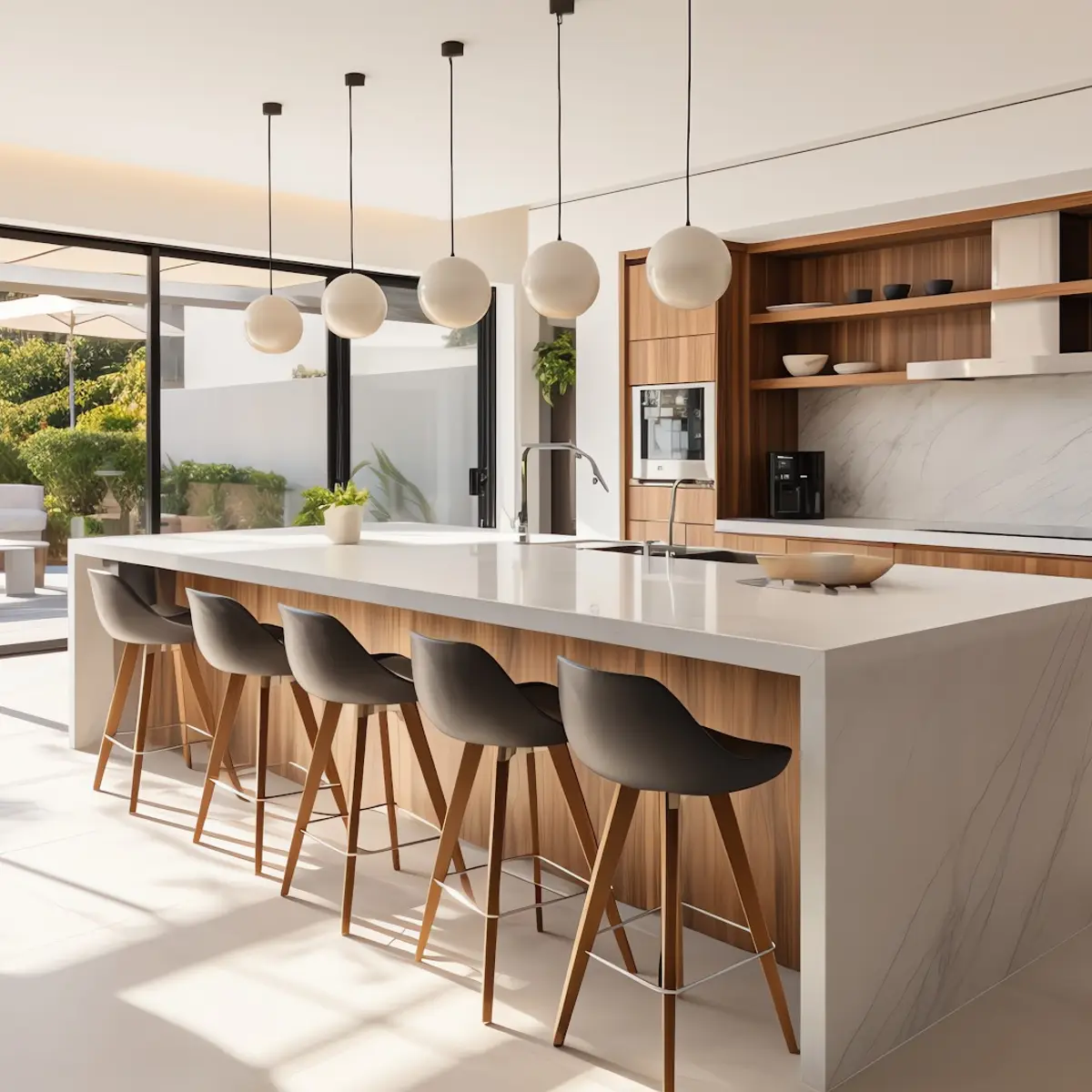
Quartz's real pull in 2026 is aesthetic. If your kitchen design calls for a white or pale counter with subtle veining, granite has no honest answer; light granites are either busy or stain-prone. Quartz also takes near-invisible joints, so long runs and waterfall islands look monolithic. Granite joints are visible and its pattern varies slab to slab, which either reads as natural character or as mismatch depending on your eye.
One caution: marble-look quartz next to a window in strong sun can yellow slightly over many years on cheaper brands; ask specifically about UV stability if the counter sees direct afternoon light. And compare full slabs, never 4-inch samples; veined quartz patterns repeat, and on a big island the repeat can be obvious. Browsing finished kitchens on kitchen design ideas with the counter specifically in mind is the fastest way to decide which look you are actually buying.
Verdict by kitchen type
The heavy-duty family kitchen (daily Indian cooking, multiple cooks, pressure cookers): dark granite. It takes heat, hides everything, costs a third as much, and a decade of abuse will not show. Spend the savings on hardware and lighting.
The open-plan showpiece kitchen (island visible from the living room, light palette): quartz. The seamless light counter is the design; granite would fight it. Budget honestly for edge and wastage charges.
The rental or resale flat: popular-colour granite, no debate. The counter will outlive the tenancy and the next owner.
The compact 8x6 kitchen: either works, and the total gap shrinks to ₹10,000–20,000 at this size; choose on colour. A small kitchen in a light quartz visibly opens up, which is worth something real in a 1 BHK or 2 BHK.
If you cook rarely and design leads: quartz, and consider the imported brands only if a specific pattern justifies the jump; Indian quartz brands in 2026 are dramatically better than five years ago.
Whichever way you go, put the stone's exact name, thickness (20mm is standard), edge profile and cutout count in the quotation. "Granite counter" and "quartz counter" as bare words are where billing disputes are born.
Frequently asked questions
Which is cheaper in India, quartz or granite?
Granite, by a wide margin. Popular Indian colours like Steel Grey, Tan Brown and Absolute Black cost Rs 90-180 per sq ft in 2026, while Indian quartz brands start around Rs 350-550 and imported quartz runs Rs 600-1,200. On a typical 30 sq ft counter, installed, the gap is usually Rs 10,000-30,000 including edges and cutouts.
Does turmeric stain quartz countertops?
A haldi spill wiped within a reasonable time leaves nothing on quartz because the surface is non-porous. Left overnight on white quartz, turmeric can tint the resin and that ghost is hard to remove. Unsealed light granite stains worse and permanently, while dark granites like Absolute Black make turmeric a non-issue in daily practice.
Can you put hot vessels directly on quartz?
No. The resin binding quartz scorches, and a kadhai straight off the flame can leave a permanent whitish ring that no brand's warranty covers. Granite tolerates hot vessels without drama, which is why it still dominates heavy-cooking Indian kitchens. If you choose quartz, trivets near the hob become non-negotiable house rules.
What hidden charges come with a quartz counter?
Three usually surprise people: slab wastage, since quartz is sold by the slab and an L-shaped counter can add 15-25% to material; edge profiles at Rs 150-350 per running ft, with waterfall or mitred edges adding Rs 8,000-20,000; and hob or sink cutouts at Rs 500-1,500 each. Ask for an all-inclusive installed quote with cutouts counted.
Is granite outdated for modern kitchens?
Not functionally; it remains the toughest, most heat-proof and cheapest option, and dark granite still suits heavy daily cooking better than anything engineered. What dates a kitchen is the colour choice, not the stone. Where granite genuinely cannot compete is the light, seamless, marble-look counter, which is quartz territory and the main reason quartz is winning showpiece kitchens.
Want a real estimate for your home?
Share your home in 2 minutes. We'll match you with designers in your city and give you a BOQ-level estimate before any work begins.
Share your home →Related reading