Modular kitchen vs carpenter-made: cost, finish, and who to trust
Match the material grades and the gap is 15-30%, not double. A referee's verdict from a platform that sells neither kitchens nor carpentry.
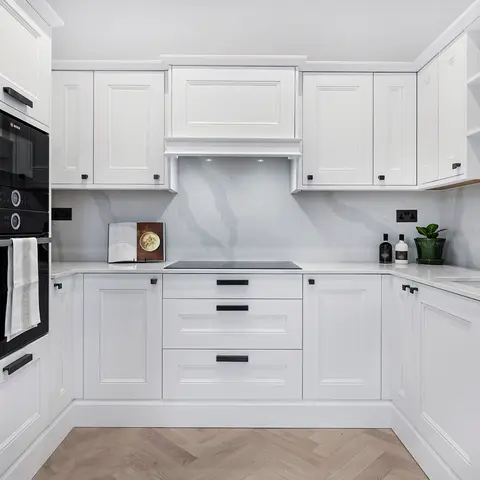
Match the materials and the real cost gap is 15–30%, not the double you have been told. In 2026, a 10x8 L-shaped kitchen built in BWR plywood with laminate shutters costs about ₹1.4–1.9 lakh from a good independent carpenter, ₹1.8–2.6 lakh from a local modular workshop, and ₹2.5–4 lakh from a national modular brand. Modular buys you factory edges, integrated hardware and a written warranty. A carpenter buys you flexibility on odd walls, cheap future repairs, and work that matches what already exists in your home. One thing to know before you read any other comparison: almost every page ranking "modular vs carpenter" is published by a modular kitchen company. This one is not selling either.
Who writes these comparisons, and why it matters
Search the phrase and count. The articles calling carpenter kitchens "outdated", "unhygienic" or "a thing of the past" sit on the blogs of companies whose entire revenue is modular kitchens. That does not make them wrong about modular's strengths — factory finishing is genuinely better in specific, visible ways — but it makes them structurally incapable of telling you where a carpenter wins, and it inflates the cost gap by comparing a branded modular kitchen in premium boards against a carpenter using the cheapest commercial ply.
HeyBuddy sells neither kitchens nor carpentry — the platform produces AI design estimates and lists independent designers — so the referee's chair is available, and this post sits in it.
The true cost gap when material grades match
The comparison trick to watch for: quoting the carpenter's price on unbranded MR ply and the modular price on HDHMR with imported hardware, then presenting the difference as a quality gap. Specify the same materials on both sides and the picture changes. Here is the same kitchen — 10x8 ft, L-shaped, roughly 16 running ft of lower and upper cabinets, BWR ply carcass, branded laminate shutters, standard Indian soft-close hardware — priced three ways at 2026 rates.
| Build route | Typical 2026 cost | What is included | Lead time | Warranty |
|---|---|---|---|---|
| Independent carpenter, on site | ₹1.4–1.9 lakh | Material + labour; you supply drawings and supervision | 3–5 weeks on site | None written; the carpenter's phone number |
| Local modular workshop | ₹1.8–2.6 lakh | Factory-cut panels, machine edge-banding, installation | 3–6 weeks | 1–5 years, firm-dependent |
| National modular brand | ₹2.5–4 lakh | Design service, factory build, install, service network | 4–8 weeks | 5–10 years on cabinets |
Counters, backsplash, chimney and appliances are extra on all three routes. For what those and the two pricing units (per sq ft vs per running ft) add, see the modular kitchen cost guide.
For scale: across 65 completed AI estimates on HeyBuddy (Aug–Sep 2026), the median kitchen estimate was ₹3.73 lakh for a 103 sq ft kitchen — kitchens averaging about 13% of the whole-home budget. Those estimates span finish levels well above this worked example's laminate spec, which is exactly the point: finish level moves the number more than the build route does.
Where modular genuinely wins
Credit where due, because these are real and visible every day you use the kitchen.
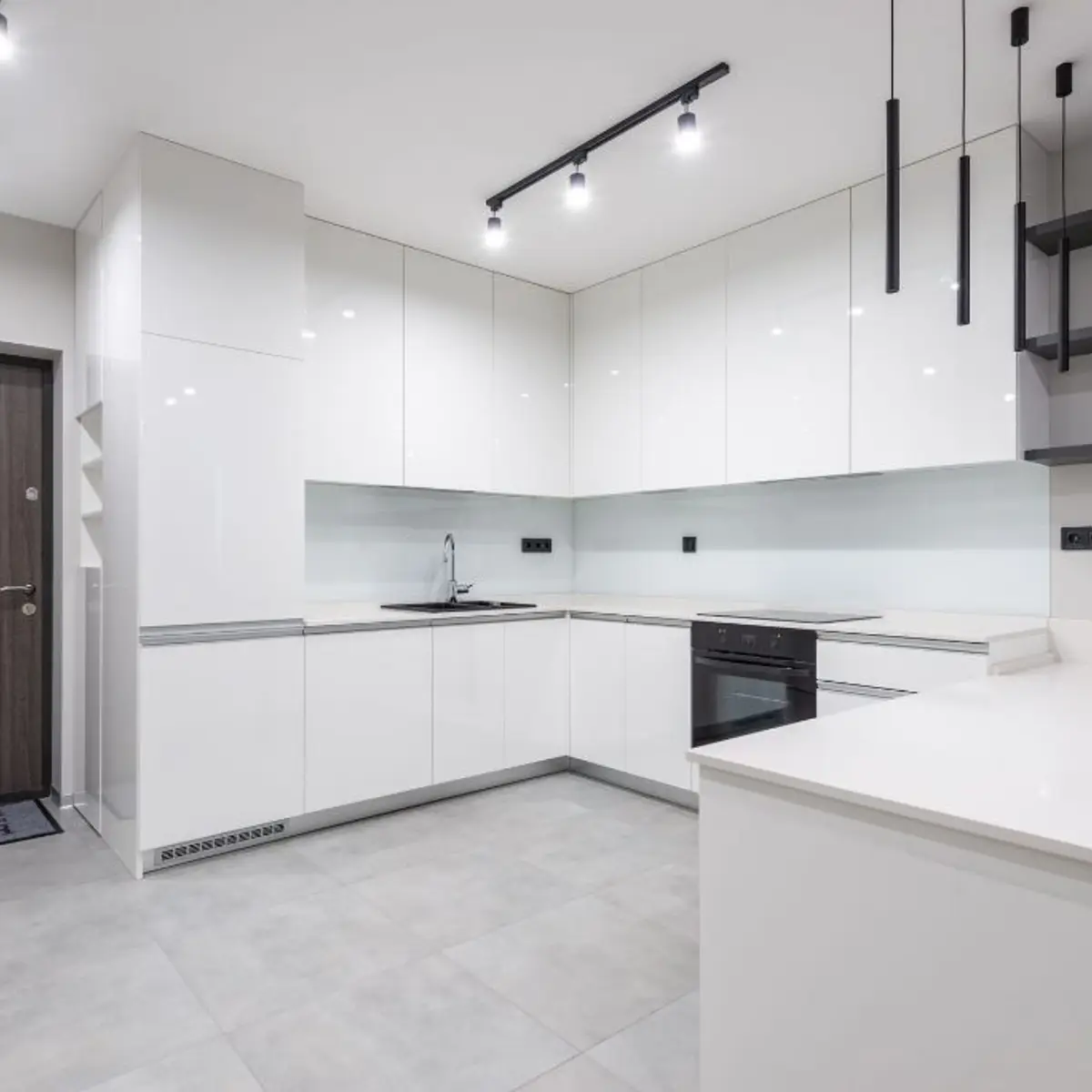
Edges. Factory edge-banding is glued with heat and pressure (good factories use PUR adhesive) and does not peel; hand-pressed edge tape is the first thing to lift in a carpenter kitchen, usually near the hob.
Drawers and hardware. Tandem boxes, corner carousels, tall pantry pull-outs — these are engineered systems that need millimetre-accurate cabinets. Factories cut to that accuracy; hand-cut carcasses fight the hardware forever.
Predictability. You approve drawings and a 3D view, the kitchen arrives finished, and installation takes days, not weeks of dust and plug-in tools in your flat. If something fails inside warranty, there is a company to call, not one man who may have changed cities.
Where the carpenter genuinely wins
This is the half the ranking pages skip.
Odd layouts. Modular cabinets come in standard module widths; a wall of 9 ft 7 in gets filler strips where storage should be. A carpenter builds to the actual wall — around the beam, under the window, into the alcove — and wastes nothing. In older buildings and non-standard layouts, this is decisive.
Repairs and matching existing work. Extending last decade's wardrobe, adding a unit that matches your existing kitchen's shade, fixing what another vendor built — no modular firm will touch it; every carpenter will.
Mid-work changes. Decide during construction that you want the drawer bank on the left after all, and a carpenter adjusts tomorrow. A factory order is frozen at drawing sign-off.
Cost at matched grade. As the table shows, the same materials cost 15–30% less through a carpenter, and the gap widens outside metros where site labour is cheaper and brand logistics are not.
Transparency. Every sheet of ply arrives at your door with its grade stamped on the edge — you can verify materials in a way a sealed factory panel never allows. (Worth doing properly: here is how to read the grades on a quotation.)
And the honest weaknesses: the result depends entirely on the individual mistri's skill, hand edge-banding peels, timelines drift, your home is a workshop for a month, and the warranty is a handshake.
The hybrid most homes should actually consider
The choice is not binary, and the best kitchens in most mid-budget homes are hybrids.
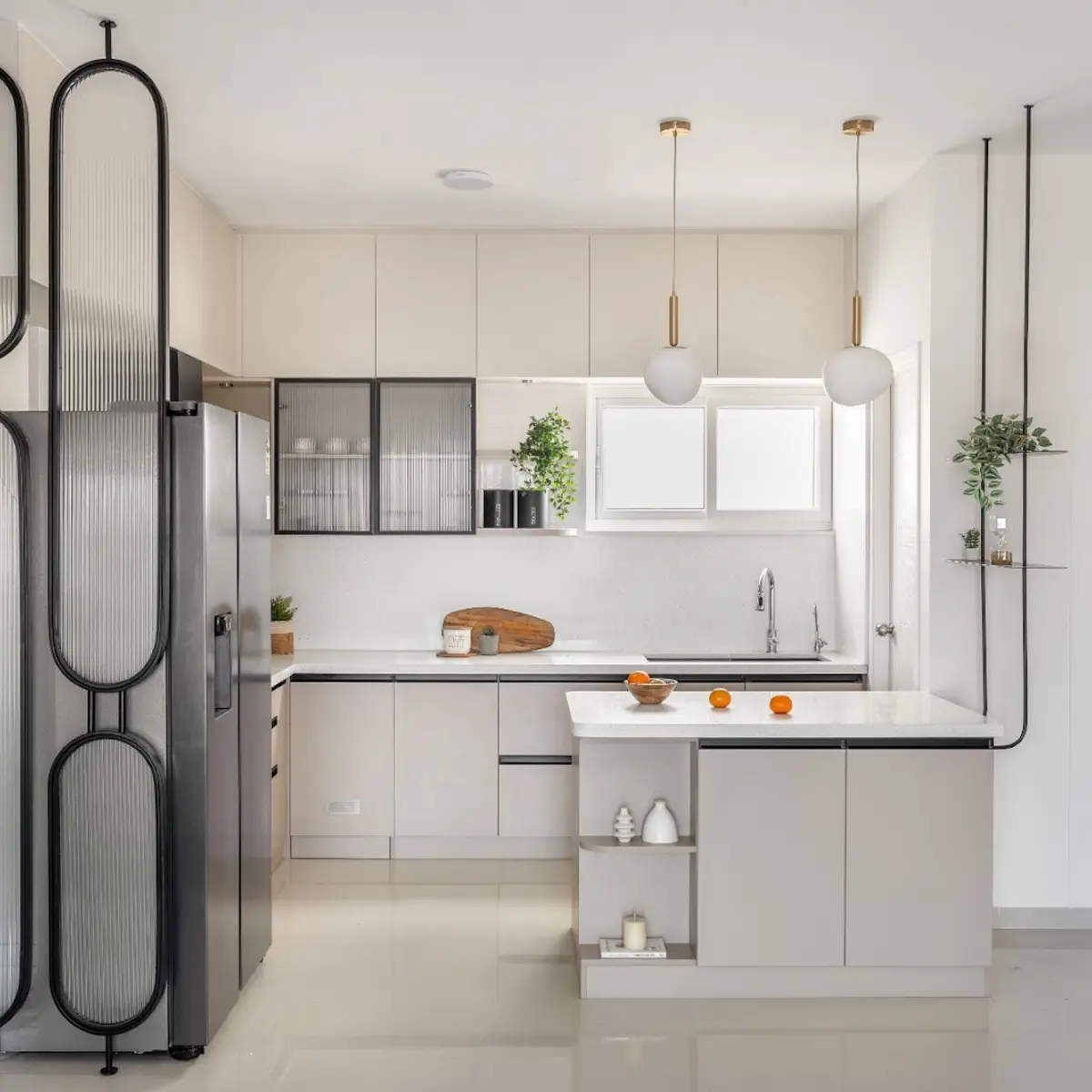
The common pattern: factory-made shutters on a site-built or workshop-built carcass. Shutters are where factory finishing shows (edges, flatness, gloss); carcasses are where site-fitting shows (odd walls, lofts to the ceiling). Several local workshops will happily supply shutters alone. The reverse hybrid also works — a branded modular kitchen for the core, with a trusted carpenter adding the loft units, utility shelving and crockery unit the brand priced absurdly.
A designer-managed carpentry job is the third route: an independent designer produces factory-grade drawings and supervises a known carpentry team, giving you modular-level planning at site-built prices. If you want that model, start with the verified designers in Bangalore listings and ask specifically who supervises fabrication.
How to decide in one pass
Choose modular if your layout is standard, you value warranty and a fixed finish date, and the quote fits after you have matched material grades line by line. Choose a carpenter if the layout is odd, you are matching or extending existing work, you can supervise (or hire a designer who will), and you have seen the mistri's last two kitchens in person. Choose the hybrid if you want factory shutters without brand pricing. And whichever route you take, read the modular kitchen mistakes guide first — most of its traps, from hinge-grade substitution to dead corners, apply to all three.
Frequently asked questions
Is a carpenter-made kitchen cheaper than modular?
Yes, when materials match — typically 15–30% cheaper. A 10x8 L-shaped kitchen in BWR ply with laminate shutters costs about ₹1.4–1.9 lakh carpenter-built in 2026, against ₹1.8–2.6 lakh from a local modular workshop and ₹2.5–4 lakh from a national brand. Comparisons showing a 2x gap are usually pricing different material grades on each side.
Do carpenter-made kitchens last as long as modular ones?
The boxes last just as long — lifespan comes from plywood grade and hardware, which you can specify identically on both routes. Where carpenter kitchens age faster is edges and alignment: hand-pressed edge banding peels near heat and moisture, and hand-cut carcasses hold drawer hardware less precisely. A skilled carpenter with branded hardware narrows that gap to nearly nothing.
What does a modular kitchen warranty actually cover?
Usually manufacturing defects in cabinets and factory hardware — warping, delamination, edge-band failure, hinge and channel defects — for anywhere from 1 to 10 years depending on the firm. It typically excludes laminate wear and scratches, water damage from leaks, misuse, and site modifications by others. Read whether the warranty is on cabinets only or includes the installation, and who pays for service visits.
Can I mix modular and carpenter work in one kitchen?
Yes, and it is often the best-value route. The common hybrid is factory-made shutters on a site-built carcass — factory finish where it shows, site-fitting where it matters. The reverse also works: a modular core with a carpenter adding lofts, tall units and utility storage at site rates. Keep one person (you or a designer) accountable for matching finishes across the two.
Which is better for an odd-shaped or small kitchen?
A carpenter, usually. Modular systems are built from standard module widths, so irregular walls, beams, low windows and non-right-angle corners end up bridged with filler panels — paid-for centimetres with nothing inside. Site-built work uses every inch of an awkward layout. If you still want factory finish, order custom-width shutters on a site-built carcass.
Want a real estimate for your home?
Share your home in 2 minutes. We'll match you with designers in your city and give you a BOQ-level estimate before any work begins.
Share your home →Related reading