MR vs BWR vs BWP plywood: decoding the grades on your quotation
The difference between plywood grades is the glue, not the wood — MR for dry rooms, BWR for kitchens, BWP only where water actually sits.
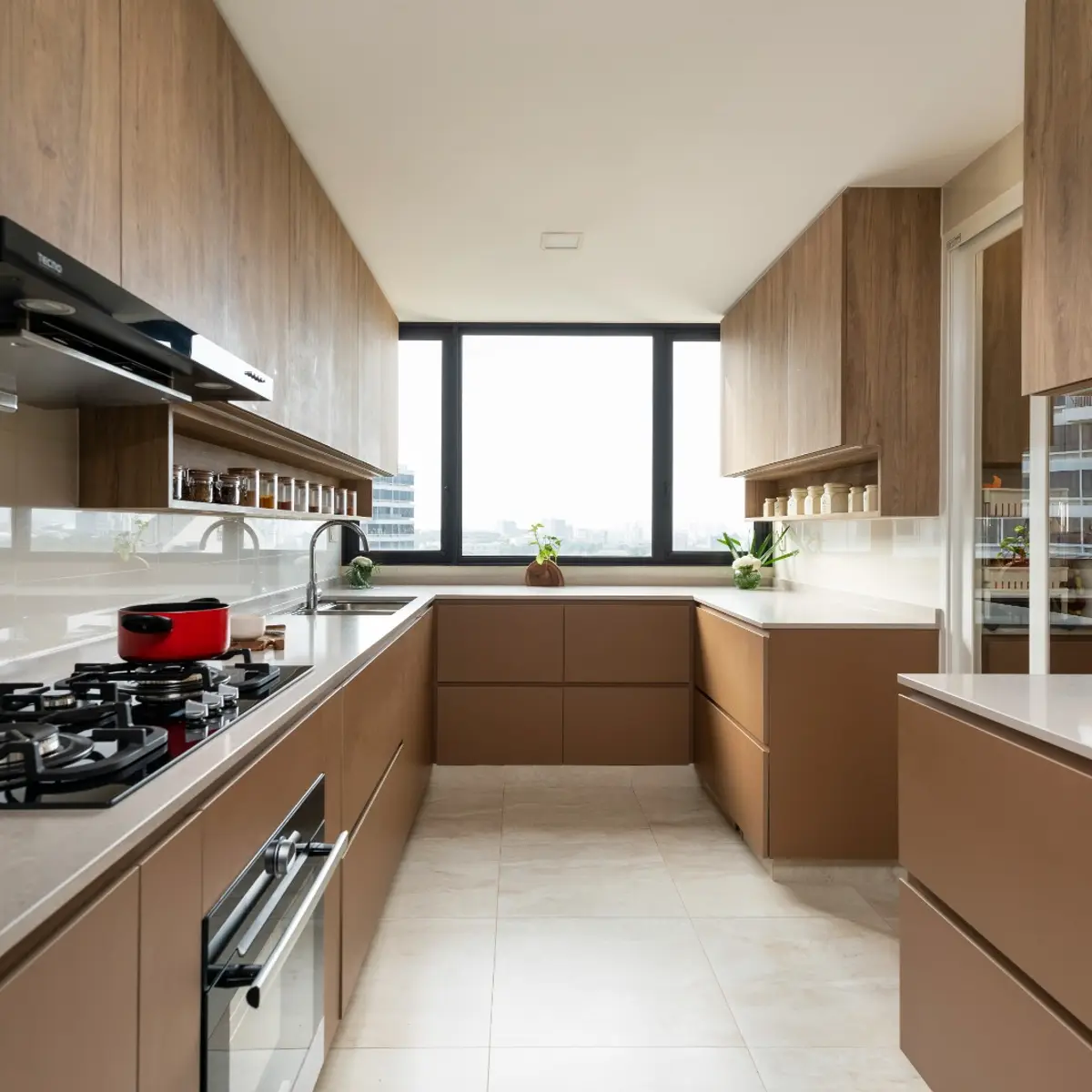
MR, BWR and BWP are glue grades, not wood grades — the difference between them is the resin holding the plies together, and that is what you are paying for. In 2026, branded 18mm plywood costs roughly ₹60–90 per sq ft for MR, ₹85–130 for BWR, and ₹120–180 for BWP (marine). MR belongs in dry-room furniture like wardrobes and TV units, BWR in kitchens and bathroom-adjacent units, and BWP only where water actually sits. If your quotation says "marine ply throughout", you are likely paying ₹45,000–1,00,000 extra on a full 3 BHK for protection most rooms will never use. Here is how to read the grades the way a site engineer does.
The one-line difference: it is the glue
Every plywood sheet is thin wood veneers pressed together with resin. What changes between grades is the resin.
MR stands for moisture resistant. The plies are bonded with urea-formaldehyde glue, which tolerates humid air — a Bangalore monsoon, a Delhi summer cooler — but lets go if the sheet actually gets wet repeatedly. Shops also call this "commercial ply". Same thing.
BWR stands for boiling water resistant. The glue is phenolic, a tougher resin that survives splashes, wet wiping and steam. This is the workhorse grade for kitchens.
BWP stands for boiling water proof, and overlaps with what the market calls marine ply. Phenol-formaldehyde resin, denser core veneers, and the sheet is expected to survive extended boiling without the plies separating. It is built for soaking, which almost no furniture in a home ever experiences.
IS codes in plain words
Those IS numbers on a quotation are Bureau of Indian Standards specifications, and they are the closest thing you have to a written promise.
IS 303 is the standard for general-purpose plywood. Both MR and BWR are graded under it. A sheet stamped "IS 303 BWR" claims phenolic glue and has, in principle, passed the corresponding water-resistance tests.
IS 710 is the separate, stricter standard for marine plywood — the true BWP sheet. The tests include a 72-hour boil, and the core must be as good as the face.
That is genuinely all you need: IS 303 covers MR and BWR, IS 710 means marine. A quotation that names a brand, a grade and an IS code per unit is being straight with you. One that just says "waterproof ply" is not saying anything testable.
The 2026 price card
| Grade | Plain words | IS code | 18mm, per sq ft | 8x4 sheet (32 sq ft) | Belongs in |
|---|---|---|---|---|---|
| MR | Handles humid air, not water | IS 303 | ₹60–90 | ₹1,900–2,900 | Wardrobes, beds, TV units, study |
| BWR | Survives splashes and steam | IS 303 | ₹85–130 | ₹2,700–4,150 | Kitchen, vanity, utility, balcony-facing units |
| BWP / marine | Survives actual soaking | IS 710 | ₹120–180 | ₹3,850–5,750 | Under-sink unit, outdoor furniture |
These are open-market ranges for branded sheets in 2026; premium brands sit at the top of each band and unbranded material sits below the bottom — at which point the stamp, and the promise, disappear.
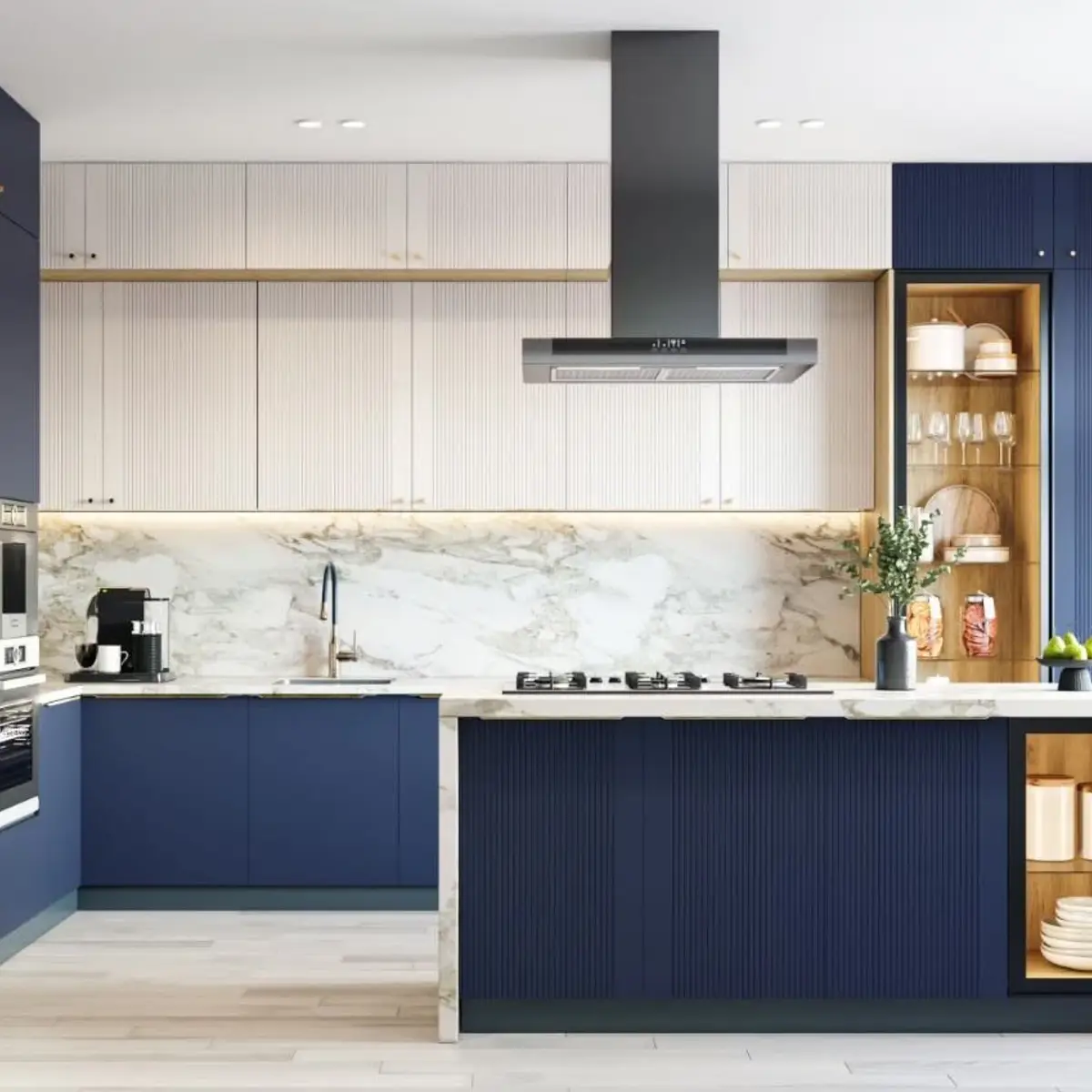
The marine-ply upsell — and its evil twin
Two tricks show up on quotations, in opposite directions.
The upsell. "We use only marine ply" sounds like quality. It is mostly margin. BWP costs ₹30–50 per sq ft more than BWR, and a full 3 BHK's furniture consumes roughly 1,500–2,000 sq ft of board. That is ₹45,000–1,00,000 of extra material cost for wardrobes and TV units that will never meet boiling water. The correct spec is boring: BWP under the sink and in the utility, BWR in the rest of the kitchen and bathrooms, MR or BWR everywhere else.
The substitution. The reverse trick is quoting BWR and delivering MR or unbranded commercial ply. Once laminate is pressed on, the grades look identical. This is why the verification habits below matter more than the words on the quote — and why a "brand or equivalent" clause deserves a hard question before you sign. Our guide on how to read an interior design quotation covers that clause and the other fine print.
How to verify what you are paying for
Read the edge stamp. Every branded sheet carries the brand, grade and IS number stamped on the edge or face. Ask for photos of stamped sheets on delivery, before cutting starts. Five minutes on WhatsApp, and the honest vendors will not blink.
Make the quote name names. Brand, grade, thickness, per unit — "18mm Century/Greenply BWR carcass, 18mm HDHMR shutters", not "premium ply". A missing grade is a decision someone else will make later, in their favour.
The offcut test. If you want certainty, drop a small offcut in boiling water at home. MR delaminates within minutes to an hour; BWR holds through hours of it; a true IS 710 sheet is barely bothered. Crude, but it is roughly what the lab test does.
Match the grade to the room, not the pitch. A wardrobe in a dry bedroom is perfectly served by MR ply — spending up is optional insurance, not a requirement. A niche closet or bed unit fails from bad hardware and bad carpentry far more often than from glue grade.
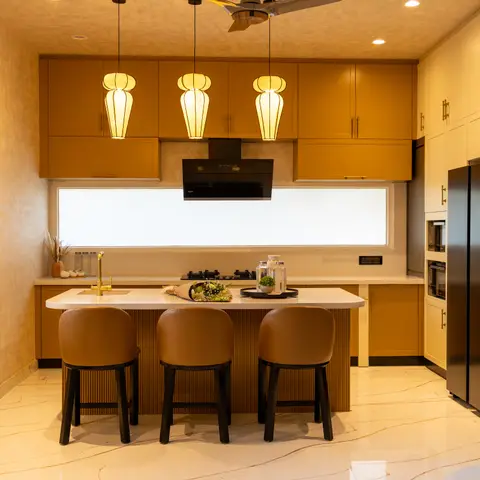
Where each grade belongs in a real home
Walk the house once and the map writes itself. The kitchen gets BWR everywhere, BWP for the sink unit. Bathroom vanities: BWP if water splashes directly, BWR otherwise. Utility and any balcony-exposed storage: BWP. Wardrobes, beds, study tables, TV and crockery units in conditioned rooms: MR is adequate, BWR is comfortable. Coastal flats and rooms with a seepage history: shift everything one grade up, because there humidity behaves like water.
Plywood grade is only one axis of the board decision — whether to use plywood at all, versus MDF, HDHMR or particle board, is the other. That trade-off, with load and span behaviour, is covered in plywood vs MDF vs particle board and the newer HDHMR vs plywood vs MDF comparison.
Frequently asked questions
What is the difference between BWR and BWP plywood?
The glue and the standard. BWR (boiling water resistant, IS 303) uses phenolic resin and handles splashes, steam and wet wiping — right for kitchens and vanities. BWP (boiling water proof, IS 710, sold as marine ply) uses richer phenol-formaldehyde bonding and denser cores, and survives actual soaking. BWP costs ₹30–50 more per sq ft and is only necessary where water can sit.
Is marine plywood necessary for a kitchen?
Only in parts. The under-sink unit and utility-area cabinets genuinely benefit from BWP because leaks and standing water happen there. The rest of the kitchen — wall units, drawers, tall units — lives with steam and splashes, which BWR is designed for. Speccing marine ply for the entire kitchen typically adds thousands of rupees per cabinet run without adding real protection.
What does IS 303 mean on a plywood quote?
IS 303 is the Bureau of Indian Standards specification for general-purpose plywood; both MR and BWR grades fall under it. So "IS 303" alone does not tell you the grade — insist the quote say "IS 303 BWR" or "IS 303 MR". IS 710 is the separate marine-plywood standard. The IS number plus grade plus brand is the testable promise; "waterproof ply" is not.
How do I check the plywood grade on site?
Look for the stamp on the sheet edge — brand, grade and IS code are printed there on genuine branded material. Ask for photos of stamped, uncut sheets at delivery. If you want to go further, boil a small offcut: MR ply delaminates quickly, BWR endures hours, true BWP is barely affected. Grades are invisible after lamination, so verify before cutting begins.
Which plywood grade is right for a wardrobe?
MR is adequate for wardrobes in dry, conditioned bedrooms, and it saves ₹25–40 per sq ft over BWR. Choose BWR if the wall backs a bathroom, faces heavy monsoon exposure, or the home has any seepage history. Marine ply in a bedroom wardrobe is an upsell — wardrobe failures come from hardware and workmanship, almost never from glue grade.
Want a real estimate for your home?
Share your home in 2 minutes. We'll match you with designers in your city and give you a BOQ-level estimate before any work begins.
Share your home →