PU vs Laminate vs Veneer: Wardrobe and Panel Finishes Compared
PU paint costs 2-3x laminate and buys seamless, repairable colour; veneer buys real wood; laminate stays the value king. Where each finish earns its place in a 2026 budget.
The short version: PU costs 2–3x laminate and buys you a paint-grade, seamless finish that can be repaired; veneer costs 2–2.5x laminate and buys you real wood; laminate remains the value king for 80% of surfaces. In 2026, expect roughly ₹250–450 per sq ft of shutter area for good branded laminate, ₹700–1,200 for veneer including polish, and ₹900–1,400 for a proper 5–7 coat PU job. Most comparisons you will find are written by a laminate brand, a paint company or a veneer seller, each declaring itself the winner; this is the neutral version, including the re-coat and repair story none of them lead with.
What PU actually is (and is not)
PU stands for polyurethane paint. A PU finish is not a sheet stuck onto the shutter; it is automotive-style paint sprayed onto an MDF or plywood panel in multiple coats, sanded between coats, then sealed with a clear topcoat. Done properly it takes 5–7 coats and several days per batch, which is most of why it costs what it costs.
Two consequences follow. First, PU is seamless; there are no edges or bands, and grooved, curved or routed shutters carry the finish continuously, which no sheet material can do. Second, PU is repairable; a scratched or chipped shutter can be sanded and re-sprayed to look new, something impossible with laminate and difficult with veneer.
The catch is that "PU finish" on a quotation covers everything from a two-coat spray over primer to a genuine seven-coat job. The gap shows up in year three, not on handover day.
The three finishes side by side
| Laminate | Veneer | PU paint | |
|---|---|---|---|
| 2026 rate (per sq ft, shutter area) | ₹250–450 | ₹700–1,200 | ₹900–1,400 |
| What it is | Printed sheet, pressed on | Real wood slice, polished | Sprayed paint system |
| Look | Very good imitation | Genuine wood depth, unique grain | Solid colour, seamless, matte or gloss |
| Edges | Visible edge-band | Lipped and polished | None; continuous |
| Repair | Replace the shutter | Sand and re-polish | Sand and re-spray |
| Scratch behaviour | Most resistant | Shows dents, polishable | Shows scuffs, resprayable |
| Humidity | Excellent if edge-sealed | Good with maintained polish | Excellent; fully sealed |
| Colour/pattern range | Thousands, incl. woodgrain and stone | Only wood, and only nature's batch | Any solid colour, no patterns |
| Aging | Stable, can look dated | Ages gracefully, can be refreshed | Gloss can show swirl marks over years |
Prices are honest market ranges for metro India in 2026; a heavily grooved shutter design pushes PU towards the top of its band because every groove multiplies spray and sanding time.
Where each one justifies itself
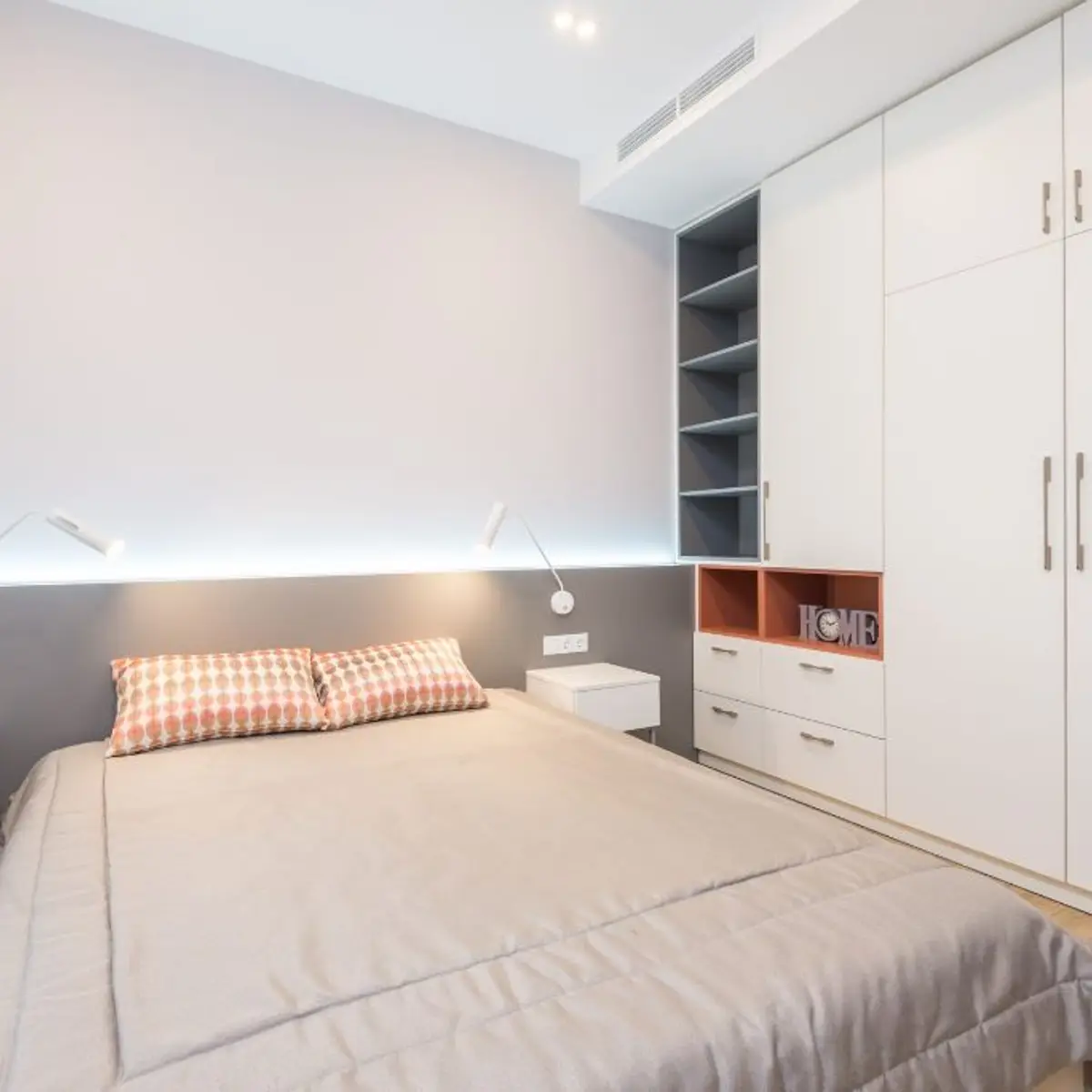
Laminate wins wherever hands land daily: wardrobe shutters in kids' rooms, loft shutters, inner carcasses, rental flats, any project where the budget must stretch across a full home. The wardrobe is usually the single biggest finish-area decision in the house; the wardrobe cost per sq ft breakdown shows how shutter finish alone can swing a 7 ft wardrobe by ₹40,000 or more.
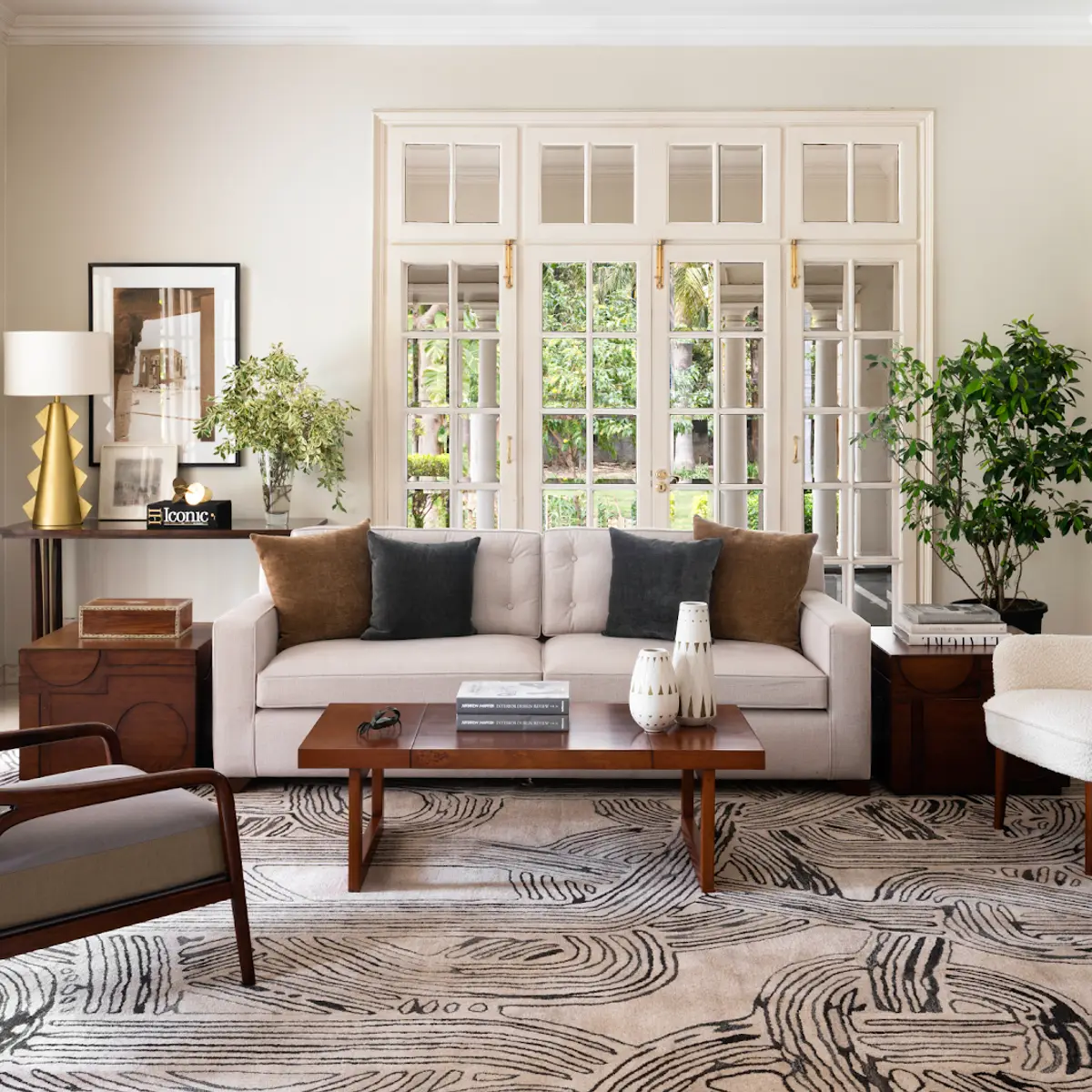
Veneer justifies itself where wood is the point: a TV unit feature wall, a study, the living-side face of a crockery unit, a main door. Veneer on a large uninterrupted surface photographs like solid wood at a fraction of the price. It wants a re-polish every 6–10 years to stay rich, and it dislikes being the splash zone next to a sink.
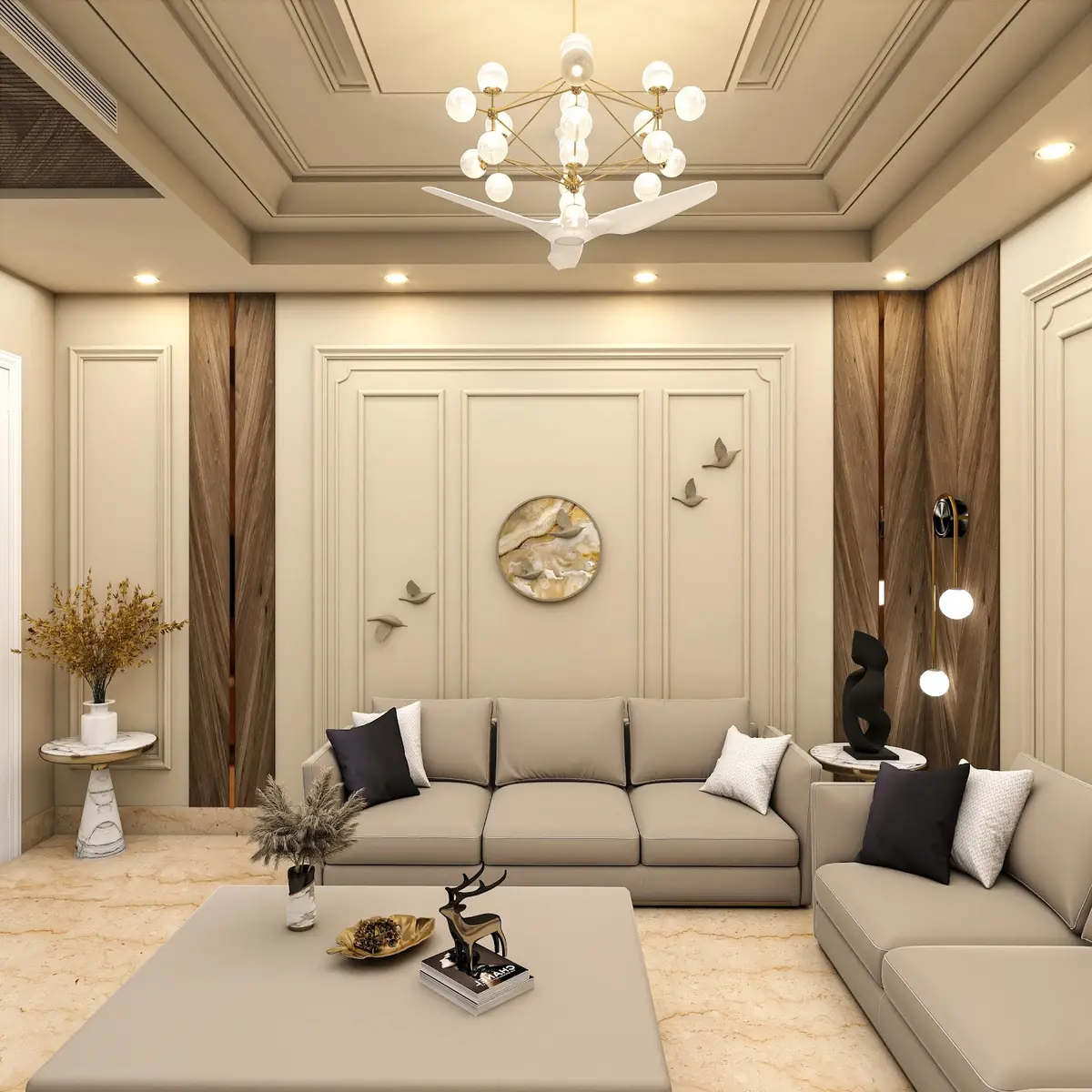
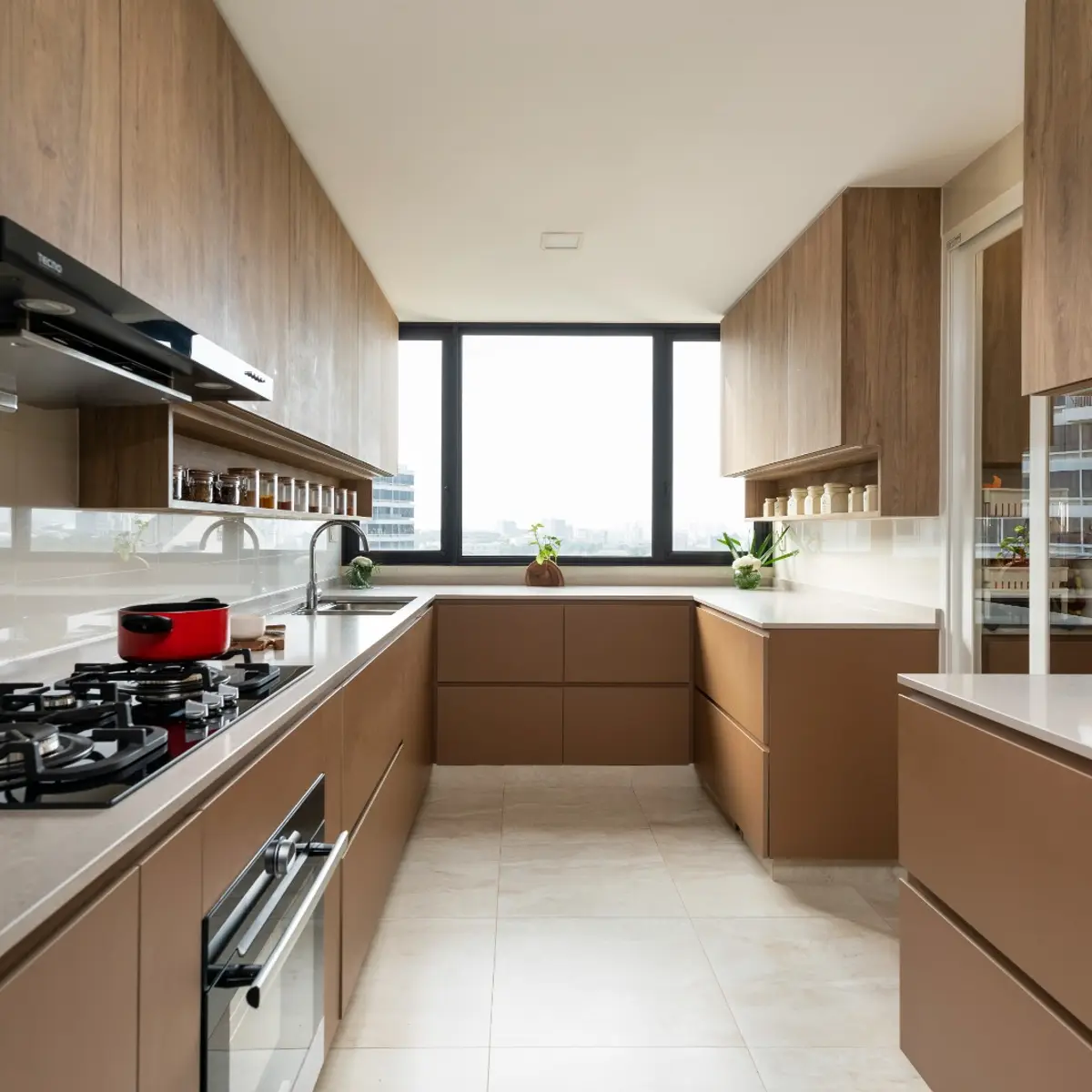
PU justifies itself on shutters with shape: fluted, grooved, arched or handle-integrated designs, and on any surface where you want colour without a repeating printed pattern. A sage green or ivory PU wardrobe wall reads as built-in architecture rather than furniture. It is also the finish of choice under back-painted-glass looks in kitchens where acrylic's limited palette falls short.
Matte vs gloss PU
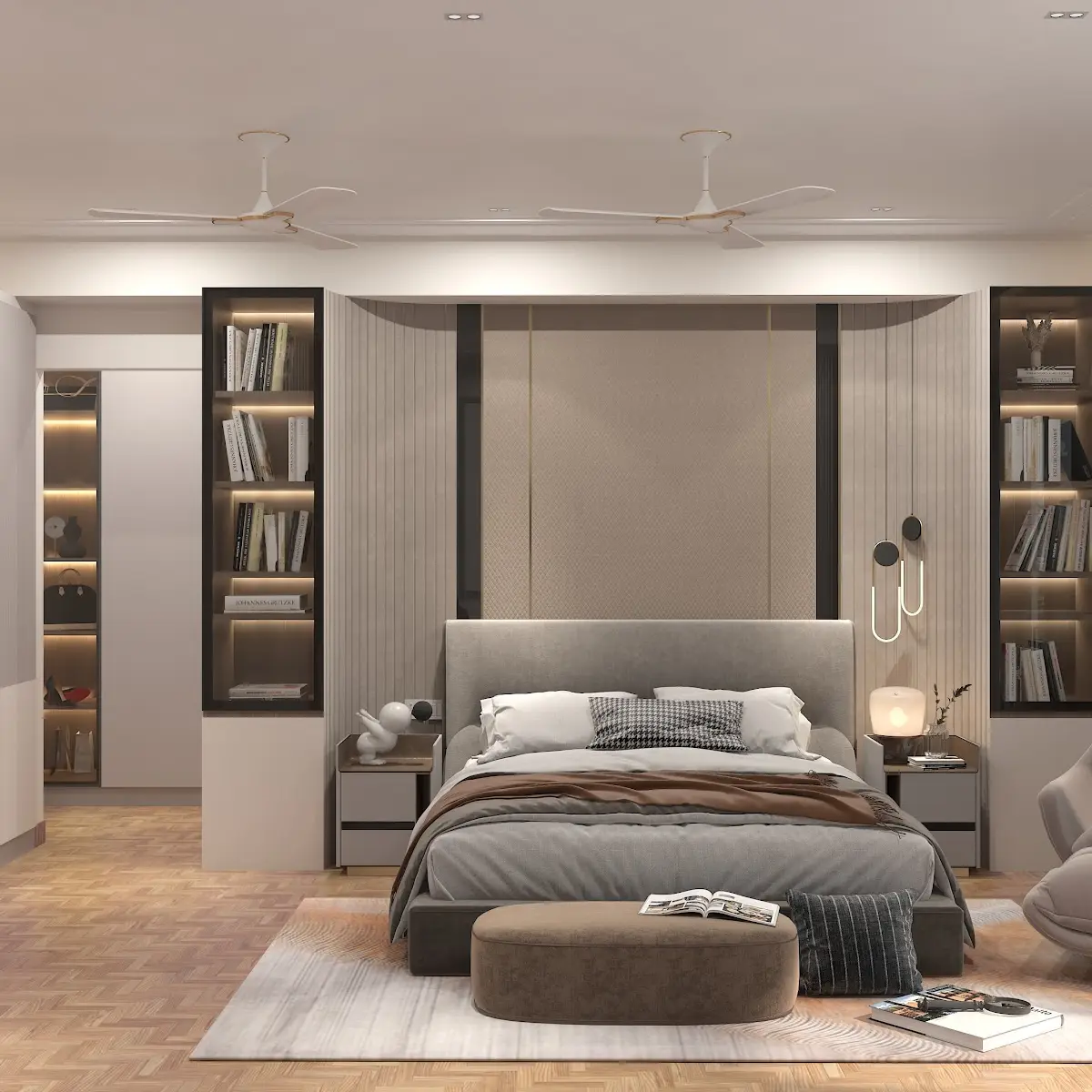
Matte PU is the safer choice in Indian homes. It hides scuffs, fingerprints and the fine swirl marks that daily dusting eventually puts into any painted surface. Gloss PU is spectacular on handover day and unforgiving afterwards; it shows every touch, and unlike acrylic sheet it cannot be buffed aggressively without risking the topcoat. If you want gloss, keep it above hand height or on surfaces nobody touches, and keep base units matte.
There is also a middle sheen, usually sold as "silk" or 30% gloss, which photographs richer than matte while staying forgiving. Ask to see all three sheens on the same colour before deciding; the same ivory reads warm in matte and clinical in gloss.
The board underneath matters as much as the finish
PU and veneer both demand a flat, stable substrate. PU is normally sprayed on MDF or HDHMR because plywood's grain can telegraph through paint; veneer is pressed on ply or MDF and then polished. This means your finish choice quietly constrains your board choice, and the trade-offs of that decision, from screw-holding to monsoon swelling, are covered in the plywood vs MDF vs particle board referee's guide. A ₹1,200 per sq ft PU finish on a board that swells at the first humid season is money sprayed away.
The honest re-coat and repair story
Sellers of each material describe the other two at their worst. Here is the fair version over a 10-year life.
Laminate needs nothing, ever, but a damaged shutter is a replaced shutter, and matching a discontinued laminate five years later is a lottery; keep the code, or accept that one wardrobe door will be a near-match.
Veneer wants care: coasters, no standing water, a professional re-polish (₹80–150 per sq ft) once or twice a decade. In exchange it is the only finish that genuinely improves with age, and a 15-year-old veneer unit can be sanded back to new.
PU can be locally touched up, but a good colour match needs the original painter or the colour code, and a full re-spray means shutters go back to the factory for days. Budget a small re-spray (₹5,000–10,000 for a couple of shutters) somewhere in years 5–8 for high-touch areas.
Deciding across a whole home
The mistake is choosing one finish for everything. Homes that feel expensive mix them deliberately: laminate across the high-wear bulk, veneer on one or two wood statements, PU where shape and colour matter. A practical split for a 3 BHK is roughly 70% laminate, 15% veneer, 15% PU by surface area; the blended cost stays sane while every visible focal point gets the premium treatment. If you want to see the mix before committing, generate an AI design for your own floor plan and look at where the eye actually lands in each room; those are your veneer and PU candidates, and the estimate that comes with it shows what the mix does to the total. Treat that number as an estimate; the final word is always your designer's or contractor's quotation.
Frequently asked questions
What is PU finish in furniture?
PU is polyurethane paint sprayed onto MDF or plywood shutters in 5-7 coats with sanding between each, then sealed with a clear topcoat, the way car bodies are painted. It gives a seamless surface with no edges or bands, carries any solid colour in matte or gloss, and flows continuously over grooved and routed shutter designs that sheet materials cannot follow.
Is PU finish better than laminate?
It is better looking and repairable, not tougher. PU gives a seamless, edge-free, any-colour surface and a scratched shutter can be re-sprayed to new. Laminate at a third of the price resists scratches better, needs zero maintenance and offers woodgrain and stone patterns PU cannot. For high-wear bulk surfaces laminate wins; for focal shutters with shape and colour, PU does.
What does PU finish cost per sq ft in 2026?
A genuine 5-7 coat PU job runs Rs 900-1,400 per sq ft of shutter area in Indian metros in 2026, against Rs 250-450 for branded laminate and Rs 700-1,200 for veneer including polish. Heavily grooved designs sit at the top of the band because every groove adds spray and sanding time. Cheap two-coat sprays sold as PU age visibly by year three.
Is veneer high maintenance?
Mildly. Veneer wants coasters, no standing water and a professional re-polish at Rs 80-150 per sq ft once or twice a decade. In exchange it is the only finish that improves with age; a 15-year-old veneer unit sands back to new. Keep it away from sink splash zones and it is a dependable, genuinely premium surface.
Should I choose matte or gloss PU?
Matte for most Indian homes. It hides scuffs, fingerprints and the fine swirl marks daily dusting eventually creates, while gloss shows every touch and cannot be buffed hard without risking the topcoat. If you want gloss, keep it above hand height or on untouched surfaces. The middle silk sheen, around 30% gloss, is a forgiving compromise.
Want a real estimate for your home?
Share your home in 2 minutes. We'll match you with designers in your city and give you a BOQ-level estimate before any work begins.
Share your home →