Sliding vs openable wardrobe: the 30% premium, measured
Sliding shutters cost 25-35% more than hinged at the same finish. Pay it when the gap between wardrobe and bed is under 2.5 ft — skip it everywhere else.
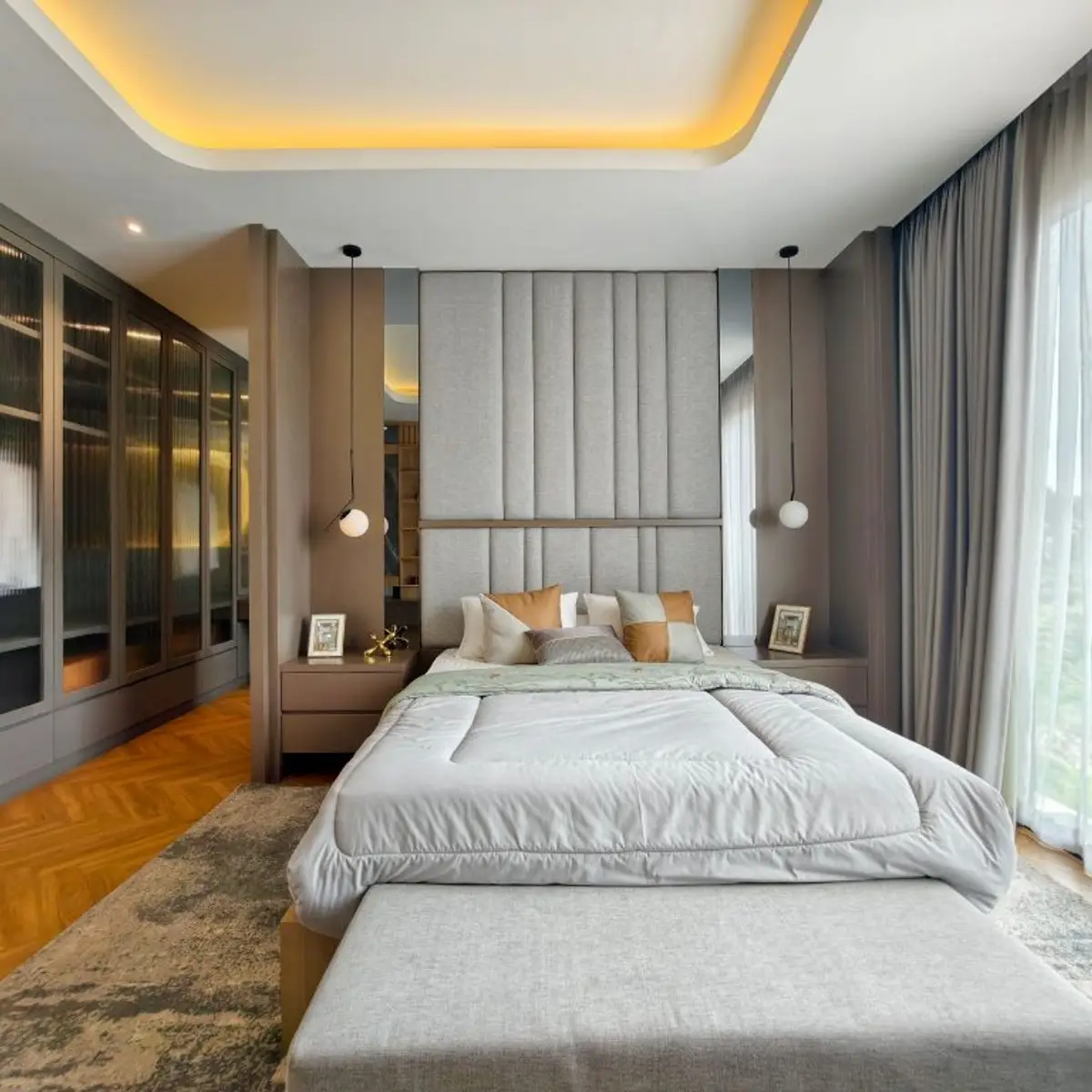
The sliding premium is real, and smaller than the showrooms imply: at the same laminate finish, sliding shutters cost roughly 25–35% more than openable (hinged) ones — about ₹25,000–45,000 extra on a standard 7 ft wardrobe in 2026. Pay it when geometry forces your hand: if the gap between the wardrobe face and the bed is under about 2.5 ft, hinged doors stop being usable, and in most 10x10 Indian bedrooms with a queen bed, that is exactly what happens. Where the room breathes, keep hinged — it is cheaper to buy, far cheaper to repair, opens fully, and gives you mirror and hook space inside the doors. Here is the premium measured width by width, and the clearance math to run before you decide.
The price delta, measured by width
These are 2026 market ranges for a 7 ft tall wardrobe in standard laminate finish with a BWR ply carcass, fabricated locally or by a mid-market modular vendor. Premium finishes shift both columns up but the percentage gap holds.
| Wardrobe width | Hinged (openable) | Sliding | Typical premium |
|---|---|---|---|
| 6 ft (3 door / 2 panel) | ₹75,000–1,10,000 | ₹95,000–1,40,000 | 25–30% |
| 8 ft (4 door / 2–3 panel) | ₹1,00,000–1,40,000 | ₹1,30,000–1,80,000 | 28–32% |
| 10 ft (5 door / 3 panel) | ₹1,30,000–1,70,000 | ₹1,60,000–2,20,000 | 30–35% |
Where does the extra money go? Three places: the channel-and-roller mechanism (₹6,000–15,000 for a decent set, more for top-hung imported hardware), aluminium profiles framing each panel, and heavier shutters — sliding panels are larger and need stiffer board. For how the wardrobe's finish and carcass choices move these numbers further, the wardrobe cost per sq ft guide breaks the rate down layer by layer.
For context on where this sits in a full room: across 122 bedrooms in completed AI estimates on HeyBuddy (Aug–Sep 2026), the median bedroom estimate — wardrobe included — was ₹3.89 lakh. The sliding premium alone can be a tenth of that, which is why it deserves a deliberate yes.
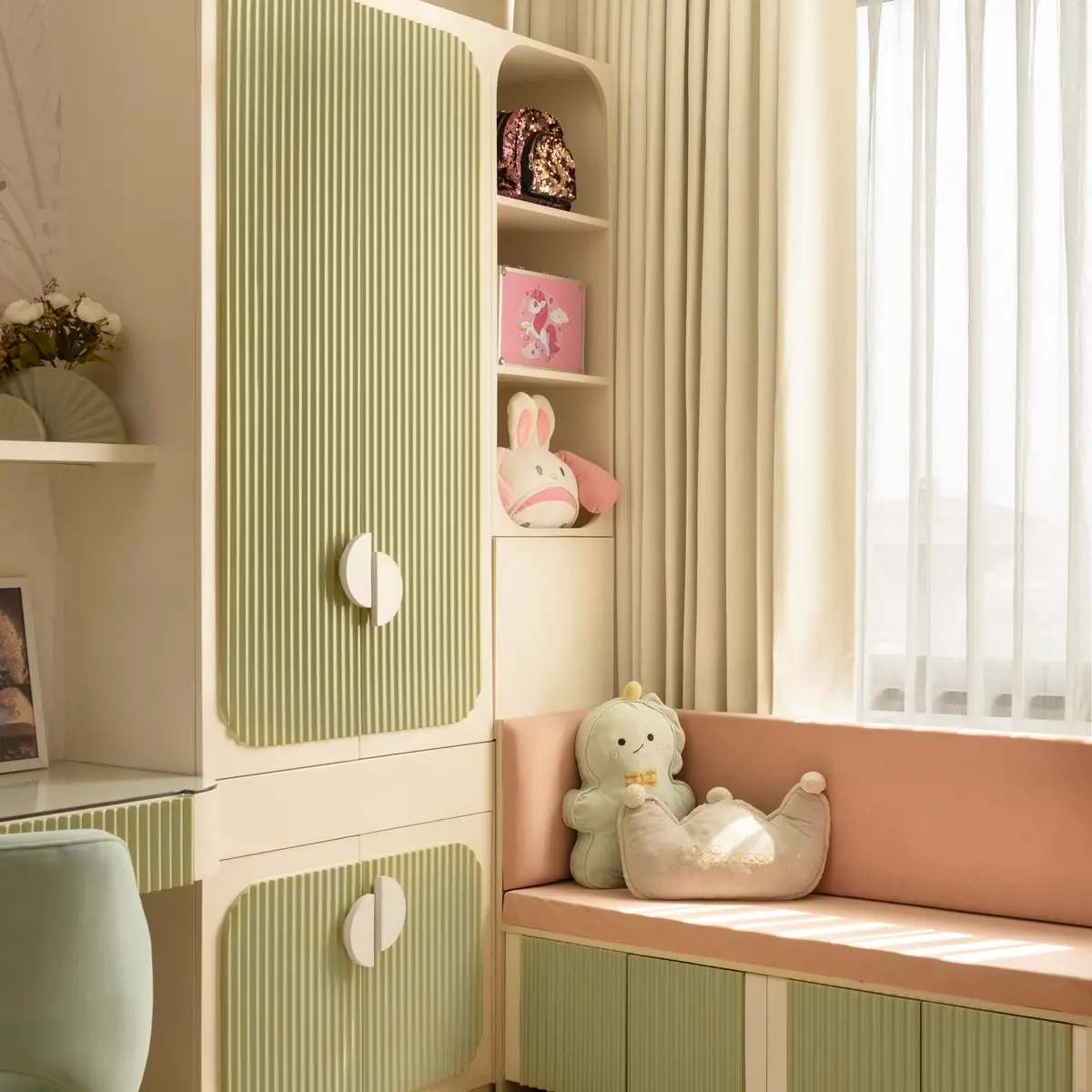
The clearance math that forces sliding
A hinged shutter is typically 18–24 inches wide. To use it you need the door's full swing plus a human standing in the arc — call it 3 ft of clear depth in front of the wardrobe.
Now run a real room. A 10x10 bedroom, wardrobe on the wall facing the bed. Wardrobe depth is 2 ft. A queen bed is 6.5 ft long including the headboard. That leaves 10 − 2 − 6.5 = 1.5 ft of gap. A hinged door physically cannot open past the mattress; you would be opening one shutter at a 40-degree angle and fishing for clothes sideways. This is the situation — common in compact 2 BHKs and kids' rooms — where sliding is not a style choice but the only working answer.
The honest rule: measure the gap between the wardrobe face and the nearest obstruction (bed, dresser, wall). Under 2.5 ft, sliding. Over 3 ft, hinged wins on every other axis. In between, think about who uses the room and how often two doors need to be open at once.
Mechanism lifespan and repair cost
This is the section the brochures skip, and it favours hinged.
Hinges are boring and bulletproof. A decent soft-close hinge is rated for tens of thousands of open-close cycles, and when one finally sags, replacement is a ₹150–400 part and a screwdriver. Any local carpenter fixes it in minutes; you can fix it yourself.
Sliding channels are the opposite. Budget bottom-rolling systems carry the panel's whole weight on small rollers running in a floor track; the track collects dust and grit, rollers wear, and the first symptom is a panel that drags or derails. Top-hung systems ride better and keep the floor track clean, but cost more up front. A roller or track repair typically runs ₹1,500–4,000 with a technician visit, and on obscure imported profiles, matching spares can take weeks. Buy branded hardware (Hettich, Häfele, Ebco and peers) precisely so future spares exist.
Soft-close economics
Soft-close is cheap insurance on hinged wardrobes: the hinge upgrade adds roughly ₹2,000–4,000 across a full wardrobe's 8–12 hinges, ends slamming, and extends shutter life. Take it.
On sliding wardrobes, soft-close dampers cost ₹1,500–3,500 per pair of panels. They matter more than they sound, because a heavy sliding panel shutting hard hammers the end-stop and gradually knocks the alignment out. If the budget forces a choice, put the soft-close money on sliding, not hinged — the mechanism it protects is the expensive one.
What sliding costs you beyond money
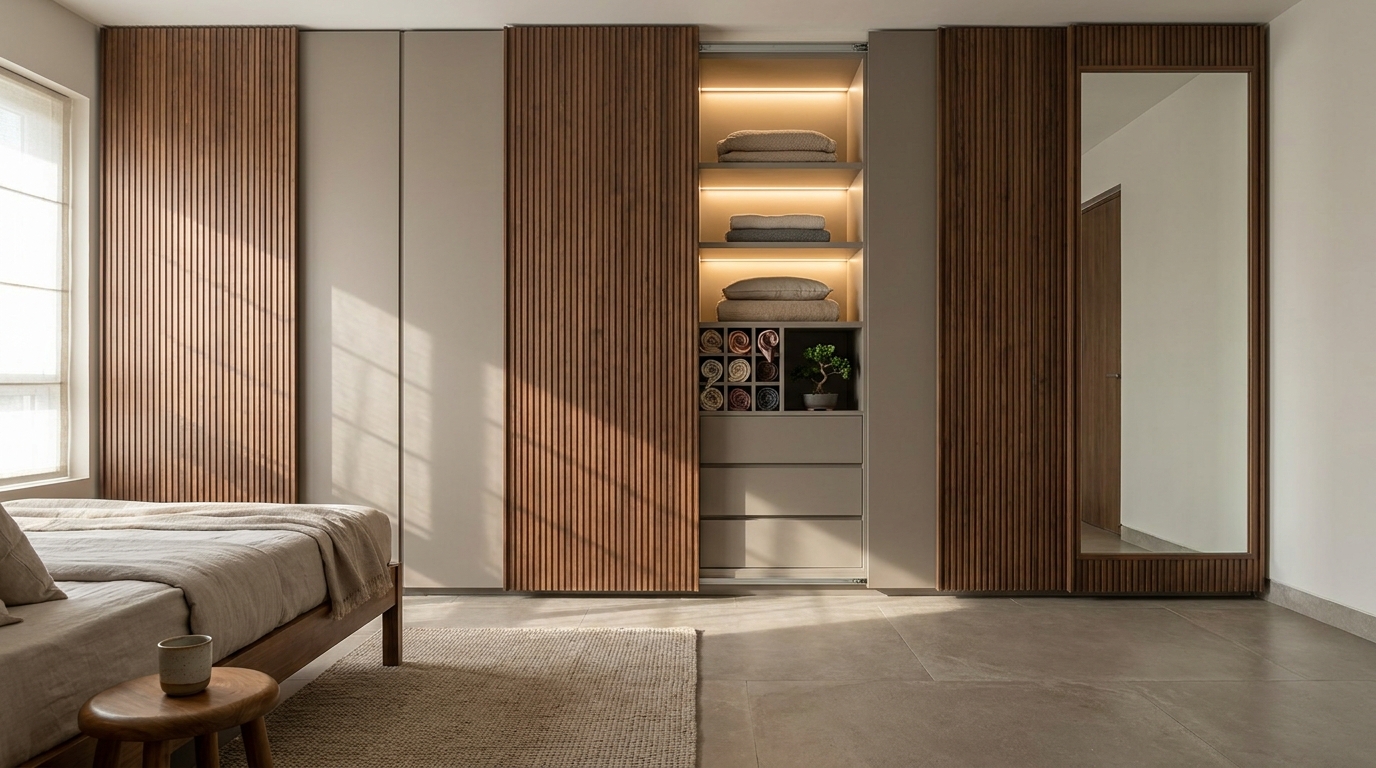
Three quiet trade-offs. You can only open half the wardrobe at a time — one panel always covers another, which is genuinely annoying while packing or when two people share the wardrobe on a workday morning. The inside of the doors is dead space — no full-length mirror, no tie or belt hooks, no jewellery pouches; a mirror has to go on the panel face instead, which some homes love and some do not. Tracks need cleaning — a monthly wipe of the bottom channel is the difference between a 10-year mechanism and a 4-year one.
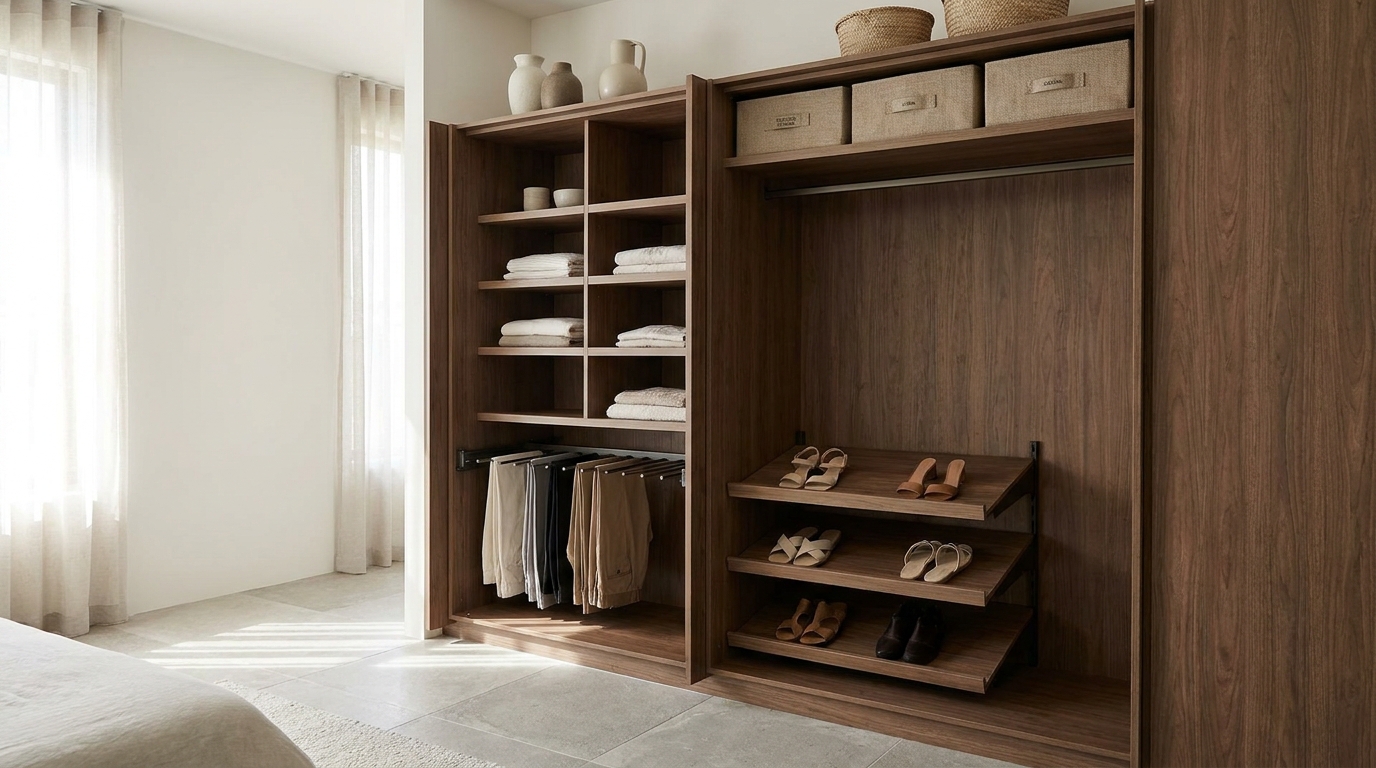
Hinged gives all of that back, at the price of swing space and a busier-looking run of shutters.
The verdict
Let the room decide, then the users. Gap under 2.5 ft: sliding, with branded top-hung hardware and soft-close. Gap over 3 ft: hinged, soft-close, and spend the saved ₹30,000-odd on better internals — drawers, a loft, or the finish upgrade you were told you could not afford. Browse real wardrobe walls in both styles in our bedroom design ideas gallery, and if you are still speccing the room, an AI estimate will price your exact wardrobe wall both ways before any carpenter quotes it.
Frequently asked questions
How much more does a sliding wardrobe cost than an openable one?
At the same finish, plan for a 25–35% premium in 2026. A 7 ft tall, 8 ft wide laminate wardrobe runs ₹1,00,000–1,40,000 hinged versus ₹1,30,000–1,80,000 sliding. The gap comes from the roller-and-channel mechanism, aluminium panel profiles and heavier shutters. The percentage holds fairly steady across widths; premium finishes raise both numbers.
Is a sliding wardrobe better for a small bedroom?
Usually, yes — and often it is the only workable option. Hinged doors need about 3 ft of clear swing space in front of the wardrobe. In a 10x10 room with a queen bed, the gap between bed and wardrobe is typically 1.5–2 ft, so hinged shutters cannot open past the mattress. Measure that gap: under 2.5 ft, choose sliding.
Which lasts longer, sliding or hinged wardrobes?
Hinged mechanisms age better. Quality hinges survive decades and cost ₹150–400 apiece to replace, a five-minute job. Sliding systems depend on rollers and tracks that collect dust and wear; repairs run ₹1,500–4,000 and need a technician, and spares for unbranded profiles can be hard to find. With branded top-hung hardware and clean tracks, sliding lasts well too — it just fails more expensively.
Are soft-close wardrobes worth the extra cost?
Yes, and more so on sliding. Soft-close hinges add ₹2,000–4,000 to a full hinged wardrobe and stop slamming. Sliding dampers cost ₹1,500–3,500 per pair of panels and protect the alignment of a heavy panel hitting its end-stop, which is exactly how sliding mechanisms drift out of true. Treat soft-close as mechanism insurance, not luxury.
Can a hinged wardrobe be converted to sliding later?
Rarely worth it. Sliding needs a top and bottom track, aluminium-framed panels sized differently from your existing shutters, and a carcass built to carry the hardware — so a conversion means new shutters and tracks on an old box, costing 60–80% of a fresh sliding wardrobe. If clearance may become a problem (a bigger bed is coming), choose sliding at build time.
Want a real estimate for your home?
Share your home in 2 minutes. We'll match you with designers in your city and give you a BOQ-level estimate before any work begins.
Share your home →