10 Wardrobe Planning Mistakes That Waste Space (and Money)
Ten planning decisions made before the wardrobe is even built and the ones that quietly waste space for years after.
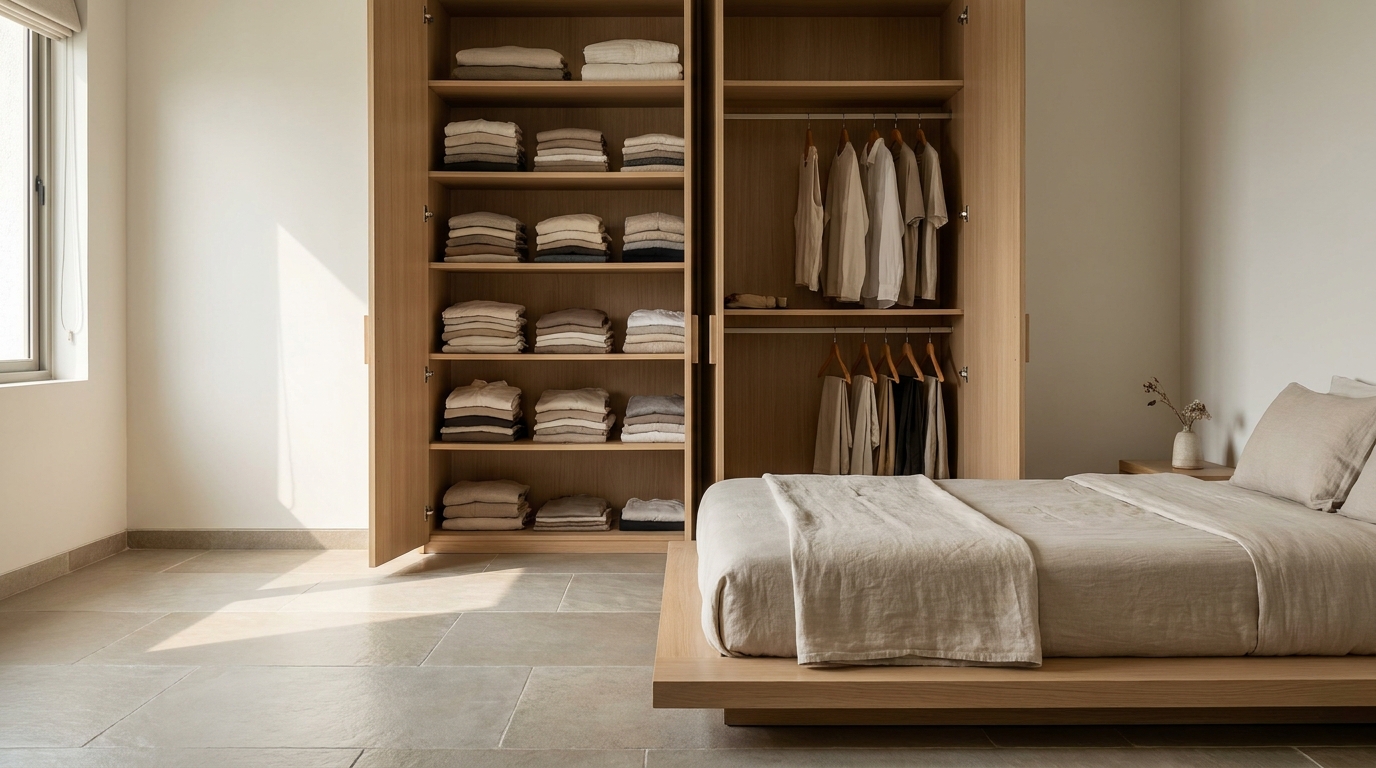
Getting the Shelf-to-Hanging Ratio Wrong
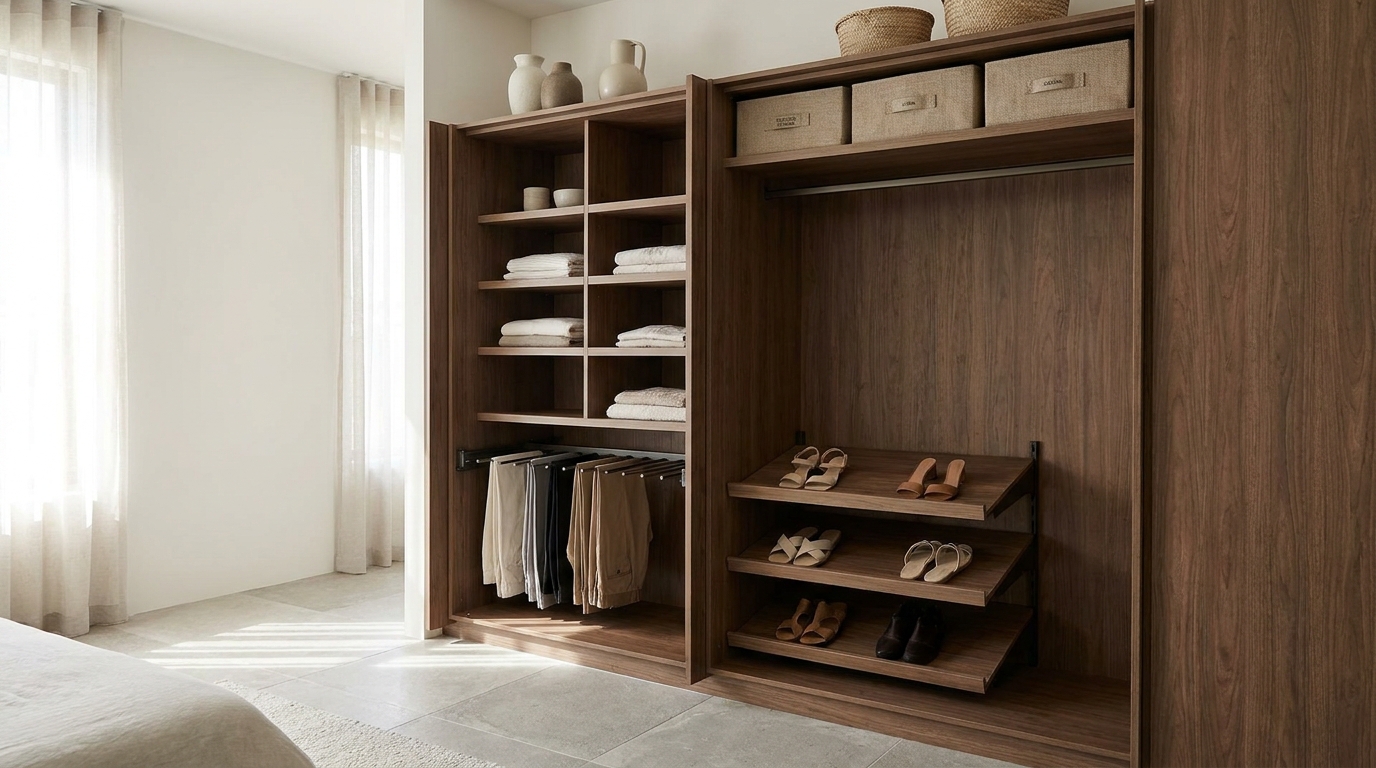
Most wardrobe briefs default to a 50-50 split between shelves and hanging space without actually checking what the household owns. If most clothing is folded (common with Indian everyday wear kurtas, salwars, t-shirts), a wardrobe with too much hanging rail sits half-empty while shelves overflow. Map out roughly what percentage of the wardrobe's contents get folded versus hung before finalizing the layout, not after.
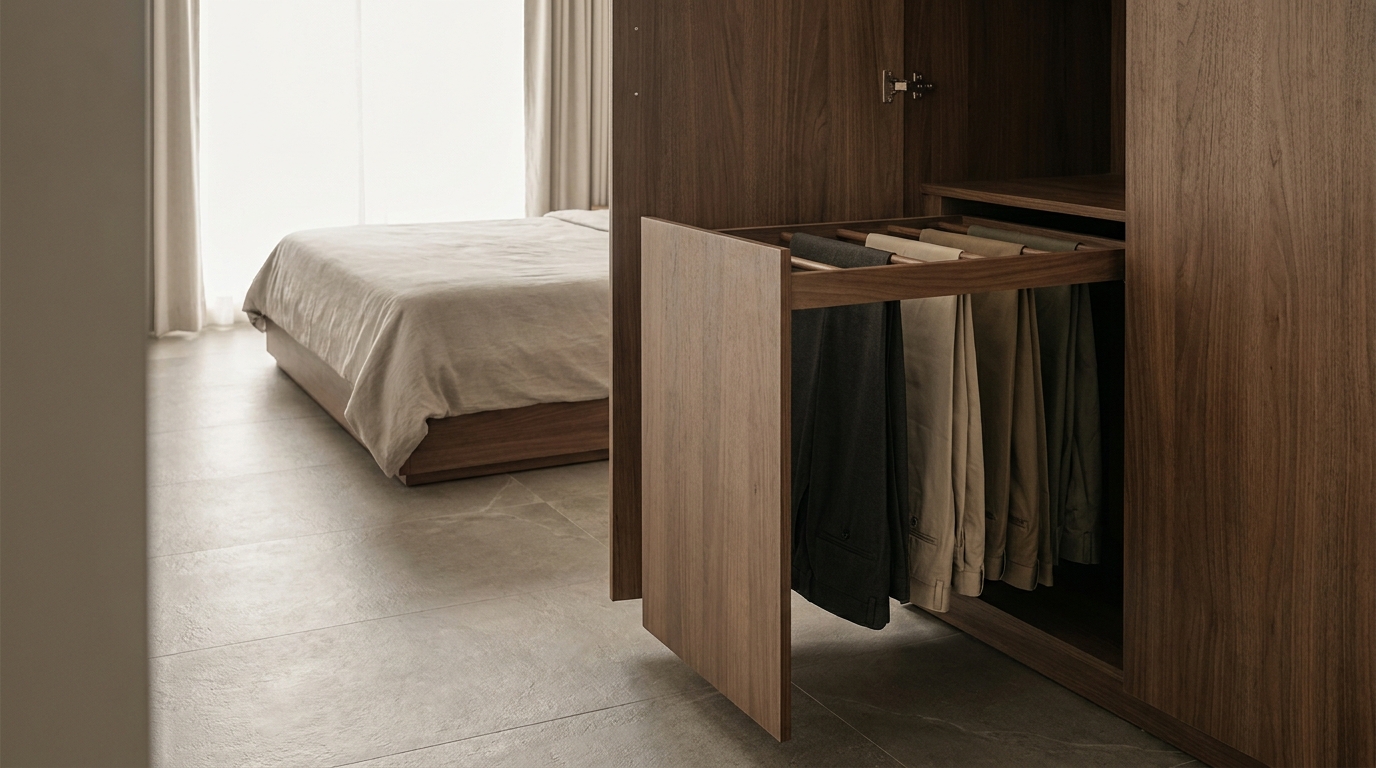
No Pull-Out Rack for Trousers and Formal Wear
Trousers and formal shirts hung on a standard rod tend to slide, crease at the fold point, and get buried behind casual wear. A dedicated pull-out trouser rack even a narrow one, 4-6 slots keeps formal wear separated, wrinkle-free, and visible at a glance, which matters most on exactly the mornings when time is tight.
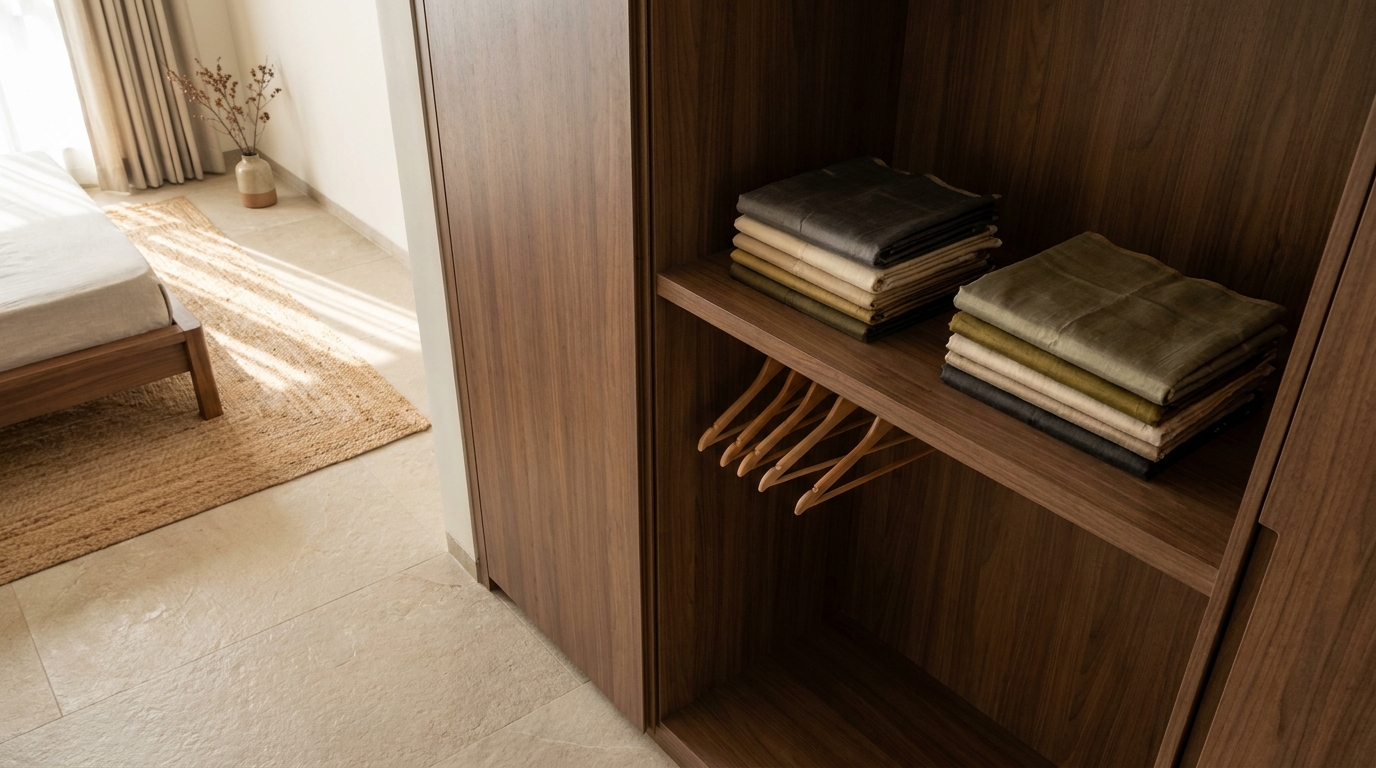
Shelf Depth That Doesn't Account for Sarees and Dupattas
Standard wardrobe shelf depth (around 45-50cm) is fine for folded shirts but often too shallow for sarees, dupattas, and long stoles, which either hang off the edge or get folded into smaller squares that crease badly. A wardrobe brief for an Indian household should include at least one section with shelf depth planned specifically around saree and dupatta dimensions.
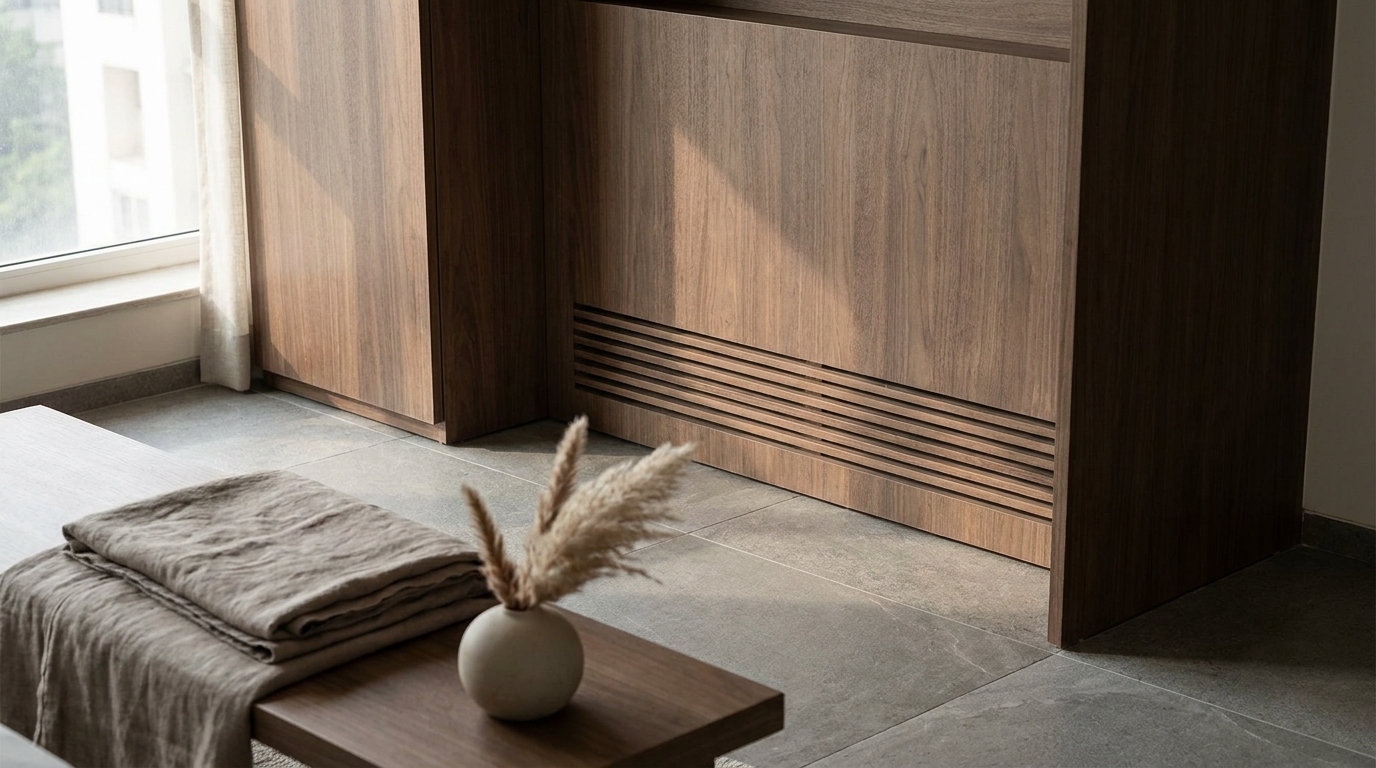
Skipping Ventilation Entirely
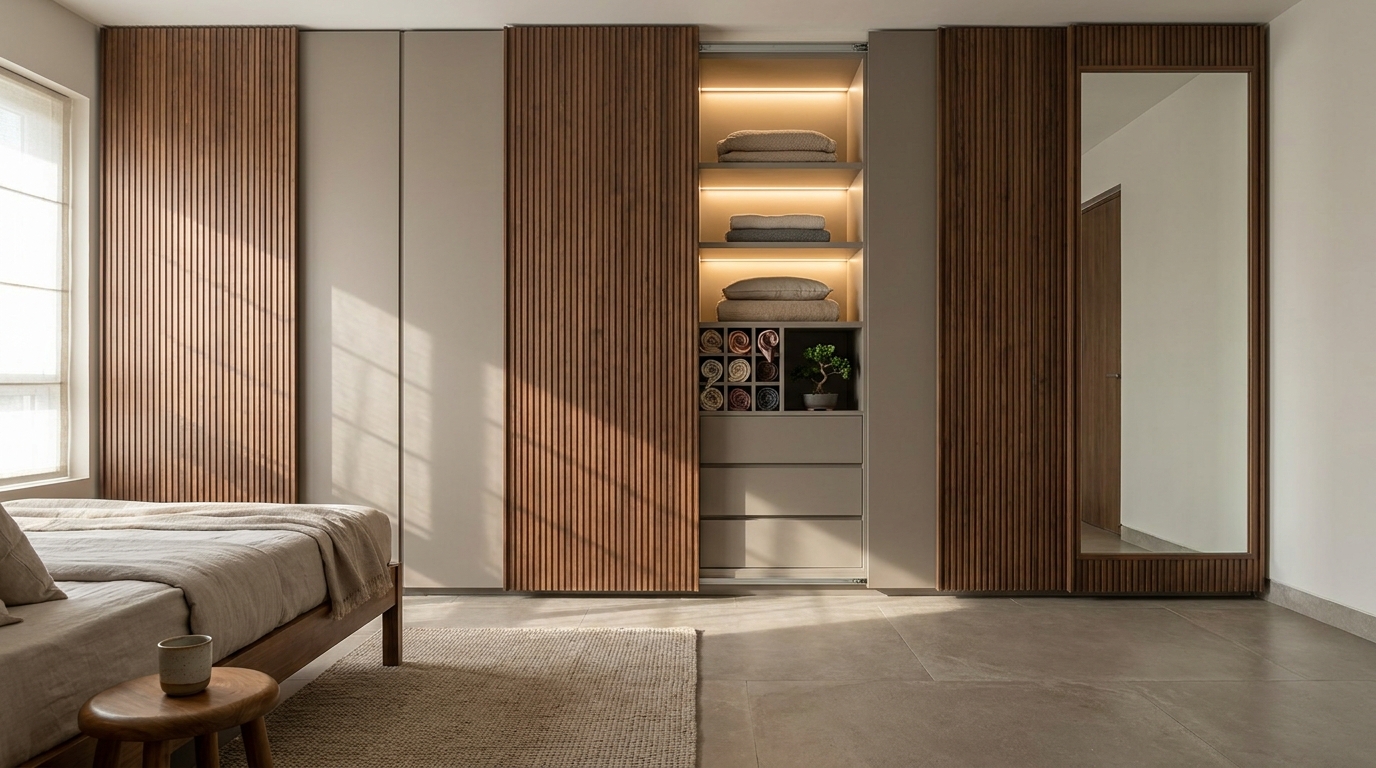
A fully sealed wardrobe especially common with laminate finishes and tight-fitting sliding shutters traps humidity, which in most Indian climates leads to a musty smell and, over time, fabric damage or mold on leather goods. Small ventilation slats or gaps built into the back panel or base allow airflow without compromising the closed look from outside.
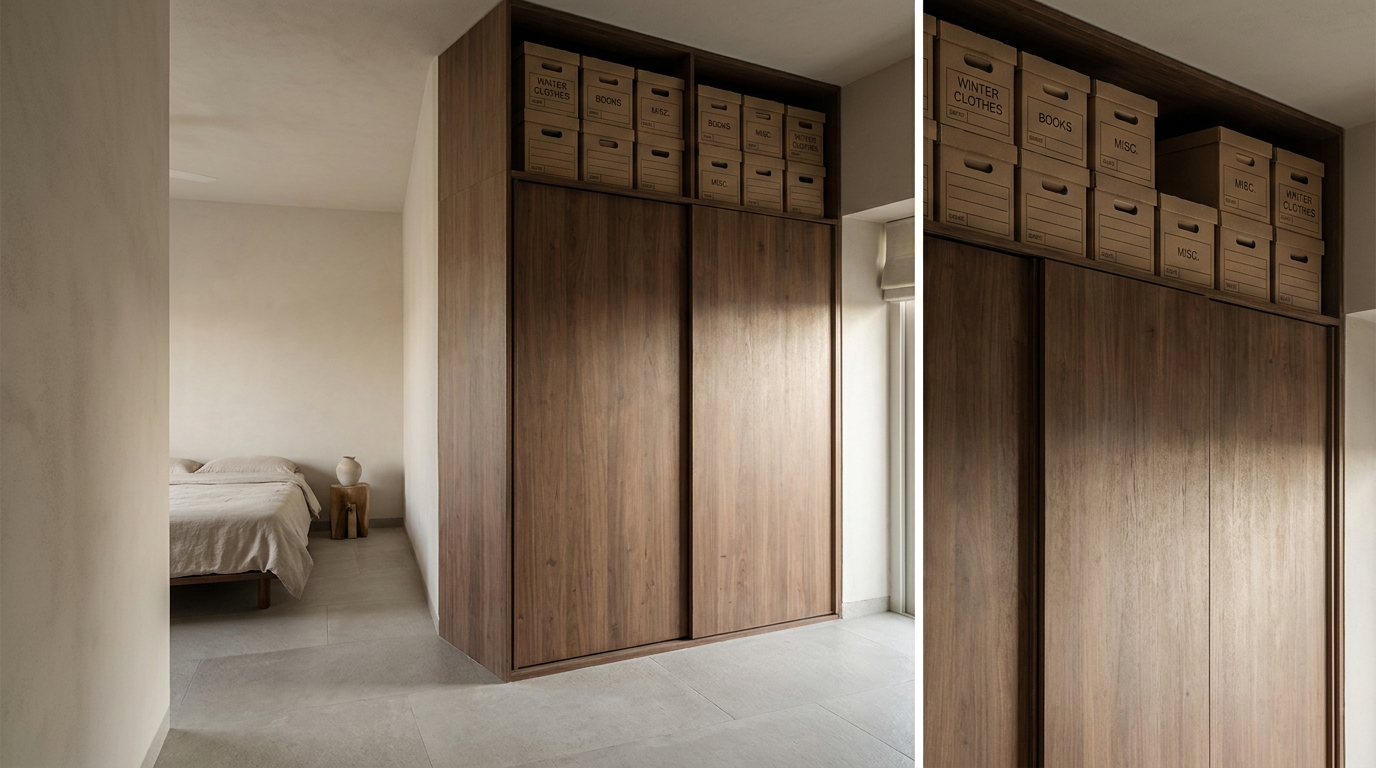
No Real Plan for Off-Season Storage
Winter clothes, festive wear, spare bedding most homes end up stuffing these into whatever gap is left, usually the hardest-to-reach top shelf, in no particular order. A loft storage section, planned from the start with labeled zones, keeps seasonal items accessible without turning the top shelf into a guessing game every October.
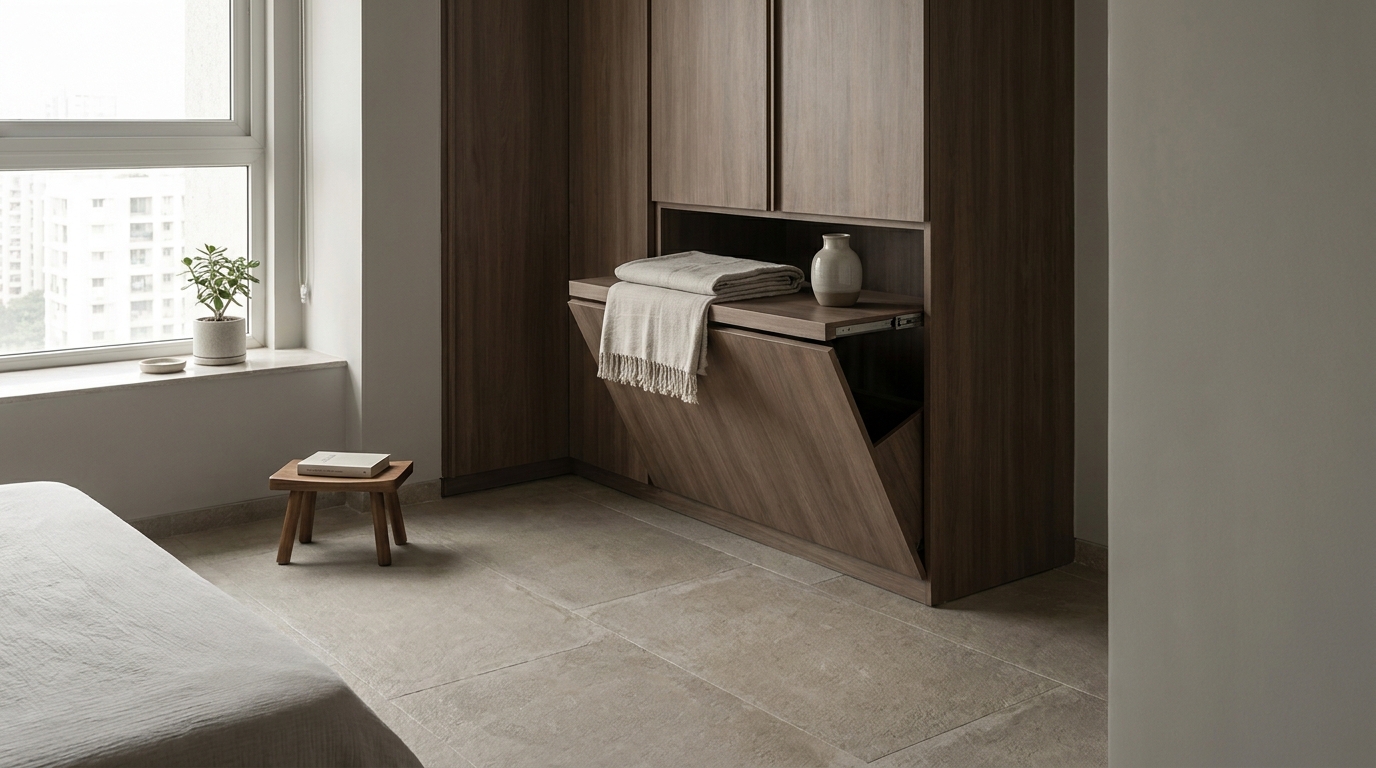
Wasting the Corner When Wardrobes Meet at an Angle
L-shaped bedroom layouts often result in two wardrobe runs meeting at a corner, and that corner is frequently left as dead space or an awkward, hard-to-reach cabinet. A corner carousel unit or angled pull-out shelf reclaims that space for actual use instead of losing it to geometry.
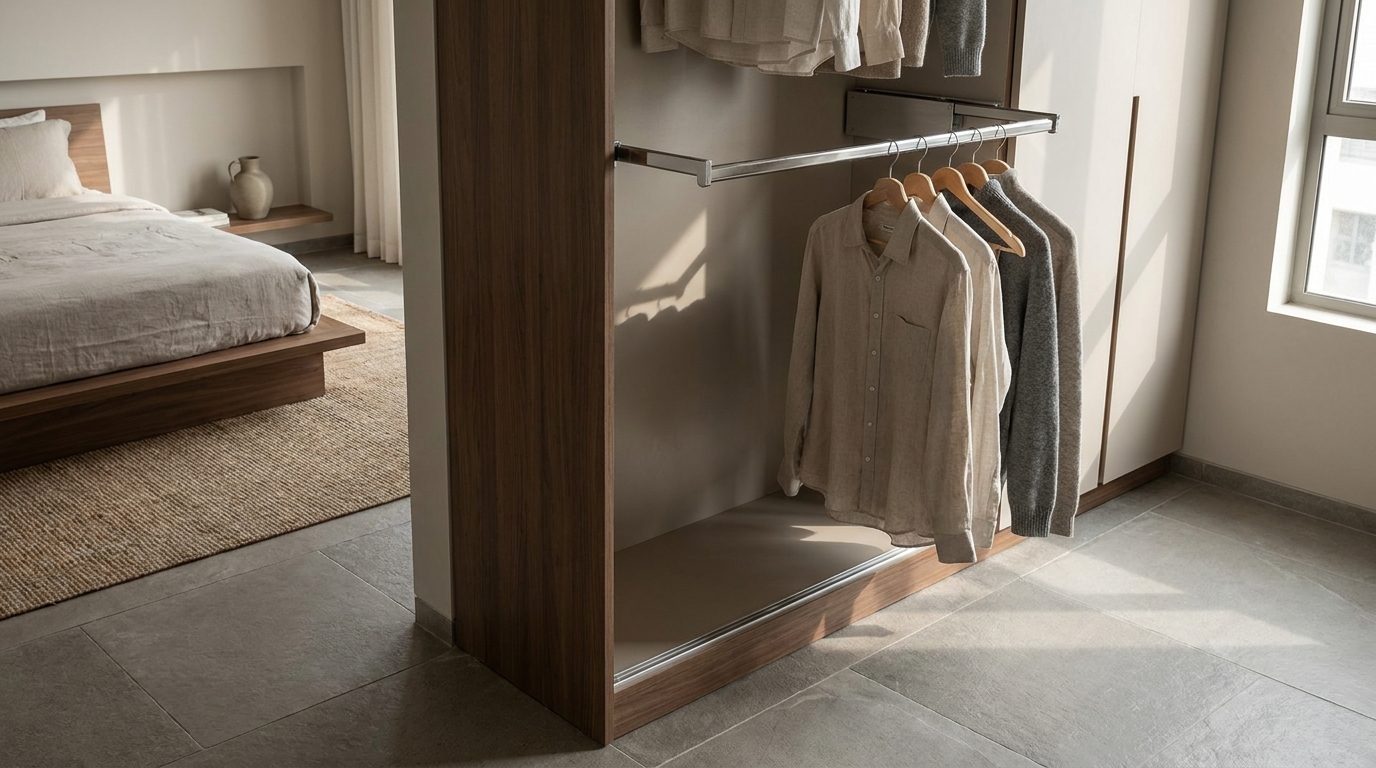
No Pull-Down Rod for High Shelves
Wardrobes that run floor-to-ceiling often put the top section out of comfortable reach, and without a pull-down mechanism, that space either goes unused or requires a step stool every time. A pull-down hanging rod a simple mechanical fitting brings the top section down to a reachable height on demand, then folds back up.
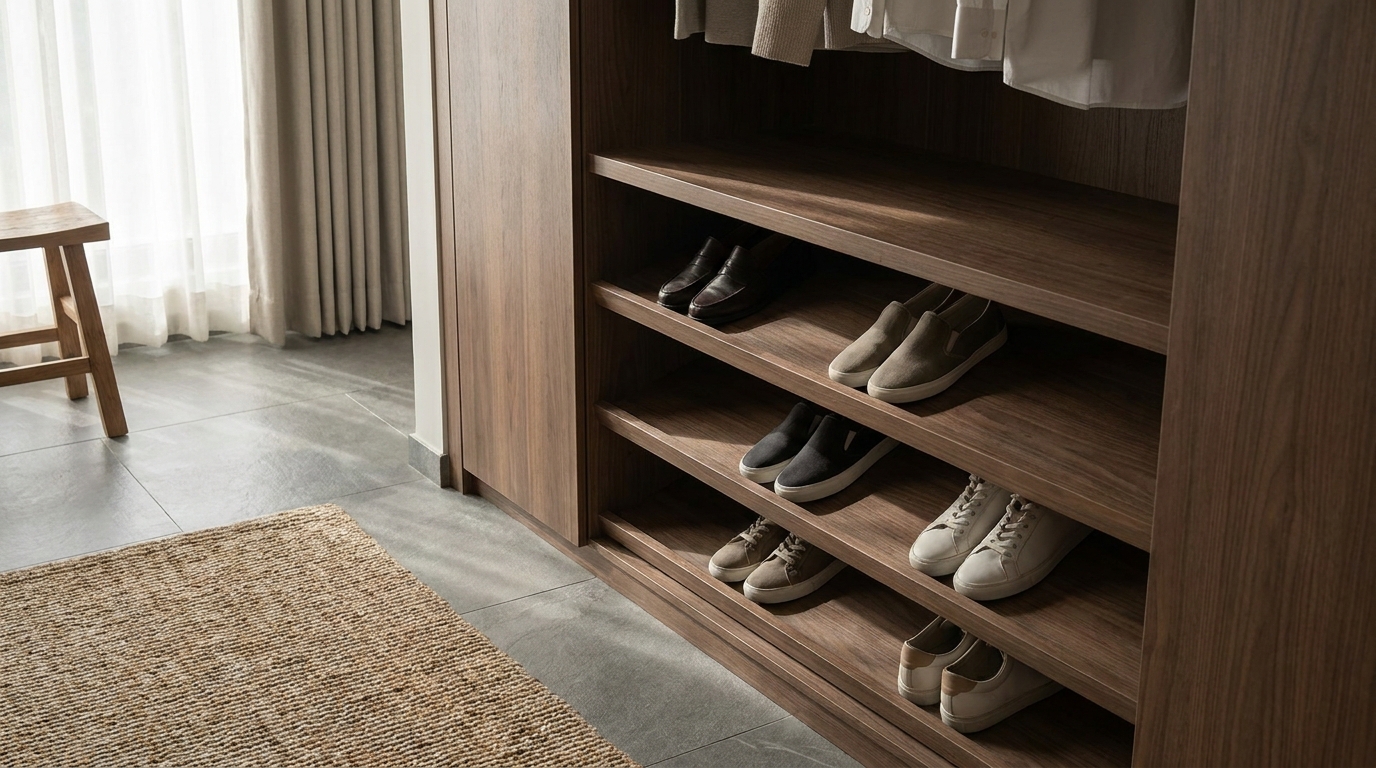
Flat Shoe Shelves Instead of Slanted Ones
A flat shelf for shoes wastes vertical space and makes it hard to see what's stored beyond the front row. Slanted shoe shelving, angled at roughly 15-20 degrees, lets shoes sit visibly toe-down and fits more pairs into the same shelf height than flat storage ever could.
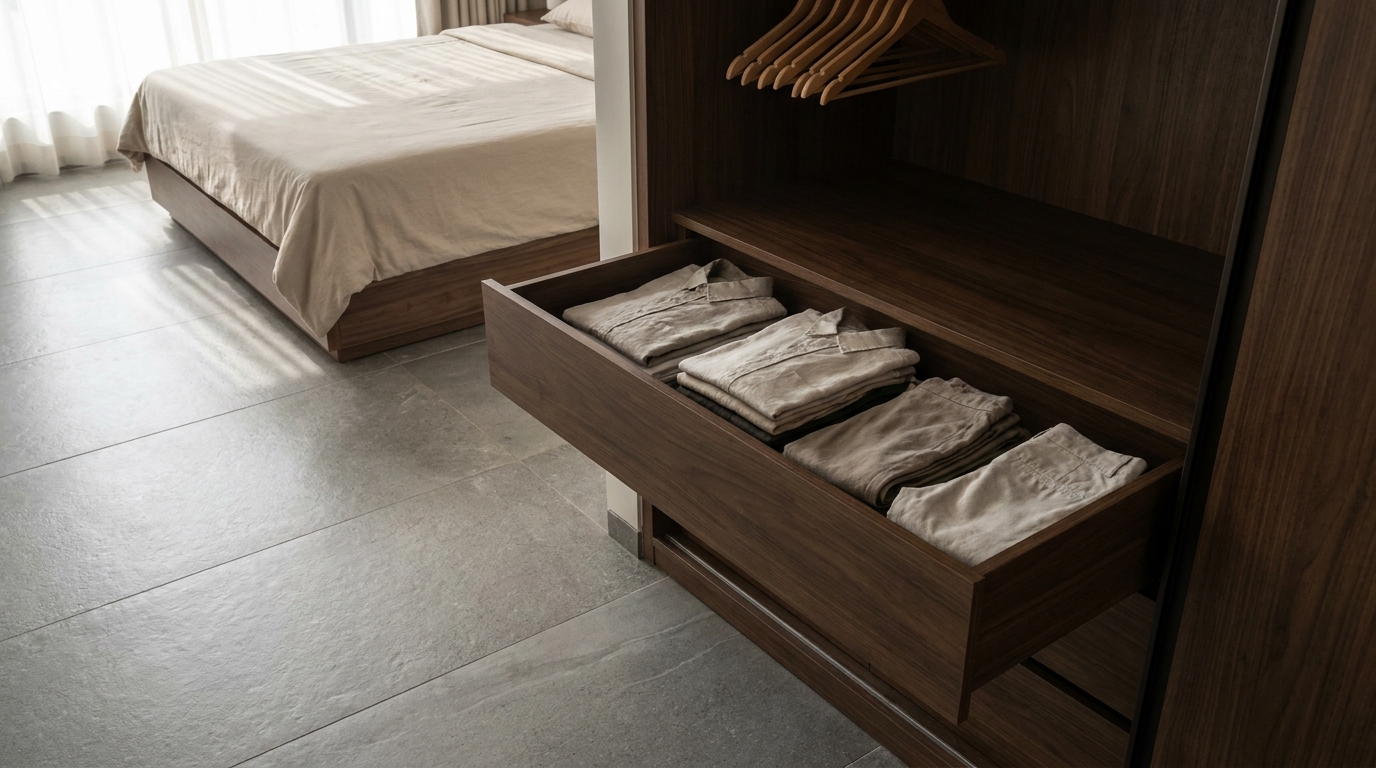
Drawers Too Deep for What Actually Goes in Them
A deep drawer sounds efficient, but folded t-shirts and undergarments stacked more than 3-4 items high become impossible to see from above you end up digging through the pile for what's at the bottom. Shallower drawers, divided if needed, keep folded items visible in a single layer instead of buried in a stack.
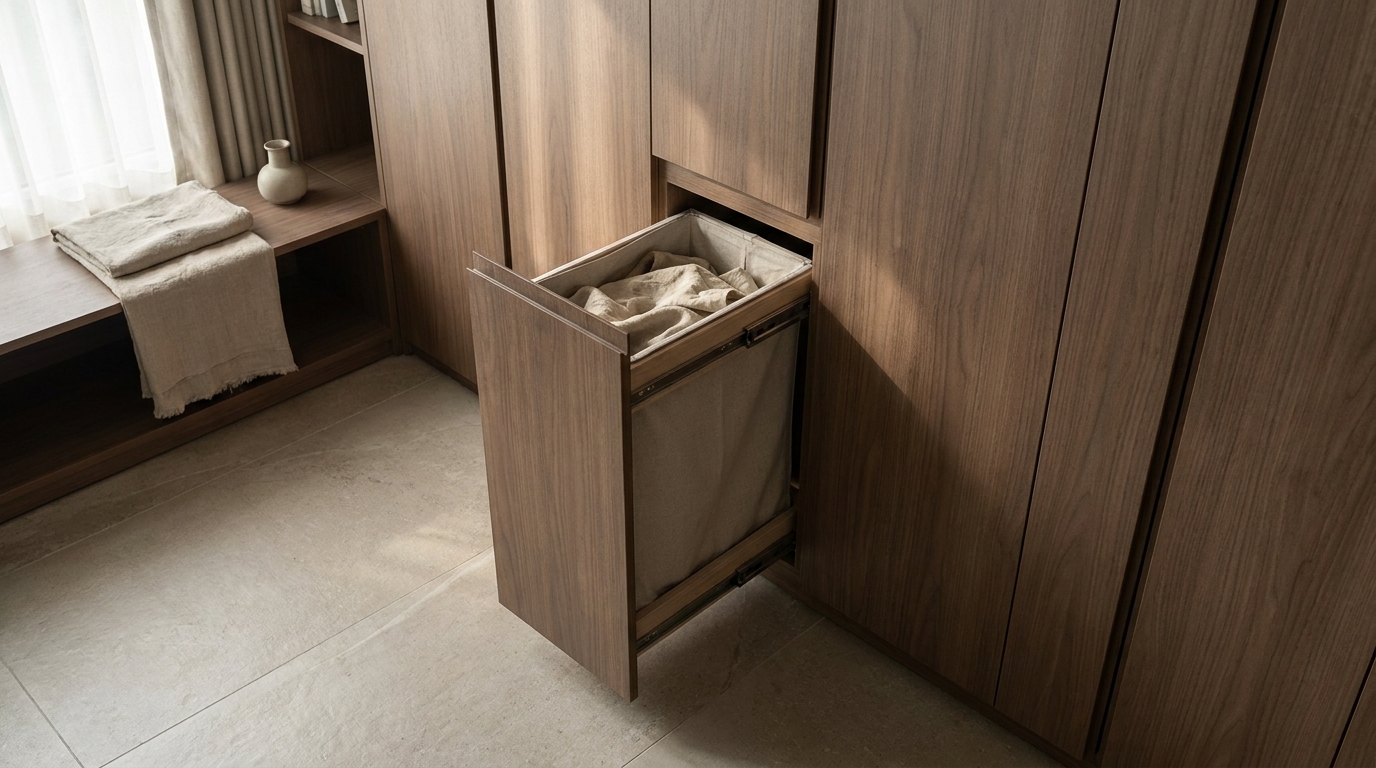
No Dedicated Spot for the Laundry Hamper
Without a planned spot, the laundry hamper ends up as a freestanding basket somewhere in the bedroom usually in the way, and rarely matching anything. A slim pull-out laundry hamper built into one end of the wardrobe run keeps it fully out of sight until needed, with zero extra floor space used.
Want a real estimate for your home?
Share your home in 2 minutes. We'll match you with verified designers in your city and give you a BOQ-level estimate before any work begins.
Share your home →