Everyone Designs the Door. Almost Nobody Designs Around It
5 before-and-after entrance upgrades for Indian homes that have nothing to do with the door itself
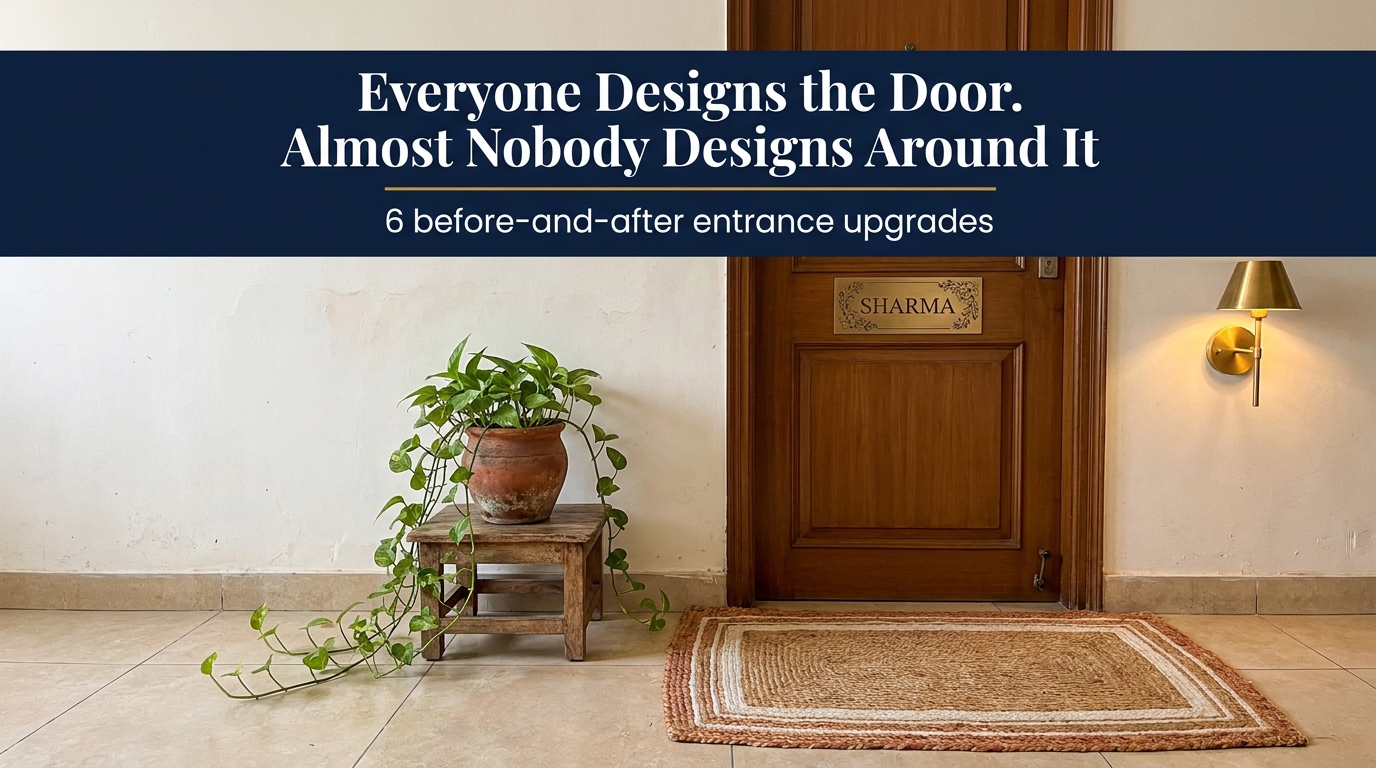
A beautifully designed front door can still sit inside a completely forgettable entrance, because the door itself is only one part of what someone actually experiences standing at a threshold. The mat underfoot, the light overhead, the nameplate beside the frame, whatever's sitting on the floor or a small shelf nearby — all of that gets noticed before anyone's hand even reaches the handle, and almost none of it gets any design attention, even in homes where the door itself was a considered choice. These six before-and-after upgrades style everything around the door, on the assumption that the door was never actually the whole entrance to begin with.
1. From a Generic Mat to a Considered Doormat
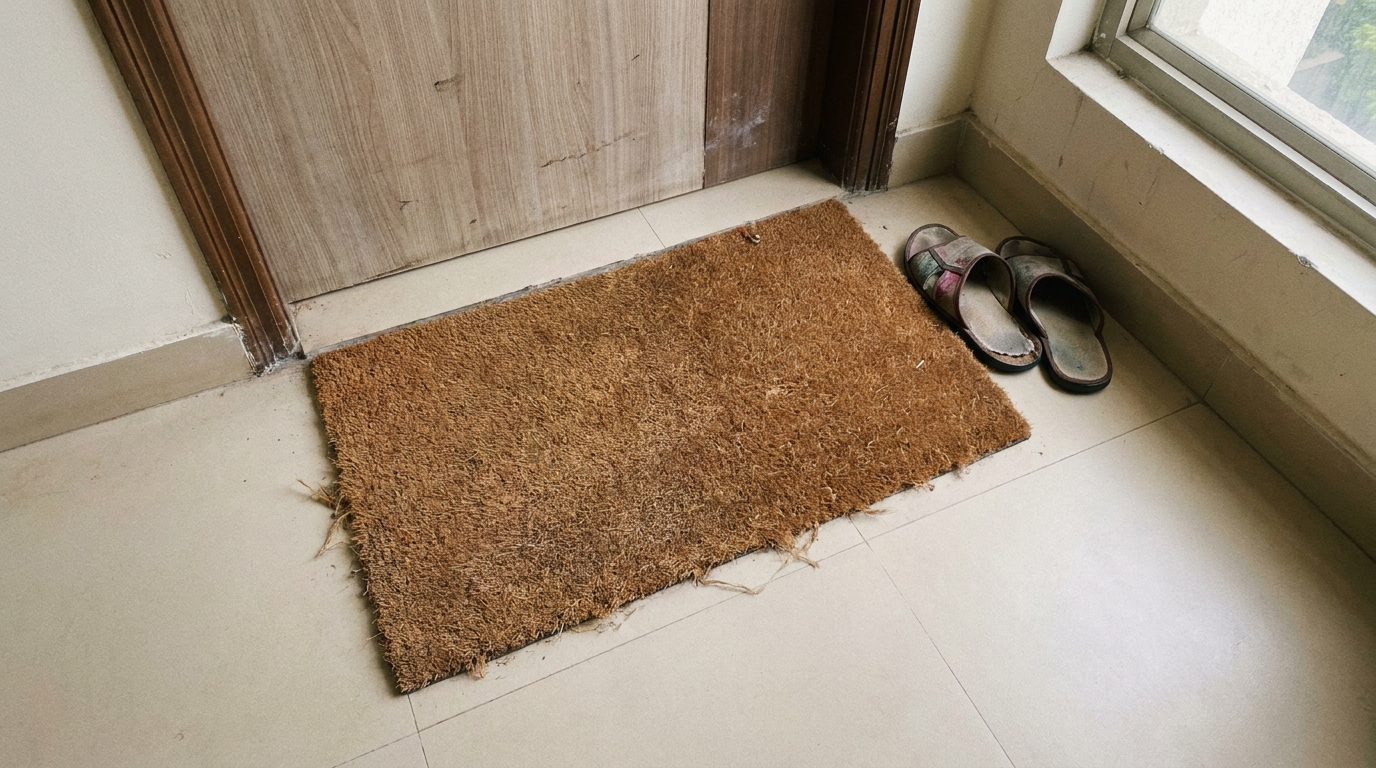
Before: A thin, cheap coir mat — whatever came free with a delivery or was grabbed quickly from a local shop — chosen entirely for function with zero consideration for how it looks against the door and corridor around it, often faded or fraying at the edges from months of monsoon wear.
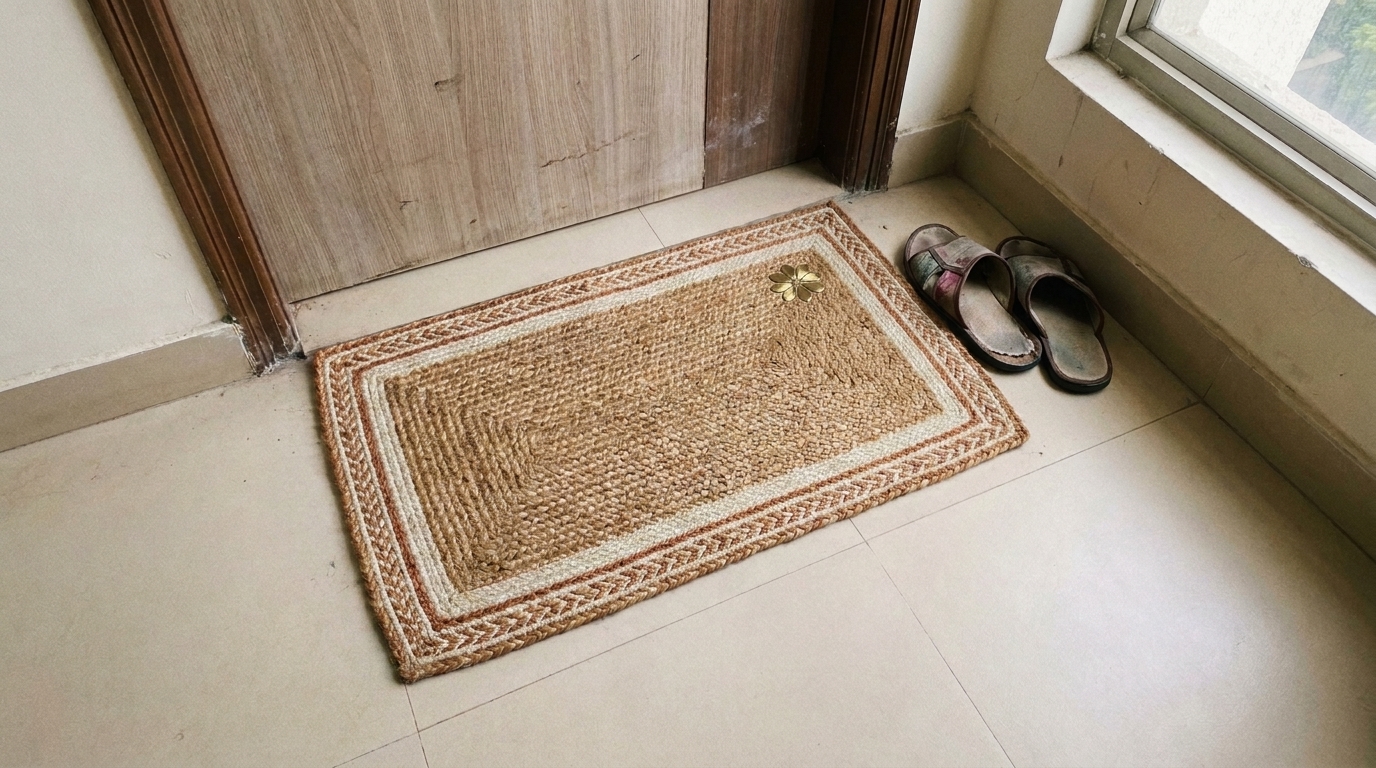
After: A thick woven jute doormat in a natural tone with a clean patterned border, sized to extend slightly beyond the doorway's width on both sides, positioned squarely at the threshold. The upgrade does real visual work at exactly the spot where every visitor's eyes land first.
Beyond appearance, a genuinely functional doormat matters more in Indian conditions than people tend to credit — monsoon season alone makes a proper moisture- and dirt-trapping mat a real practical need, not just a styling choice, so it's worth choosing one that performs the job as well as it looks doing it.
2. From a Mismatched Sticker to a Nameplate That Matches Your Hardware
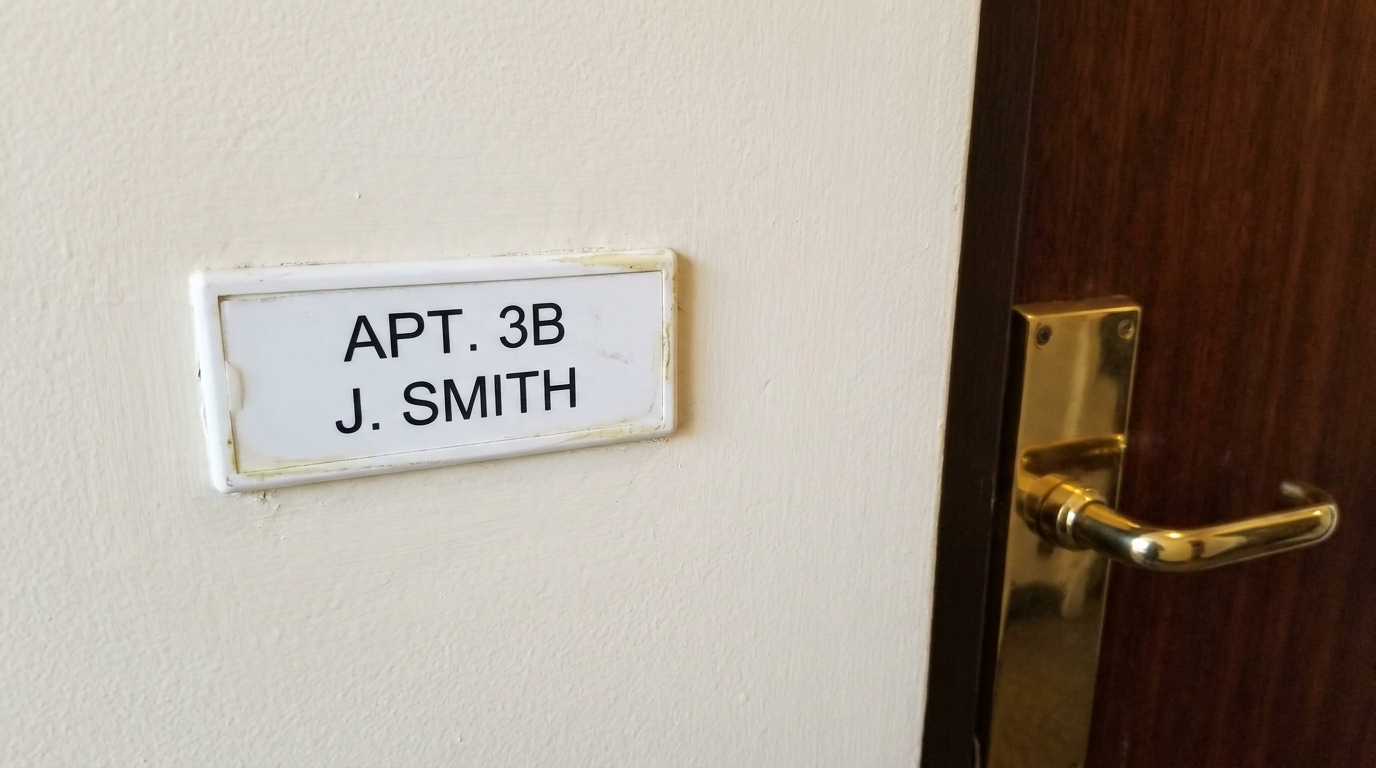
Before: A generic plastic nameplate or a printed sticker, bought quickly and separately from every other decision made about the door, often in a finish or colour that has nothing to do with the door handle or any other hardware nearby.
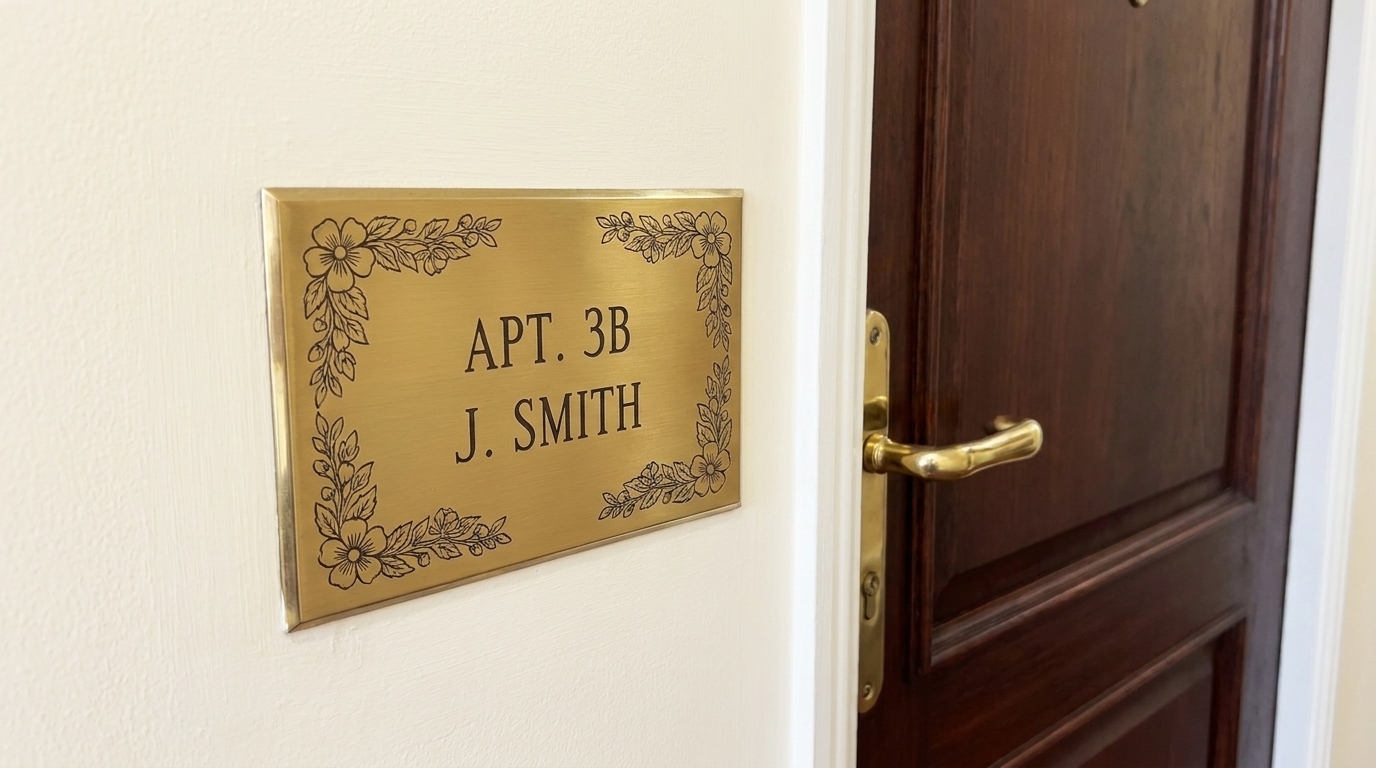
After: An engraved nameplate made in a material that deliberately matches the door's hardware finish — brass to match brass handles, matte black to match a matte black grille mounted cleanly on the wall beside the frame.
A nameplate that matches reads as one considered decision rather than a functional label bolted on separately. It's a small, inexpensive detail, but it's also one of the most visually inconsistent details when it's wrong, since a mismatched finish stands out precisely because everything else at the door was chosen deliberately.
3. From the Corridor's Default Overhead Light to Dedicated Entrance Lighting
Before: A single shared overhead corridor light doing the job of general illumination, treating every door along the hallway identically, with no distinct light source marking any individual entrance as different from the next.
After: A small wall-mounted brass sconce installed specifically beside the door, switched on, adding a second, warmer light source that distinguishes this entrance from the identical doors around it.
This makes a genuine difference at night specifically, when the corridor's default lighting is often the only light source anyone's using to find the right door among several identical-looking ones.
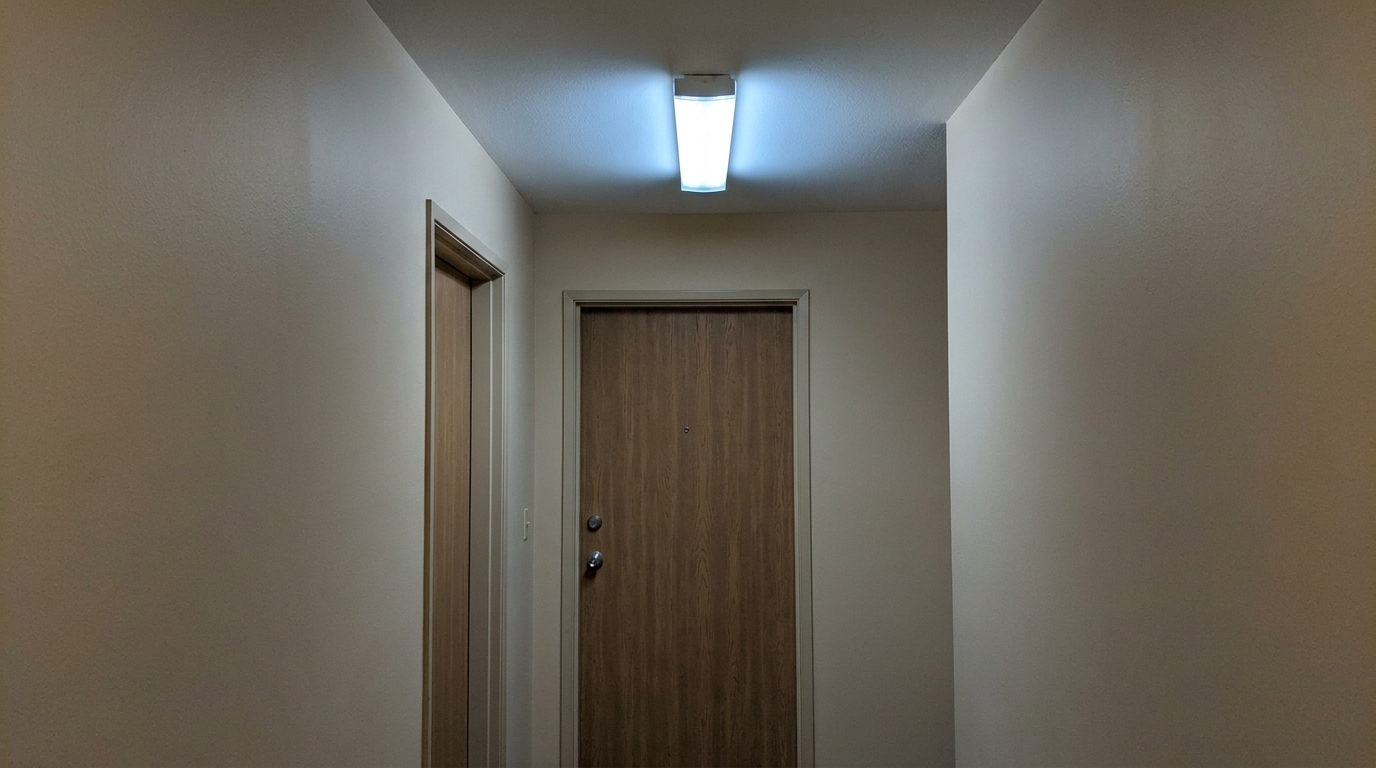
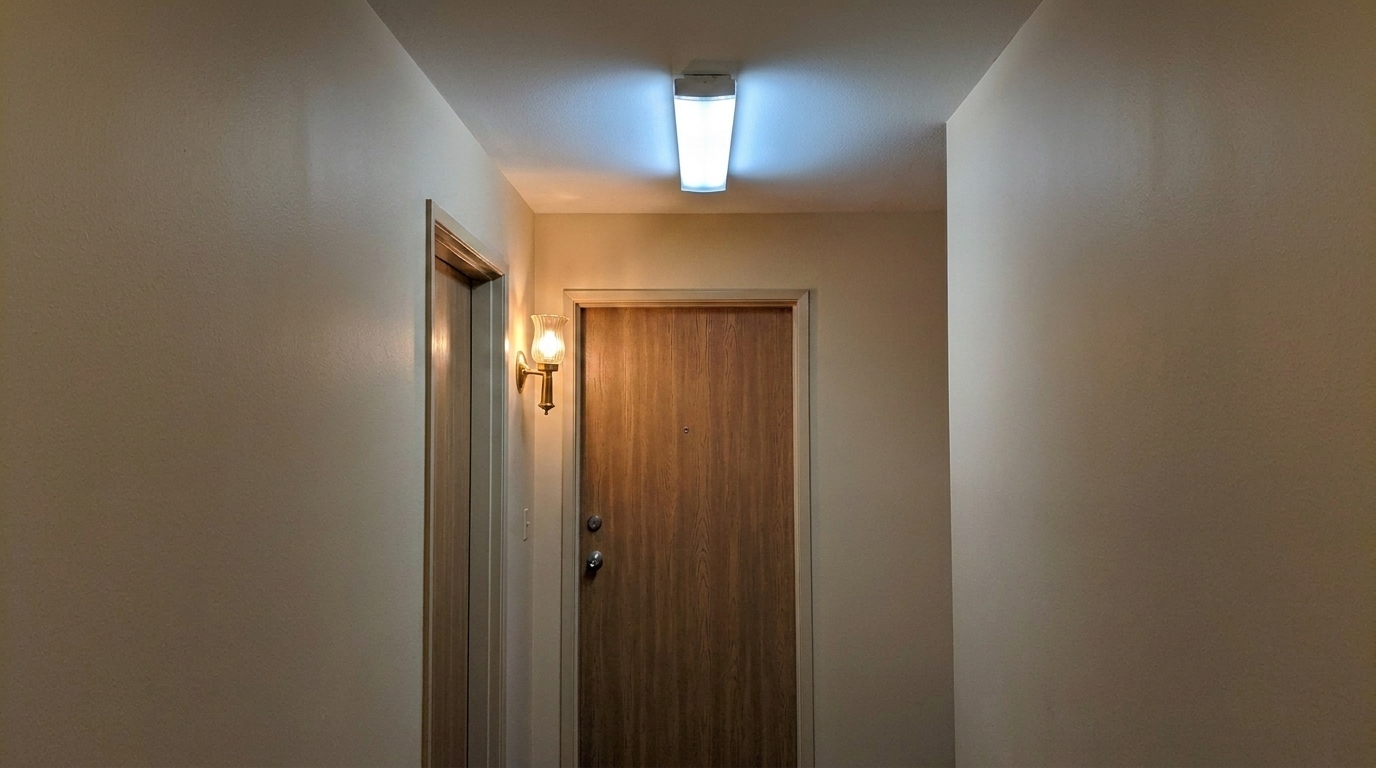
4. From a Bare Threshold to a Plant Positioned Out of the Walking Path
Before: A completely bare stretch of floor beside the door, or a single plant placed directly in the walking path where it's inevitably knocked, kicked, or eventually removed out of frustration after repeated accidents.
After: A small potted plant positioned on a low wooden stool to one side of the door, clearly out of the direct walking line and the door's swing path, softening what was otherwise a hard, flat threshold made entirely of door, frame, and floor tile.
The mistake was never the plant itself — it was placement. A stool positioned deliberately to the side gives the plant a stable spot that survives daily foot traffic, rather than sitting loose on the floor where it's one distracted step away from disaster.
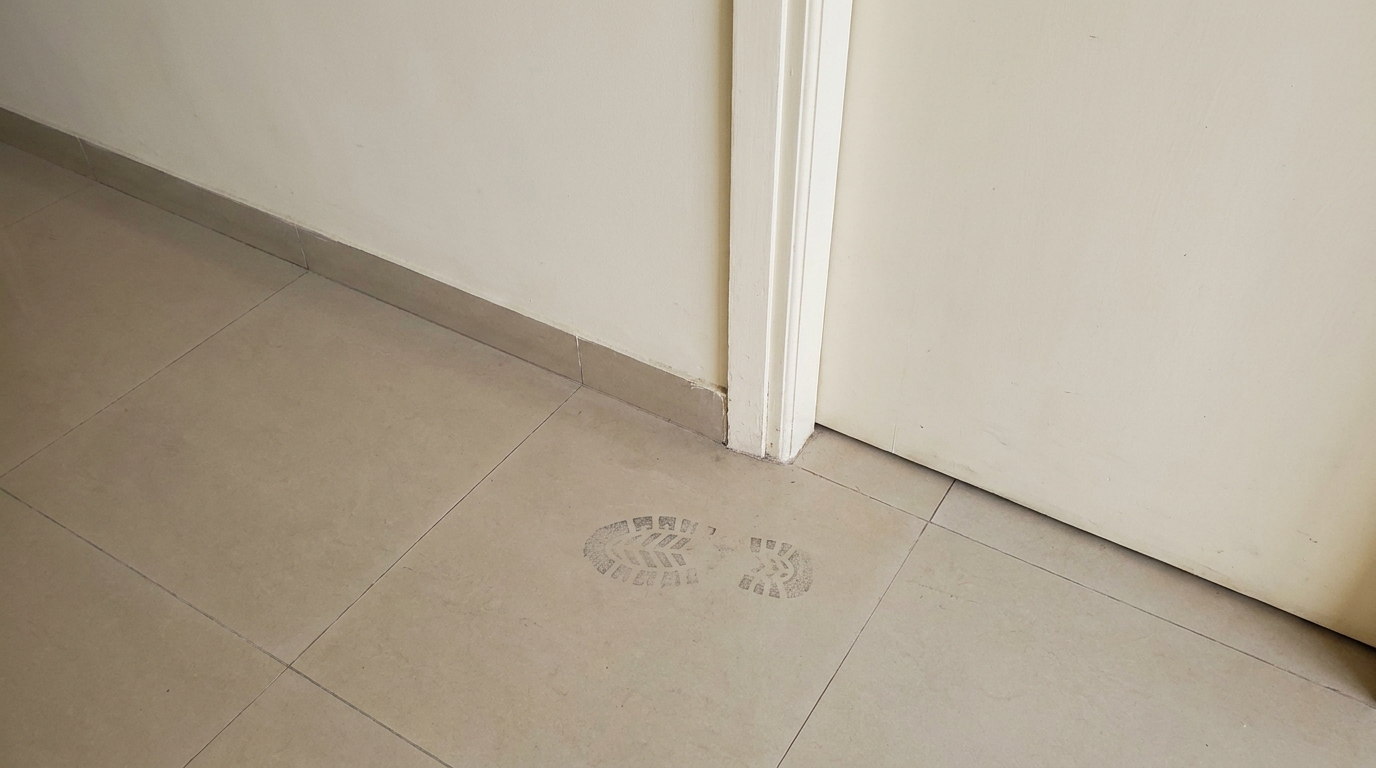
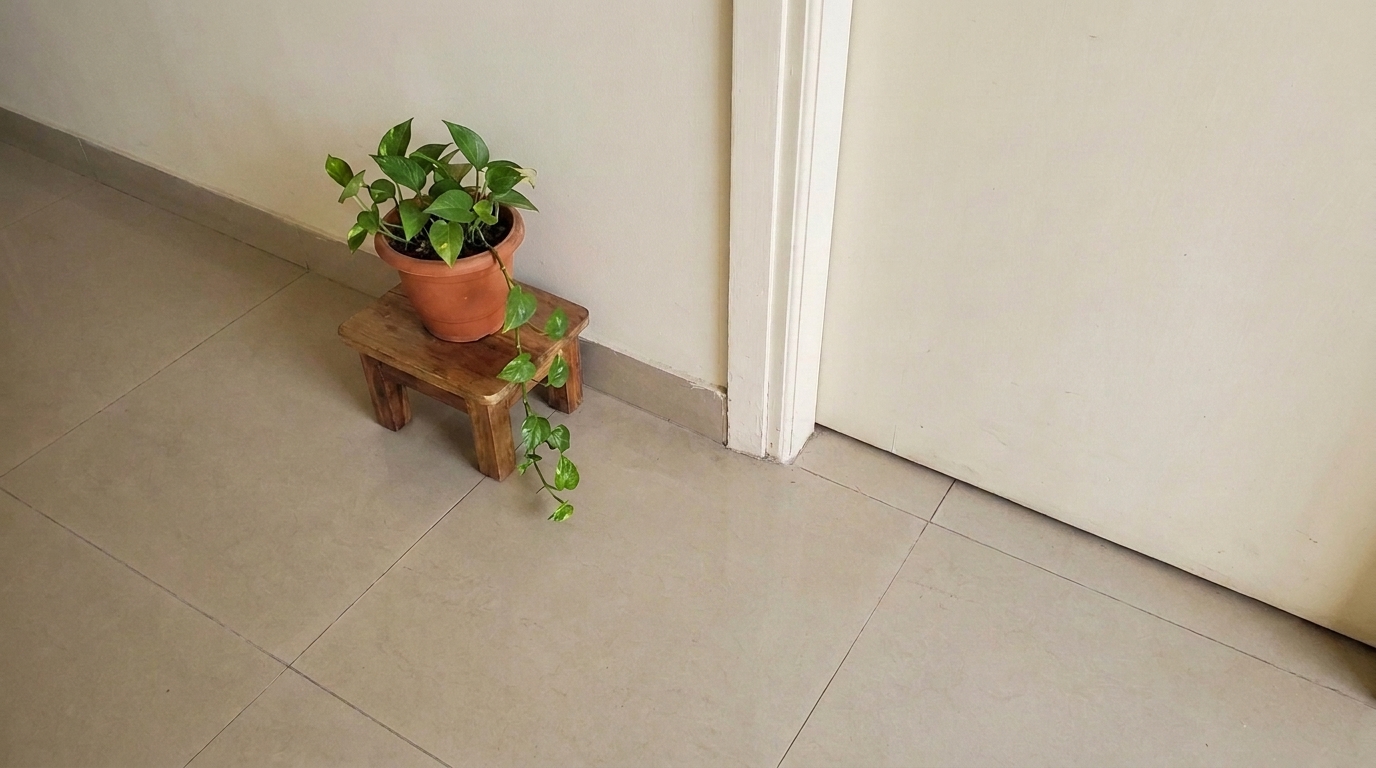
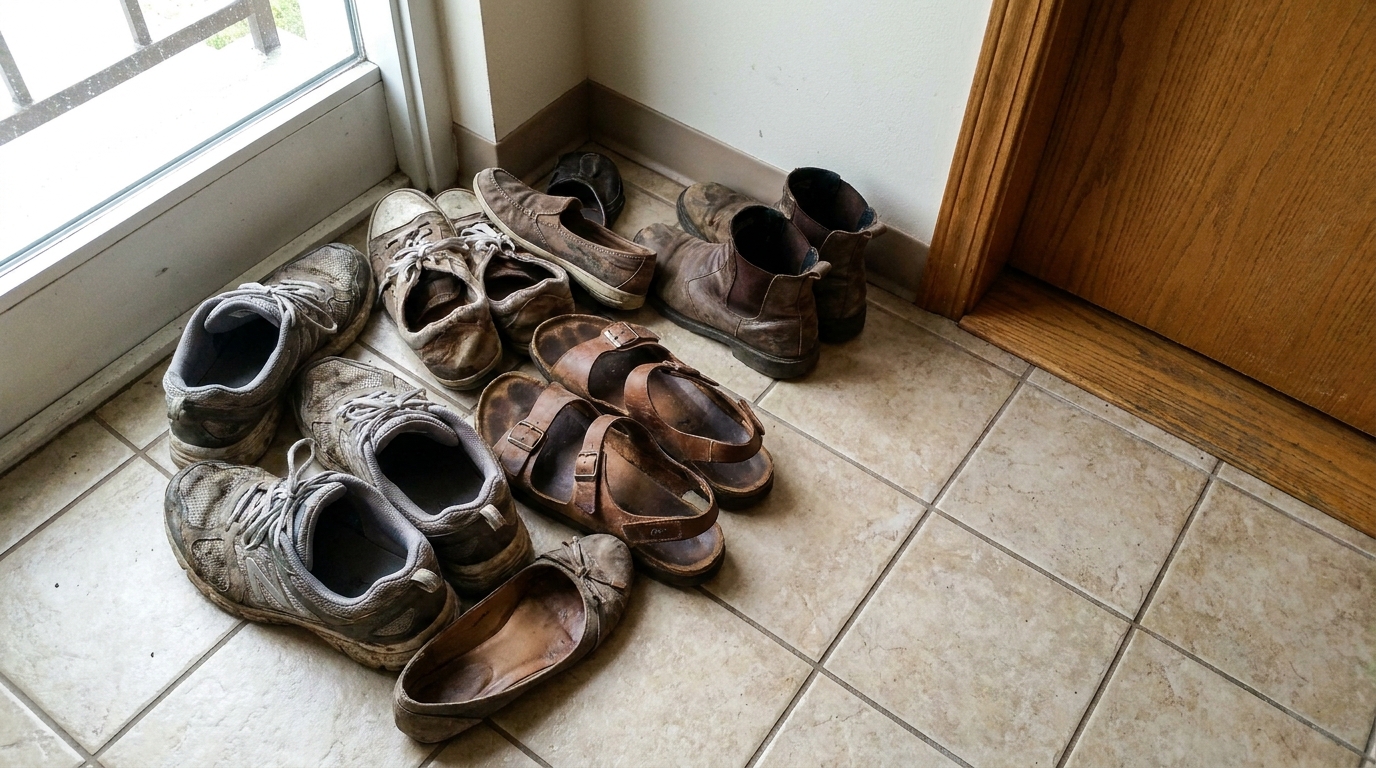
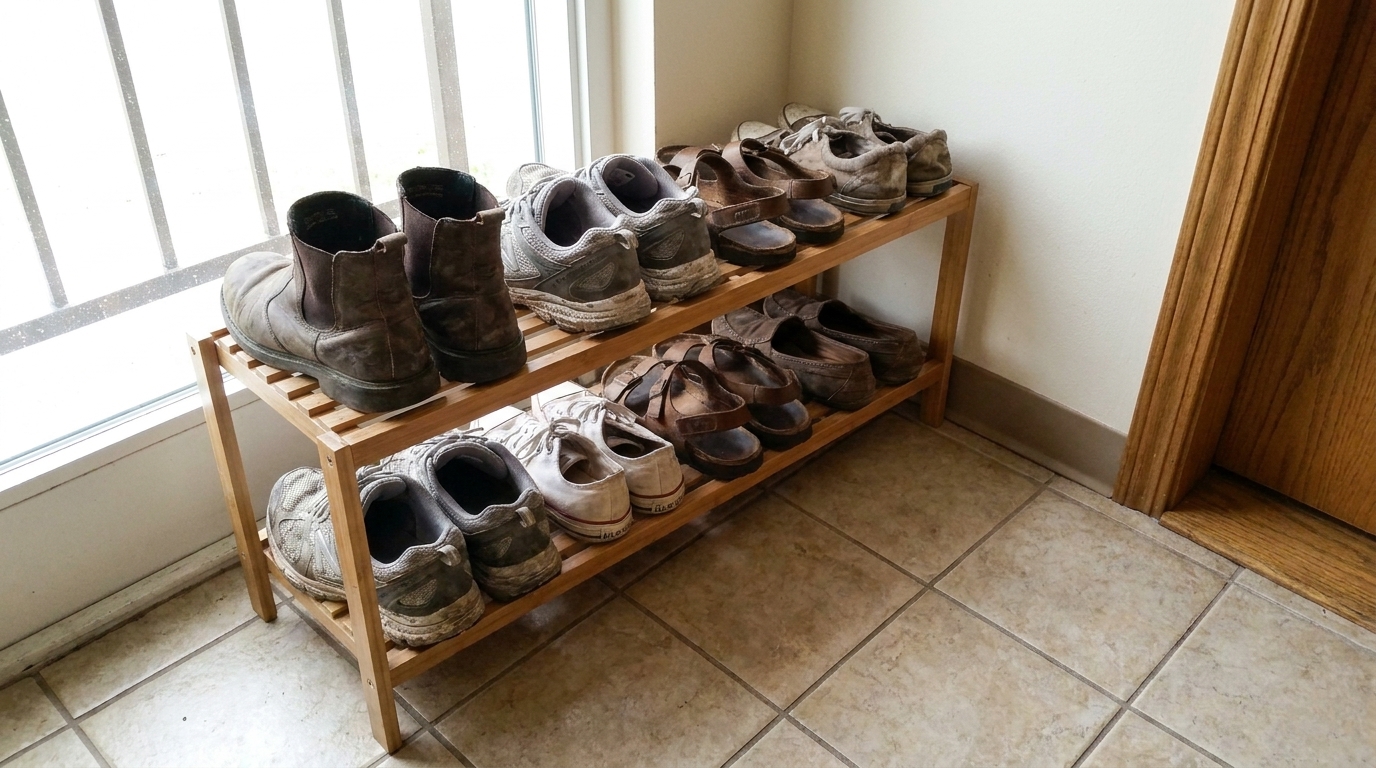
5. From a Loose Pile of Shoes to a Proper Rack
Before: A loose, shifting pile of shoes directly on the floor beside the door frame, the default result of a household convention (leaving shoes outside) with no actual designated spot ever set up for it.
After: A slim slatted wooden shoe rack positioned against the wall just outside the door, shoes arranged neatly and visibly on it, ventilated rather than trapping moisture and odour the way a closed pile or box would.
It's worth choosing a rack size that fits the specific corridor width, since an oversized rack in a narrow shared corridor becomes an obstacle rather than a convenience for neighbours passing by — the goal is a designated spot, not a bigger version of the same clutter.
Closing
None of these five upgrades touch the door itself, and that's the entire point — a genuinely finished entrance is made up of everything around the door as much as the door, and most of it gets zero design attention even in homes where real thought went into the door choice. A doormat, a matching nameplate, a bit of warm light, a plant that isn't in the walking path — together, these do as much to make an entrance feel considered as the door ever could on its own.
Want a real estimate for your home?
Share your home in 2 minutes. We'll match you with verified designers in your city and give you a BOQ-level estimate before any work begins.
Share your home →