The Entryway Nobody Designs
Five deliberate choices turn the space between your front door and the rest of the house into a room worth designing.
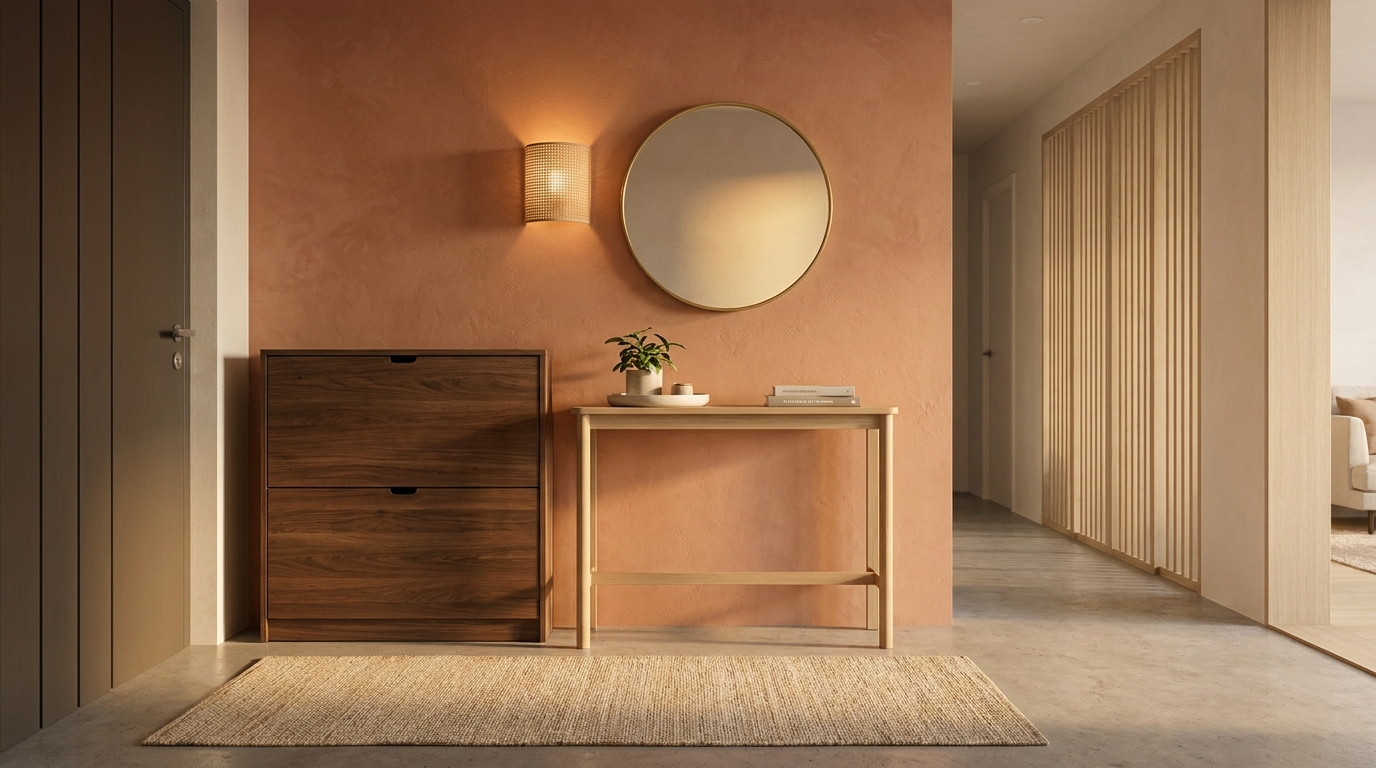
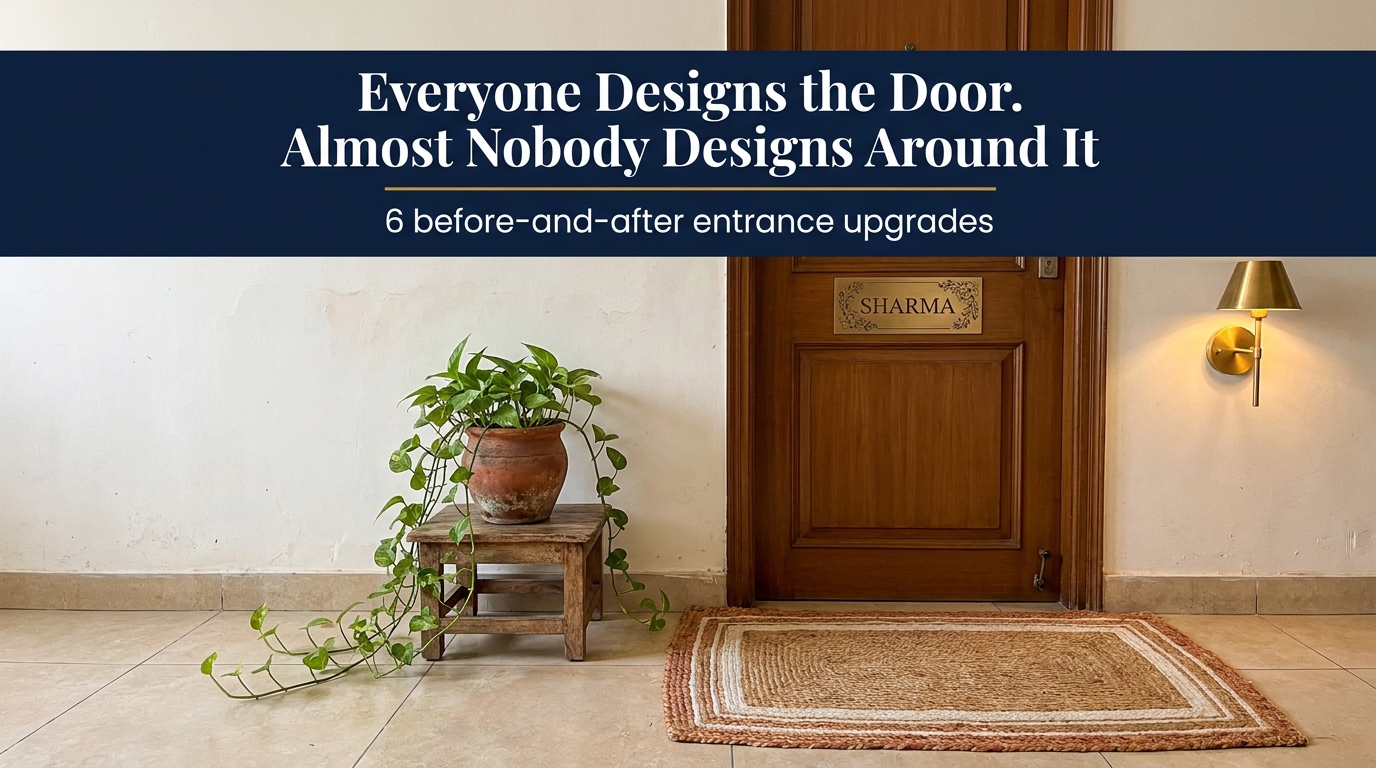
Most Indian apartments don't really have an entryway just the space between the front door and wherever the shoe rack ended up. It's the first thing you see coming home and the last thing anyone designs. Here's what changes when it gets treated like an actual room instead of a gap.
1. Give the Shoes a Real Home, Not a Pile by the Door
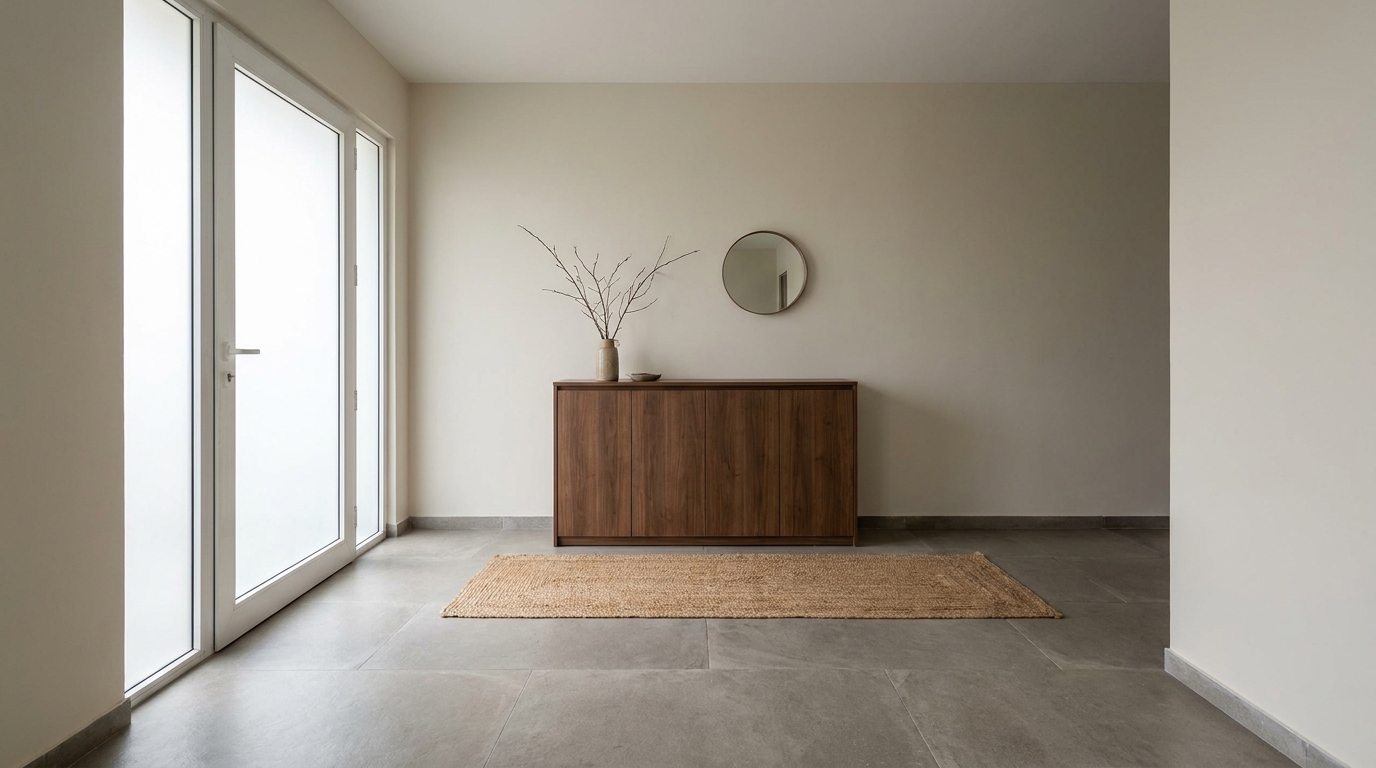
The shoe pile by the door is the single biggest reason an entryway feels chaotic before you've even noticed anything else. A closed shoe cabinet even a slim one, 30-35cm deep clears the floor completely and instantly makes the space feel intentional.
The depth matters more than the width here: a narrow cabinet that runs along one wall takes up far less visual space than people expect, and closed doors matter more than open cubbies visible shoes read as clutter even when they're technically "organized."
2. Add a Console Table for the "Drop Zone" Stuff
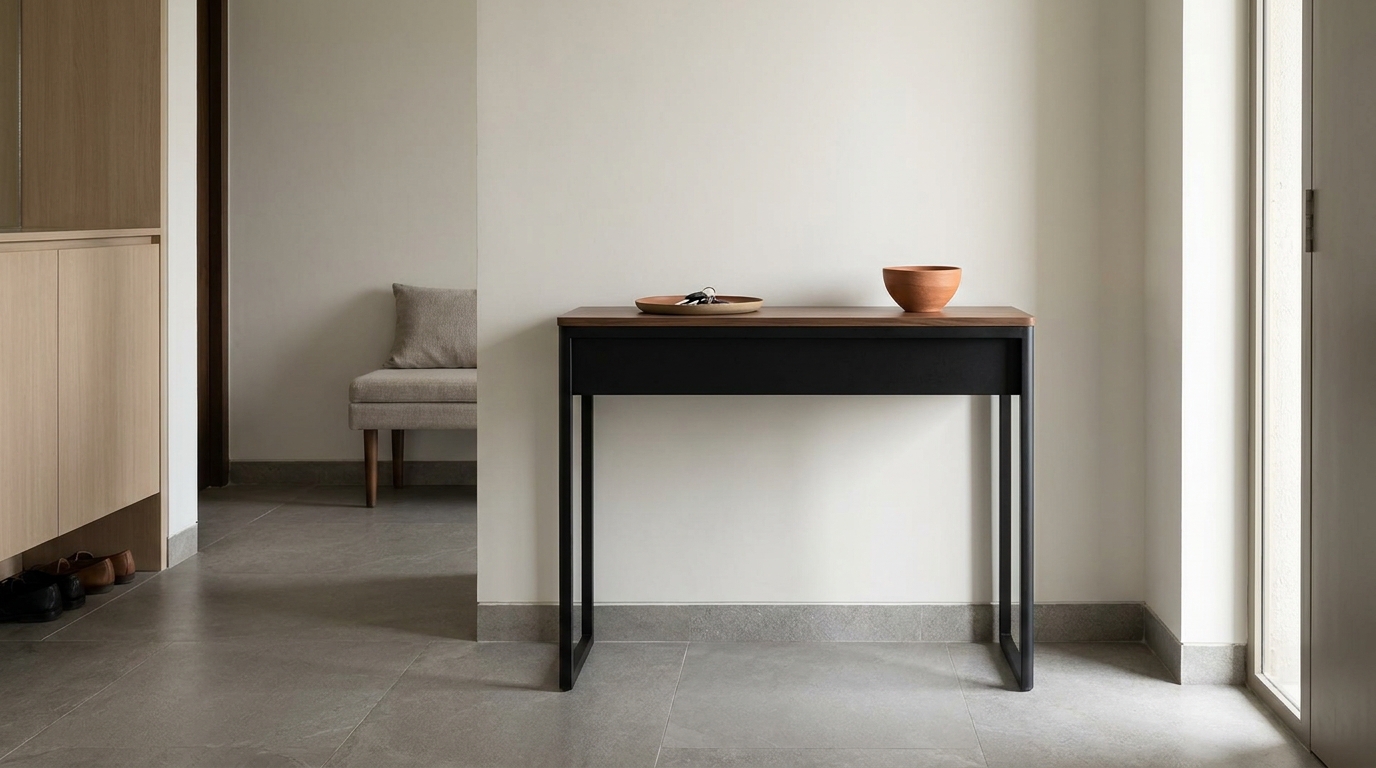
Keys, mail, sunglasses, the odd receipt every home has a drop zone, and without a designated surface, it ends up being the dining table or kitchen counter. A slim console table right at the entry catches all of it before it migrates further into the house.
Keep the surface shallow (25-30cm deep works in most Indian apartment entryways) so it doesn't eat into circulation space, and resist the urge to decorate it heavily one tray for keys, one small bowl, and it's done its job.
3. Put a Mirror Where You'll Actually Use It
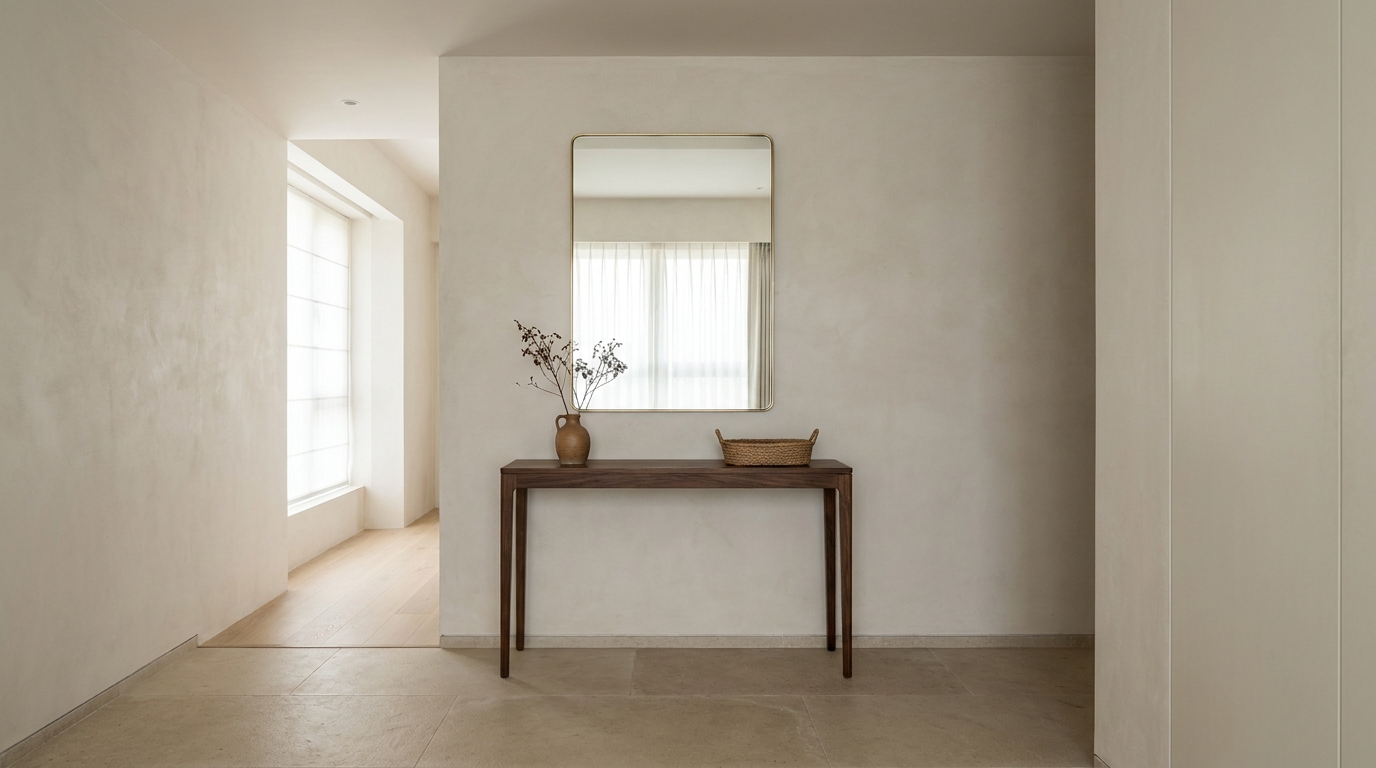
Most Indian homes have a mirror somewhere near the door, but it's often mounted too high, too small, or angled wrong to actually be useful before stepping out. A properly placed full or half-length mirror by the entry does two things at once it's functional for a last-look check, and it visually doubles the sense of space in what's usually a narrow area.
Position it at a height that reflects from roughly chest-up for most household members, and angle the entryway lighting so it doesn't cast a shadow directly across the mirror's centre.
4. Light It Separately From the Rest of the Hallway
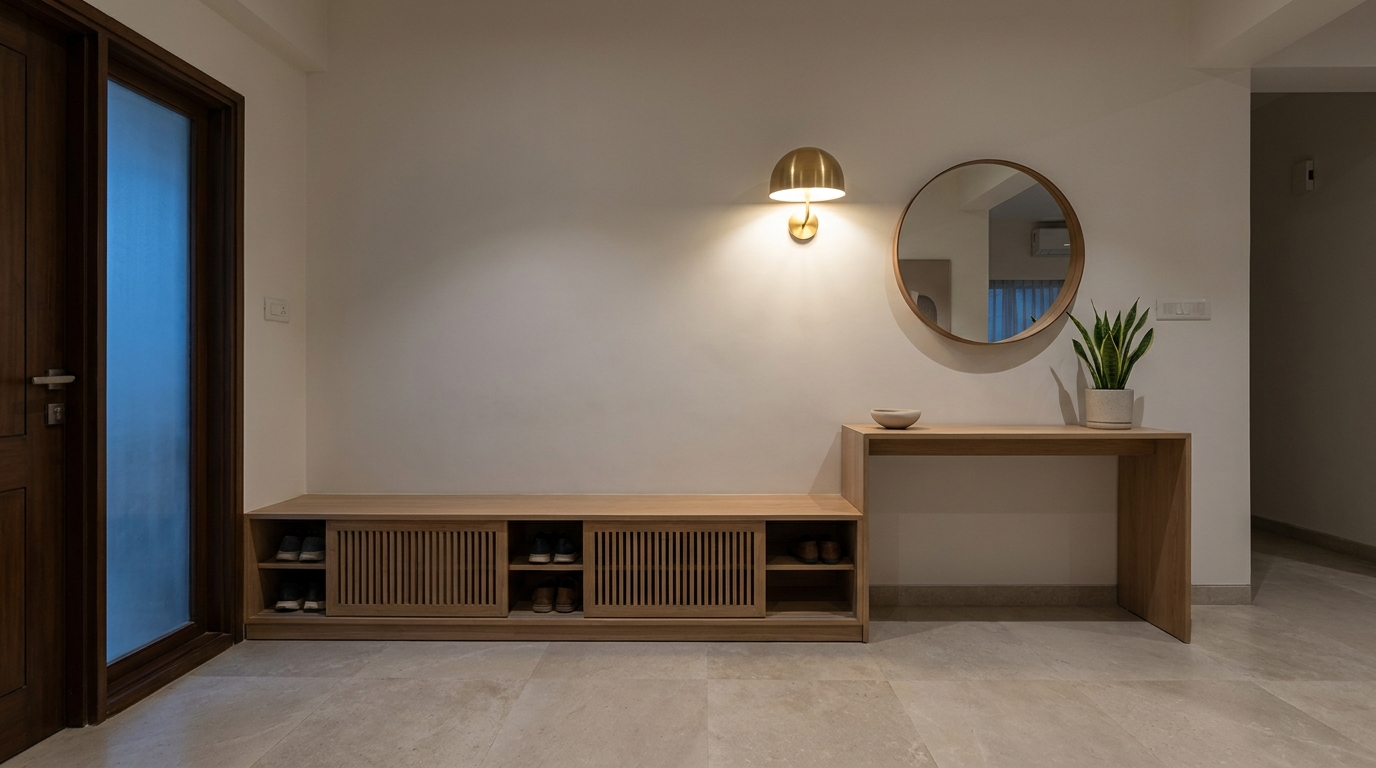
Entryways almost never get their own light source they just borrow spill light from the living room or hallway, which means the one space you pass through daily is usually the dimmest, most poorly lit corner of the home. A single warm wall sconce or a small pendant right at the entry changes that instantly.
This doesn't need rewiring in most cases a plug-in wall sconce or a battery-operated puck light under a shelf can do the job. The goal is simply for the entryway to have its own light source, not leftover glow from somewhere else.
5. Add One Textural Moment So It Doesn't Feel Like a Hallway
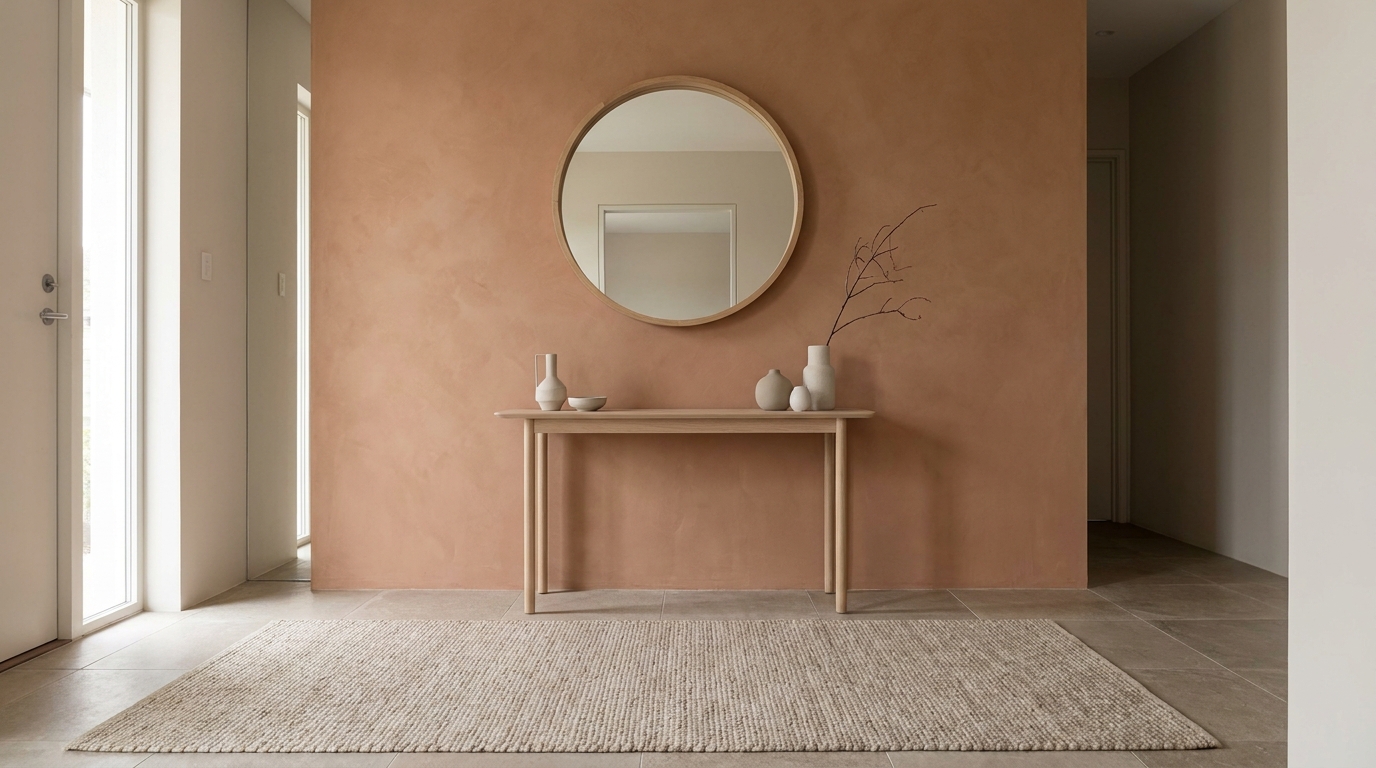
Without at least one deliberate design choice a textured wall, a patterned floor tile insert, a piece of art an entryway defaults to feeling like a transitional hallway rather than a room in its own right. It doesn't need much: one accent wall finish or a single framed piece is usually enough to signal "this space was considered."
A limewash accent wall behind the console, or even a runner rug with texture underfoot, gives the entryway its own identity distinct from whatever room comes next.
The Real Shift
None of these five changes need major construction a cabinet, a table, a mirror, a light fixture, and one textured surface. What they add up to is an entryway that feels like it was designed on purpose, instead of a gap you walk through on the way to the rest of the house.
Want a real estimate for your home?
Share your home in 2 minutes. We'll match you with verified designers in your city and give you a BOQ-level estimate before any work begins.
Share your home →