From Storage Dump to Favourite Room: A Balcony Renovation
Five small, deliberate changes turn an overlooked corner into the room you actually want to sit in.
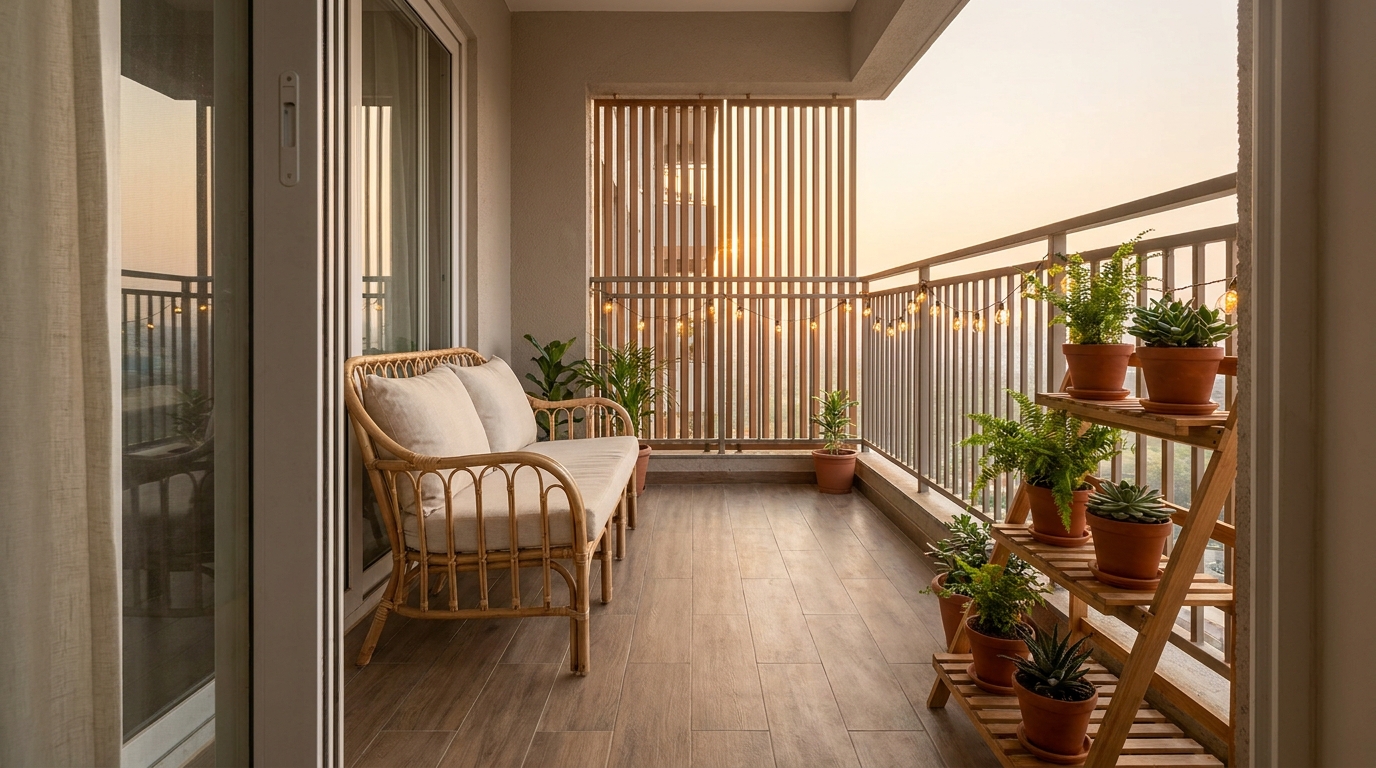
Most Indian balconies start as a decent little outdoor space and slowly turn into where the extra chair, the drying rack, and the boxes nobody's sorted go to live. It's not that the balcony was ever poor it just got treated as leftover space instead of a room. Here's how five simple moves change that.
1. Swap the Flooring First
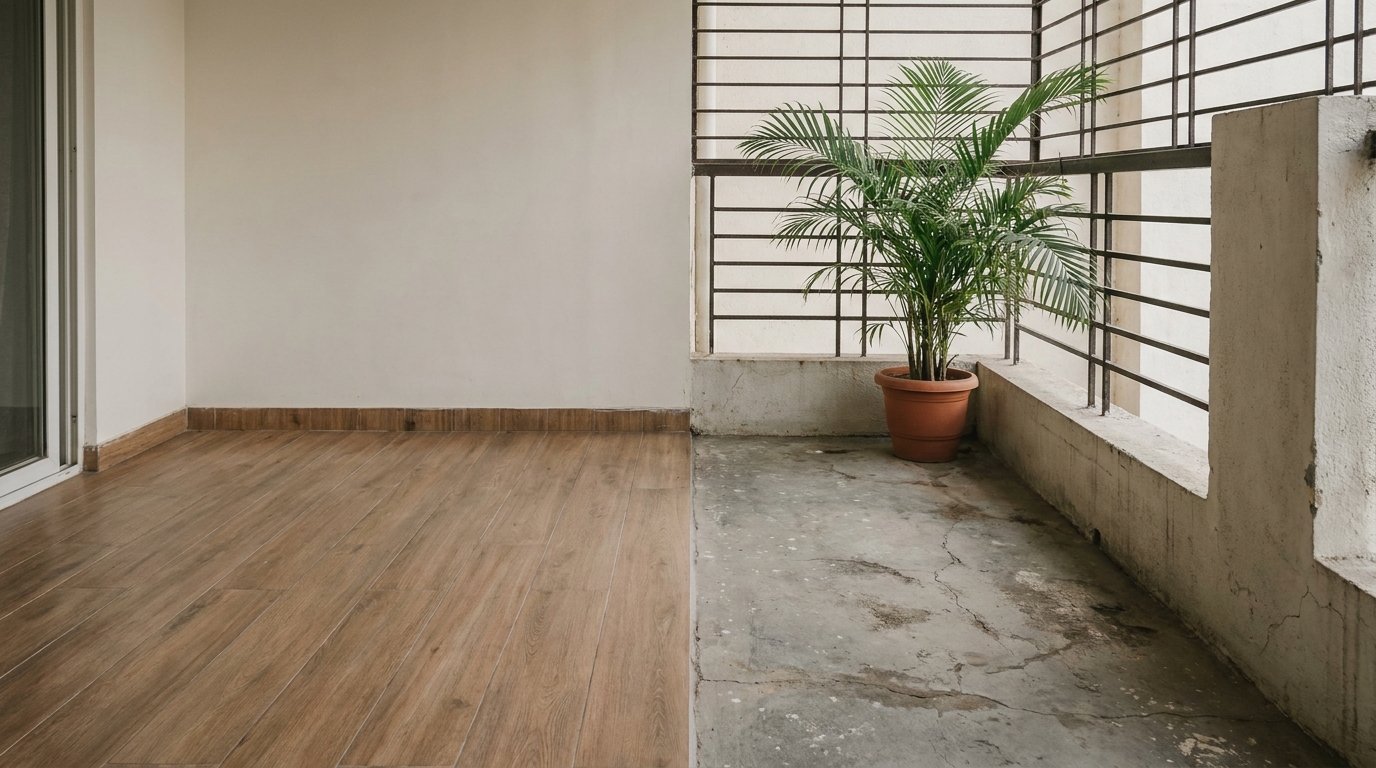
Bare cement or old mosaic tile is usually the first thing making a balcony feel unfinished even when everything else about the apartment is done well. It's a small detail that quietly signals "we didn't get to this room yet," and it's often the reason people avoid stepping out there at all.
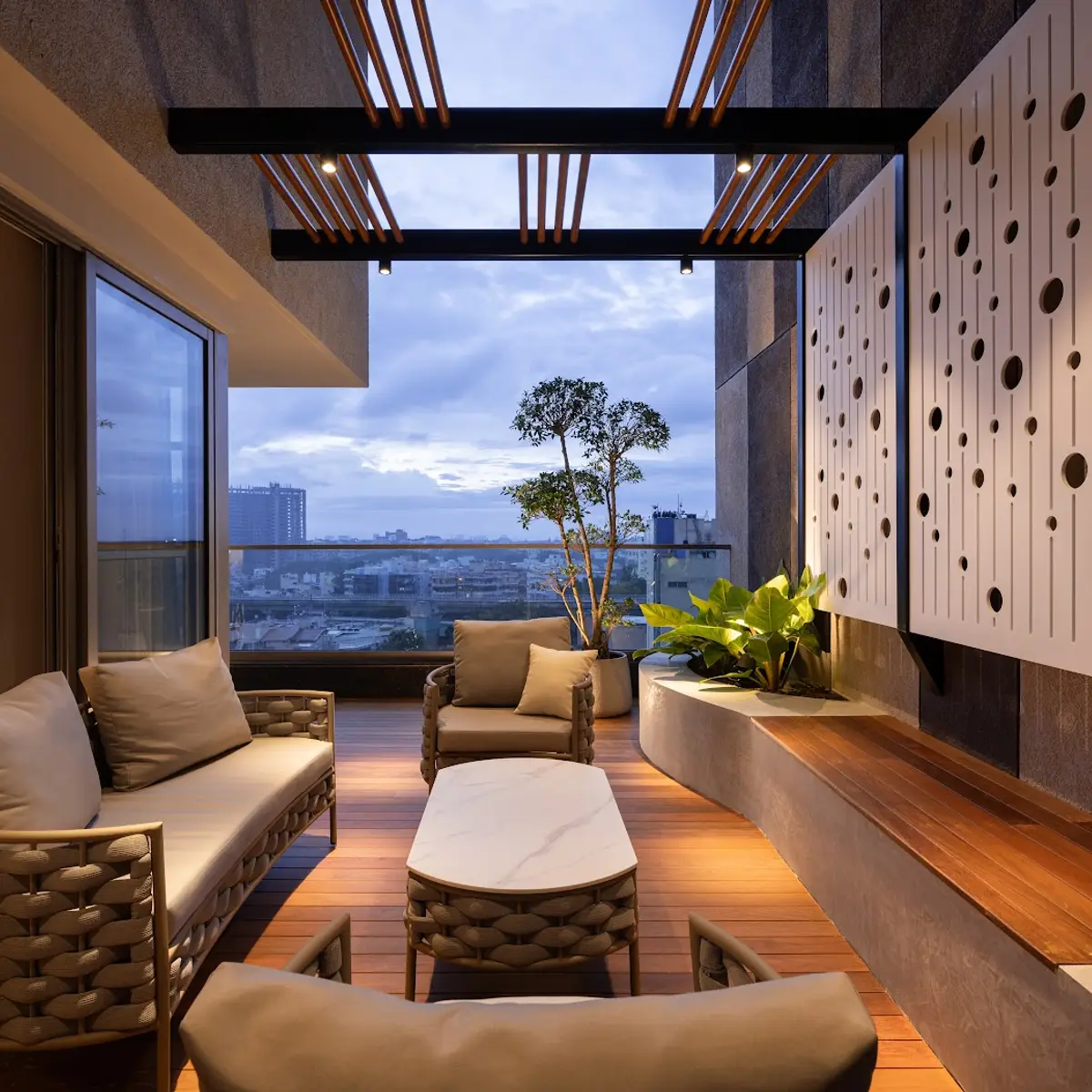
Outdoor-grade wood-look tiles or textured stone tiles instantly read as "designed space" rather than "utility area." They hold up fine against Indian weather sun exposure, monsoon splash, dust as long as they're properly sealed at installation. This is also the one upgrade on this list that genuinely needs budget and a contractor, so if you're phasing a renovation, this is the step to plan first and build the rest around. Everything else on this list works better once the floor stops looking like an afterthought.
2. Add Seating That Isn't a Plastic Chair
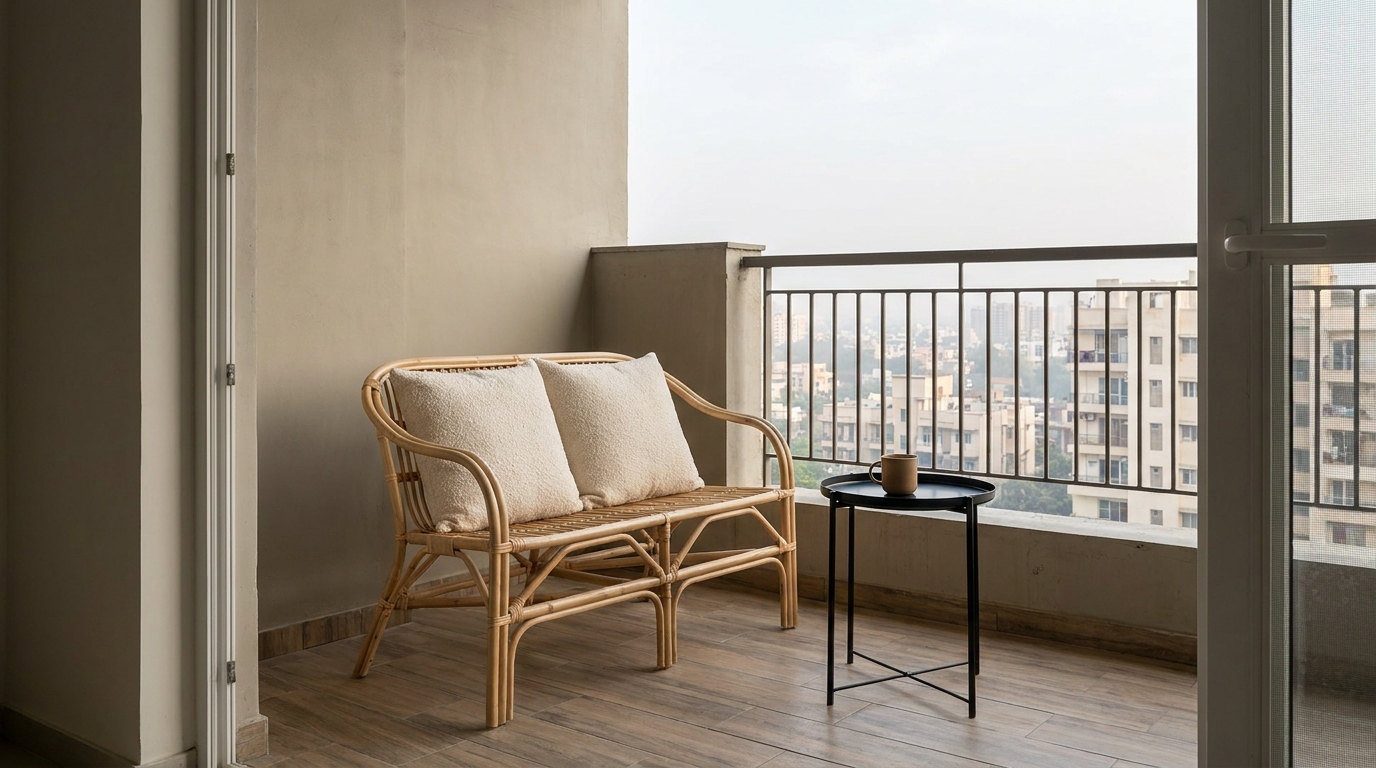
A single foldable plastic chair signals "unused space" it's the kind of furniture you set out only when you need it, then fold away and forget. That in-and-out relationship is exactly why the balcony never becomes a habit.
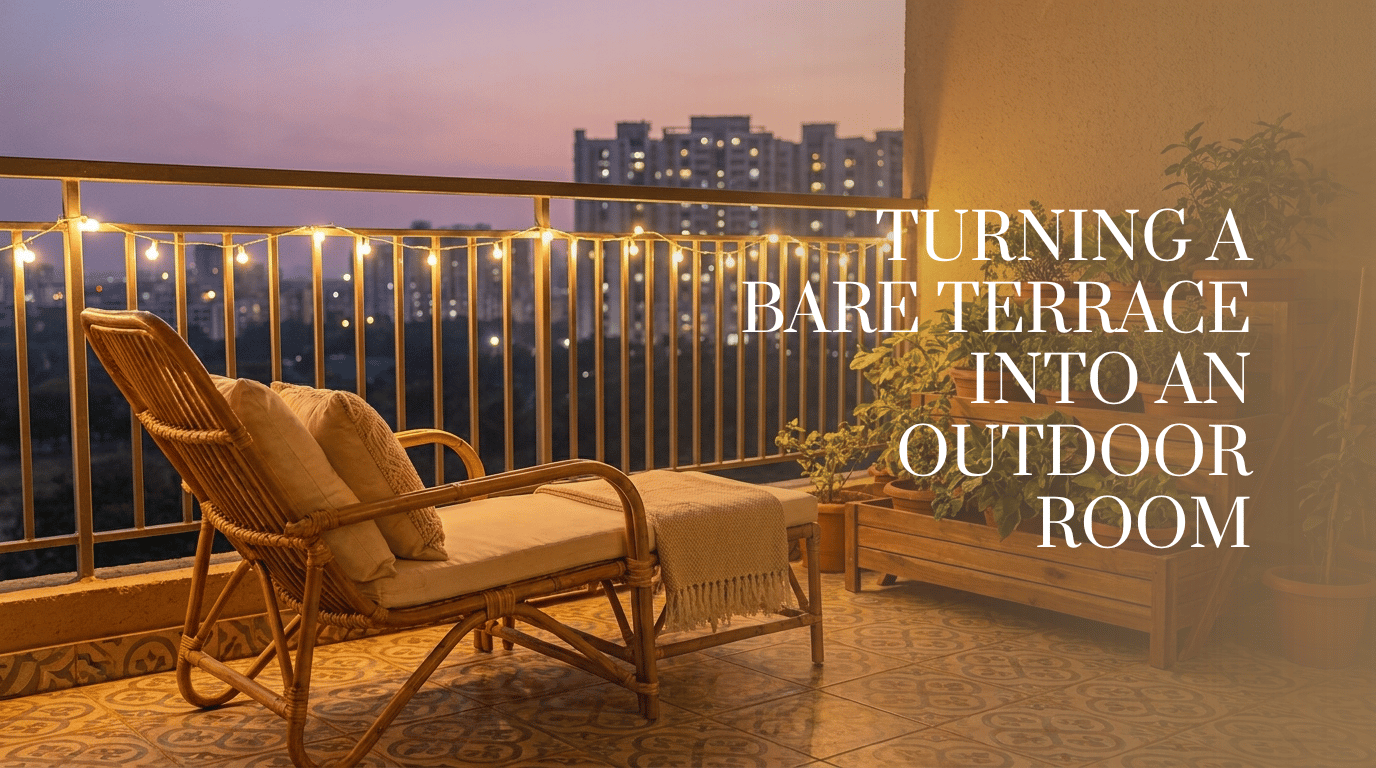
A compact two-seater with weather-resistant cushions flips that. It doesn't need to be large even a narrow bench along the railing with two cushions is enough to change how the space gets used, because now there's somewhere that's always ready to sit. Choose outdoor-rated fabric (not indoor upholstery that'll degrade in a season) and keep the footprint tight if the balcony is narrow a bench that hugs the railing wall uses almost no floor space while still giving two people somewhere real to sit with their morning chai.
3. Layer in Greenery With a Plan, Not Randomly
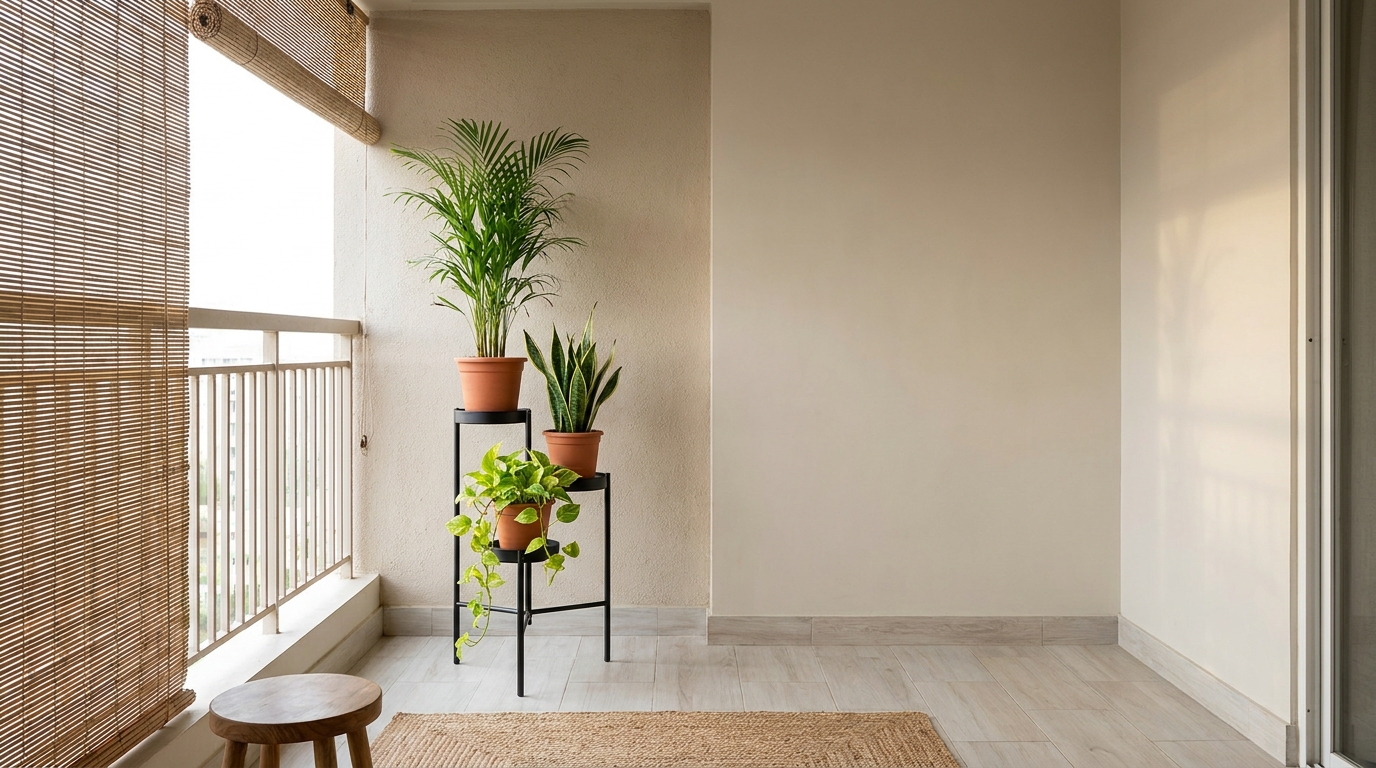
Balconies often accumulate plants the same way they accumulate clutter one at a time, wherever there's a gap, usually gifted or bought on impulse. Over a year or two, that turns into a scattered mess of mismatched pots at different heights with no real logic to where anything sits.
A tiered plant stand or a single wall-mounted planter rail does the same job with far less visual noise. Grouping plants vertically instead of spreading them across the floor also makes watering and maintenance genuinely easier everything's in one spot instead of six. If you want variety without chaos, stick to 3-4 plants max in one grouping, mix leaf shapes and heights, but keep the pot material consistent (all terracotta, or all matte ceramic) so the eye reads it as one styled moment rather than a collection.
4. Get the Lighting Off the Ceiling Bulb
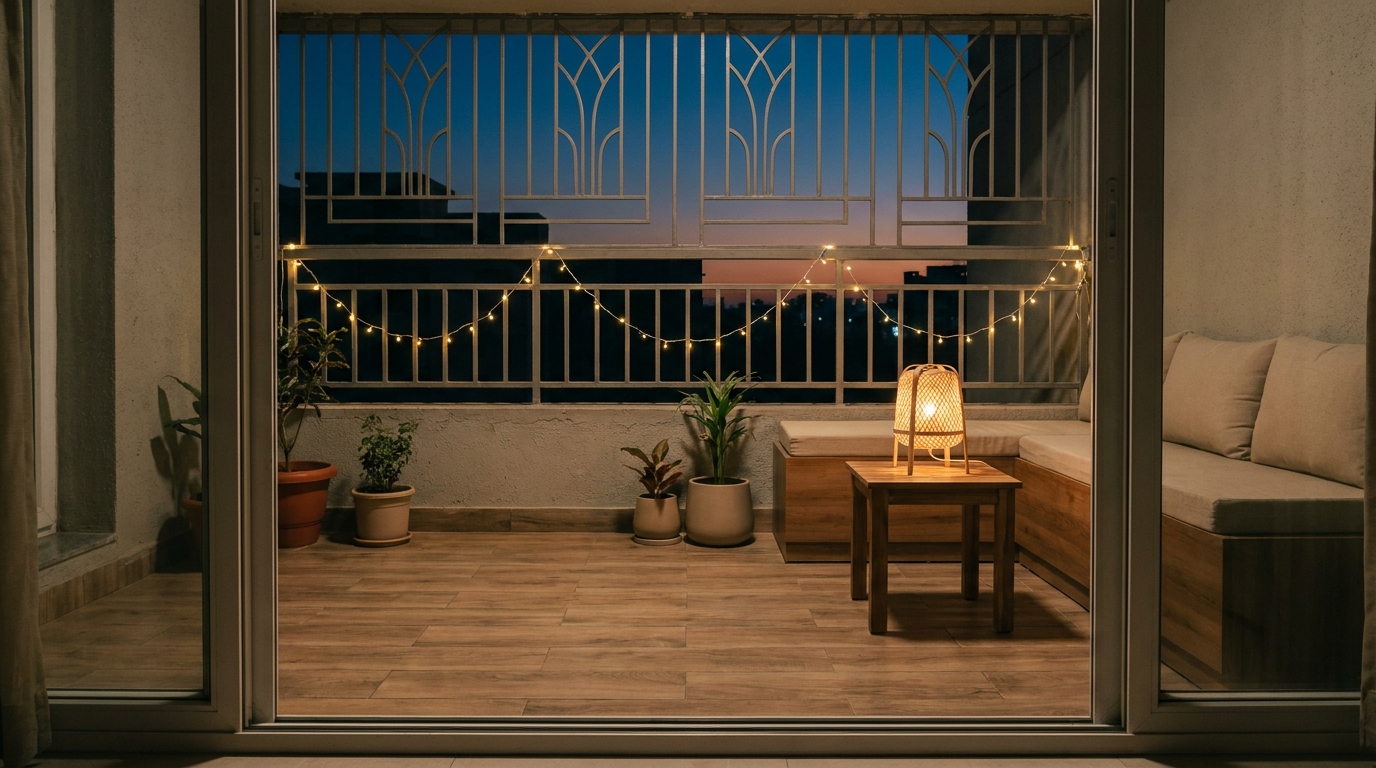
A single bare ceiling bulb is the fastest way to make a balcony feel like a utility space rather than a room harsh, flat, overhead light is functional but never inviting, and it's usually the reason a balcony that looks fine in daylight feels abandoned by evening.
A warm LED string light along the railing, paired with one small table lamp for evenings, changes the mood entirely without needing any electrical rework string lights typically run off a plug point you likely already have nearby. The warmth of the light matters as much as the placement: stick to warm white (2700K–3000K), not cool white, or the balcony will feel clinical instead of relaxed. This is one of the lowest-cost changes on the list and often has the most visible before/after impact, especially in photos.
5. Hide the Utility Stuff, Don't Eliminate It
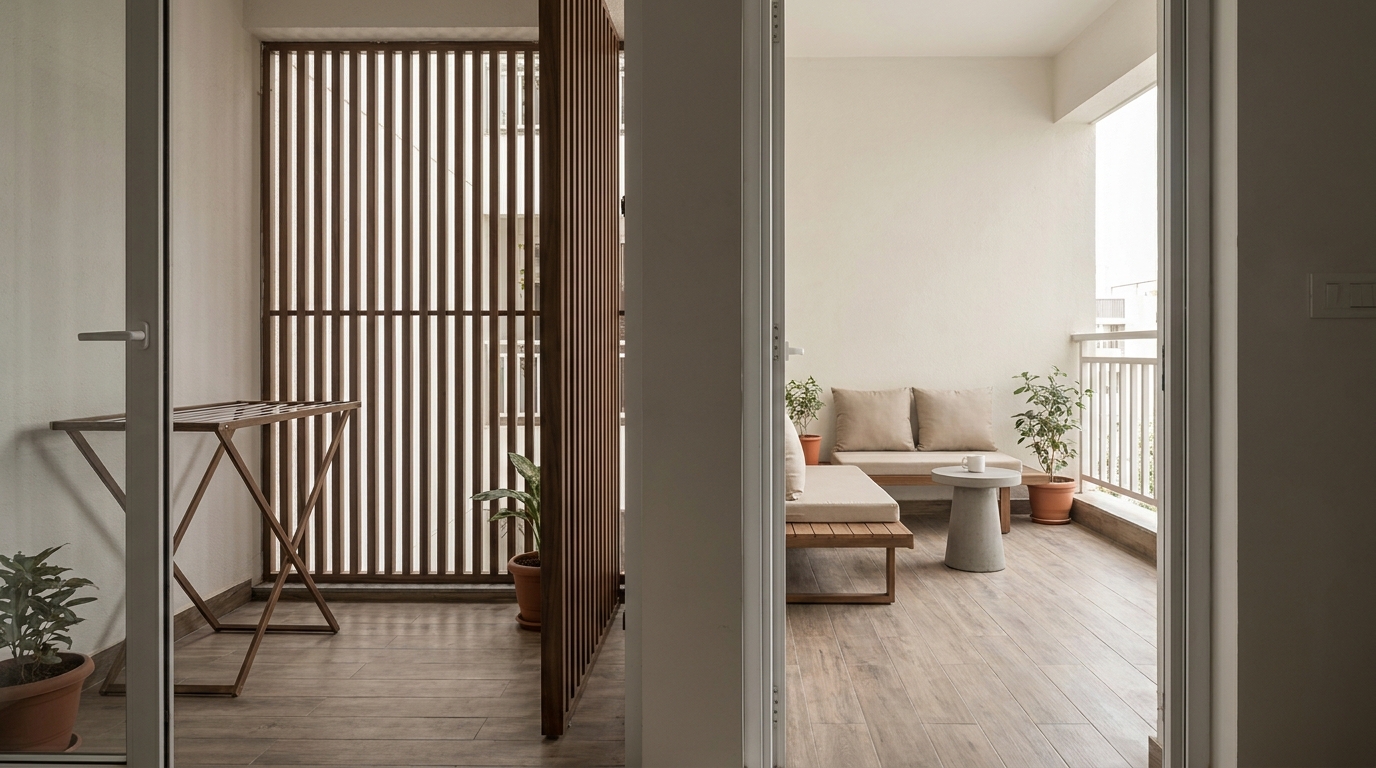
The drying rack, the storage boxes, the extra suitcase these don't have to disappear, and pretending a balcony can be entirely utility-free is usually unrealistic in an Indian home. What actually needs to happen is giving those items a boundary instead of letting them spread across the whole space.
A slim slatted wood screen or a tall cabinet with doors keeps utility items out of sight without requiring you to get rid of them. This is usually the single biggest visual fix on the list, because it's rarely one object causing the cluttered feeling it's the lack of separation between "things we use" and "things we sit in." Once there's a clear line between the two zones, both work better: the utility corner stays functional, and the seating area finally feels like an actual room.
The Real Shift
None of these five moves are expensive on their own new flooring is the only one that needs real budget, and even that can be phased. What actually changes the balcony is treating it like a room with a purpose, not the place where things get parked until someone deals with them.
Want a real estimate for your home?
Share your home in 2 minutes. We'll match you with verified designers in your city and give you a BOQ-level estimate before any work begins.
Share your home →