Turning a Bare Terrace Into an Outdoor Room
Six ways to turn a bare terrace into an actual room — morning coffee, evening lounge, container garden, monsoon-proofing, kids' play zone, and pet-friendly corner.
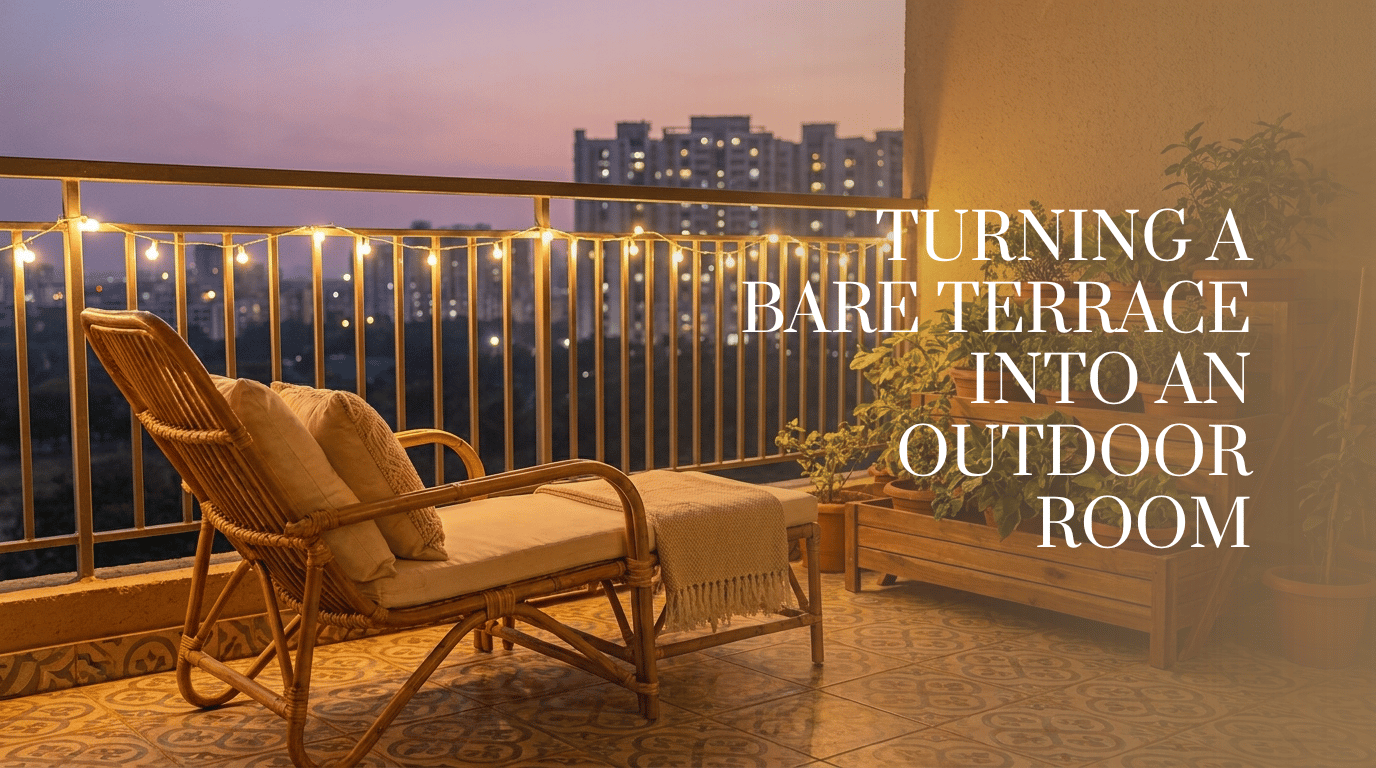
Most Indian apartment terraces exist in a strange in-between state too small to call a garden, too outdoor to furnish like a room, so they end up as the place where nothing quite belongs anywhere else. A spare chair migrates out there. A few plants get added over time without much plan. Eventually the terrace becomes a storage overflow with a nice view, rather than a space anyone actually goes to on purpose.
That's usually not a size problem. Even a modest terrace 60 to 100 sq ft, which covers most Indian apartment terraces has enough room to function as a real outdoor room, provided it's treated with the same intentionality as an indoor space: a defined purpose for each zone, materials that can handle sun and rain, and lighting that makes it usable after dark, not just during the two hours of pleasant morning weather. What follows isn't one terrace shown from six angles it's six different ways a terrace can work, each suited to a different way of actually using the space, shown in the lighting and mood that fits it.
1. The Morning Coffee Corner
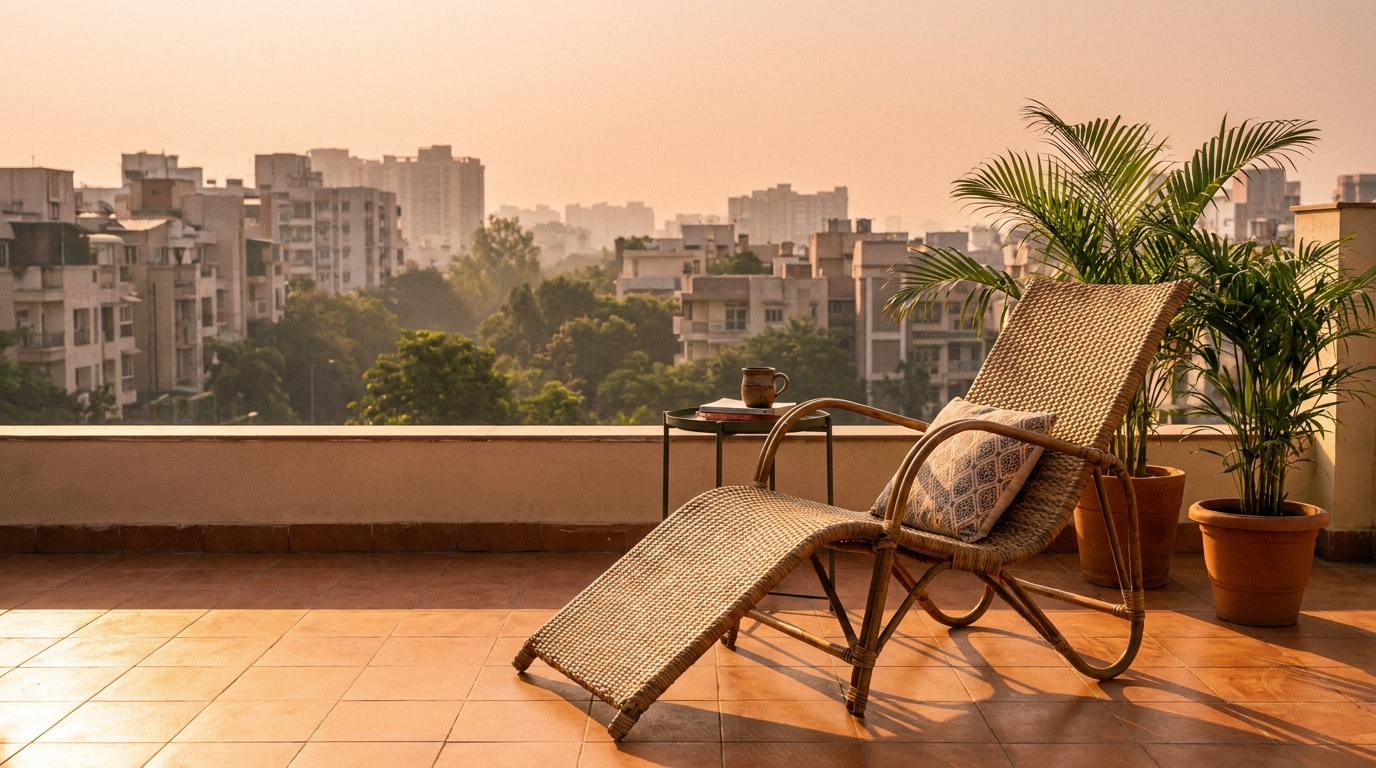
For households where the terrace's main job is five quiet minutes with coffee before the day starts, the layout needs almost nothing one comfortable chair, a small side surface, and east-facing exposure that catches early light. This is the lowest-effort, lowest-cost terrace concept on this list, and often the one that actually gets used most, because it asks so little of the person using it.
The chair matters more than anything else here it should be genuinely comfortable for sitting still in for ten minutes, not a decorative piece that looks right in photos but gets abandoned after one use. A small side table just large enough for a cup and a phone is enough; resist the urge to add more furniture than the ritual actually needs.
2. The Evening Wind-Down Lounge
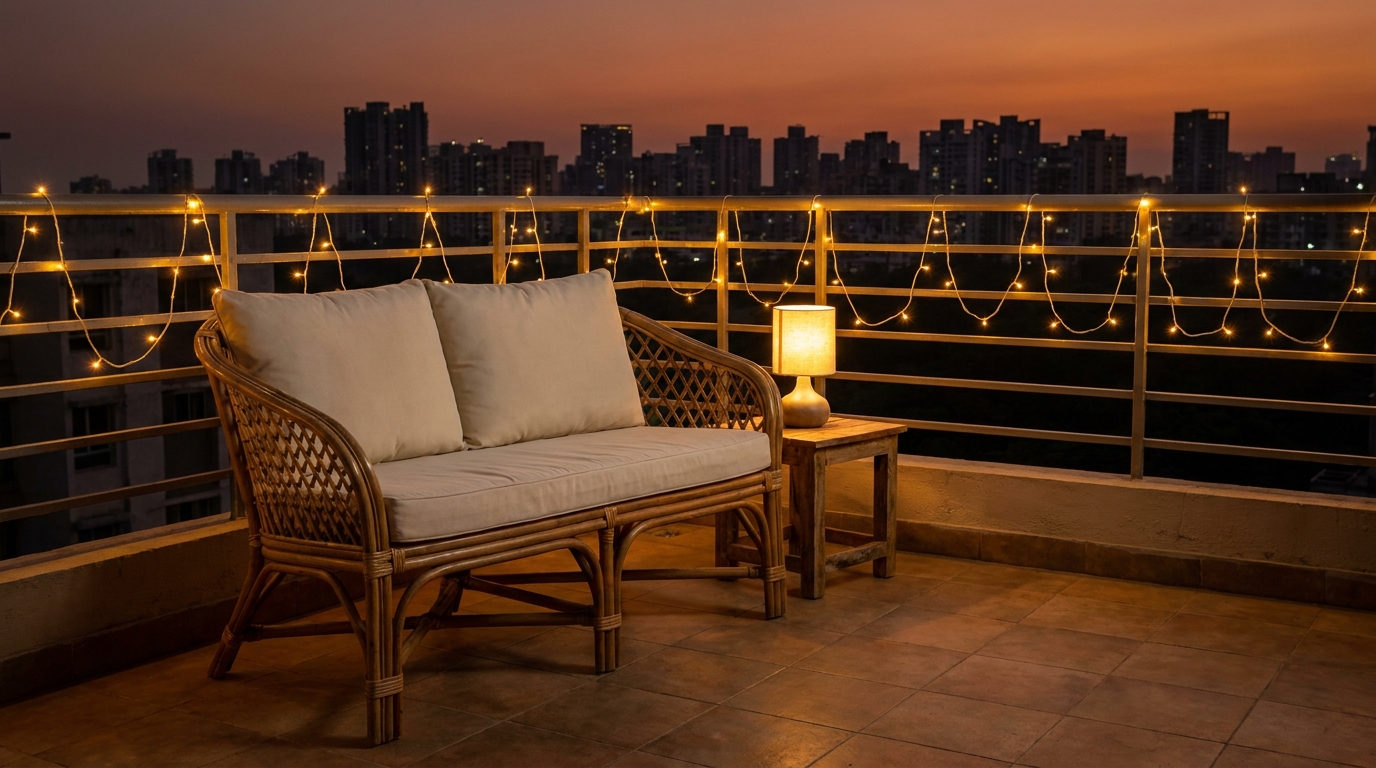
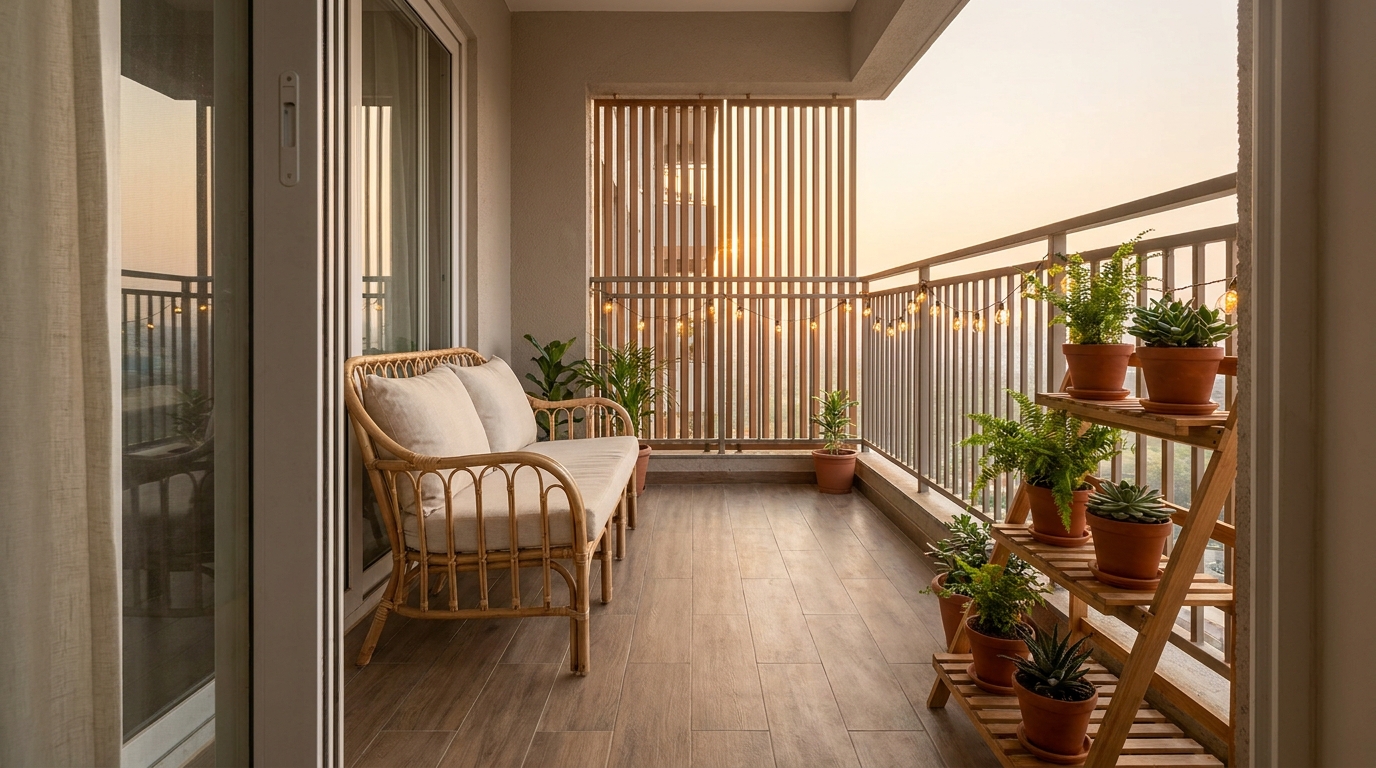
A terrace styled for evening use needs a completely different lighting plan than one styled for morning warm layered light rather than relying on daylight, and seating oriented toward conversation rather than a solo view. This version works well for households that treat the terrace as a decompression spot after work, often with a partner or a phone call rather than alone with coffee.
Warm LED string lighting along the railing, paired with one low table lamp, gives the space its own evening identity distinct from the harsher overhead light of the rest of the home. A low two-seater bench with weather-resistant cushions keeps the footprint manageable while still giving two people a proper place to sit.
3. The Container Garden Zone
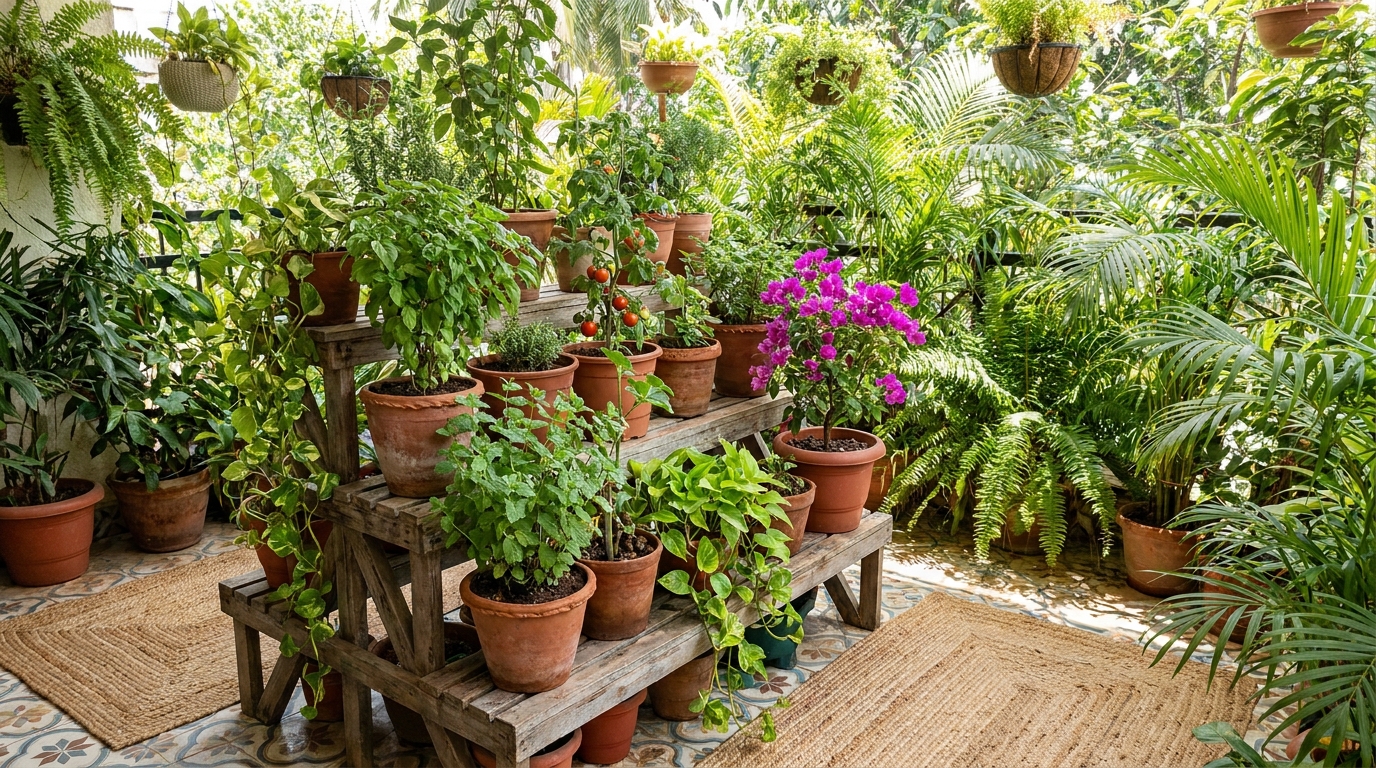
For households where the terrace's primary purpose is genuinely growing things not just a couple of decorative pots a dedicated container garden zone with tiered shelving and mixed planter sizes makes far better use of limited space than scattered pots wherever there's a gap. This version leans into a slightly wilder, greener visual mood than the others, since the plants themselves are the point.
Grouping by sun requirement rather than just aesthetics matters here herbs and vegetables that need full sun should sit at the terrace's brightest edge, while shade-tolerant foliage plants can fill in corners with less direct light. A simple drip or manual watering routine is worth planning for before the garden gets large enough that watering becomes its own daily project.
4. The Monsoon-Ready Covered Corner
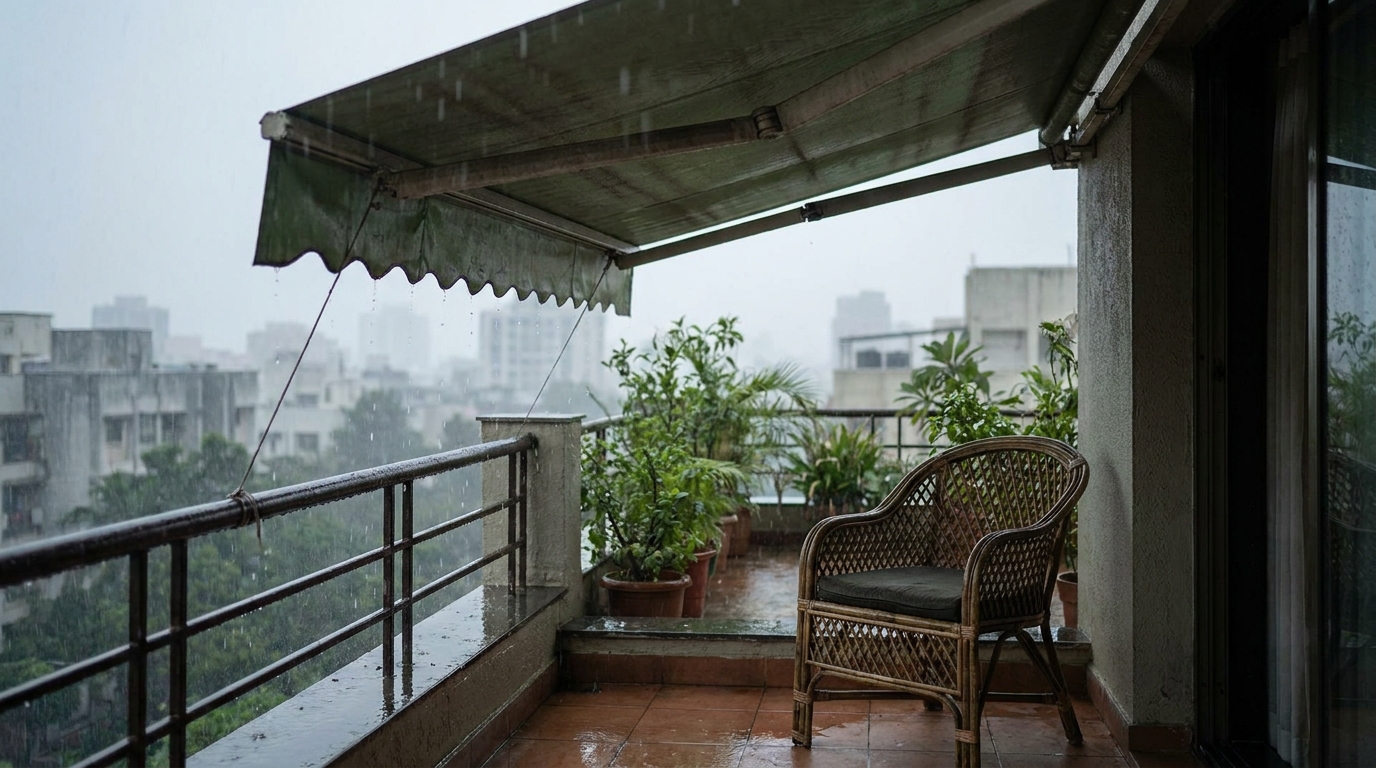
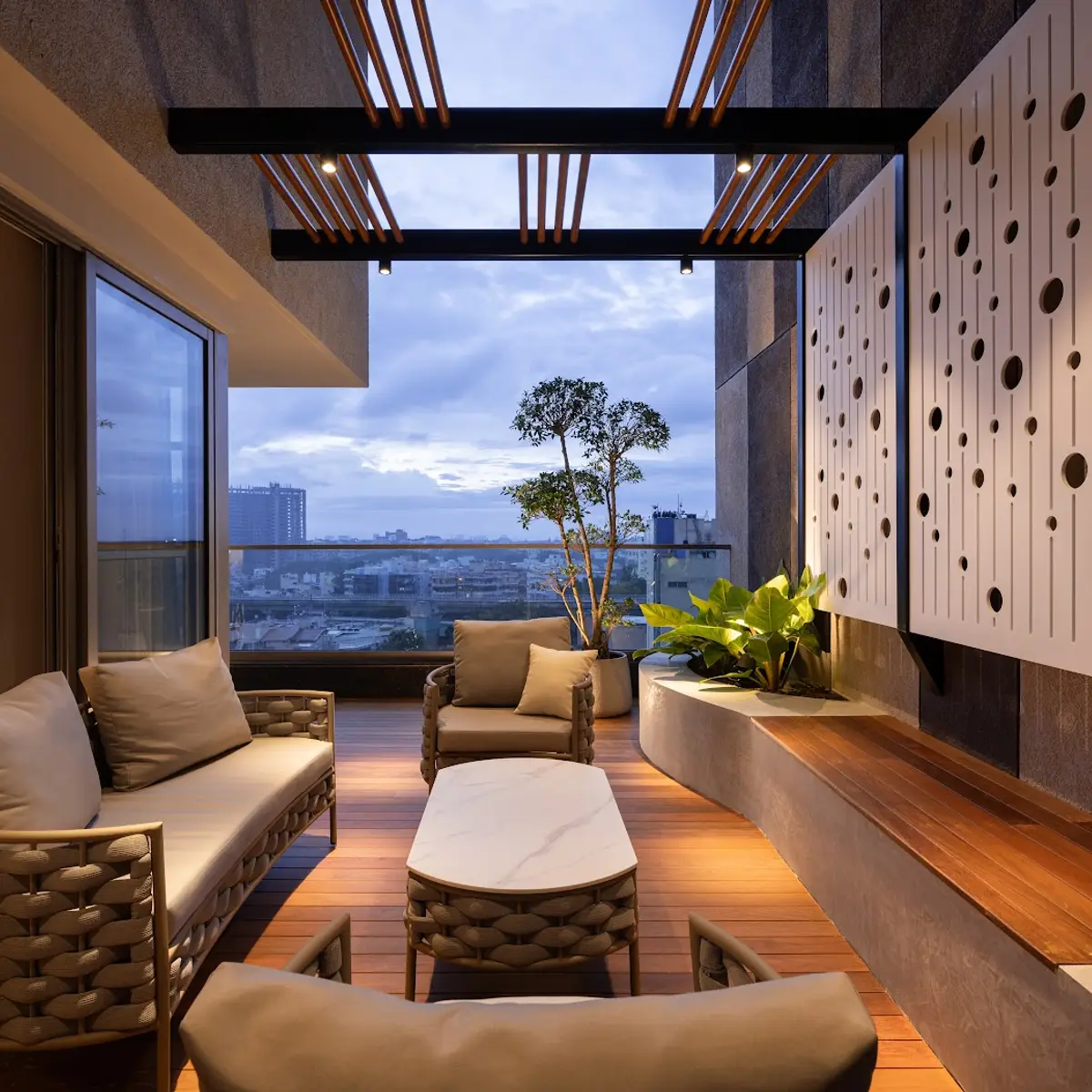
Most terrace furniture and plants get dragged indoors every monsoon because the space wasn't planned to handle rain at all which means the terrace effectively goes unused for a third of the year. A partially covered corner, using a simple retractable awning or a fixed overhang section, keeps at least part of the terrace usable through the rainy months without needing to fully enclose it.
This version has a distinctly different mood from the others softer, greyer light, visible rain in the background, water beading on outdoor-grade surfaces because the whole point is showing the terrace still works when the weather doesn't cooperate. Furniture in this zone should specifically be rated for damp conditions, not just general outdoor use, since covered doesn't mean fully dry.
5. The Kids' Play Corner
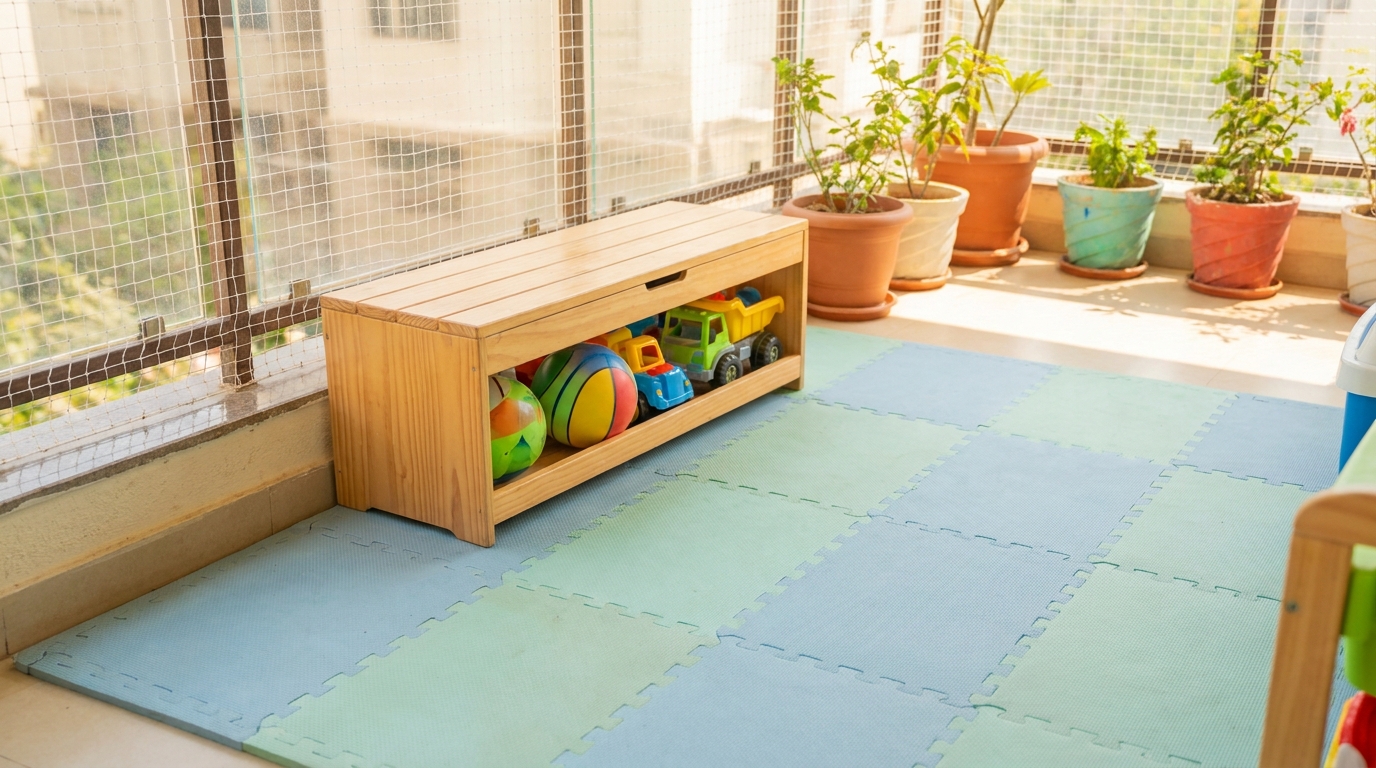
For families with young children, a small dedicated play zone soft flooring, low storage for outdoor toys, and nothing breakable within reach turns the terrace into supervised outdoor space without needing to leave the apartment. This version has a brighter, more playful visual tone than the others, since the priority here is safety and fun rather than adult relaxation.
Interlocking rubber or foam floor tiles over a small section make the space forgiving for falls, and a low, closed storage bench keeps outdoor toys contained rather than scattered across the terrace between uses. Railing height and gap spacing are worth double-checking specifically for this zone what's fine for adult use isn't automatically safe for a small child.
6. The Pet-Friendly Terrace
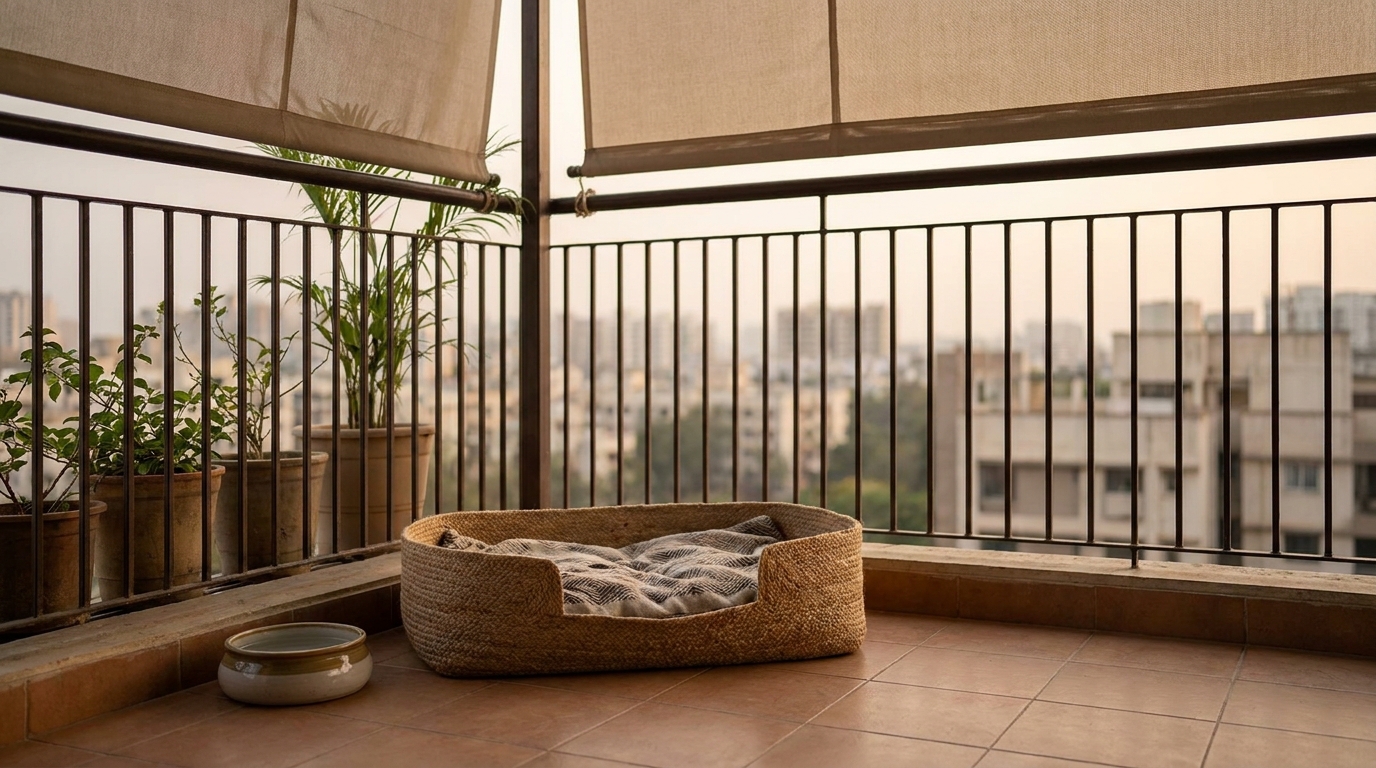
For households with a dog or cat that spends time outdoors, a terrace zone built around pet needs shaded rest spot, secure railing, easy-clean flooring solves for a different set of priorities than any of the other five versions. This one leans into a calmer, more natural visual mood, with a pet bed and water bowl as the defining details rather than human furniture.
Shade matters more here than in a human lounging zone, since pets can't simply move themselves indoors the way a person can when the sun gets too strong midday an awning, an umbrella, or even a strategically placed large plant can provide enough relief. Flooring that's easy to hose down and railing gaps checked specifically for a pet's size round out the practical side of this setup.
The Real Shift
None of these six terrace concepts require the same terrace to do all six things at once most homes will lean into just one or two, based on how the household actually lives. What changes the terrace from unused storage overflow to an actual room is picking the zone that matches real daily use, then committing to the lighting, flooring, and furniture that specific use actually needs rather than furnishing generically and hoping it gets used for everything.
Want a real estimate for your home?
Share your home in 2 minutes. We'll match you with verified designers in your city and give you a BOQ-level estimate before any work begins.
Share your home →