8 Lighting Mistakes That Make an Indian Home Feel Flat
Eight lighting habits quietly working against every other design decision made in the home.
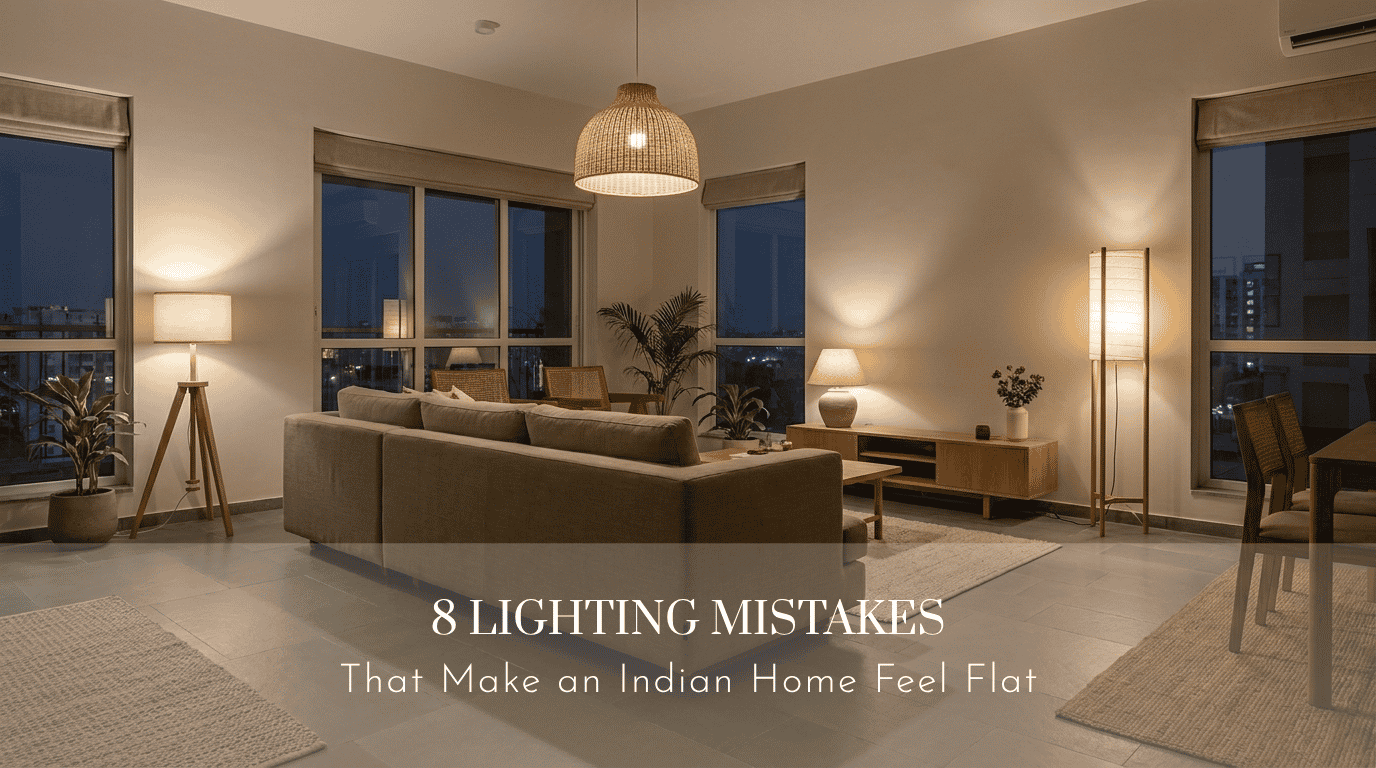
Lighting gets treated as the last decision in most Indian home renovations usually settled in a single trip to the electrical shop after everything else is finalized. That's a mistake, because lighting affects how a room feels more than almost any other single design choice. A beautifully furnished room under the wrong light still feels flat, tired, or clinical. A modestly furnished room under the right light feels considered and warm. These eight mistakes show up again and again in Indian homes, and every one of them is fixable without a major renovation.
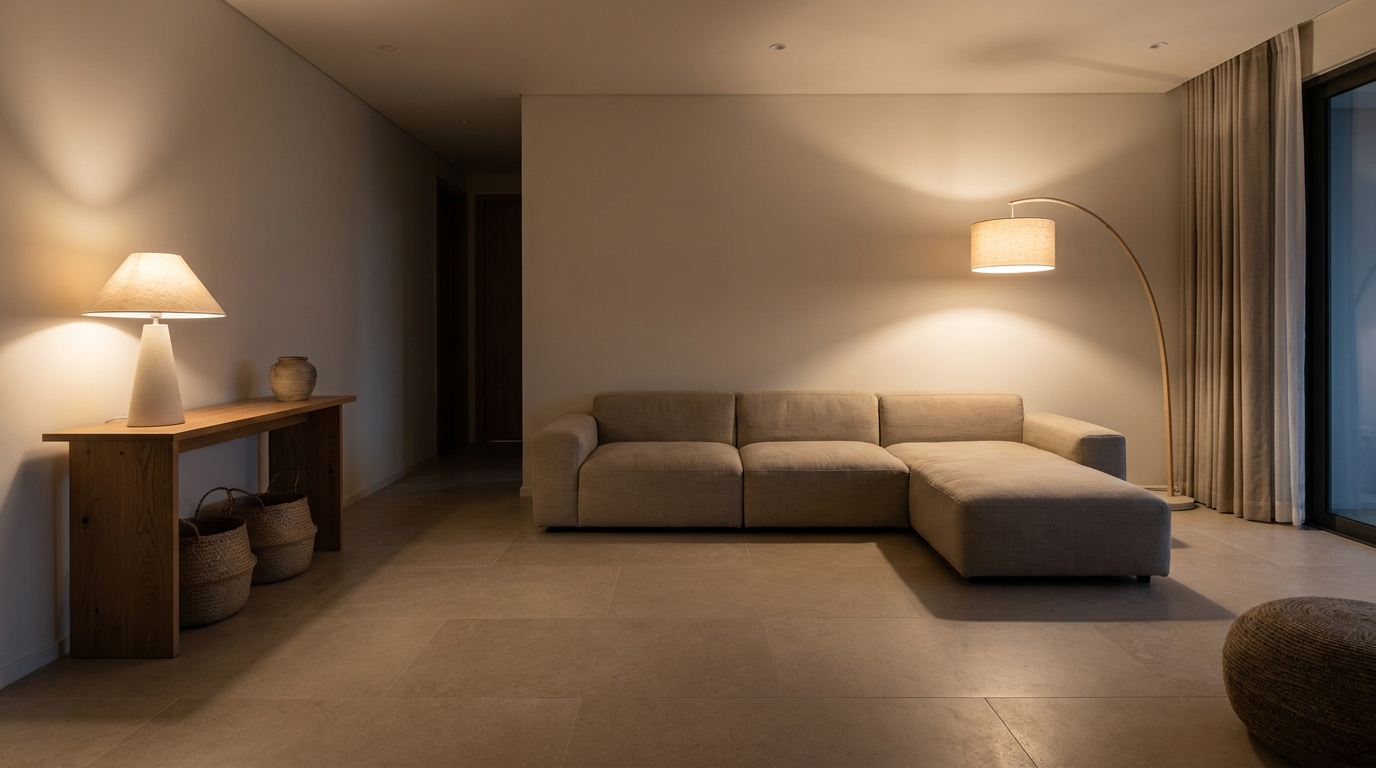
Relying on a Single Ceiling Light for the Whole Room
The most common lighting setup in Indian homes is one central ceiling fixture doing all the work bright enough to see by, but flat and shadowless in a way that makes the room feel more like an office than a living space. A single overhead source lights everything evenly, which sounds good on paper but actually removes all the depth and contrast that make a room feel dimensional.
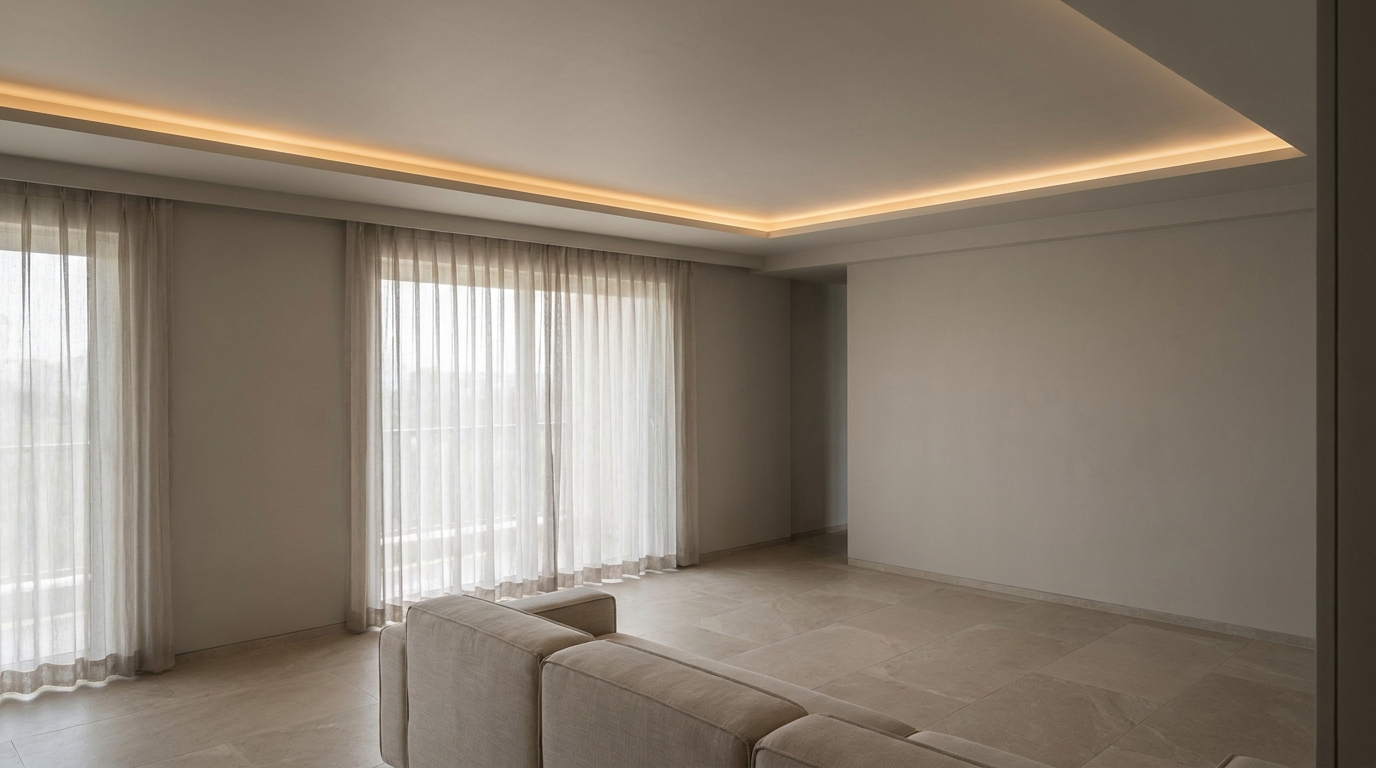
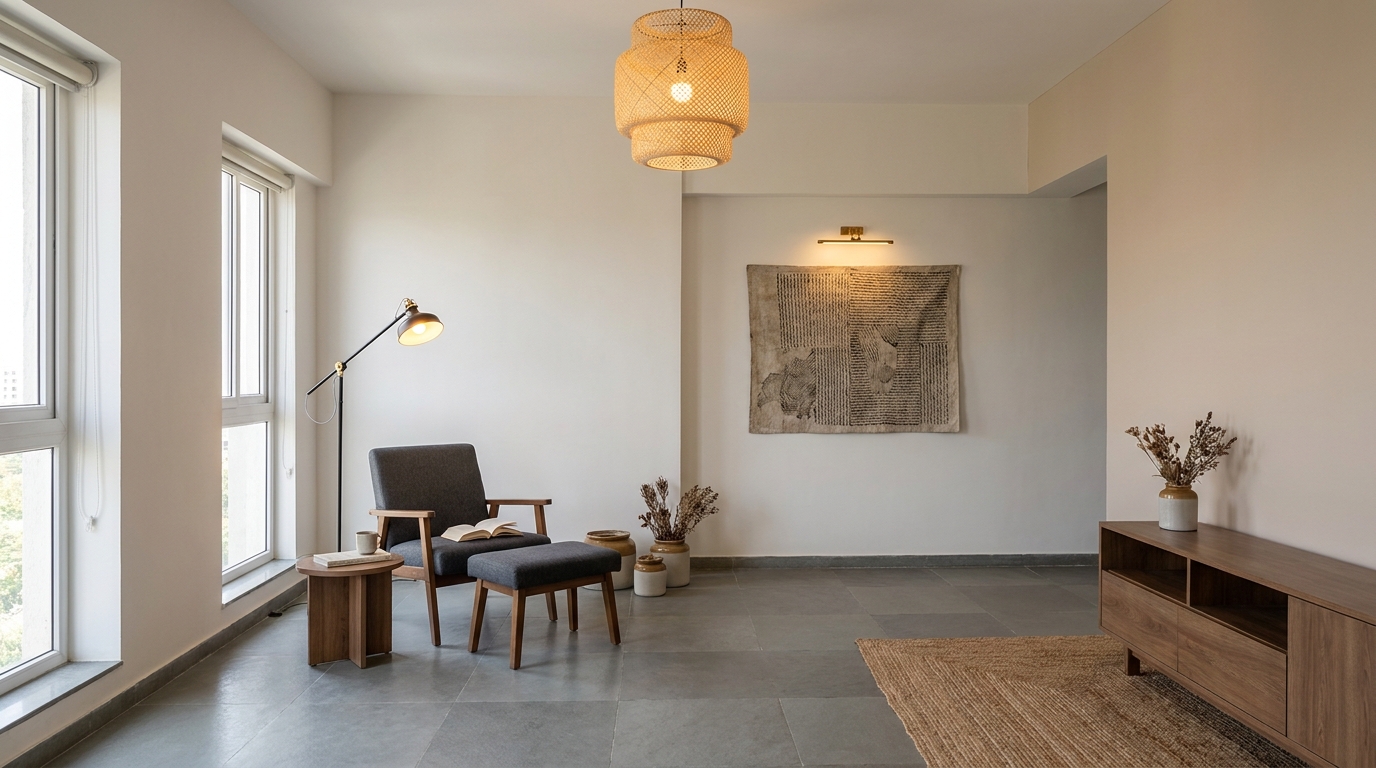
The fix is layering: combine the ceiling light with at least one or two secondary sources a floor lamp, a table lamp, a wall sconce — placed at different heights around the room. Layered light creates pools of brightness and shadow that give the room a sense of depth, and it also means the room can shift moods by turning different combinations on or off, rather than being stuck at one uniform brightness all evening.
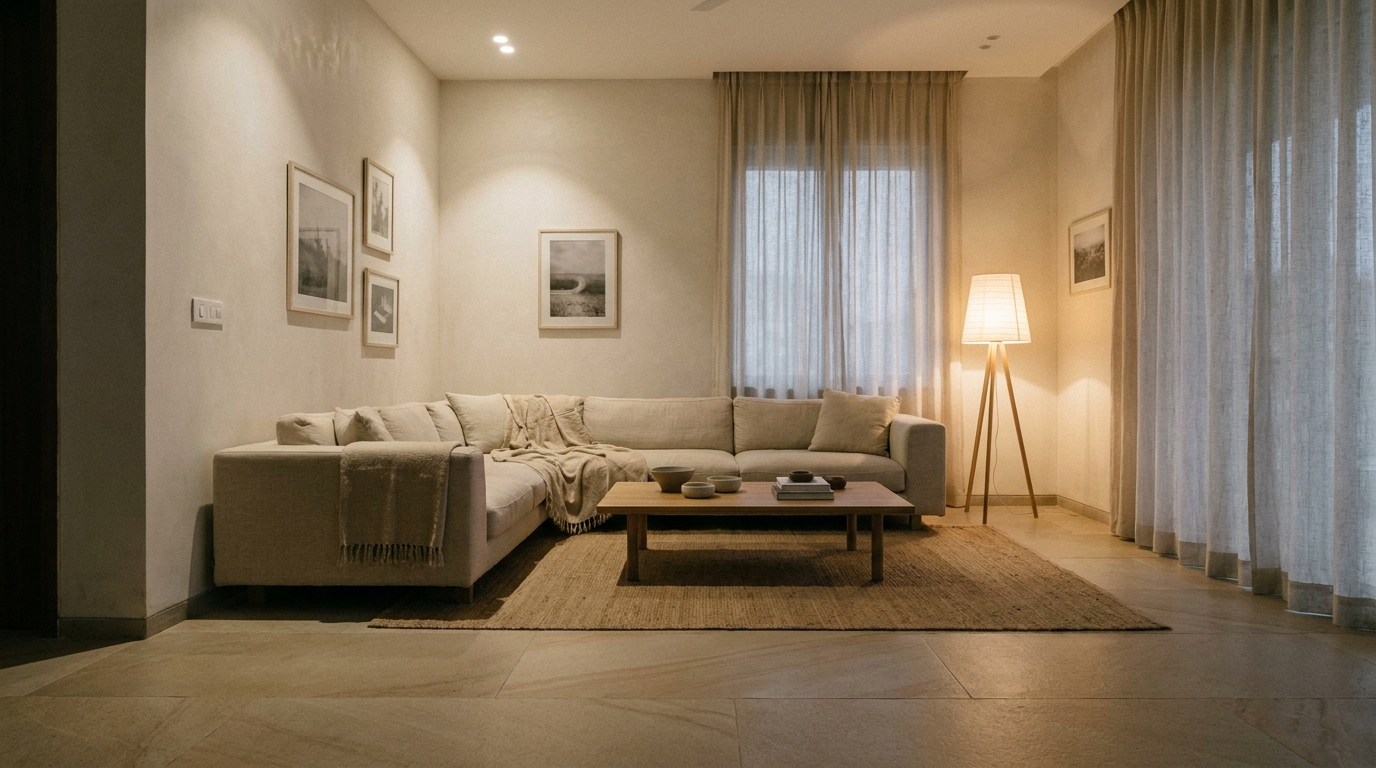
Using Cool White Light Throughout the Home
Cool white LED bulbs (5000K–6500K) are common in Indian homes partly because they're marketed as "brighter" and partly because they're the default stock at most electrical shops. But cool white light reads as clinical and sterile in living and bedroom spaces it's better suited to task-heavy areas like kitchens or study desks than to spaces meant for relaxing.
Switching to warm white (2700K–3000K) throughout living rooms and bedrooms makes an immediate difference to how the space feels, without changing a single fixture often it's just a matter of choosing a different bulb temperature at the same wattage. If brightness is a genuine concern, warm white bulbs are available at higher lumens too, so there's no real trade-off between warmth and adequate light levels.
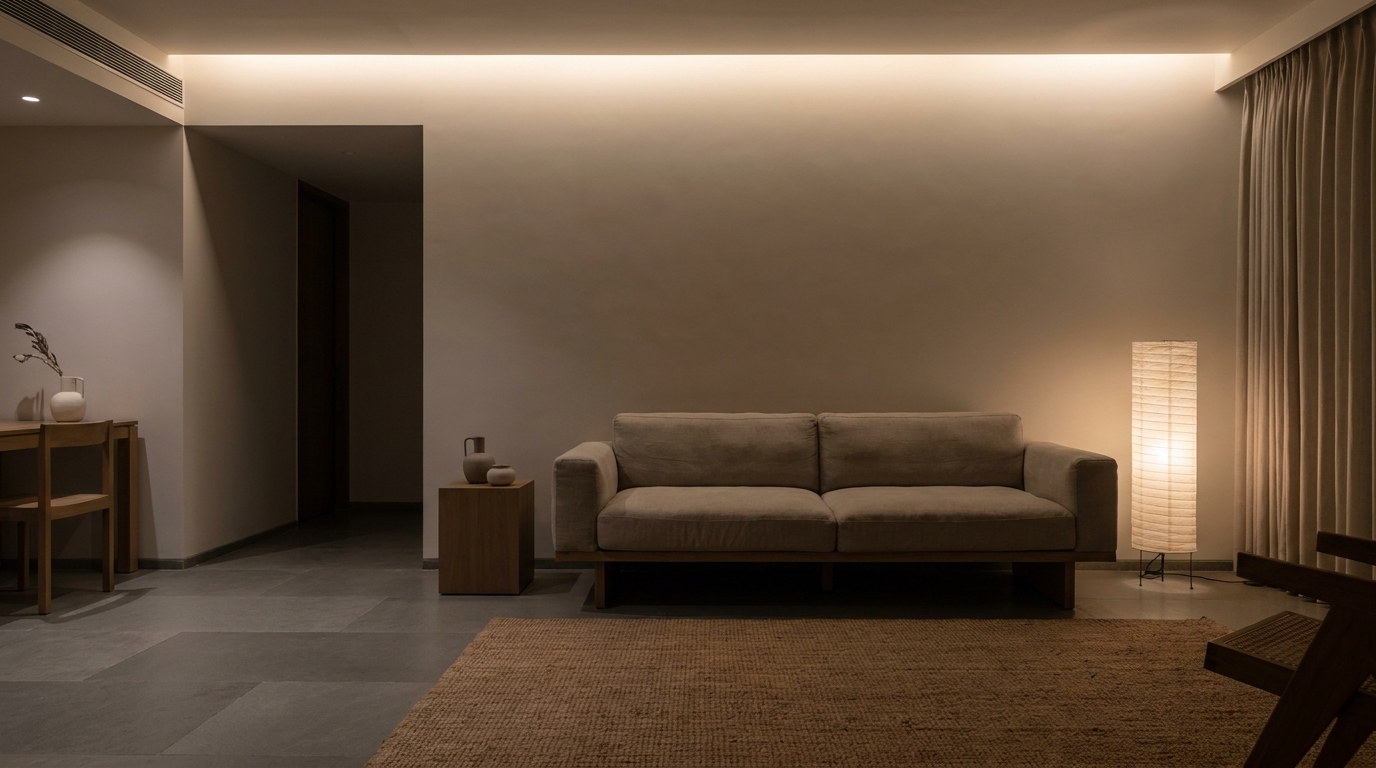
No Dimmers Anywhere in the Home
Fixed-brightness lighting means a room is stuck at one intensity level regardless of the time of day or the mood needed full brightness for a movie night, full brightness for a quiet evening, full brightness for entertaining guests. Without a dimmer, the only adjustment available is turning lights fully on or fully off, which is a blunt tool for something that should be adjustable.
Adding dimmer switches to at least the living room and bedroom's main fixtures is a relatively small electrical addition during a renovation, and it gives a home the flexibility to shift from bright and functional during the day to soft and relaxed in the evening all from the same fixtures. For homes where rewiring isn't an option, dimmable smart bulbs achieve a similar effect without any electrical work at all.
Skipping Task Lighting in Work and Prep Areas
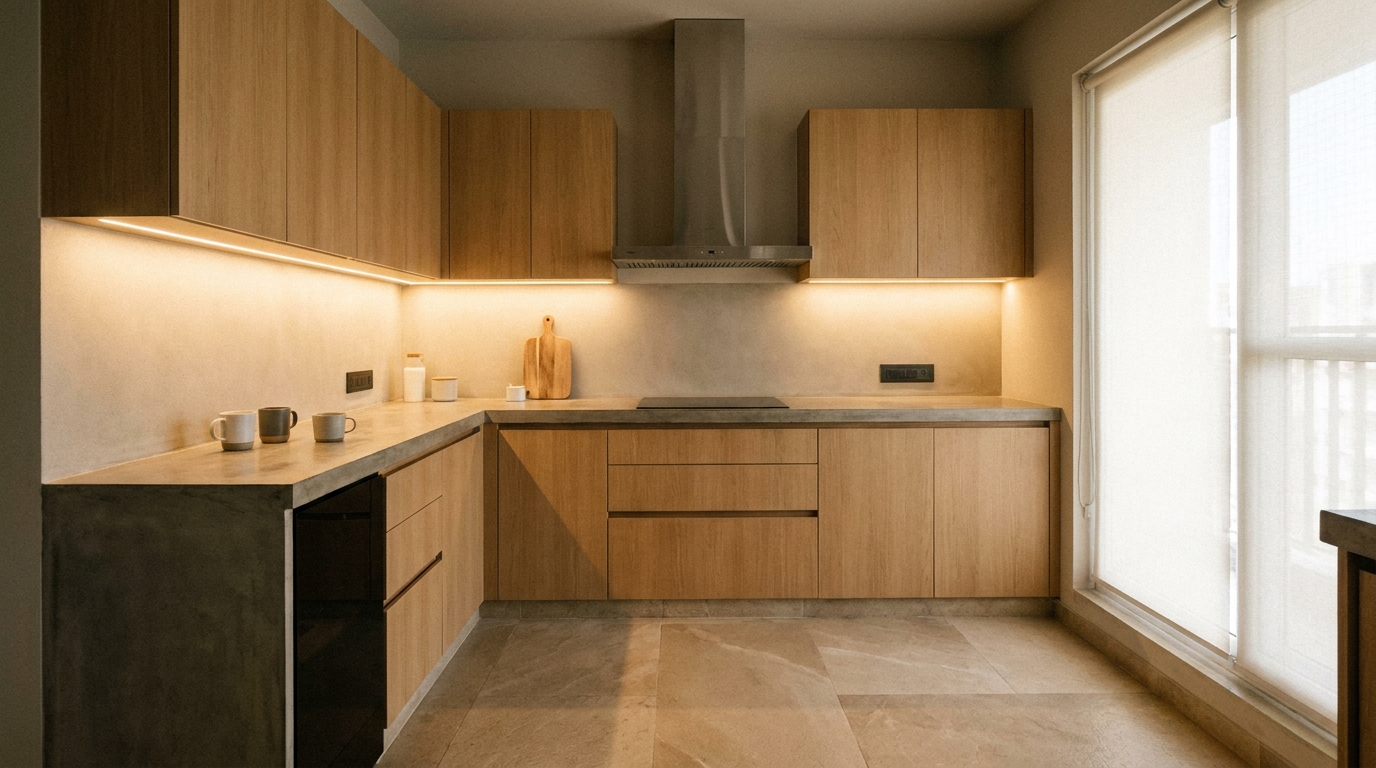
Kitchens, study desks, and dressing areas often rely on the same general room lighting used everywhere else, which leaves the specific surface being worked on under-lit even when the room overall feels bright enough. Chopping vegetables under a dim shadow cast by your own body, or reading at a desk lit only by an overhead bulb across the room, are both signs of missing task lighting.
Under-cabinet LED strips in the kitchen, a dedicated desk lamp for a study area, and vanity-style lighting around a dressing mirror all solve this directly the goal is light falling exactly where the task happens, independent of how the rest of the room is lit.
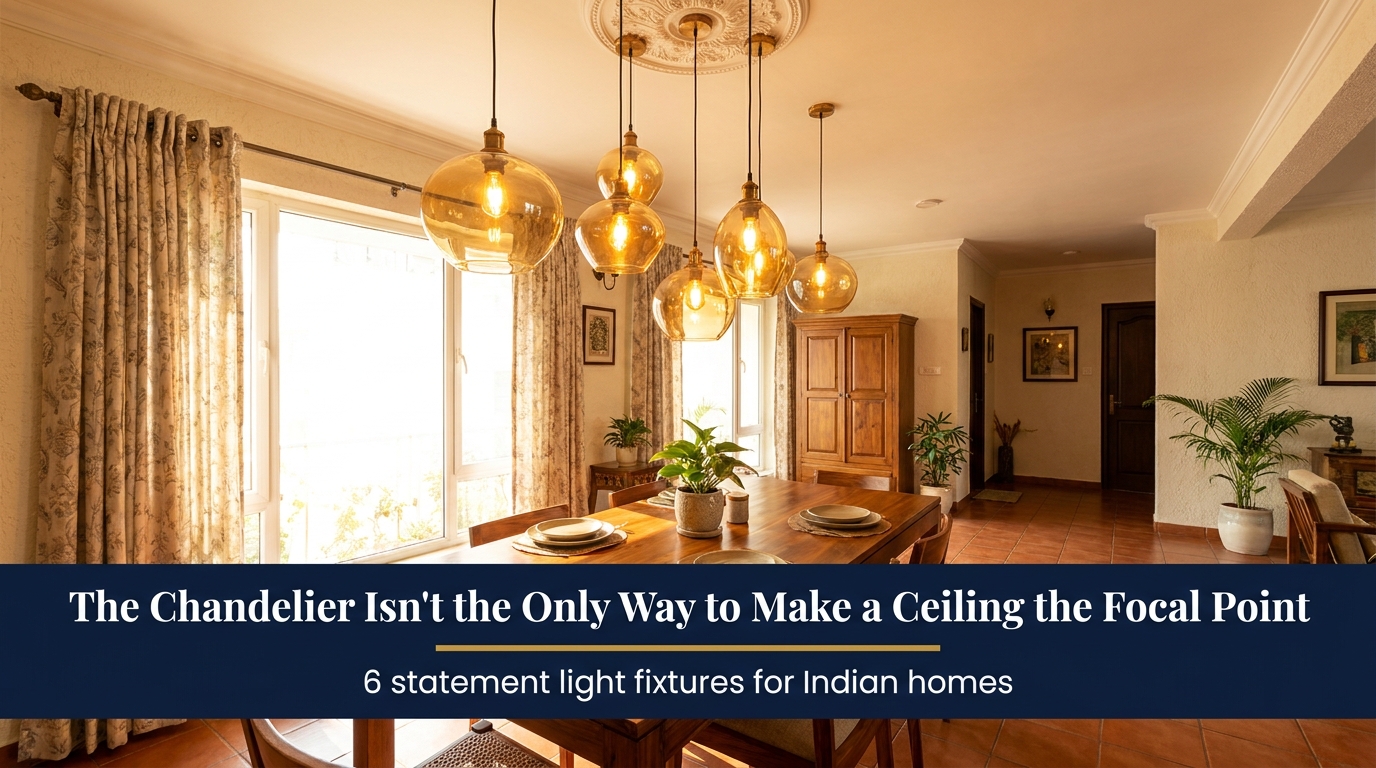
Placing Lights Without Considering Furniture Layout
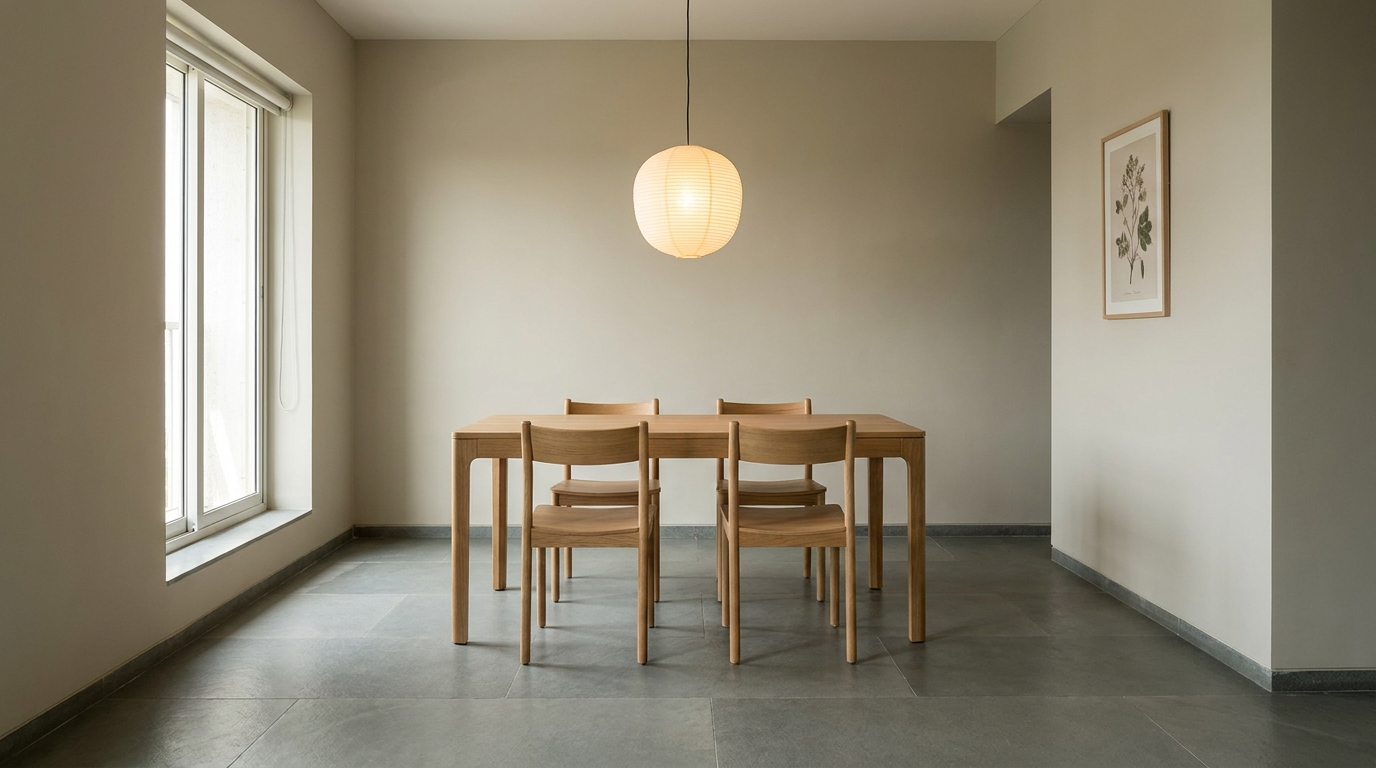
Ceiling lights and switch points are frequently finalized during construction, well before furniture placement is decided which often results in a pendant light hanging off-center from where the dining table eventually goes, or a reading lamp with nowhere sensible to plug in near the actual reading chair. The mismatch is subtle in person but shows up constantly in daily use, in small frustrations that are hard to trace back to their actual cause.
Where possible, involve lighting planning at the same stage as furniture layout planning, not before it even a rough sense of where the sofa, bed, and dining table will sit is enough to place ceiling points and switches where they'll actually be useful, rather than symmetrically centered in a room whose furniture won't be centered at all.
Leaving Balconies and Entryways with No Real Lighting Plan
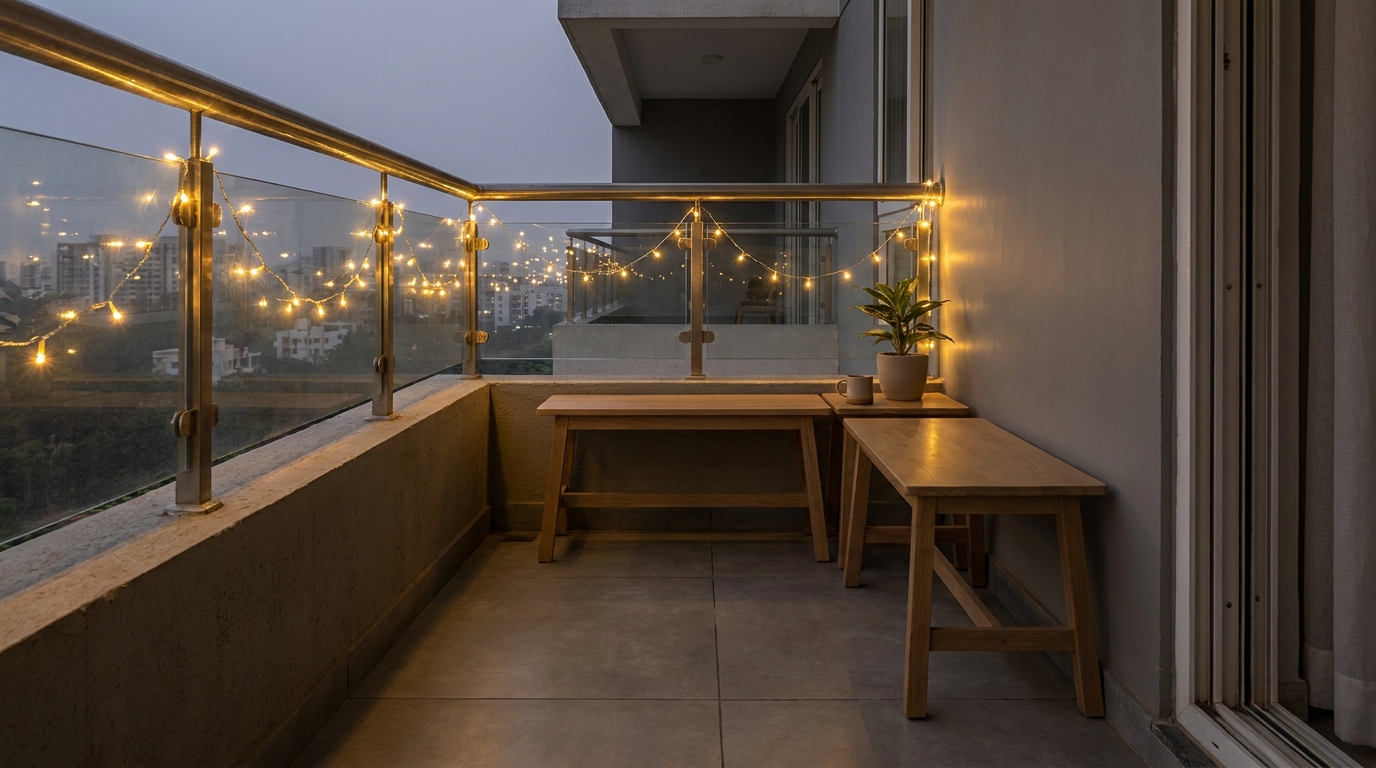
Balconies and entryways are commonly treated as afterthoughts in lighting plans they get whatever spill light happens to reach them from adjacent rooms, rather than a fixture of their own. This leaves two of the most-used transitional spaces in a home dim by default, even when the rooms on either side are well-lit.
A simple warm wall sconce or a string of warm LED lights at the entry and balcony gives both spaces their own light source, independent of borrowed glow from elsewhere and it's usually a low-cost addition compared to the lighting budget for the rest of the home.
Overlooking Wardrobe and Cabinet Interior Lighting
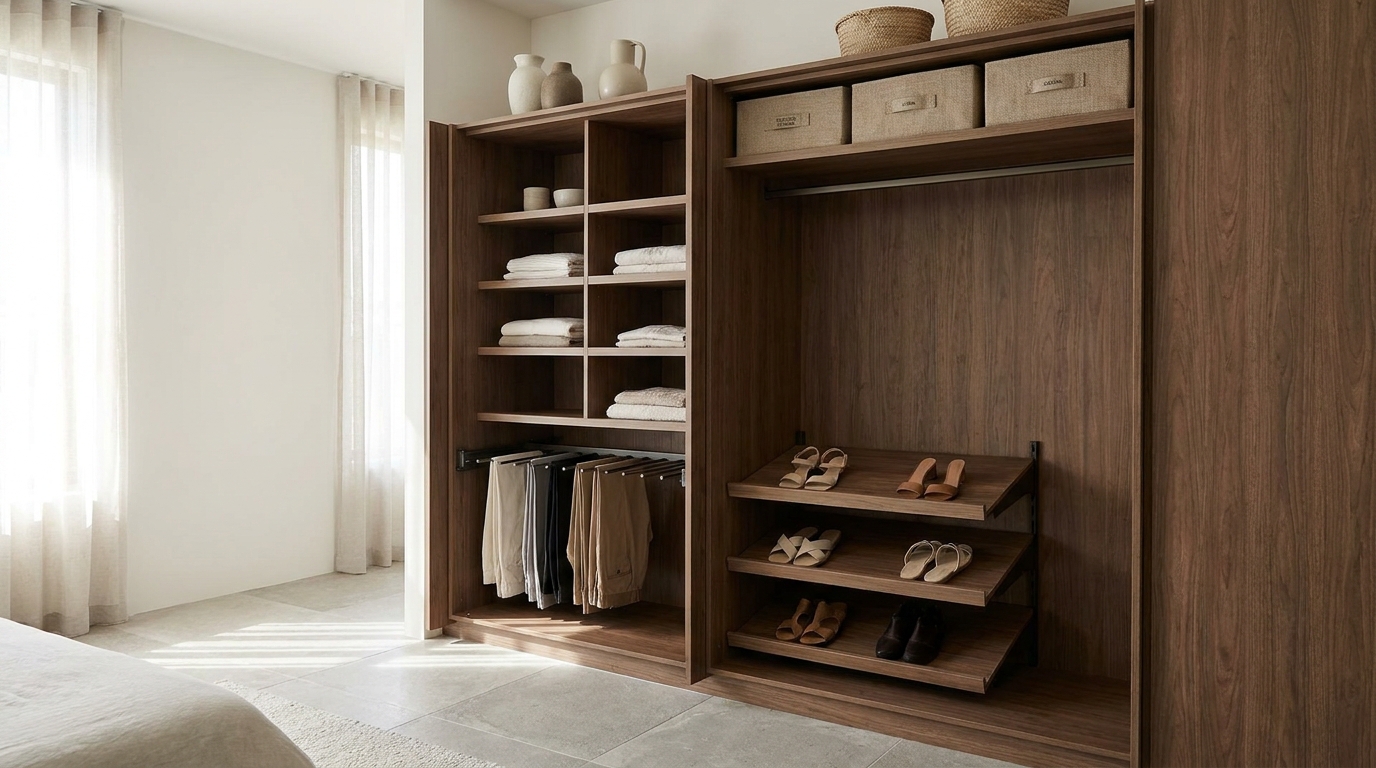
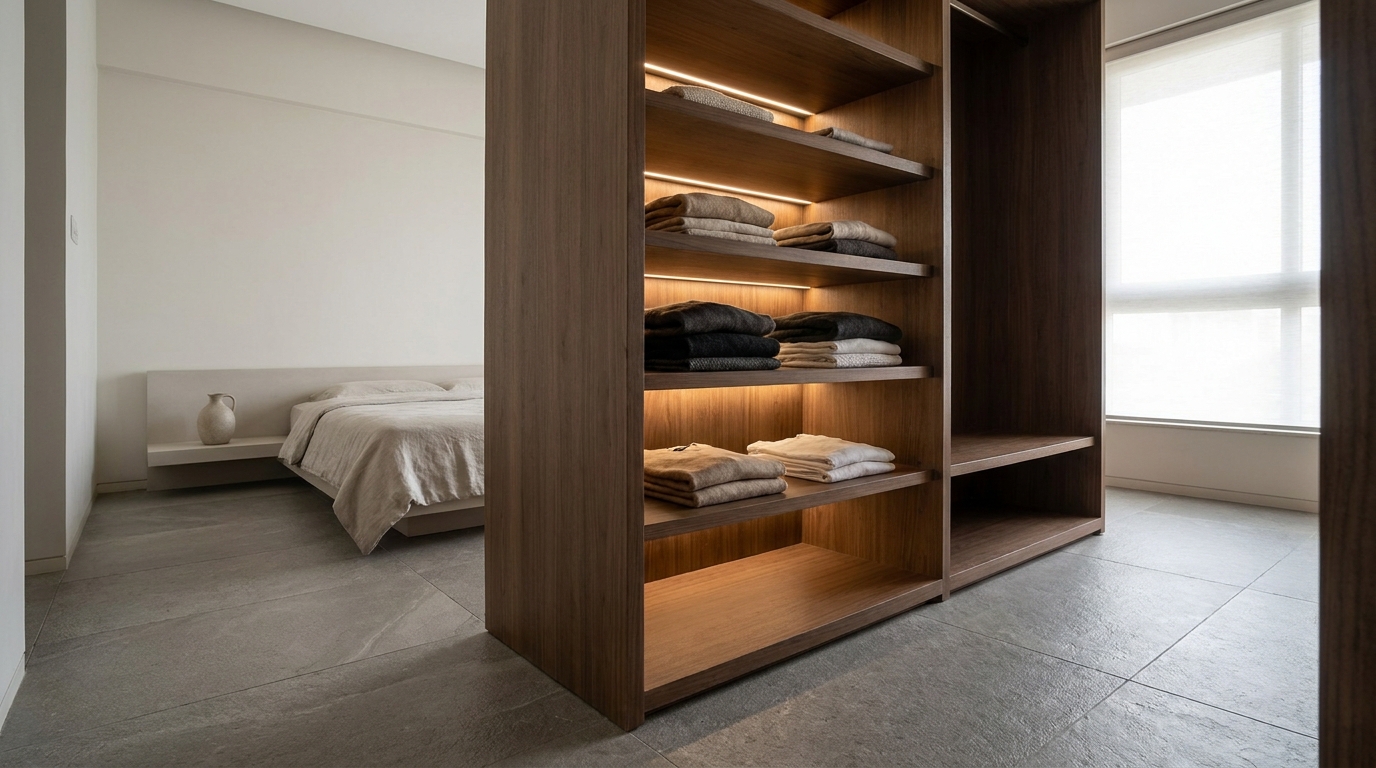
A wardrobe or cabinet that goes completely dark once the door closes is easy to overlook during planning, since it's not part of the "visible" room lighting but it's a detail that gets used daily, often at exactly the moments when good light matters most (getting dressed in a hurry, finding something specific in a dim cabinet).
Motion-sensor LED strips inside wardrobes and taller cabinets are inexpensive to add during construction and solve this completely, removing the daily friction of searching a dark shelf by phone flashlight or overhead room light that doesn't really reach inside.
Choosing Fixtures Before Deciding What Each Room Needs
It's common to pick light fixtures the same way furniture gets picked by browsing a catalogue for what looks good before actually deciding what function each light in the room needs to serve. This backwards approach often results in a beautiful pendant light that provides too little actual illumination, or a bright flush-mount fixture in a spot that needed something softer and more decorative.
The better sequence is deciding function first (ambient, task, or accent) for each light point in a room, and only then choosing a fixture that fits both that function and the room's style rather than starting with an aesthetic choice and hoping it happens to light the room correctly.
Want a real estimate for your home?
Share your home in 2 minutes. We'll match you with verified designers in your city and give you a BOQ-level estimate before any work begins.
Share your home →