9 Things Nobody Tells You About Renovating a Rental Apartment
Nine realities of designing a home you don't own — from written agreements to what actually survives a security deposit inspection.
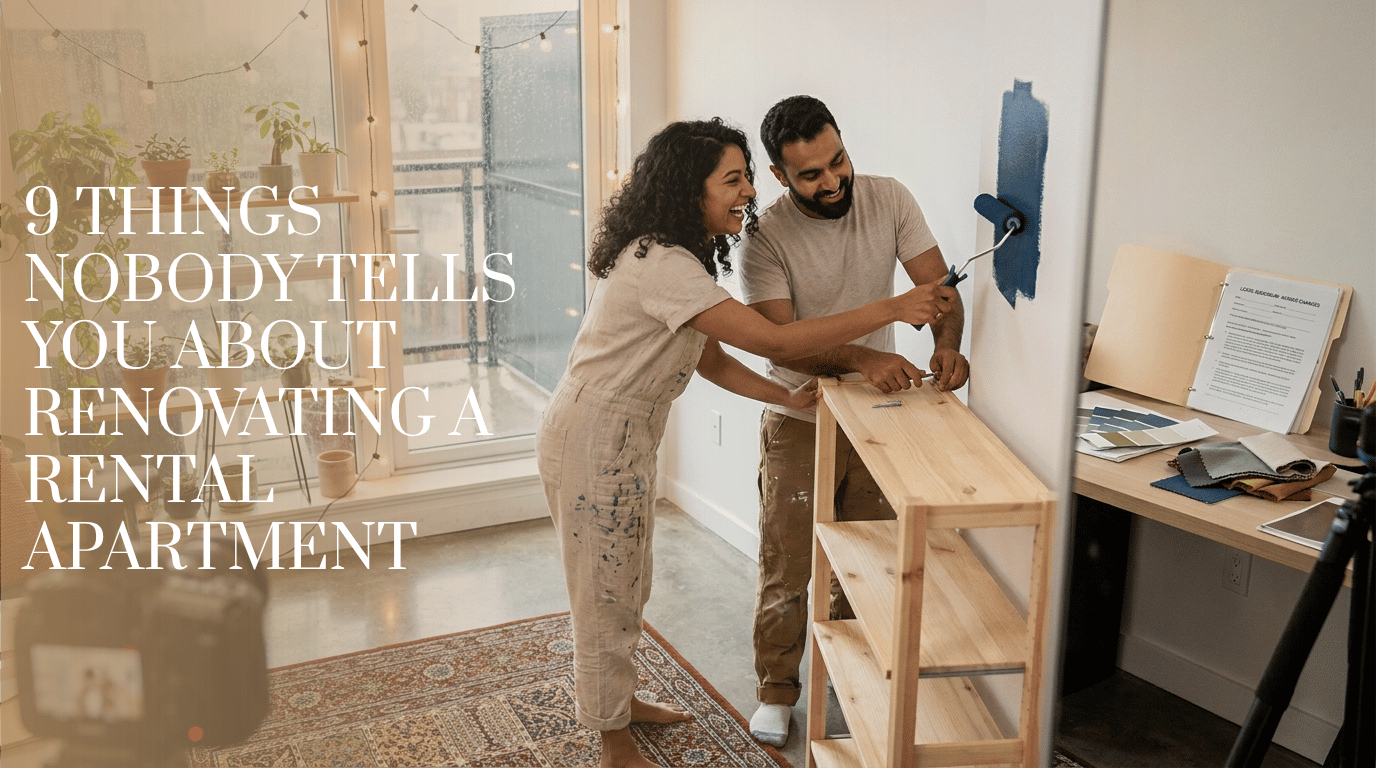
Most interior design content including a fair amount of what's on this blog assumes you own the home you're renovating. Renters are a real and growing share of Indian apartment dwellers, especially in Delhi NCR, Gurgaon, and Noida, where 2-3 year leases are common and full ownership renovations aren't always realistic. Renting doesn't mean living with a landlord's beige walls and a mismatched sofa for years. It means designing under a different set of constraints reversibility, budget recovery, and landlord relationships that ownership renovation content simply doesn't address.
Here are nine things that actually matter when you're designing a home you don't own.

Get the Renovation Terms in Writing Before You Start Anything
Verbal agreements with landlords about what you can and can't change tend to be remembered very differently by each party once the lease is up and there's a security deposit on the line. Before any work begins even something as minor as painting get a written addendum to the lease specifying exactly what changes are permitted, whether the landlord will contribute to costs, and what condition the property needs to be restored to at move-out.
This document doesn't need to be formal or lawyer-drafted. Even a simple email exchange confirming "landlord agrees tenant may paint the living room and install shelving, to be removed/restored at tenant's cost at lease end" creates a paper trail that protects both sides. Skipping this step is the single most common source of security deposit disputes in rental renovations.
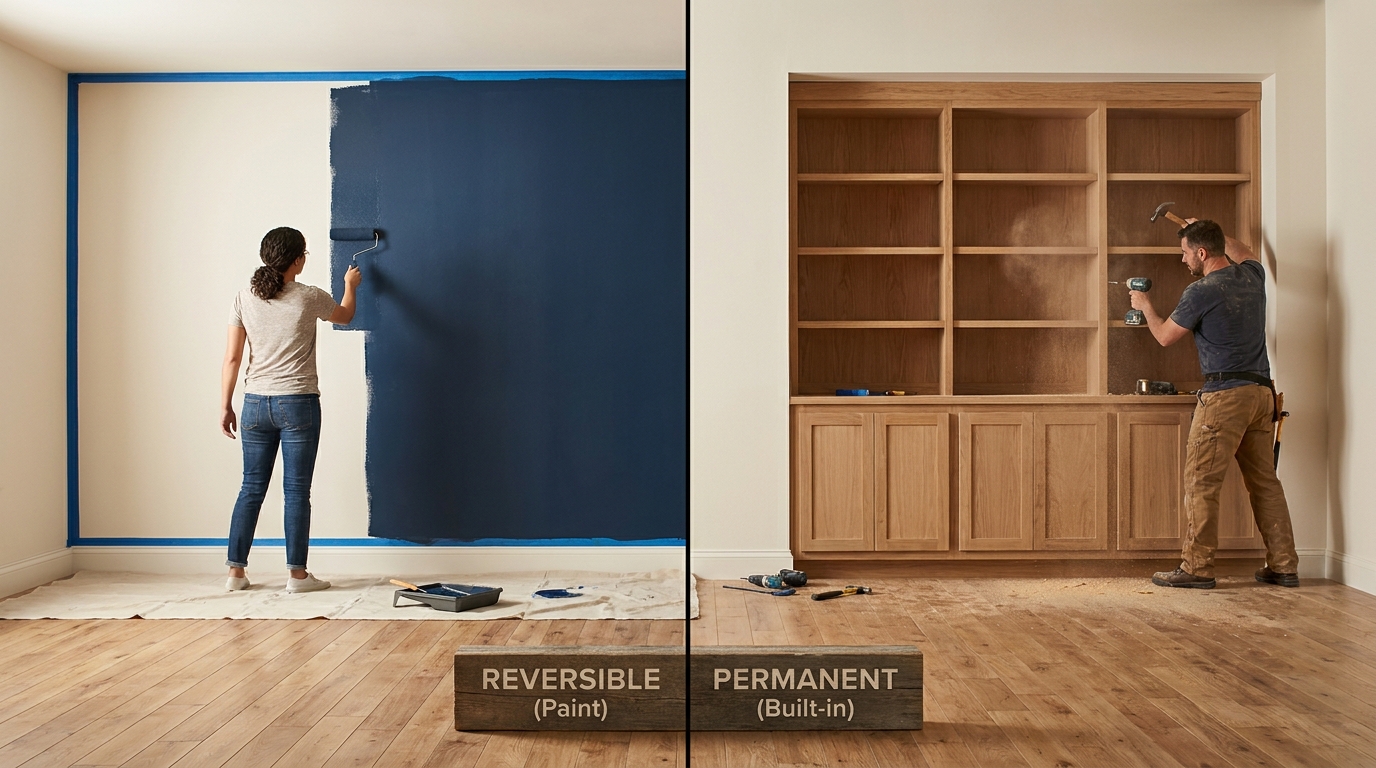
Distinguish Between Reversible and Permanent Changes Early
Not every renovation decision needs to be reversible, but every decision should be made knowingly with a clear sense of whether it's temporary or permanent before the work happens, not figured out after the fact when it's time to move. Painting a wall is usually reversible with a repaint. Installing built-in wardrobes or modular kitchen cabinetry is not, and either needs landlord sign-off as a permanent fixture or should be avoided entirely in a rental.
A useful mental filter: if removing it at move-out would require patching holes, repainting, or professional removal, treat it as a permanent change requiring explicit landlord approval not a design choice you can quietly make and hope nobody notices later.
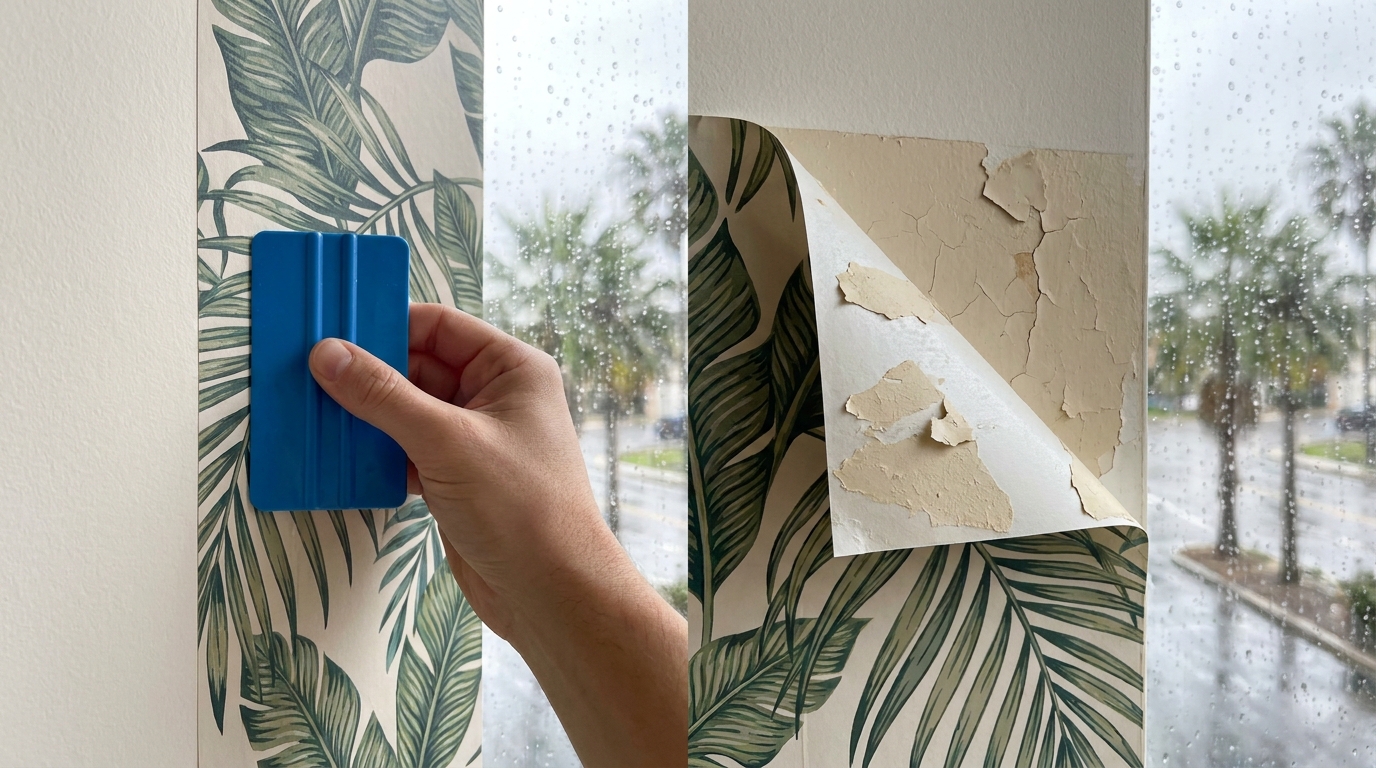
Peel-and-Stick Wallpaper Has Real Limits Renters Should Know
Removable wallpaper is marketed as the renter's dream solution, but its performance varies significantly with wall condition and climate. On freshly painted, smooth walls in a dry climate, it can genuinely apply and remove cleanly. On older, textured, or slightly damp walls common in many Indian apartments, especially through monsoon humidity it can peel unevenly, leave adhesive residue, or in worst cases, take a layer of the landlord's paint off with it when removed.
Testing a small patch in an inconspicuous corner before committing to a full wall is worth the extra week it takes, especially before applying it to a wall you'll be responsible for restoring.

Modular, Freestanding Furniture Beats Built-In Every Time
The instinct to maximize a rental's storage with built-in wardrobes or custom shelving usually backfires, both financially and practically built-in furniture typically can't move with you to the next apartment, and the landlord may not compensate for the improvement at all. Freestanding modular wardrobes, bookshelves, and storage units cost more upfront per unit of storage than built-ins, but they travel with you across multiple rental moves, which usually makes them cheaper over a multi-year renting timeline.
This is also where renters can justify spending slightly more on quality furniture than they might for a one-time-use piece a good modular wardrobe purchased at 25 is still useful at 30, in a different apartment entirely.
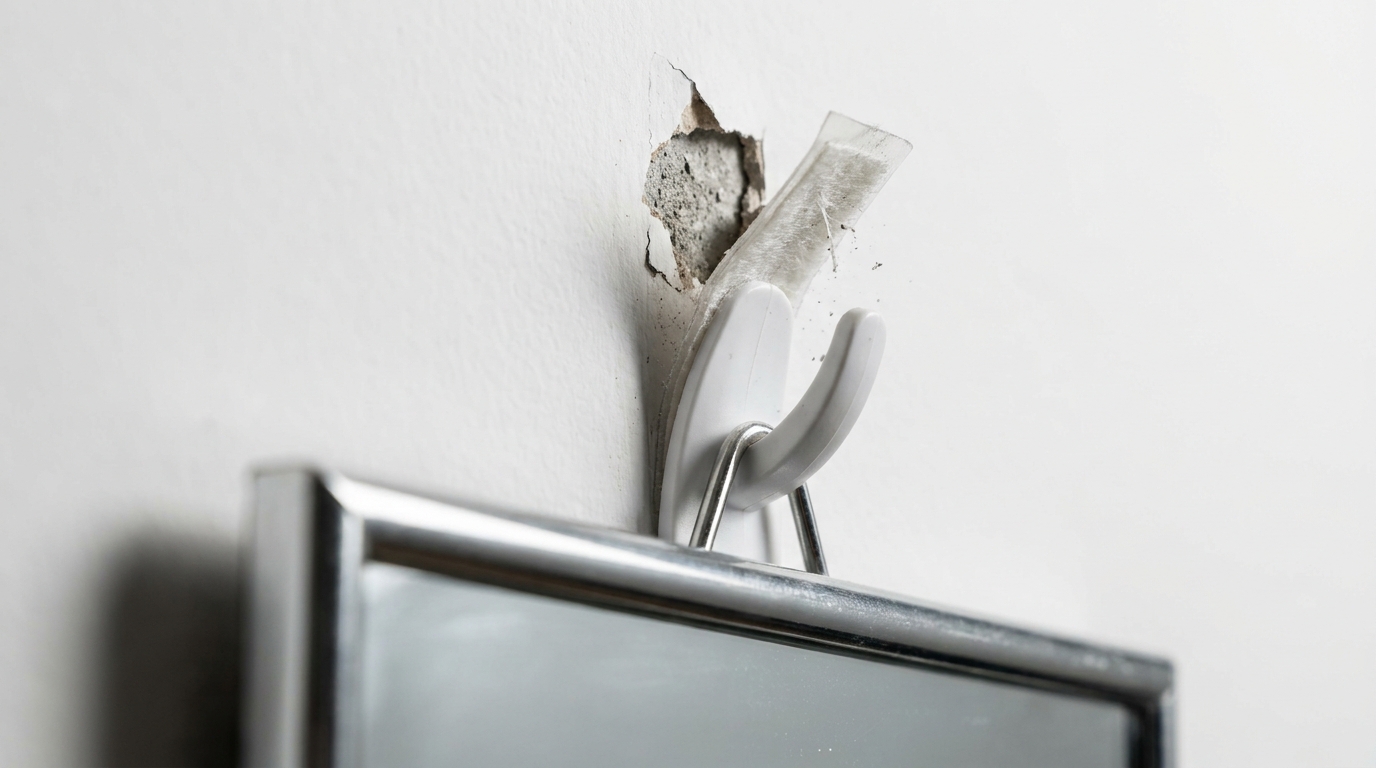
Command Strips and Adhesive Hooks Have a Weight Limit Renters Consistently Ignore
Adhesive-mounted hooks and strips are rated for specific weight limits that are easy to underestimate, especially for anything holding more than light decor a mirror, a small shelf, or anything with drawers attached. Exceeding the rated weight doesn't just risk the item falling; it often takes wall paint off when it does, turning a small oversight into a security deposit problem.
Checking the manufacturer's weight rating against the actual loaded weight of what's being hung — not just the item itself, but anything that might sit on or in it avoids this. For anything genuinely heavy, a landlord-approved small drilled anchor point is usually a better trade than risking wall damage from an overloaded adhesive mount.
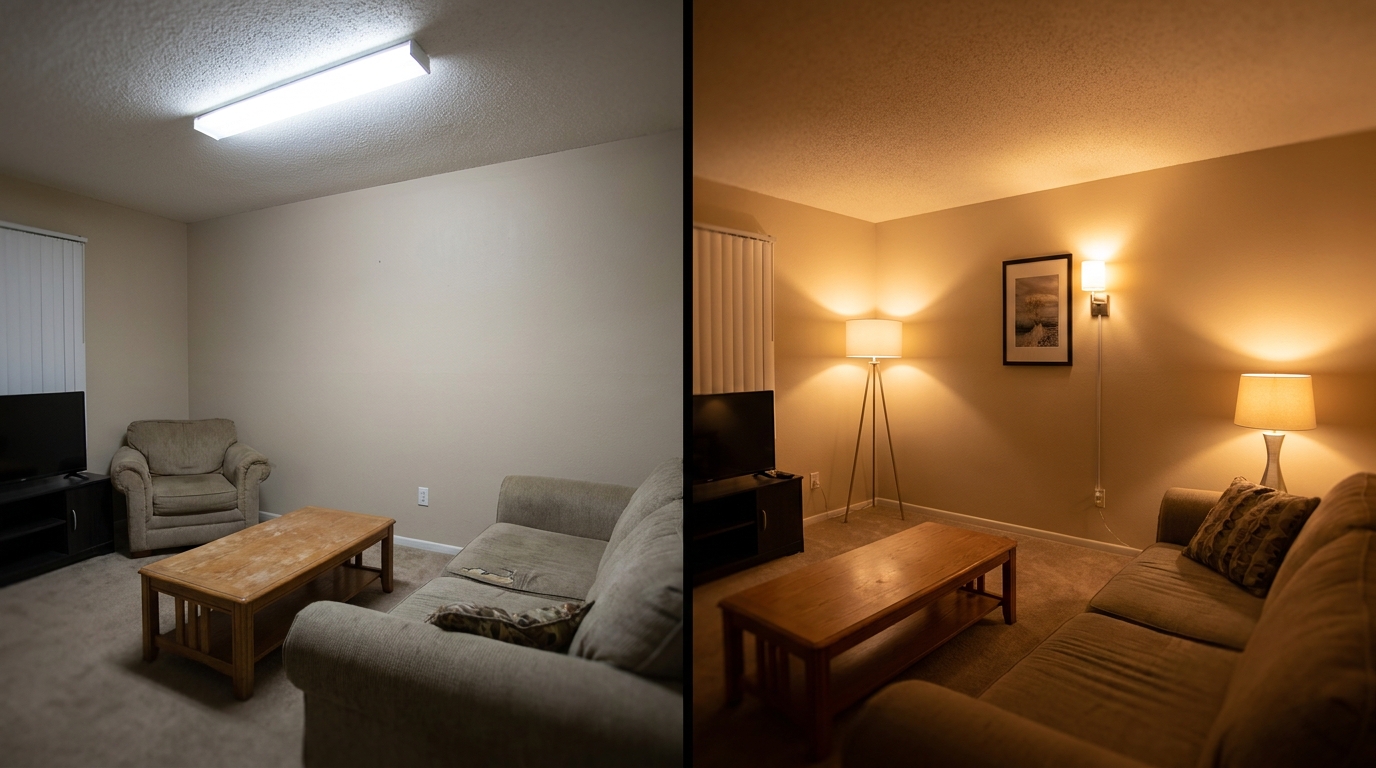
Lighting Upgrades Are the Highest-Impact, Lowest-Risk Renovation Category
Swapping out fixtures, adding floor and table lamps, and changing bulb temperature from cool to warm white are among the most transformative changes available to a renter, and almost none of it requires landlord permission or leaves any lasting trace. Unlike structural changes, lighting is inherently portable floor lamps, table lamps, and plug-in wall sconces all move with you, and even swapped ceiling fixtures can usually be reinstalled to original condition with the landlord's fixture kept safely stored.
For renters working with a limited renovation budget, prioritizing lighting over furniture or wall treatments tends to deliver the most noticeable transformation per rupee spent, precisely because most rental units are under-lit with a single harsh overhead fixture to begin with.
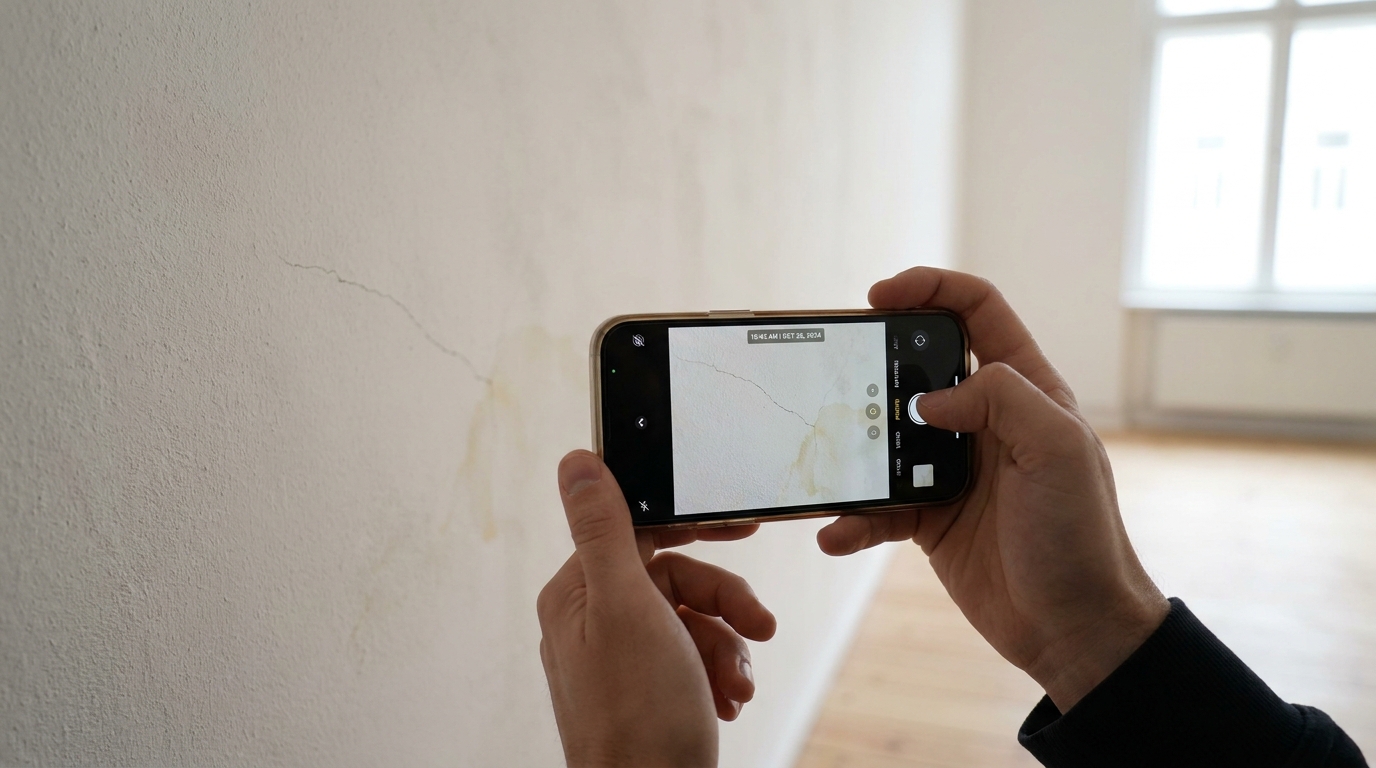
Document the Property's Condition Thoroughly Before Any Work Begins
A time-stamped photo and video walkthrough of the entire apartment, done before any furniture moves in or any work starts, is the single best protection against disputed damage claims at move-out. This should go beyond a quick phone photo of each room genuinely document existing scuffs, stains, cracks, or wear that predates the tenancy, since it's common for landlords to attribute pre-existing damage to the outgoing tenant when a year or more has passed and memory has faded on both sides.
Storing this documentation somewhere accessible (cloud storage, emailed to yourself with a timestamp) rather than just on a phone that might get lost or replaced ensures it's still available when it's actually needed, often 2-3 years later.
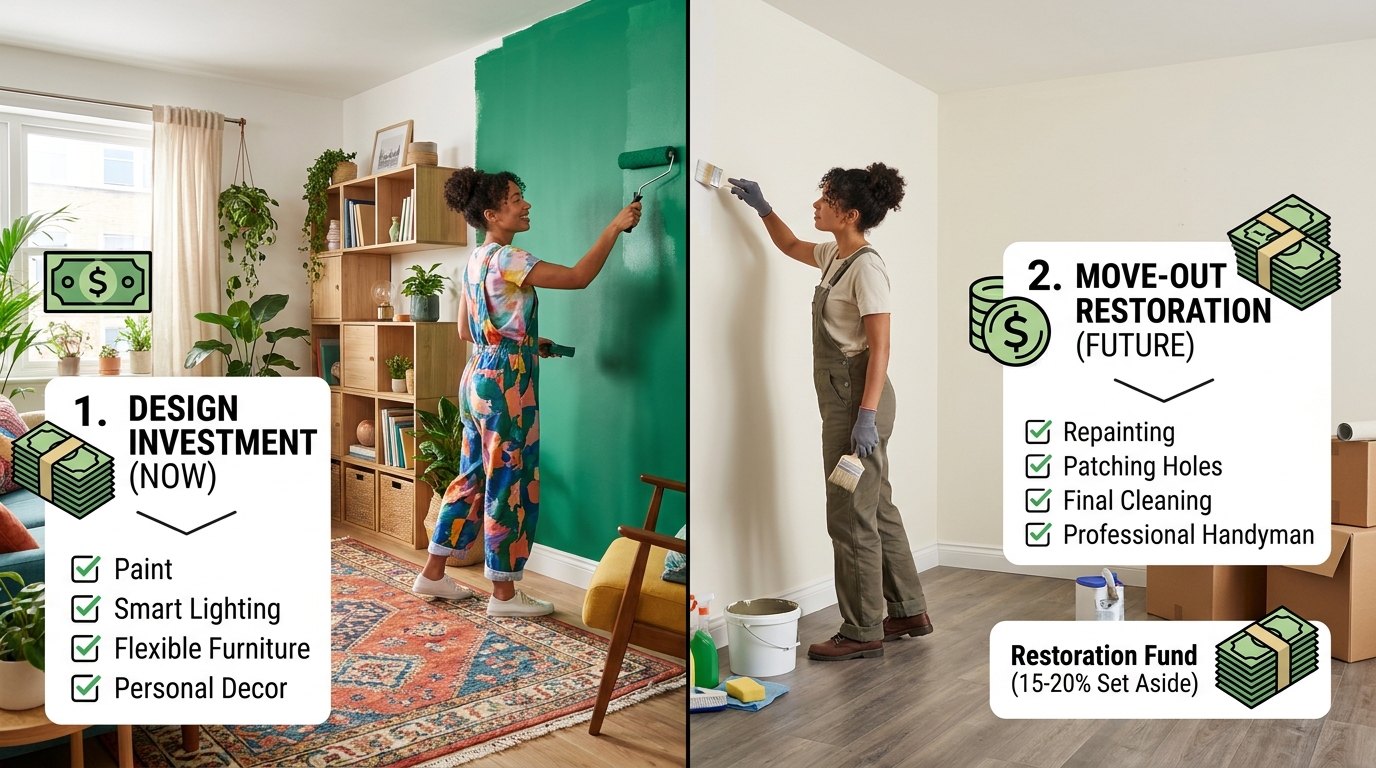
Budget Separately for "Design Investment" vs. "Move-Out Restoration"
Rental renovation budgets need a line item that ownership renovation budgets don't: the cost of undoing changes at move-out. Repainting a bold accent wall back to the landlord's original neutral, patching drilled holes, or professionally removing adhesive residue all cost real money, and forgetting to budget for this means the renovation's true cost is higher than it appeared when the work was done.
A reasonable rule of thumb is setting aside roughly 15-20% of the total renovation budget specifically for restoration costs at move-out, treating it as an unavoidable part of the project rather than a surprise expense at the end of the lease.
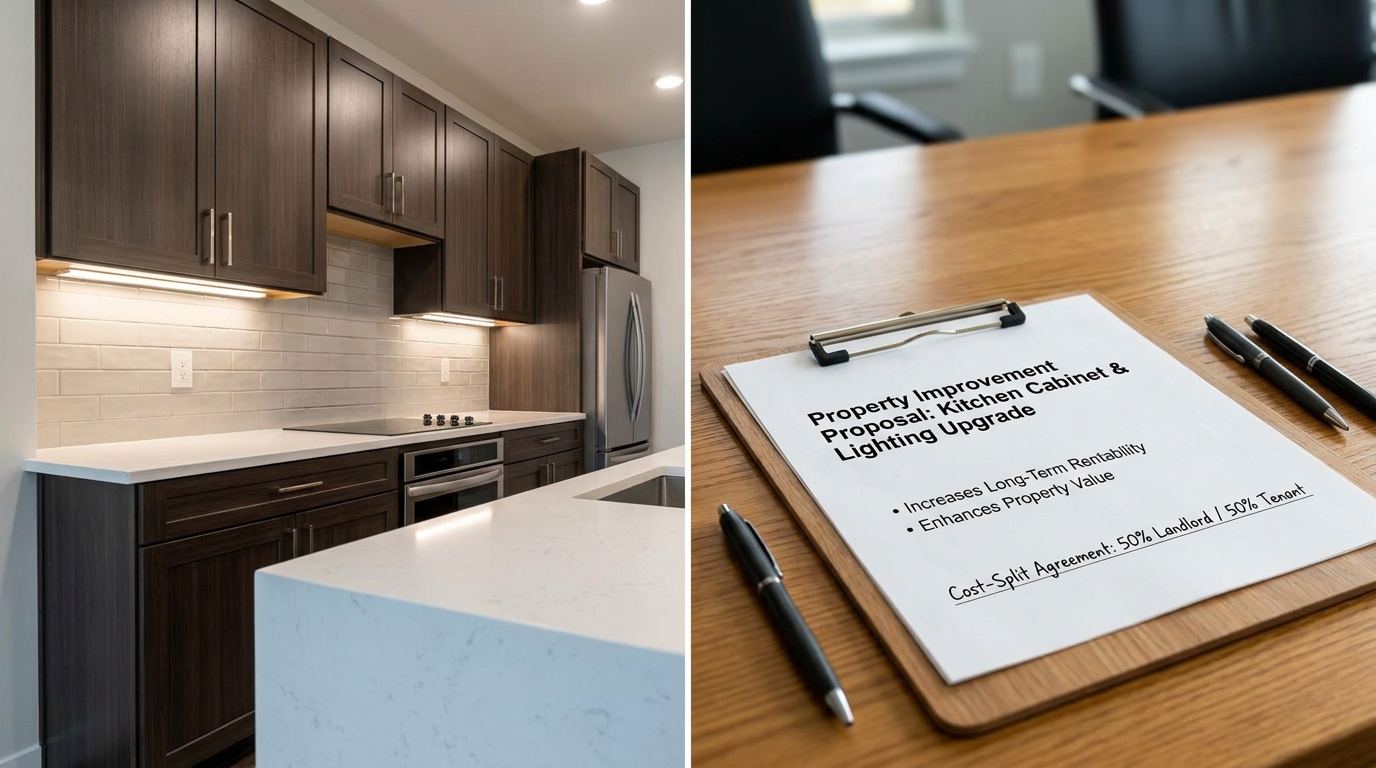
Some Landlords Will Split Costs for Improvements That Increase Property Value
It's worth directly asking landlords whether they'd contribute to renovation costs for changes that genuinely improve the property's long-term rentability or value a kitchen upgrade, improved lighting fixtures, or fixing something that was already due for replacement. Landlords focused on long-term tenancy and property value sometimes agree to split costs, particularly for anything that would need doing eventually regardless of who's renting.
This conversation goes better when framed around property value rather than personal preference — "the kitchen cabinets are original from construction and could use an upgrade that would help the unit's rentability" lands differently than "I'd like nicer cabinets." It won't work with every landlord, but it costs nothing to ask, and the outcome can meaningfully shift what's financially feasible for a rental renovation.
Want a real estimate for your home?
Share your home in 2 minutes. We'll match you with verified designers in your city and give you a BOQ-level estimate before any work begins.
Share your home →