5 Layout Mistakes That Are Making Your Small Room Feel Smaller
Even the perfect color palette can’t fix a broken layout. Avoid these 5 common furniture placement mistakes to instantly make your compact Delhi NCR room feel open and breathable.
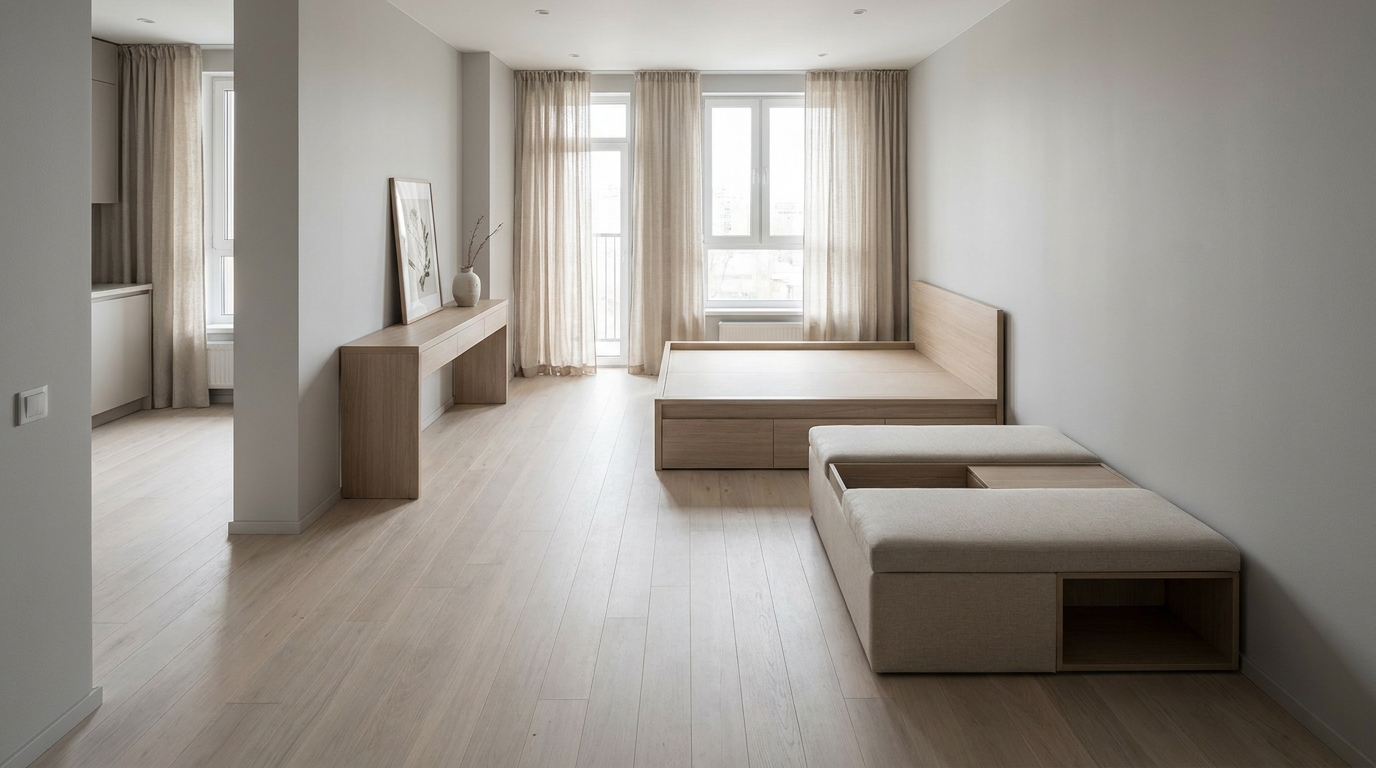
Color, light, and mirrors get most of the credit when people talk about making a small room feel bigger but layout does just as much heavy lifting, and it's usually where things go wrong first. You can have the right paint and the right lighting and still end up with a room that feels cramped, simply because the furniture is placed wrong.
Here are five layout mistakes our verified designers see most often in Delhi NCR homes, and what to do instead.
1. Blocking the Entry Point
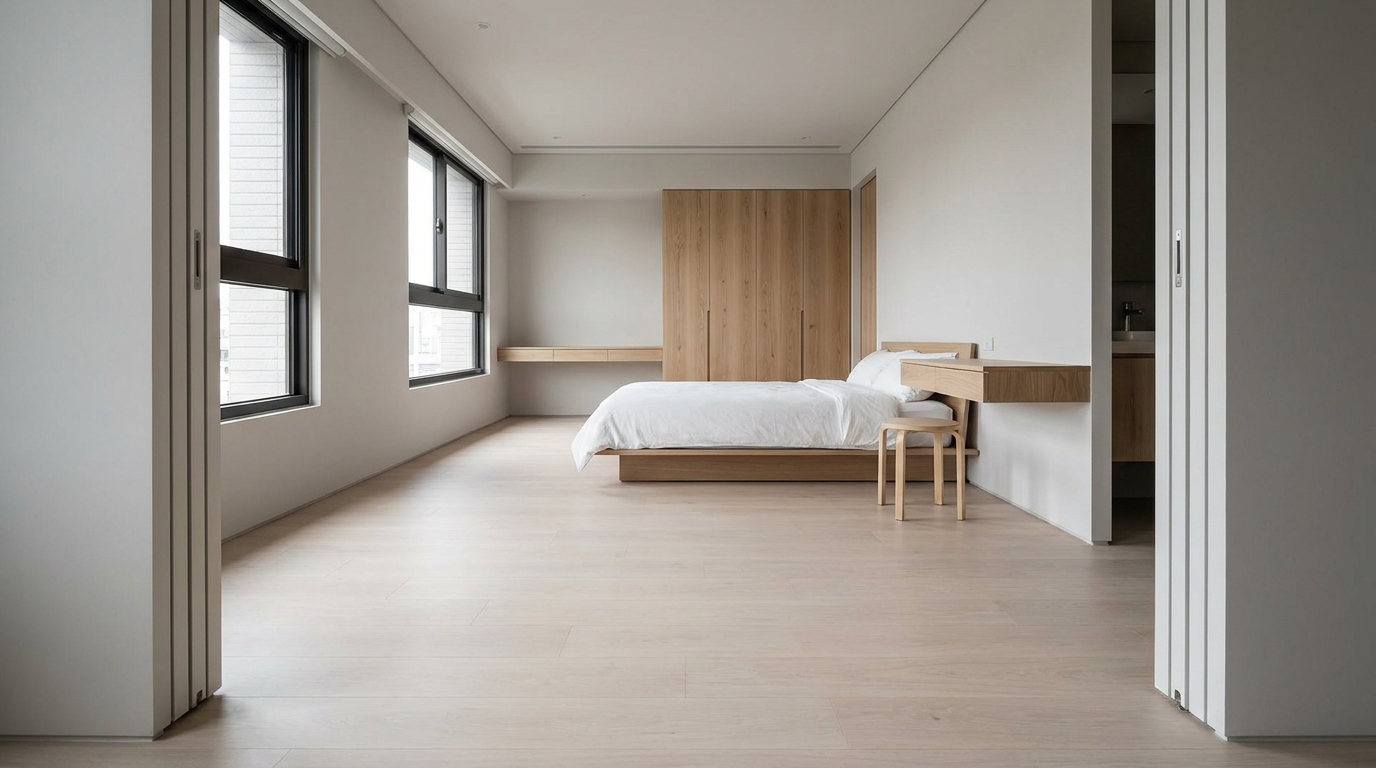
Walk into most small bedrooms and the first thing you hit is a wardrobe door, a desk corner, or a chair pushed too close to the entrance. Even a few inches of furniture crowding the doorway makes the whole room feel tighter than it is, because your brain registers "obstruction" before it registers anything else.
The fix: keep at least a 2.5–3 foot clear zone immediately inside any doorway. If that means rotating a wardrobe 90 degrees or shifting a desk to the opposite wall, do it the rest of the room can be tighter as long as the entry breathes.
2. Buying Furniture That Does Only One Job
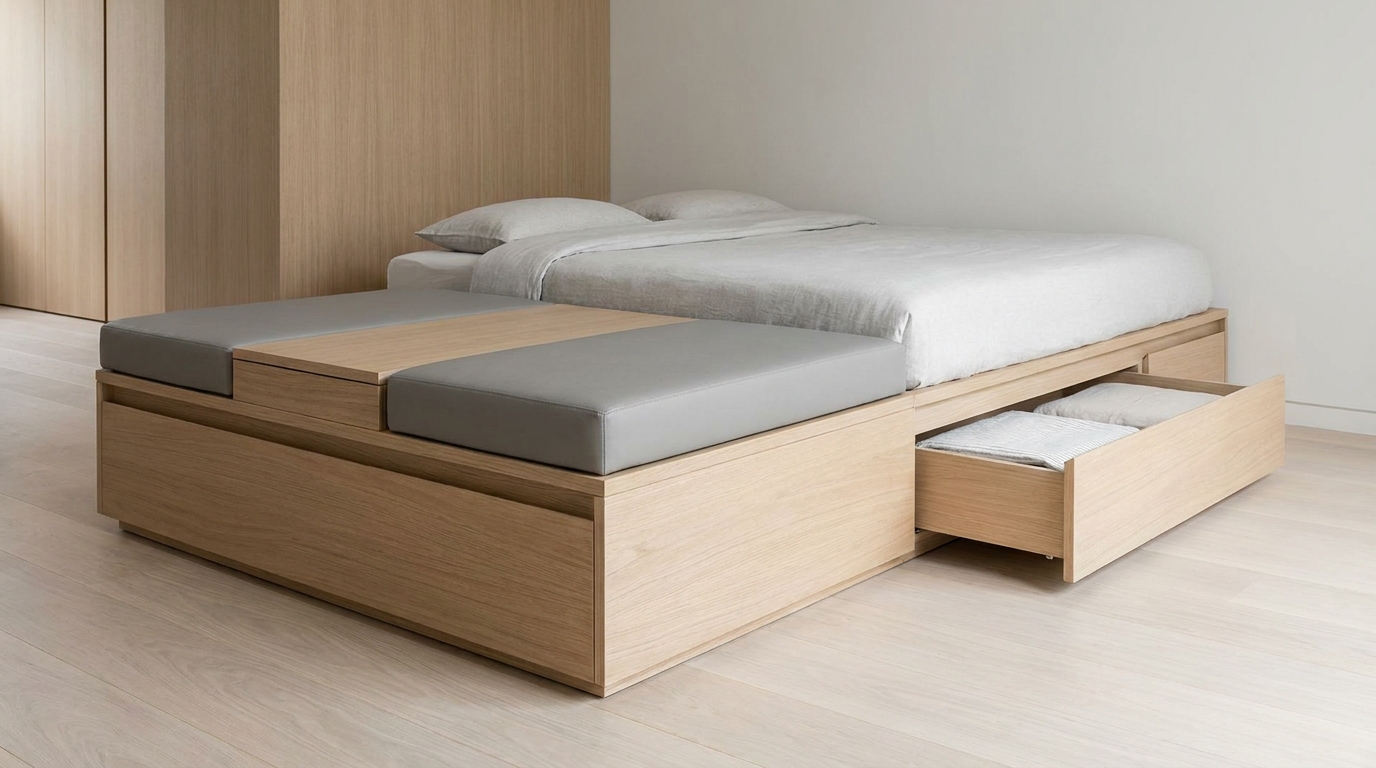
A bulky study table that's used twice a week, a coffee table that just collects clutter, a side chair nobody sits in single-purpose furniture is one of the fastest ways to eat up floor space in a small home without adding real value to daily life.
Multi-functional pieces solve this without sacrificing function: a storage ottoman that doubles as a coffee table and extra seating, a bed with built-in drawers instead of a separate chest, a foldable desk that tucks against the wall when not in use. Every piece you remove because another piece can do its job is square footage you get back.
3. Furniture That's the Wrong Scale for the Room
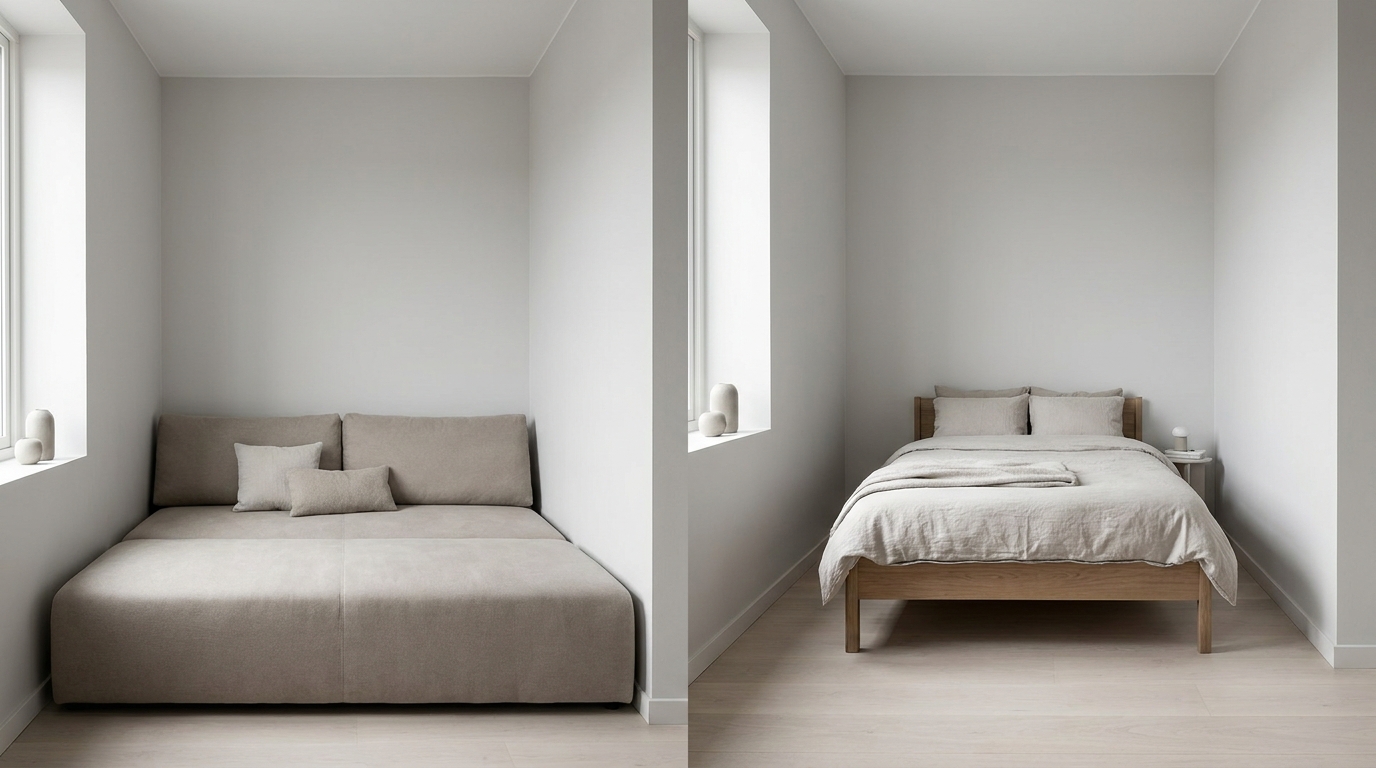
This is a subtler mistake it's not about having too much furniture, but having furniture sized for a bigger room. An oversized 3-seater sofa, a king bed in a 10x10 room, a dining table built for six when you regularly seat three oversized pieces don't just take up physical space, they throw off the proportions of the entire room and make it read as cramped even when the layout is otherwise sensible.
Before buying anything for a small room, measure the space and choose furniture scaled to it specifically not furniture you liked in a larger showroom display. A correctly scaled smaller piece almost always looks and feels better than a slightly-too-big "deal."
4. No Clear, Single Walking Path
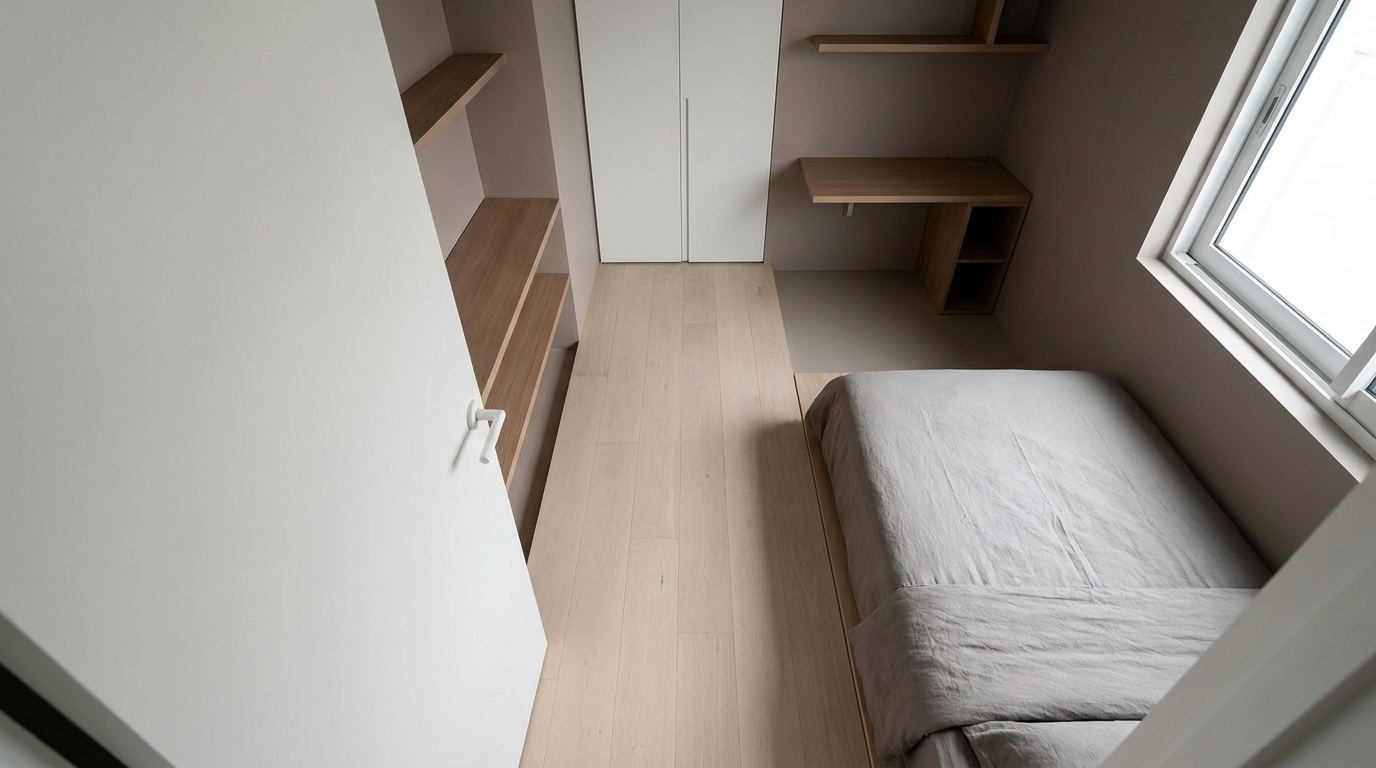
In a lot of small rooms, furniture is placed efficiently around the walls but leaves a zig-zag path to get from the door to the bed, or the bed to the wardrobe. Every turn, every obstacle you have to walk around, adds to the subconscious sense that the room is busy and small.
Plan one clear, mostly straight path through the room's main usage points before placing anything else. Furniture can flex around that path, but the path itself should stay uninterrupted it's one of the simplest layout habits that immediately makes a room feel calmer and more open.
5. Too Many Small Furniture Pieces Instead of One Considered One
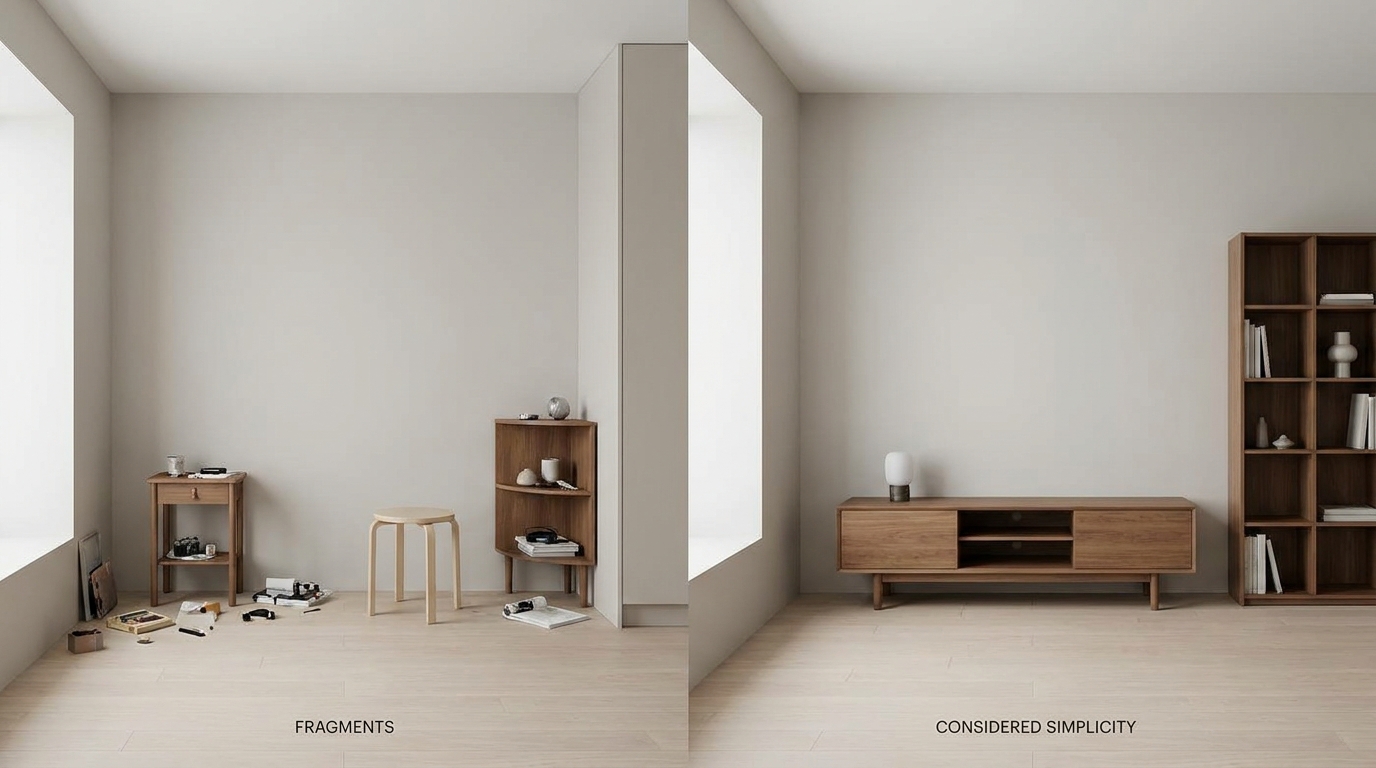
It's tempting to fill a small room with several smaller, "space-saving" pieces a small side table here, a small stool there, a small shelf in the corner. In practice, multiple small items often create more visual clutter than fewer, larger, well-chosen pieces, because each one adds its own edges and shadows for your eye to process.
One well-proportioned console instead of three small tables, one tall bookshelf instead of scattered shelving fewer decision points in the room generally read as more spacious, even when the total furniture footprint is similar.
Layout is the part of small-space design that's easiest to get wrong on your own, because what looks fine on paper often doesn't account for how a room is actually used day to day. That's exactly the kind of planning our verified designers handle from the first site visit.
Want a real estimate for your home?
Share your home in 2 minutes. We'll match you with verified designers in your city and give you a BOQ-level estimate before any work begins.
Share your home →