How to Choose a Mandir for Your Apartment: A Vaastu-First Guide
The right mandir isn't the prettiest one it's the one that fits your home's northeast, your family's habits, and the space you actually have.
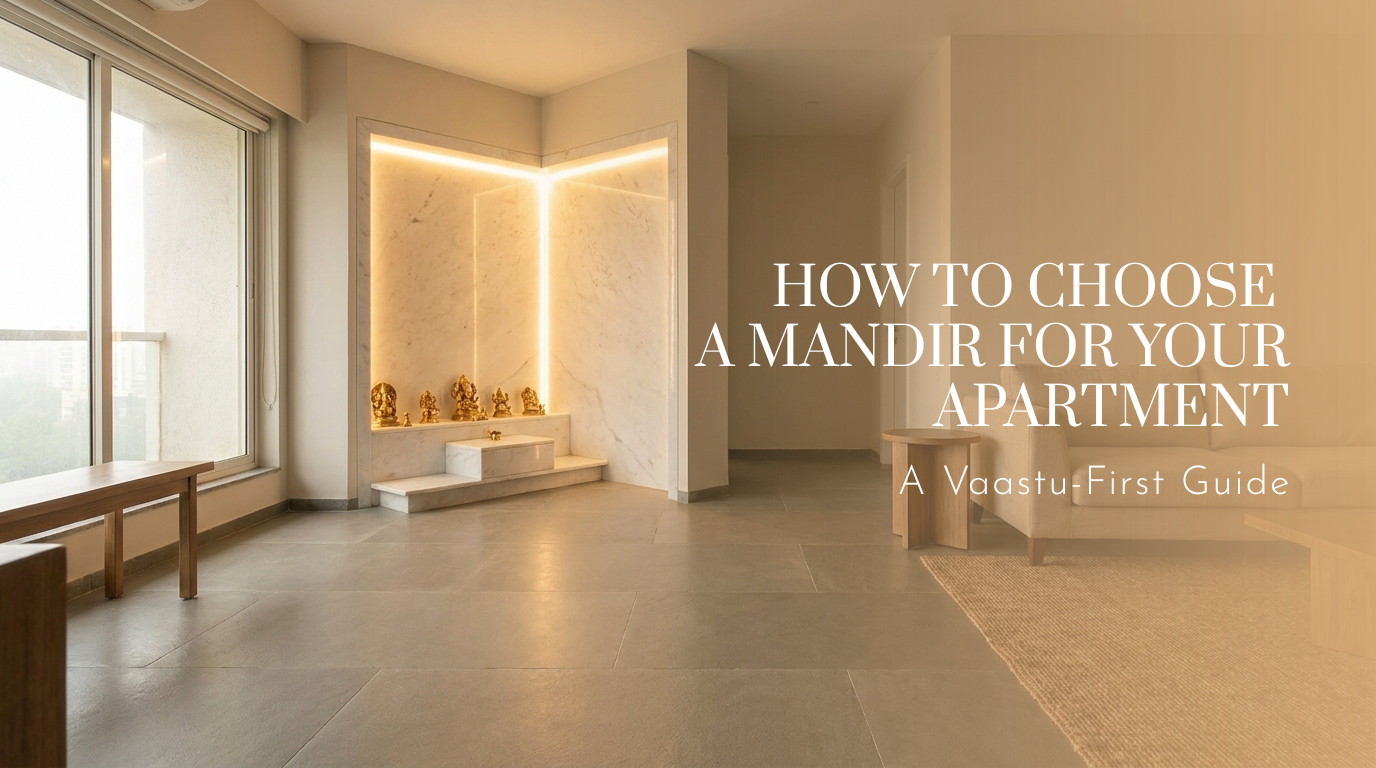
Most people pick a mandir the way they'd pick a sofa by looks. Then it gets installed, and someone points out it's facing the wrong direction or backs onto a bathroom wall, and suddenly a beautiful piece of joinery is a problem.
Choosing well really comes down to three questions, in this order: where can it go (Vaastu decides this first, since direction is the hardest thing to fix after installation), how does your household actually pray (daily use vs. occasional use changes everything), and how much space are you willing to dedicate to it. Answer those three, and the right style becomes obvious.
On direction: The northeast corner is considered most favorable. If that's not available, east or north are solid alternatives very few apartments get a perfect northeast, and that's normal. Idols are typically placed to face west or south, so the person praying faces east or north. A few practical rules apply regardless of style: keep idols raised off the floor, keep the mandir away from any bathroom wall, avoid placing it in the bedroom or facing a bed, and don't tuck it under a staircase or below heavy overhead structure.
On daily use: If your household does daily aarti, the mandir needs to stay open and reachable, on a surface that handles heat and smoke and cleans easily. If it's mainly used for festivals, something that closes and stays dust-free the rest of the year works better. A busy, shared home often wants a middle ground presence without a big footprint.
On space: An available corner or small room lets you build something with real backdrop and lighting. A wall with no floor space calls for something built-in or wall-mounted. A small shared space with almost no spare wall needs something that can disappear when not in use.
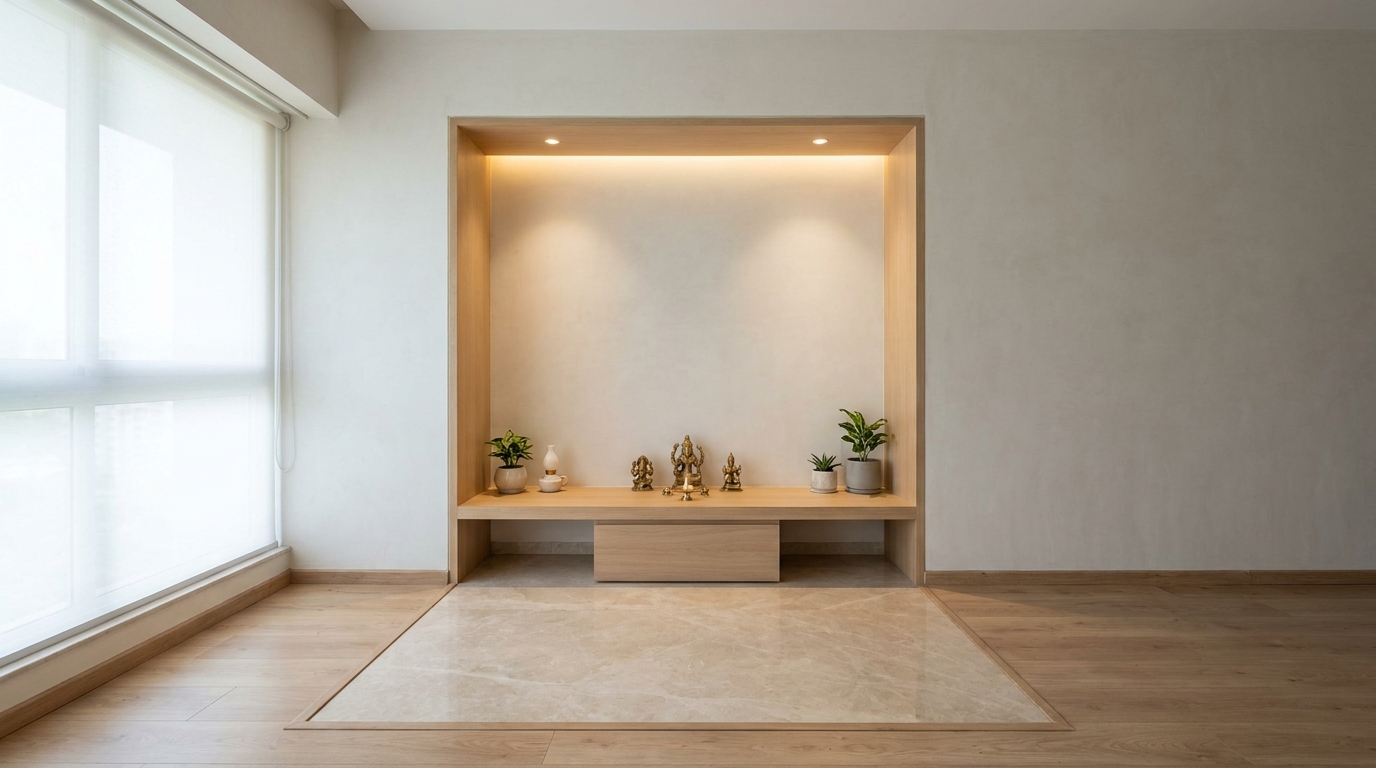
1. The Wall Niche — For a Permanent Feature With No Floor Footprint
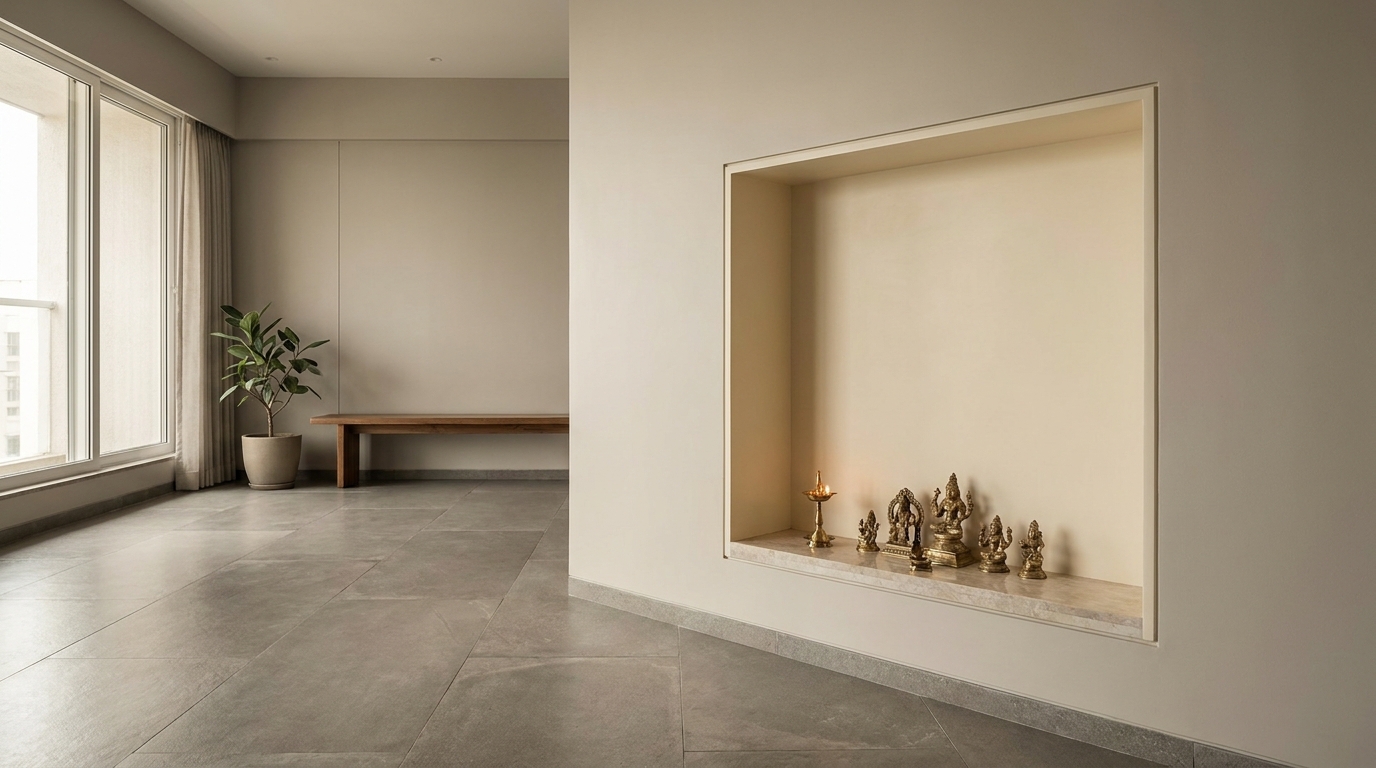
A shallow niche built into the wall, flush with the surface, works well if you have a north or east wall to spare and want daily accessibility without using any floor space. The one thing to get right before construction: the direction is fixed once it's built, so confirm north or east first.
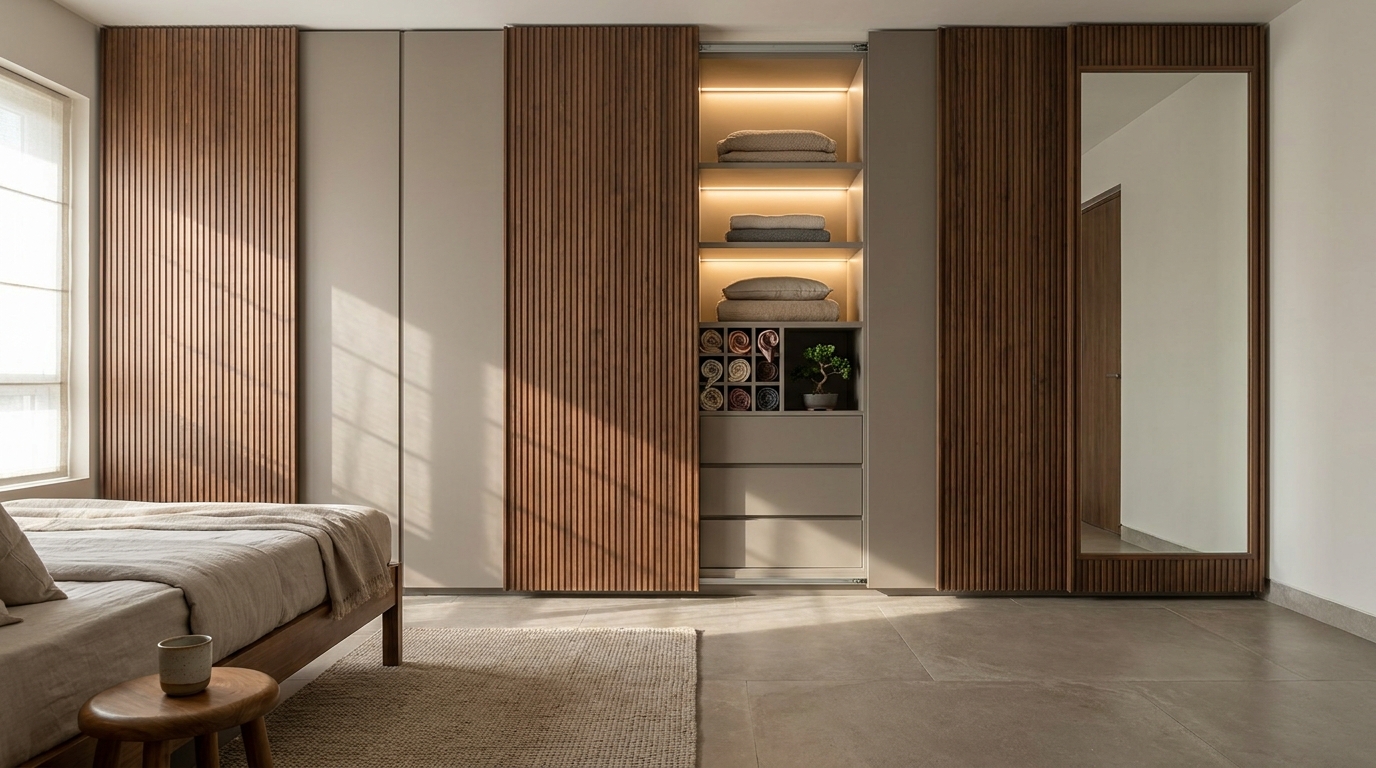
2. The Closed Cabinet — For Occasional Prayer and Flexible Homes
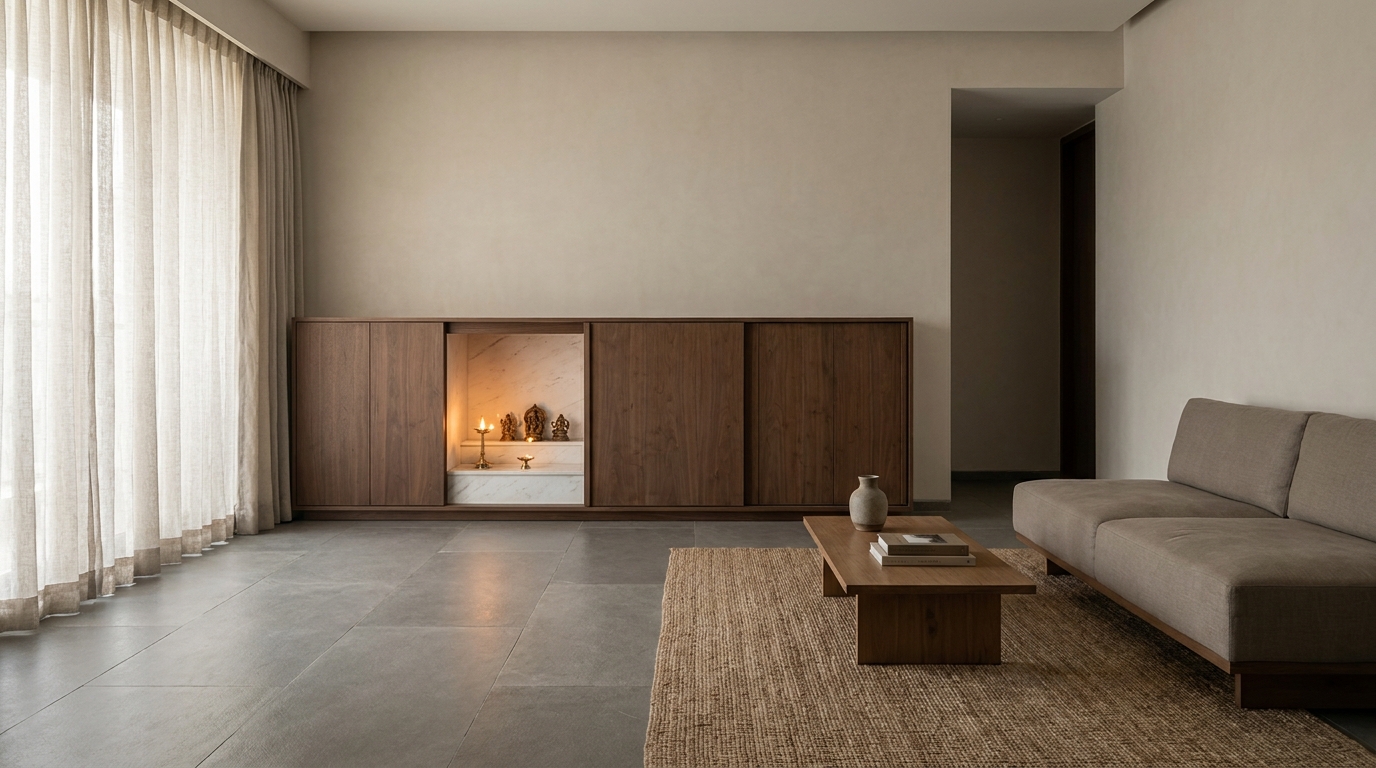
A mandir with doors that close fully suits households that pray mainly on occasions and prefer the space visually separate from everyday living. It's also the easiest style to reposition later if your walls don't offer a clean northeast.
3. The Backlit Stone Backdrop — For a Dedicated Pooja Space
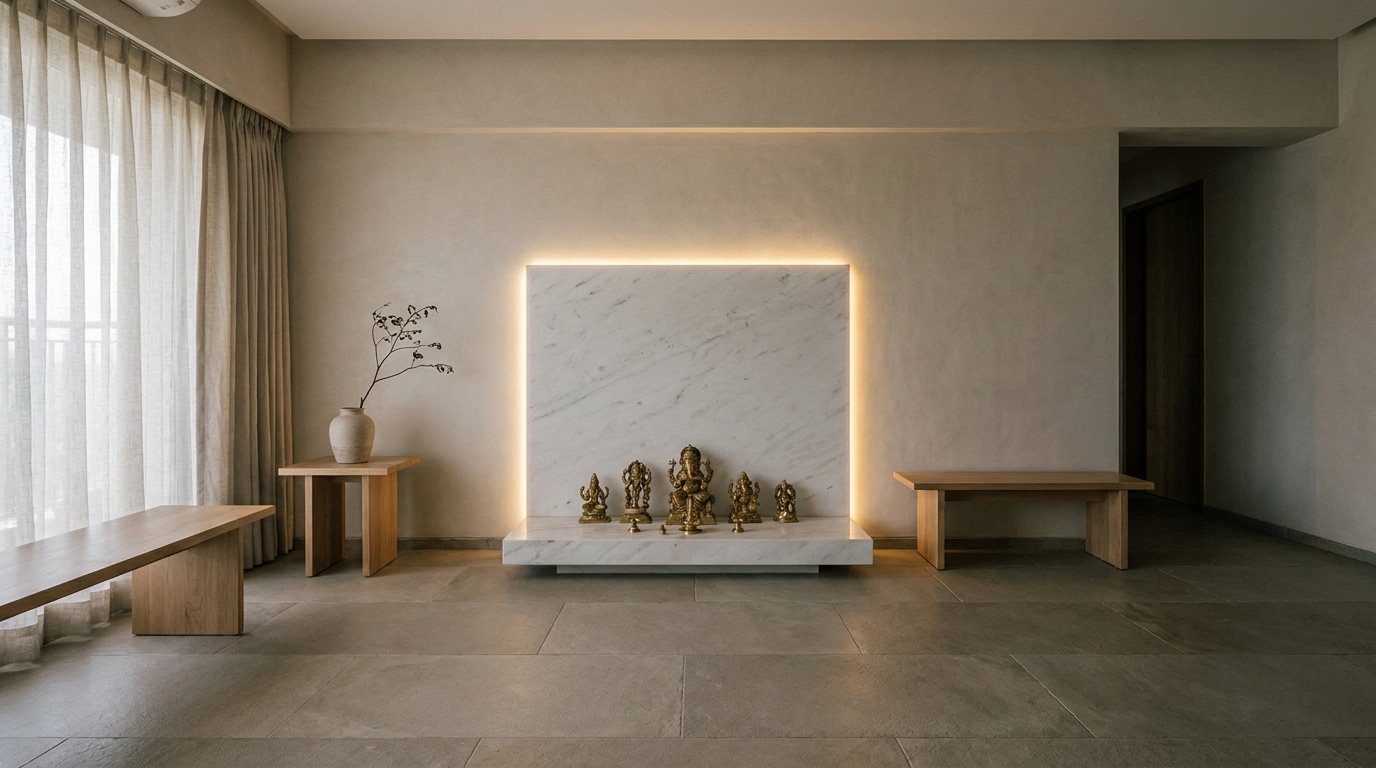
A marble or stone backdrop lit softly from behind creates a calm, glowing focal point best suited to a dedicated corner or small room rather than a tight nook. Keep the LED warm white rather than cool, and lock in the direction before installation since the backdrop is permanent.
4. The Corner Column — For Reclaiming a Northeast Corner
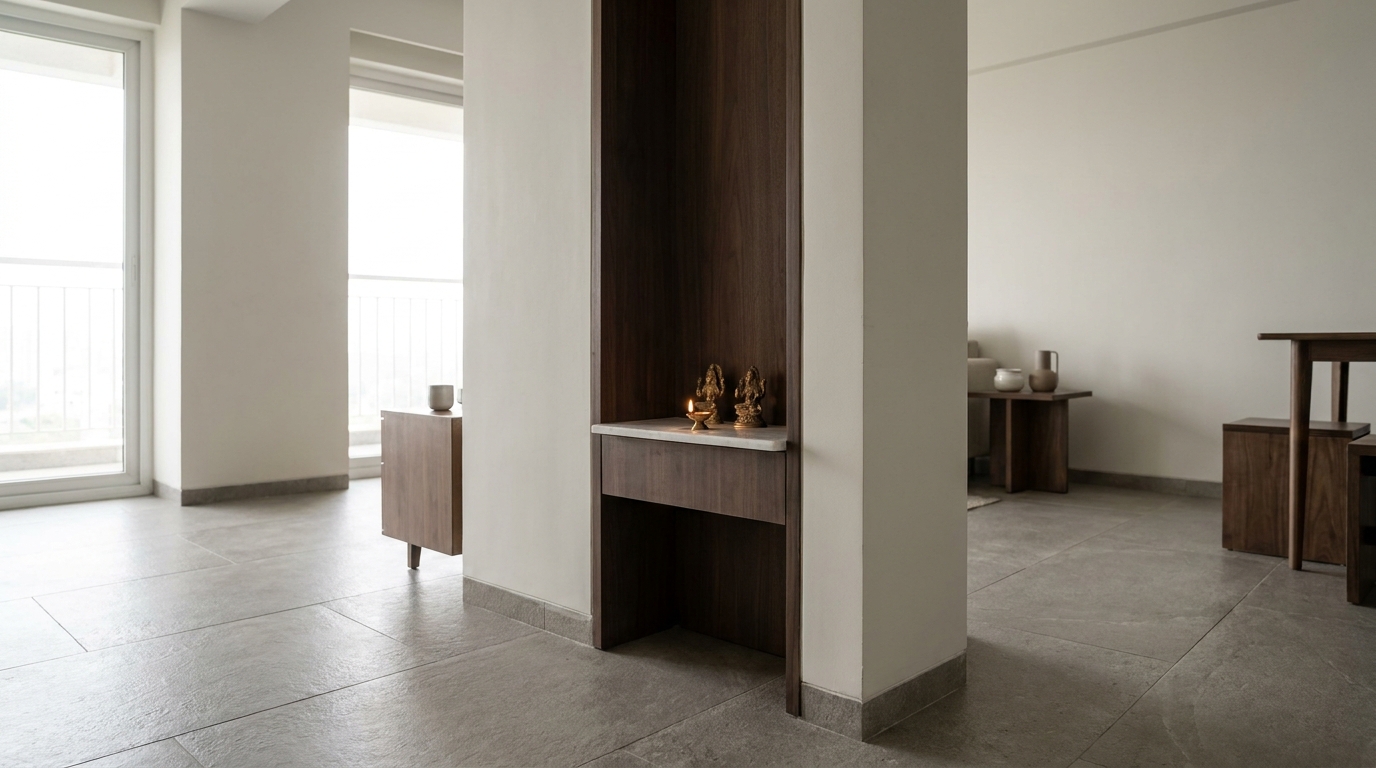
A slim vertical mandir suited to L-shaped rooms or hallway corners but only if that spare corner happens to be the northeast. Placing it in an empty corner just because it's empty defeats the purpose.
5. The Fold-Away Wall Panel — For Shared Studios With No Spare Wall
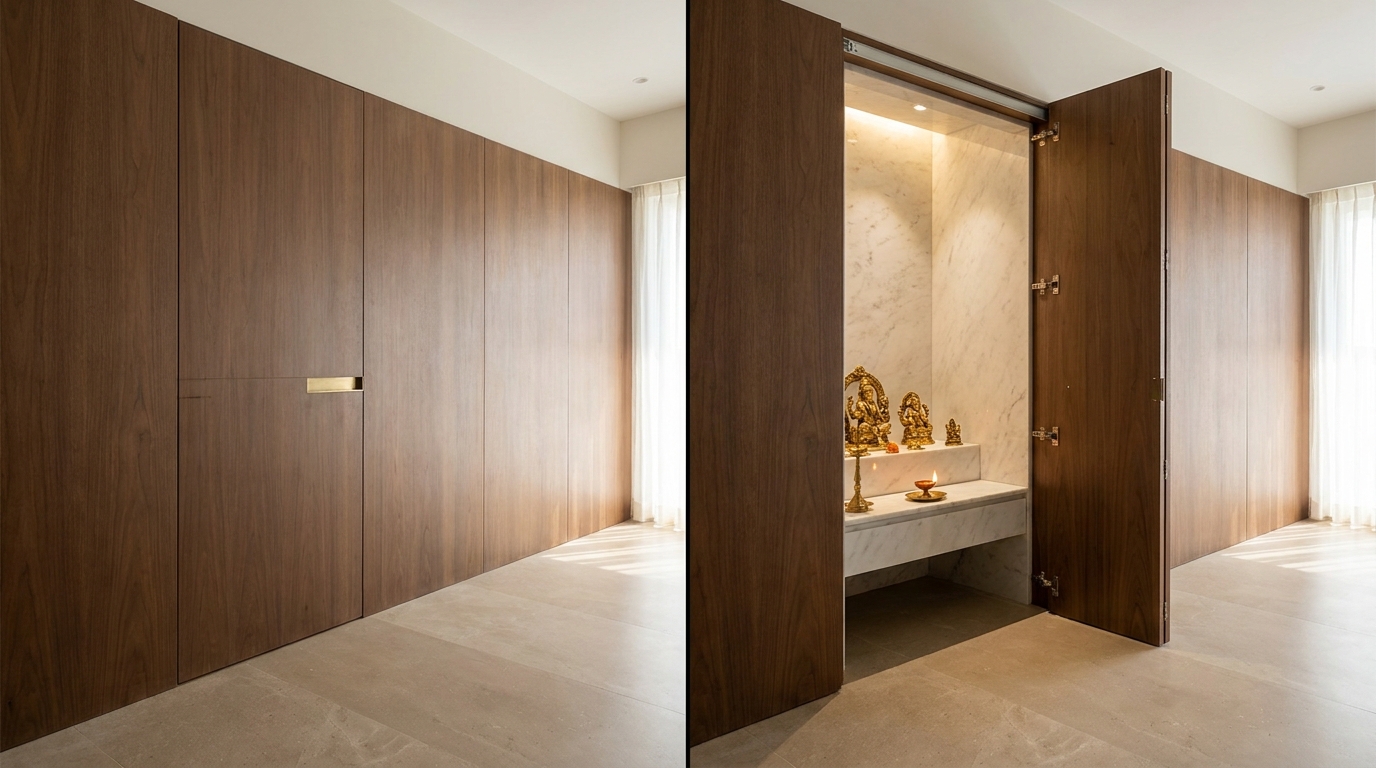
A mandir that folds flat against the wall, closing to look like a plain panel, works for shared or studio spaces that need the room to serve another purpose when idle. Fold it into a north or east wall, keep the base raised, and avoid a bathroom or bed-headboard wall.
Quick Verdict
Unsure about your walls or mostly pray on occasions → Closed Cabinet. Have a northeast corner or small room and pray daily → Backlit Stone Backdrop. Your spare space is specifically northeast → Corner Column. A north/east wall with no floor space → Wall Niche. A shared studio with nothing to spare → Fold-Away Panel.
Want a real estimate for your home?
Share your home in 2 minutes. We'll match you with verified designers in your city and give you a BOQ-level estimate before any work begins.
Share your home →