6 Master Bedroom Design Mistakes Almost Every Indian Homeowner Makes
The six habits quietly working against the one room in the house meant to help you switch off.
Making the Bed the Only Focal Point
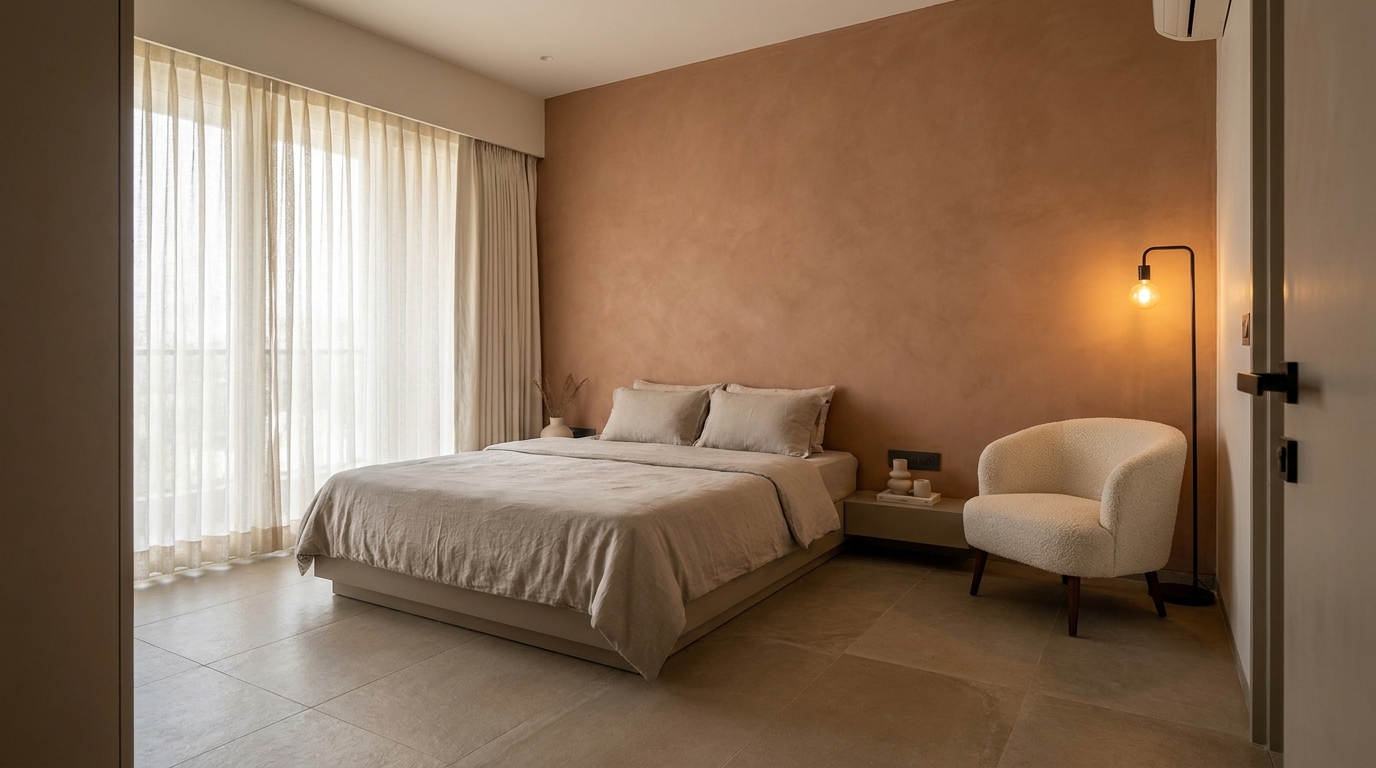
Most Indian bedroom layouts start and end with the bed against the main wall bought first, biggest piece in the room, everything else squeezed in around it. The result is a room that feels like storage-plus-a-bed rather than a place designed to rest in.
A bedroom needs at least one other zone with its own identity a reading corner, a dressing area, even just a textured accent wall behind the headboard so the eye has somewhere else to land besides the bed frame.
Overhead Lighting as the Only Light Source
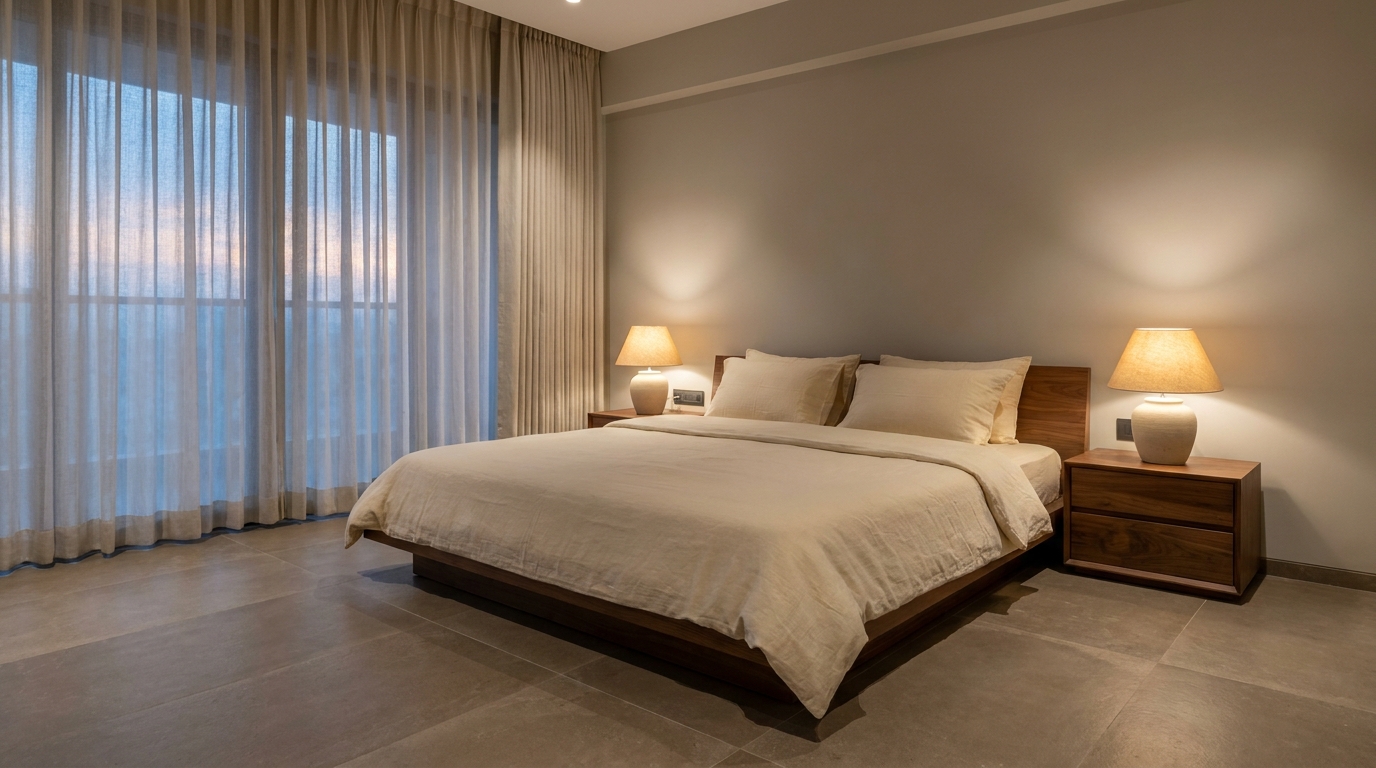
A single ceiling light usually a bright white tube or a cold LED panel is the most common bedroom lighting setup in Indian homes, and it's the least suited to a room meant for winding down. Bright overhead light works for a kitchen. It doesn't work for 11pm.
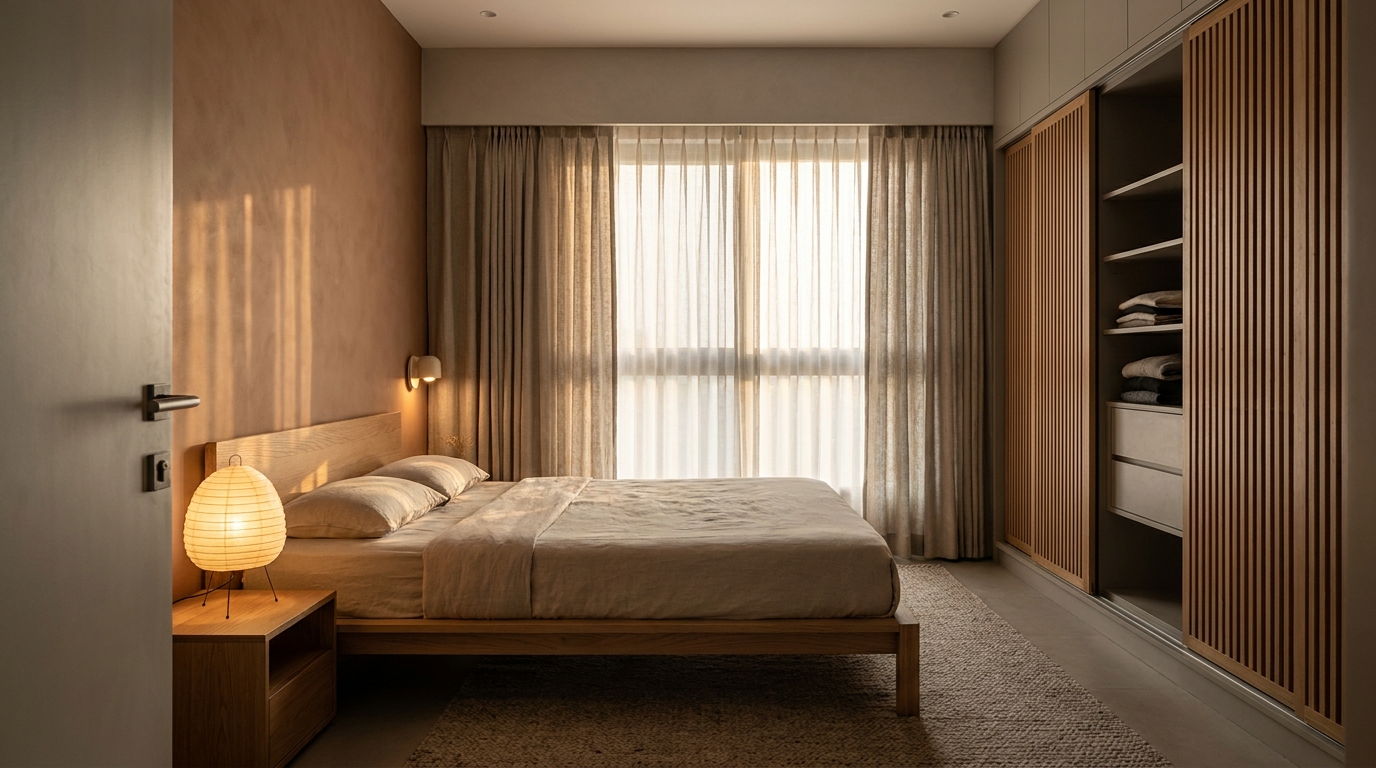
Layer in a bedside lamp on each side, plus one warm accent light (a wall sconce or a floor lamp), and keep the main ceiling light on a dimmer if possible. The room should be able to go from "getting ready" bright to "about to sleep" dim without switching furniture around.
Wardrobes That Eat the Whole Wall Without a Plan
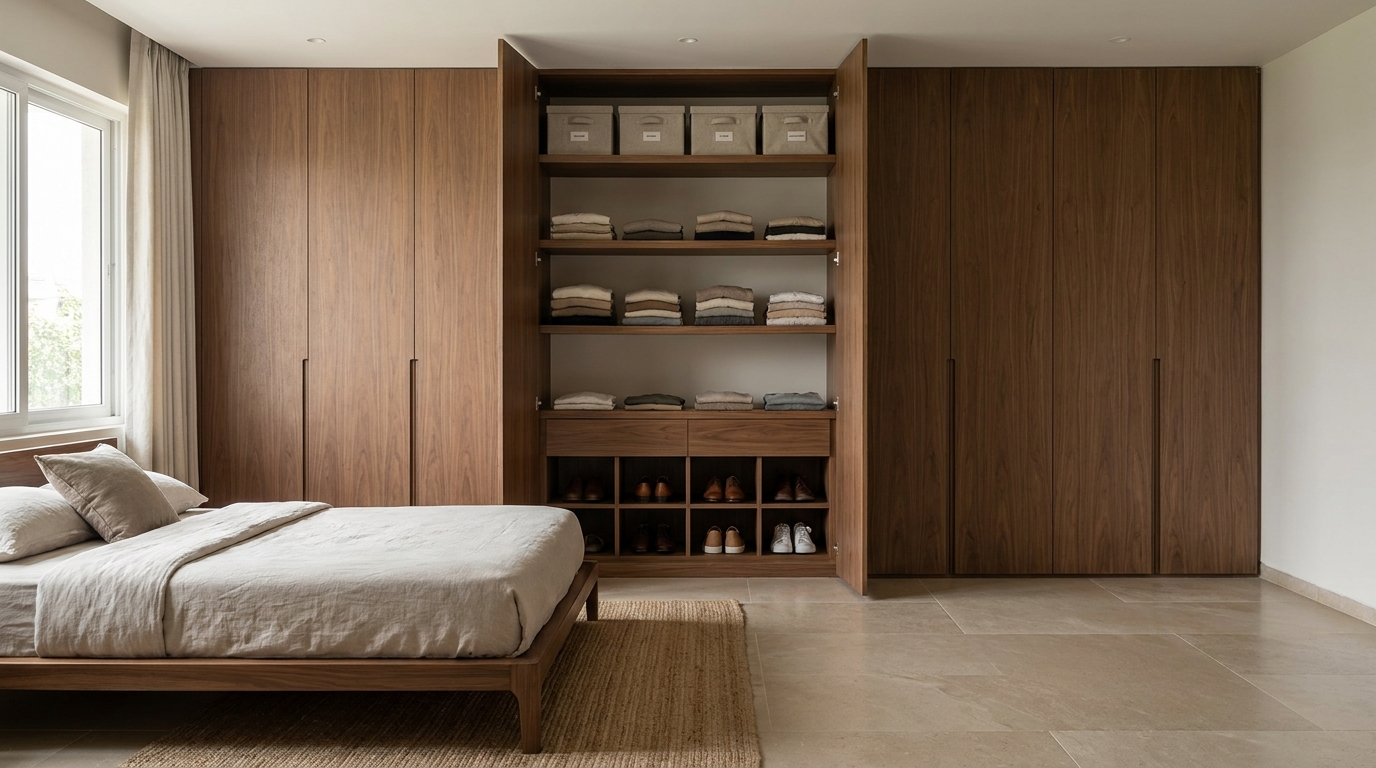
Floor-to-ceiling wardrobes are the default in most Indian bedroom briefs, and they're genuinely useful but when they're built without thinking through what actually goes inside, you end up with deep, awkward shelves that get used for maybe 40% of their volume while clothes still pile up on chairs.
Before finalizing wardrobe design, map out what's actually being stored daily wear at eye level, seasonal items up top, shoes and accessories in dedicated sections — instead of just requesting "maximum storage" and hoping it works itself out.
No Real Separation From a Home Office Corner
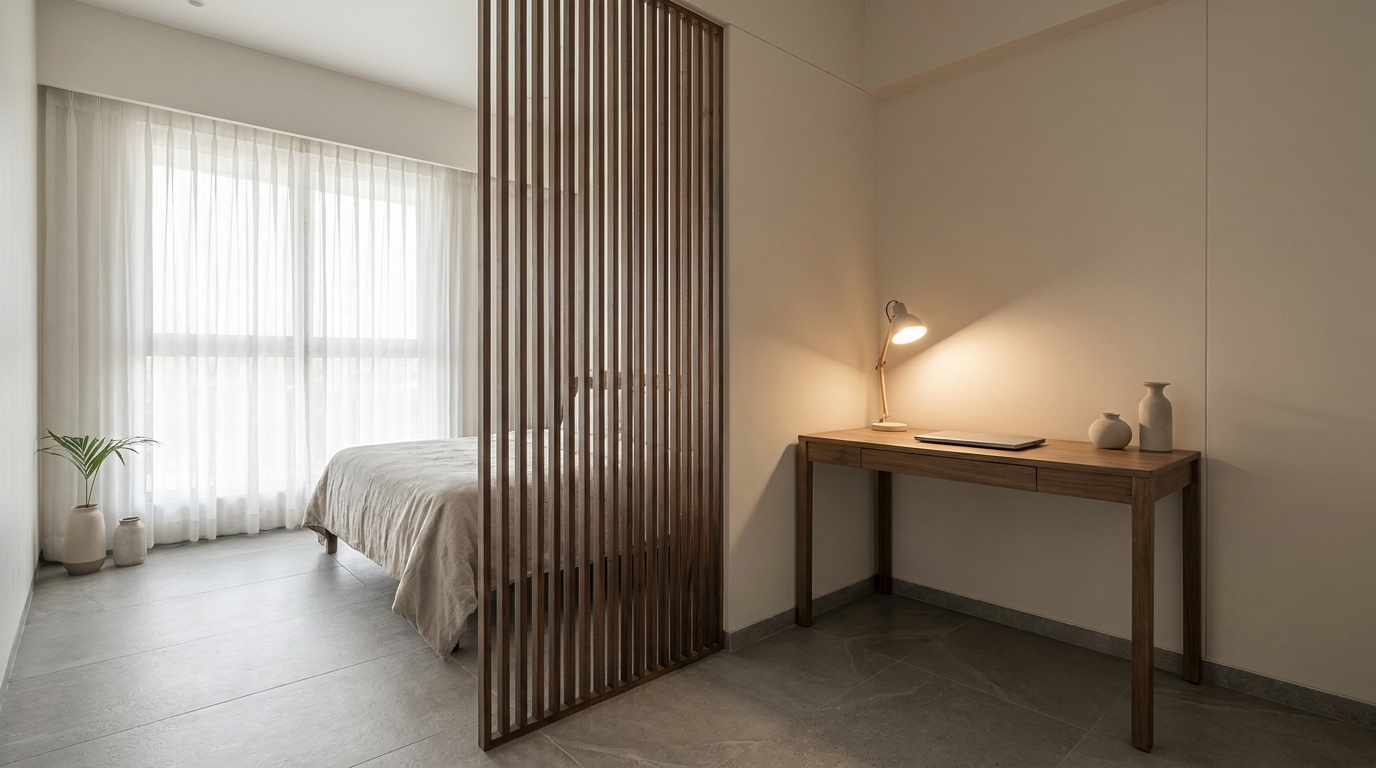
Post-2020, a huge number of Indian bedrooms quietly absorbed a work desk somewhere in the corner and it usually stayed there without ever being properly integrated. The laptop, files, and chair sit in visual conflict with a room that's supposed to help you disconnect at night.
If a desk has to live in the bedroom, give it a boundary a screen, a change in flooring texture, or simply positioning it so it's out of the direct sightline from the bed. The goal is being able to lie down without your work setup being the last thing you see.
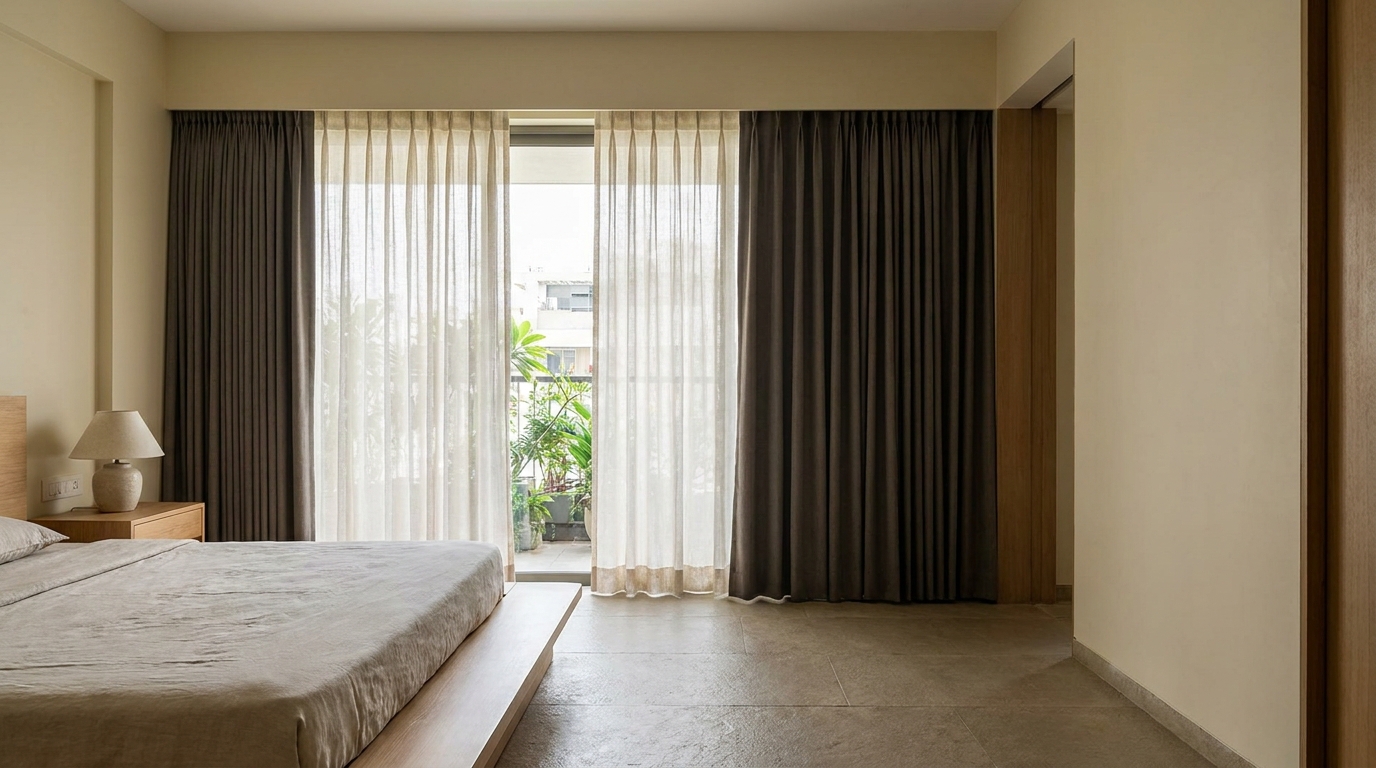
Curtains Chosen for Pattern Instead of Function
Curtain shopping in most Indian homes is driven by print and colour matching — does it go with the bedsheet, does it look nice — while blackout capability and layering get ignored entirely. The result is a bedroom that's either too bright at 6am or has curtains too heavy to let any light in during the day. A two-layer approach a sheer curtain for daytime softness plus a blackout layer for nights solves both problems and looks more considered than a single busy-print panel ever will.
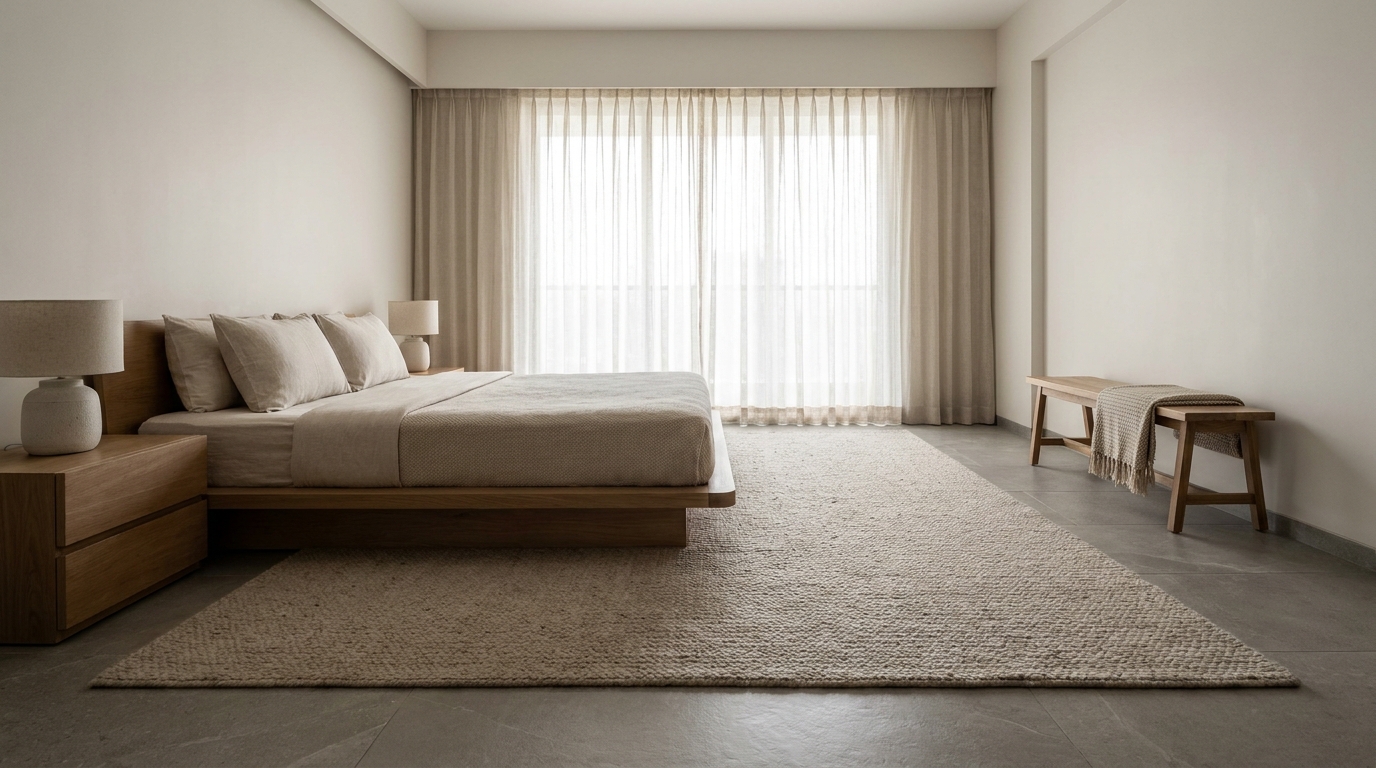
Skipping a Rug Because "the Floor Is Already Nice"
Good flooring is genuinely a reason people skip a rug but a bare floor, however nice, keeps a bedroom feeling like a showroom rather than a lived-in space. A rug under the bed (extending at least 60cm past each side) does more to soften and anchor the room than almost any other single addition.
It doesn't need to be large or expensive even a smaller rug placed just at the foot of the bed, where feet land first thing in the morning, makes a noticeable difference to how the room feels underfoot and visually.
Want a real estimate for your home?
Share your home in 2 minutes. We'll match you with verified designers in your city and give you a BOQ-level estimate before any work begins.
Share your home →