Laminate vs Acrylic Kitchen Shutters: Price, Glare, Fingerprints and the 5-Year Look
On a 10x8 ft kitchen, acrylic adds Rs 50,000-80,000 over laminate. Whether that premium is worth it depends on your colour, your window and who wipes the shutters.
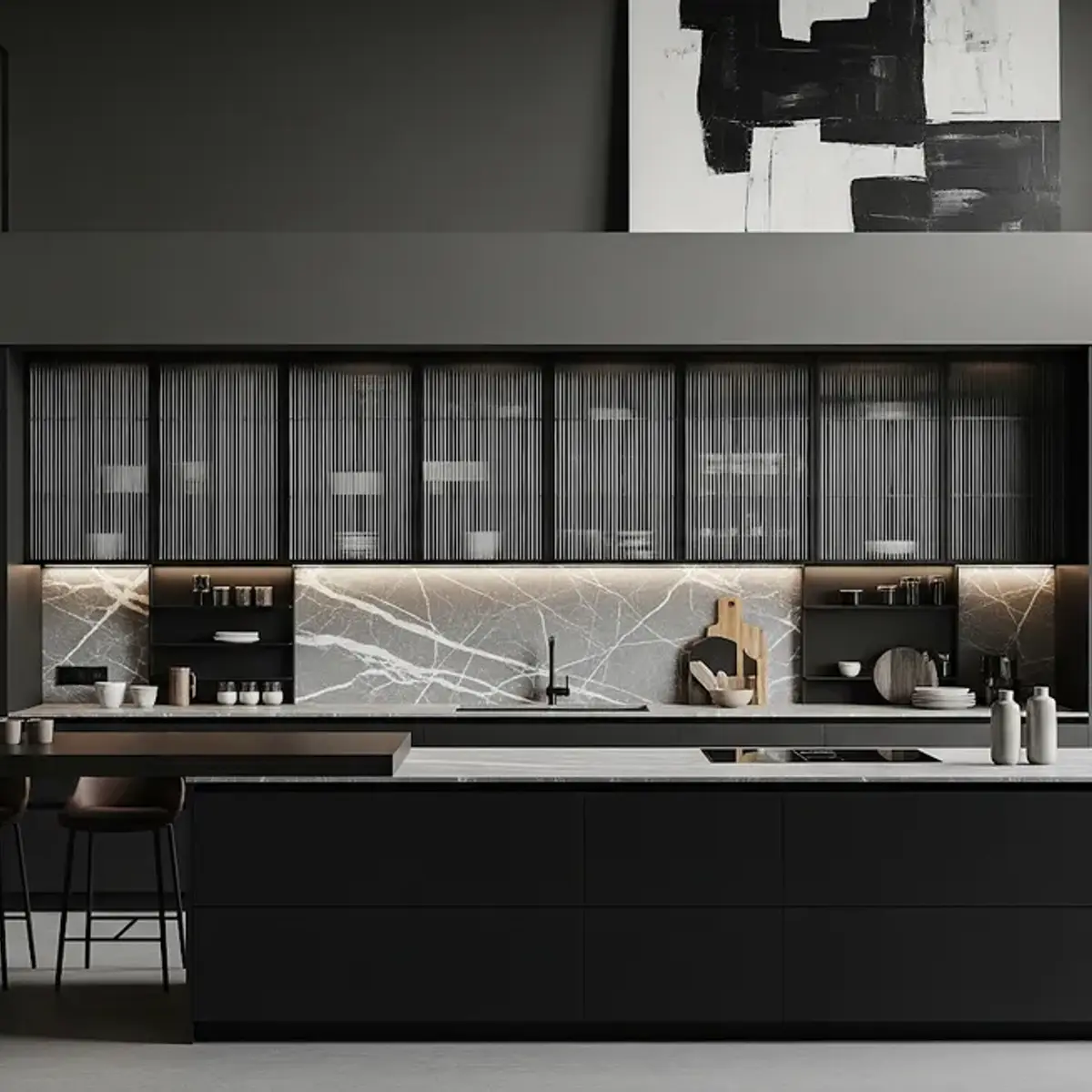
The straight answer: on a standard 10x8 ft L-shaped modular kitchen in 2026, acrylic shutters add roughly ₹50,000–80,000 over laminate for the same carcass and hardware; a laminate version lands around ₹1.7–2.3 lakh, the acrylic version around ₹2.3–3 lakh. Laminate is the rational default below a ₹2.5 lakh kitchen budget; acrylic earns its premium only when you want a mirror-gloss look and will live with fingerprints on it. For scale, the median kitchen estimate is ₹3.73 lakh for a 103 sq ft kitchen across 65 completed AI estimates on HeyBuddy (Aug–Sep 2026). Most laminate vs acrylic pages online are written by brands that sell one of the two and quote bare sheet prices; what follows is the installed-cost and five-year-wear comparison they skip.
What you are actually choosing between
Laminate is a printed decorative sheet (usually 0.8–1mm thick) pressed onto the shutter board. It comes in thousands of woodgrains, solids and textures, in matte, suede and gloss variants. The gloss version is shiny but has a faint orange-peel texture; it never quite reaches a mirror finish.
Acrylic is a 1–2mm PMMA sheet, the same family of material as premium display panels, bonded to an MDF or ply shutter. It gives a deep, wet-looking, genuinely reflective gloss that laminate cannot reproduce. The colour sits under a clear layer, which is why acrylic keeps its depth for years.
The shutter is the only thing changing here. Carcass, hinges, channels and counters stay identical, which is why the smartest comparisons hold everything else constant.
Installed cost on a real 10x8 kitchen
Sheet-price comparisons mislead because acrylic shutters also carry costlier edge-banding and more careful factory work. Here is the honest 2026 installed picture for the same 10x8 ft L-shaped kitchen, BWR ply carcass, standard hardware, counters excluded:
| Item | Laminate kitchen | Acrylic kitchen |
|---|---|---|
| Shutter finish rate (per sq ft of shutter) | ₹250–450 | ₹600–950 |
| Base + wall cabinets, ~90 sq ft shutter area | ₹1.7–2.3 lakh | ₹2.3–3 lakh |
| Typical premium over laminate | — | ₹50,000–80,000 |
| Edge treatment | Matching edge-band | Colour-matched PVC/acrylic band, visible seam on close look |
| Repair story | Cannot patch; replace shutter (₹2,500–5,000 each) | Fine scratches can be buffed; deep damage means replacement |
A common middle path is the hybrid kitchen: acrylic or gloss on the wall units at eye level, laminate on the base units that take the kicks and knocks. It reads as a premium kitchen for about half the acrylic premium. Where the whole budget sits relative to other homes is easier to judge with the modular kitchen cost per sq ft guide, and you can pressure-test your own numbers on the interior cost calculator.
The five-year look, honestly
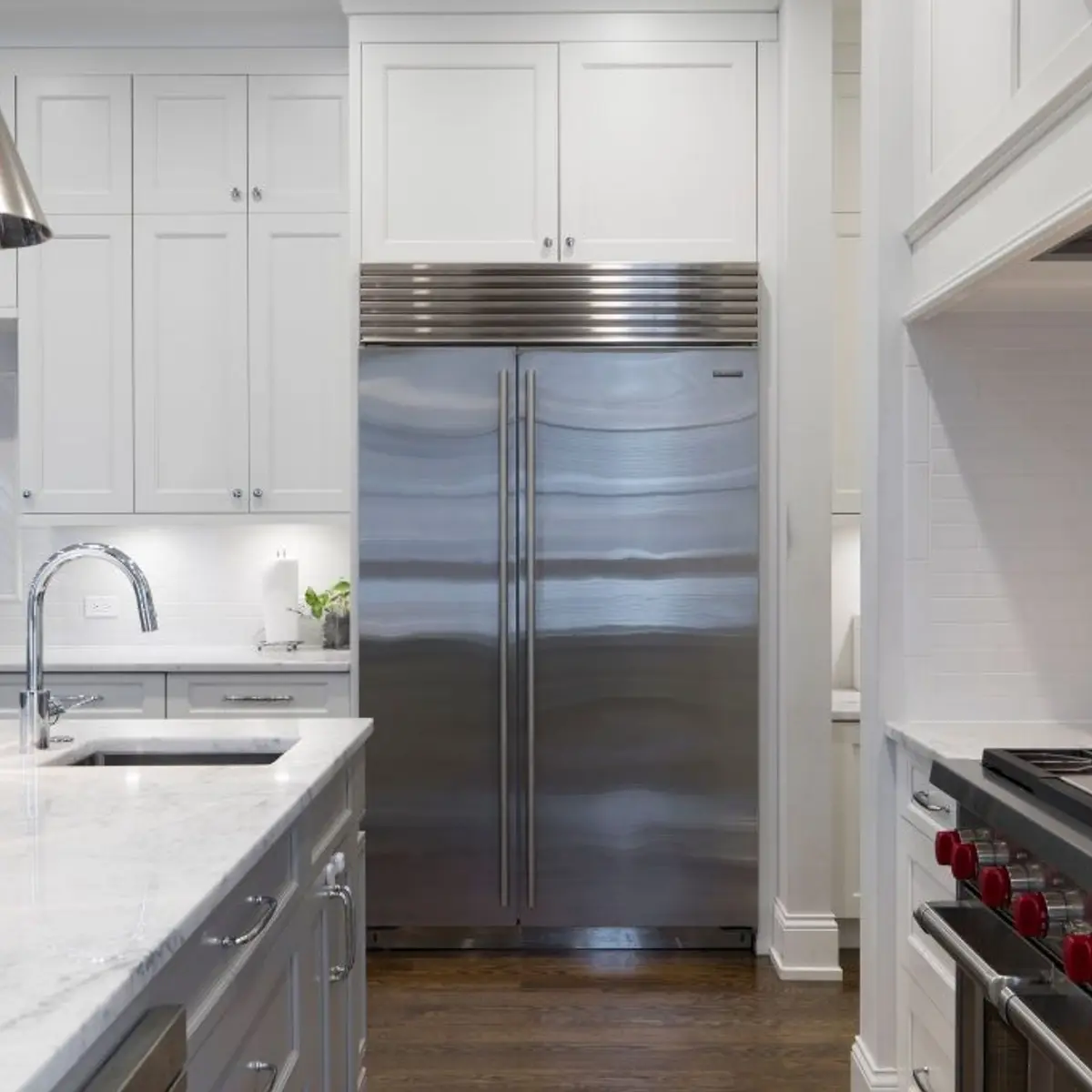
Fingerprints. Acrylic in a dark colour is a fingerprint magnet; a navy or black gloss kitchen needs a daily microfibre wipe to look the way it did in the showroom. Light acrylic colours hide prints far better. Matte and suede laminates barely show them at all. If wiping shutters is not going to be someone's habit, that decides the material by itself.
Glare. A high-gloss wall of acrylic opposite a window bounces light hard. In compact kitchens this can be genuinely unpleasant at certain hours. Check your window orientation before committing to gloss on the wall units.
Edges. This is where five-year-old kitchens show their age. Laminate edge-banding can chip at corners near the hob and sink; acrylic's edge seam can yellow slightly on cheaper brands. Neither is a failure, both are visible from two feet away.
Fading and steam. Acrylic holds colour extremely well; it is the more UV-stable surface, which matters for kitchens with strong afternoon sun. Good branded laminates are also stable; bargain laminates can dull near windows within a few years. Steam and oil affect neither surface materially if the shutters are factory-made and edge-sealed; site-pressed laminate with open edges is where swelling starts.
Scratches. Acrylic scratches more easily than laminate but fine scratches buff out with polish. Laminate resists scratching better, and when it does scratch, the mark is permanent. Households with young children tend to be harder on gloss anything.
Verdict by budget band
Kitchen budget under ₹2 lakh. Laminate, without hesitation. Spend the difference on better hardware (soft-close hinges, a decent channel brand) and a BWR carcass. A well-chosen textured laminate looks better than entry-level acrylic.
₹2–3 lakh. The hybrid is the sweet spot: gloss acrylic uppers, matte laminate bases. You get the showroom face at eye level and durability where the wear happens.
Above ₹3 lakh. Full acrylic is defensible if you love the look and your kitchen gets good ventilation and regular wiping. At this budget also compare PU-painted and glass-profile shutters before deciding; acrylic is no longer the only premium option in 2026.
Rental property or a flat you plan to sell in 3–5 years. Laminate. The premium does not return at resale, and the next owner's taste in gloss is unknowable.
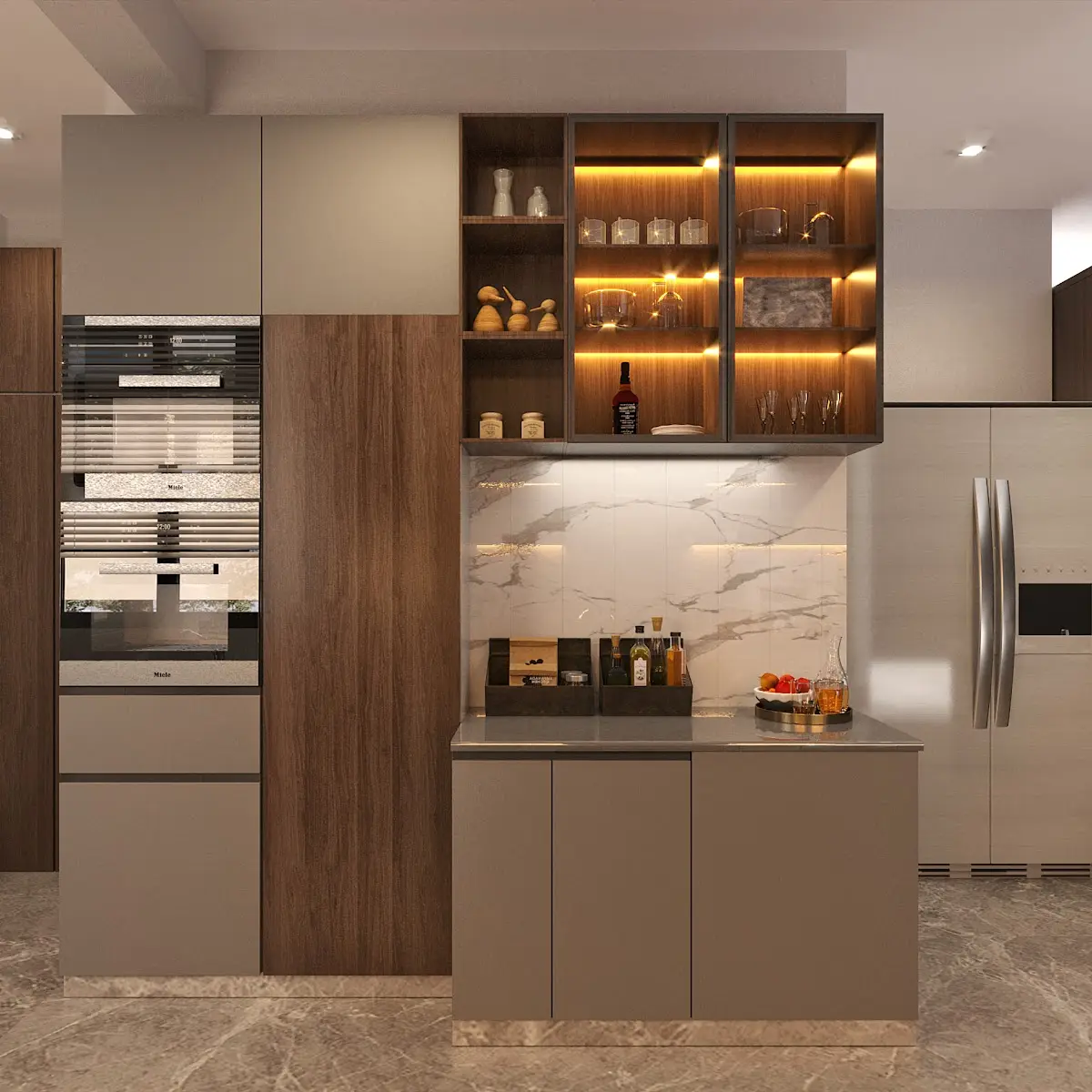
One more honest note: colour range differs. Acrylic lives in solids, mostly gloss. If your reference pictures are woodgrains, fluted textures or stone looks, you are a laminate (or veneer) customer regardless of budget. Browsing real kitchen design ideas with materials in mind settles this faster than any sample chip, because you see the finish across a whole room instead of a 4-inch swatch.
The three questions that settle it in the showroom
First, ask to see a five-year-old installation, not the display kitchen; any established dealer has customer sites they can show. Second, run your palm across a dark acrylic shutter and look at it in raking light; if the prints bother you now, they will bother you daily. Third, get the shutter finish written as a line item with brand and thickness (for example, 1mm branded laminate, or 2mm acrylic with matched edge-band), because "high gloss finish" on a quotation can legally mean a gloss laminate at a third of the price you thought you were paying.
Frequently asked questions
How much more does an acrylic kitchen cost than laminate?
On a standard 10x8 ft L-shaped kitchen with the same BWR ply carcass and hardware, expect Rs 1.7-2.3 lakh for laminate and Rs 2.3-3 lakh for acrylic in 2026, a premium of roughly Rs 50,000-80,000. Per sq ft of shutter area, laminate runs Rs 250-450 against Rs 600-950 for acrylic. Counters and appliances are extra in both cases.
Do acrylic kitchen shutters show fingerprints?
Yes, and dark colours show them badly. A navy or black gloss acrylic kitchen needs a daily microfibre wipe to look showroom-fresh, while light acrylic shades hide prints far better. If nobody in the house will maintain that habit, choose a matte or textured laminate, which barely registers fingerprints at all.
Does acrylic fade or turn yellow over time?
The acrylic colour layer itself is highly UV-stable and holds its depth for years, better than budget laminates near sunny windows. The weak point is the edge-banding on cheaper brands, which can yellow slightly with age. Buy branded acrylic with colour-matched edges and the finish stays consistent well past the five-year mark.
Which is better for a small kitchen, laminate or acrylic?
A light gloss surface visibly opens up a compact kitchen, which argues for acrylic or a hybrid with gloss wall units. But small kitchens also concentrate heat, steam and knocks, and the absolute premium matters more on tight budgets. A gloss laminate or acrylic uppers with laminate base units gives most of the effect for far less money.
What lasts longer, laminate or acrylic?
Both outlast their decade if factory-made and edge-sealed; the difference is how they age. Laminate resists scratches better but a scratch is permanent and a damaged shutter must be replaced. Acrylic scratches more easily, yet fine marks can be buffed out with polish. Edges are the tell on both: chipped banding on laminate, seam lines on acrylic.
Want a real estimate for your home?
Share your home in 2 minutes. We'll match you with designers in your city and give you a BOQ-level estimate before any work begins.
Share your home →Related reading