The One Bathroom Mistake You Can't Fix After Tiling (And 6 Others to Avoid)
The critical layout and space-planning errors that can ruin your bathroom layout permanently—and how to fix them before construction begins.
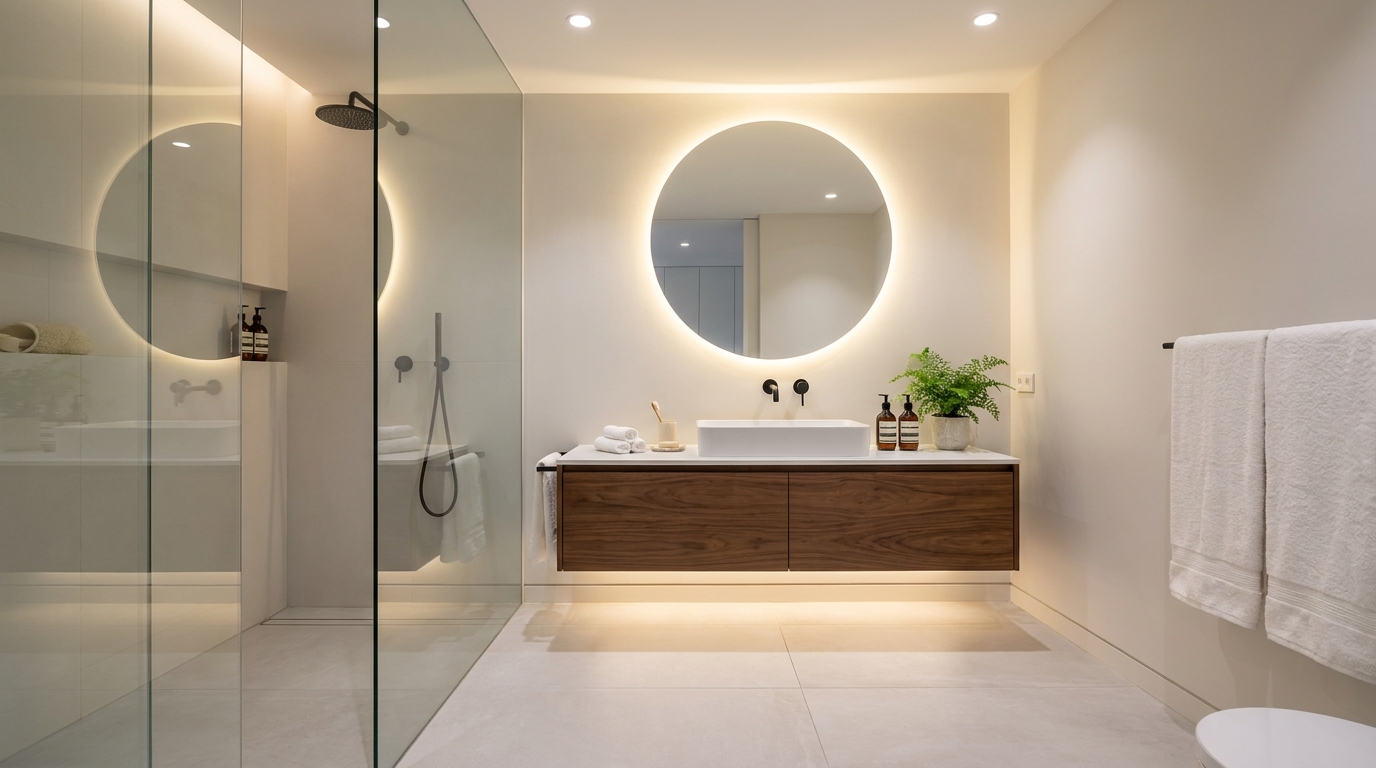
Most people plan a bathroom renovation by thinking about tiles, fixtures, and color. Which is the problem — because by the time you're choosing tiles, the decision that actually determines whether your bathroom feels spacious or cramped has already been made. And it's almost impossible to undo once construction starts.
That decision is door swing and space planning.
Why Door Swing Is the Mistake Nobody Talks About
Picture a small bathroom — say 6 feet by 8 feet. The door opens inward. Every single time someone walks in, the door sweeps across nearly a third of the usable floor space. Now add a shower partition positioned without accounting for that swing, and you've created a bathroom where two people genuinely cannot be in it comfortably at the same time, regardless of how expensive the tiles are.
This isn't a hypothetical. It's the single most common space-planning error in Indian bathroom renovations, and it happens because door direction and partition placement get decided almost as an afterthought — usually whatever the original layout had, carried forward without question.
Here's the part that makes it costly: by the time the door frame is fixed and the shower partition is installed, fixing this means re-doing structural work, not just swapping a tile. It's the one mistake on this list you genuinely cannot patch later.
What to do instead: Before any tiling begins, walk through the bathroom's actual layout on paper. Does the door open into dead space or into the main walking path? Does the shower partition leave a clear, full swing radius for the door? If the door currently swings into the shower or vanity zone, this is the moment to consider whether it should open outward, slide, or be repositioned — not after the tiles are down.
6 More Decisions That Make or Break a Renovation
Door swing isn't the only thing that needs deciding early. Here's the rest of the checklist, roughly in the order these decisions actually need to happen:
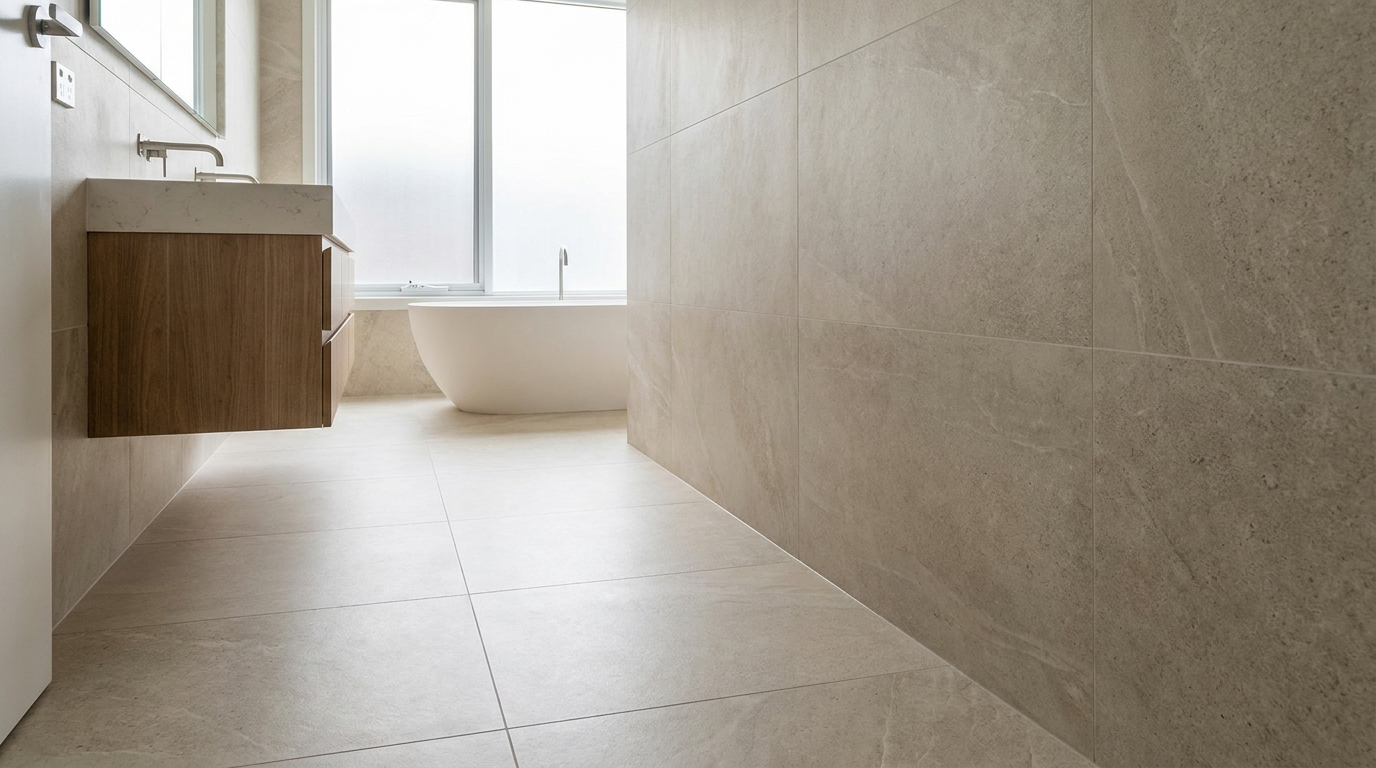
Tile Size — Bigger Often Means Bigger-Feeling
Small mosaic tiles with dense grout lines visually shrink a small bathroom. Large format tiles with minimal grout do the opposite — same square footage, noticeably more spacious feeling. This is a design decision, but it interacts with point one: tile direction and layout should be planned around the actual walking path, not chosen independently of it.
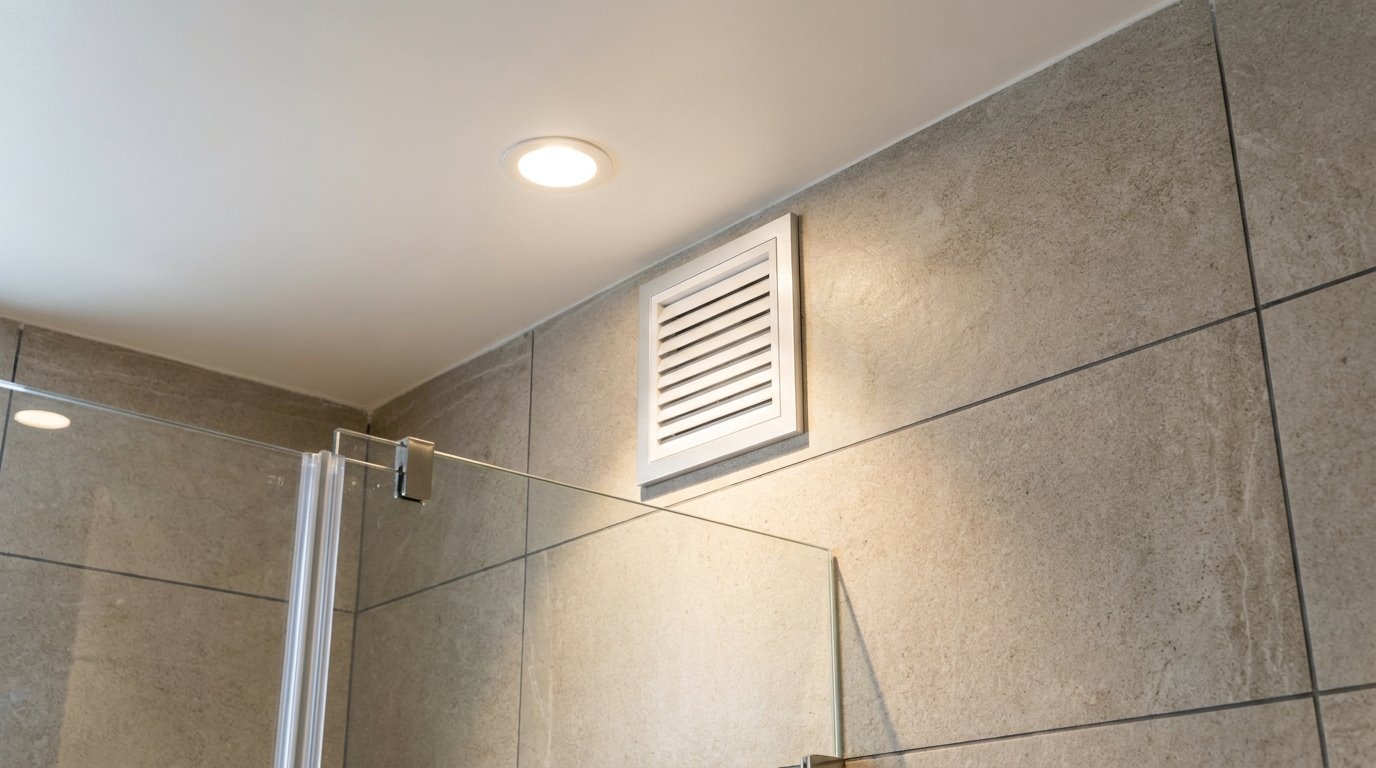
Ventilation and Exhaust Fan Placement
An exhaust fan placed as an afterthought — or skipped entirely — leads to fogged mirrors, damp ceilings, and eventually mold. The fan needs a planned electrical point and a sensible position relative to the shower, decided before the ceiling and walls are finished, not retrofitted into a completed space.
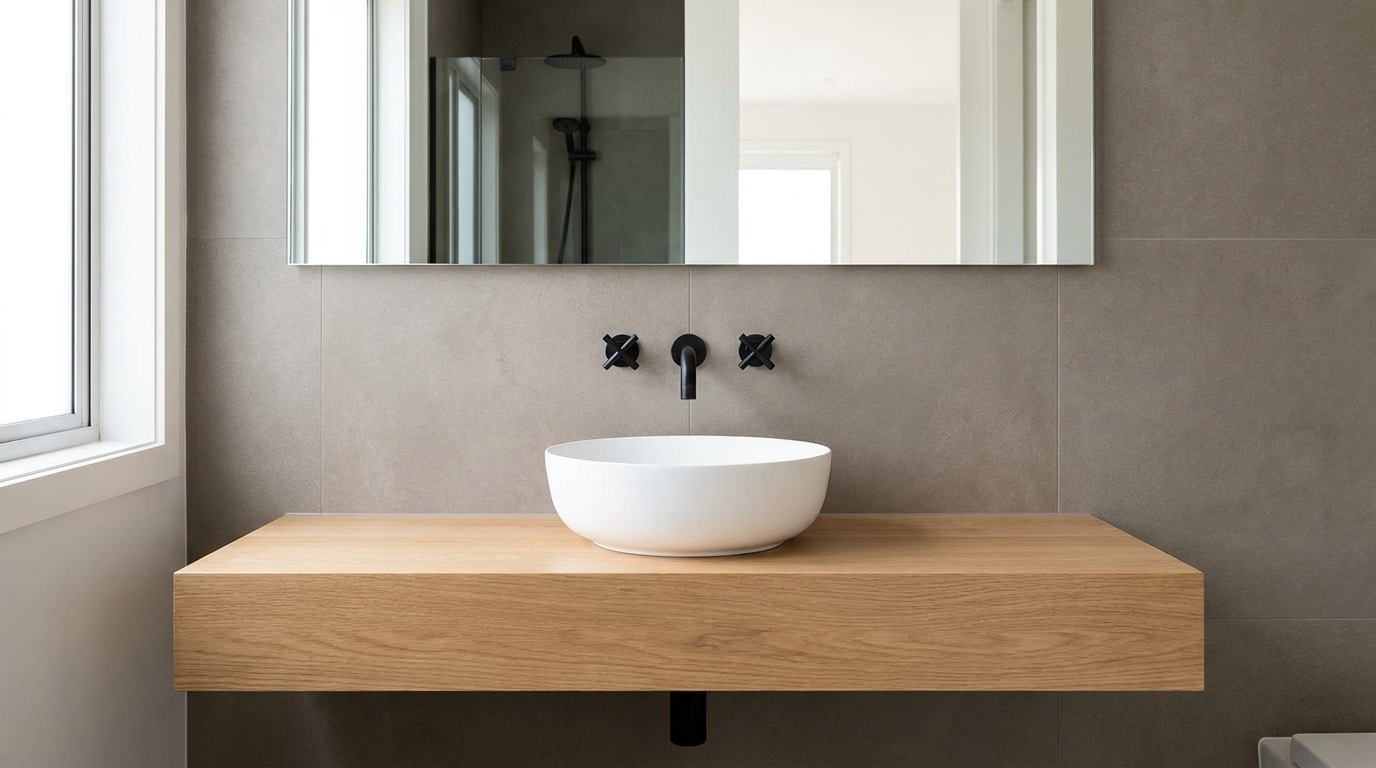
Fixture Height Planning
Basin height, mirror position, shower head height — these all need to be planned against the actual people using the bathroom, not installed at "standard" height by default. A mirror mounted too low or a basin too high turns into a daily annoyance that no amount of good lighting can fix.
Storage Built Into the Design
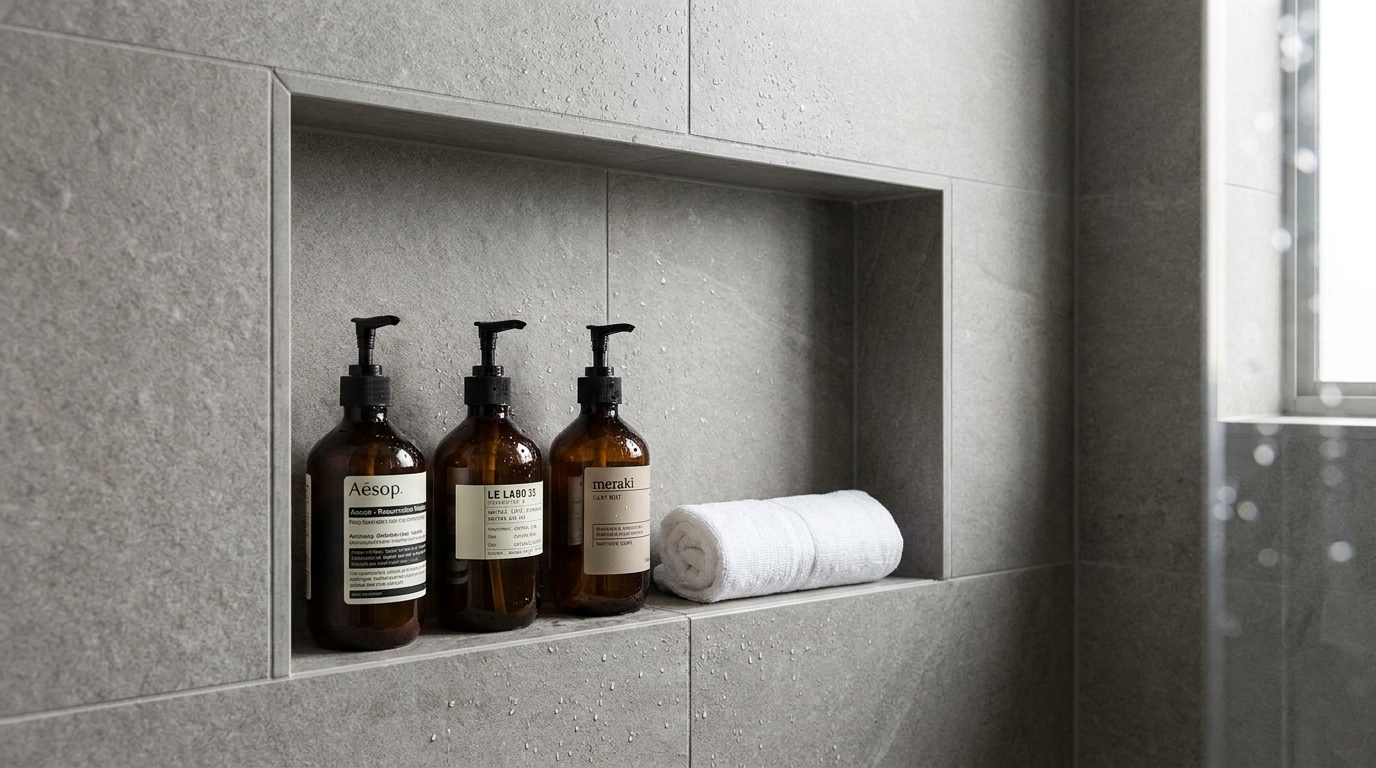
A bathroom designed without storage ends up with a flimsy hanging shelf added after the fact — cluttered, slightly precarious, and visually messy. A recessed tiled niche, planned and built into the wall during construction, solves the same problem permanently and far more elegantly.
Layered Lighting, Not One Overhead Bulb
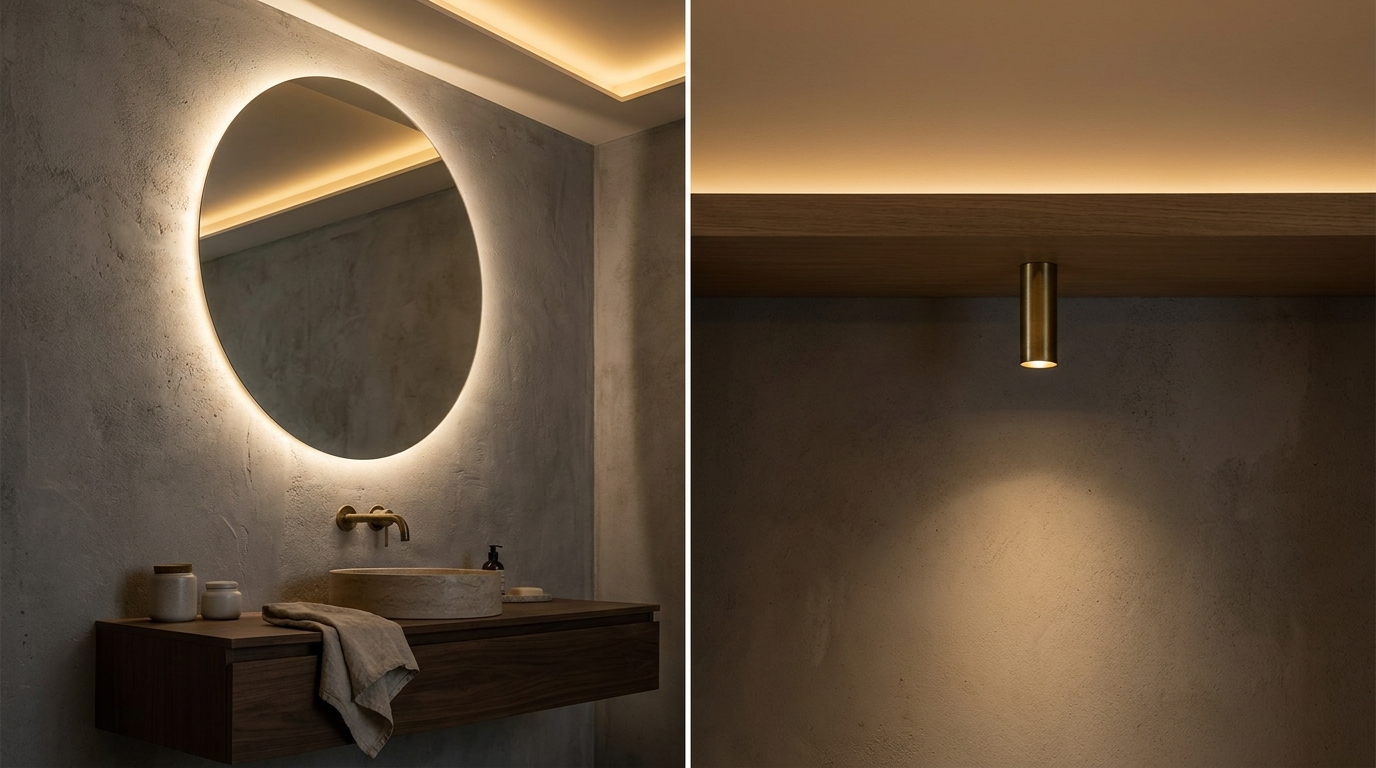
A single harsh ceiling bulb is the most common lighting setup in Indian bathrooms, and it's also the least flattering. Warm backlit mirrors, a soft spotlight above the vanity, and ambient ceiling lighting working together transform the same space into something that feels considered rather than functional-only.
Slip-Resistant Flooring
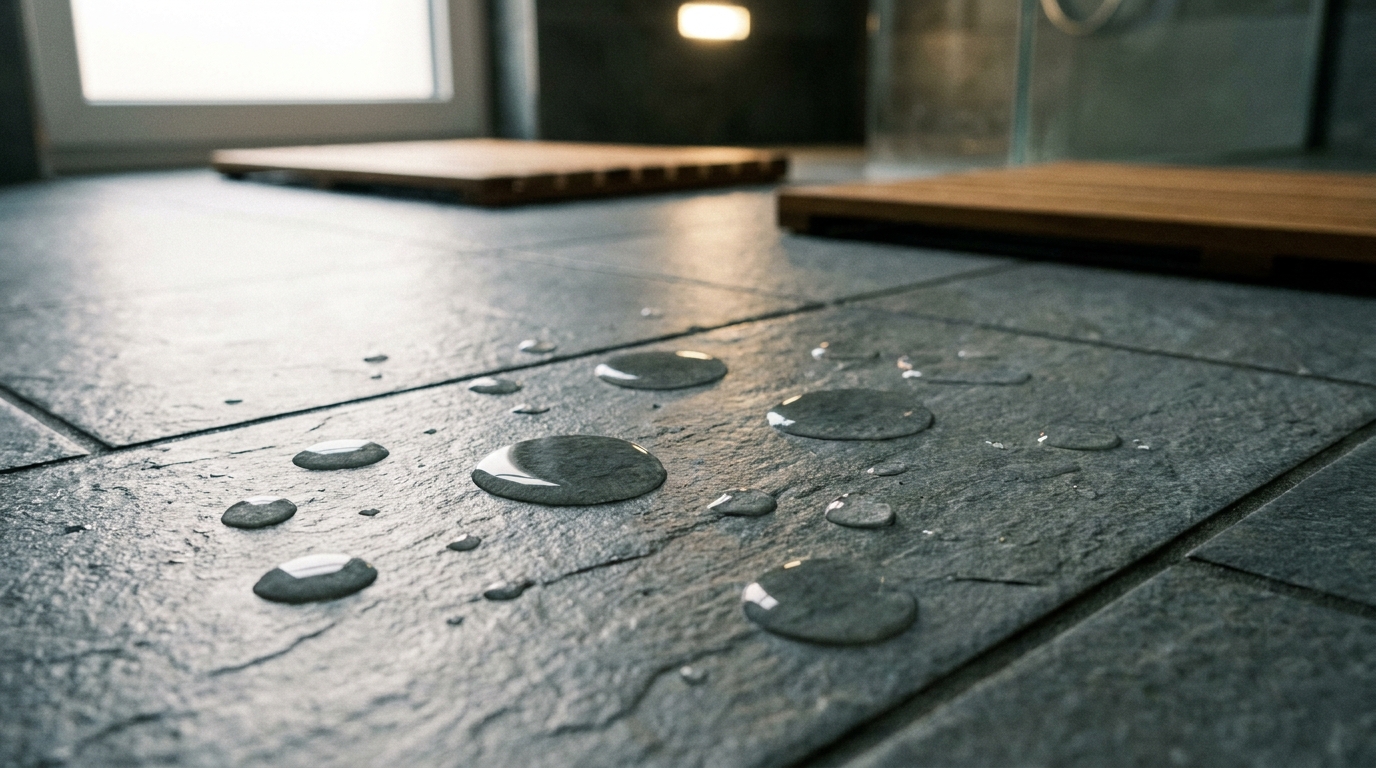
Glossy, high-shine tiles look striking in photos and become genuinely dangerous the moment they're wet. Matte, textured, slip-resistant flooring is a small material decision with an outsized safety impact — and it's far easier to choose correctly the first time than to replace later.
The Pattern Here
Notice that six of these seven points are things you decide before construction, not things you pick from a catalog afterward. Tile color and fixture brand are the fun decisions. Door swing, plumbing layout, and ventilation placement are the ones that actually determine whether the finished bathroom works.
If you're renovating soon, the order matters: walk through the space planning and door/partition layout first, lock in ventilation and storage placement second, and only then move on to tile size, lighting style, and finishes.
Want a real estimate for your home?
Share your home in 2 minutes. We'll match you with verified designers in your city and give you a BOQ-level estimate before any work begins.
Share your home →