6 TV Unit and Media Wall Ideas That Aren't Just a Console and a Screen
Six TV unit and media wall ideas that treat the wall as a design feature, not just a mount point for a screen.
The TV wall is often the largest single visual surface in an Indian living room, and yet it's usually the most default-designed element in the entire space a laminate console, a wall-mounted screen, maybe a shelf for the set-top box, chosen with almost no consideration for how it anchors the room around it. Given how much time a household actually spends facing this wall, it deserves more intention than it typically gets.
Six media wall approaches that work within realistic Indian apartment constraints limited wall width, standard ceiling heights, and the reality that the TV itself, its cables, and its box collection all need somewhere to live. Each one includes what it costs relative to a standard console, and what to watch for before committing.
1. Floating Console with a Backlit Panel
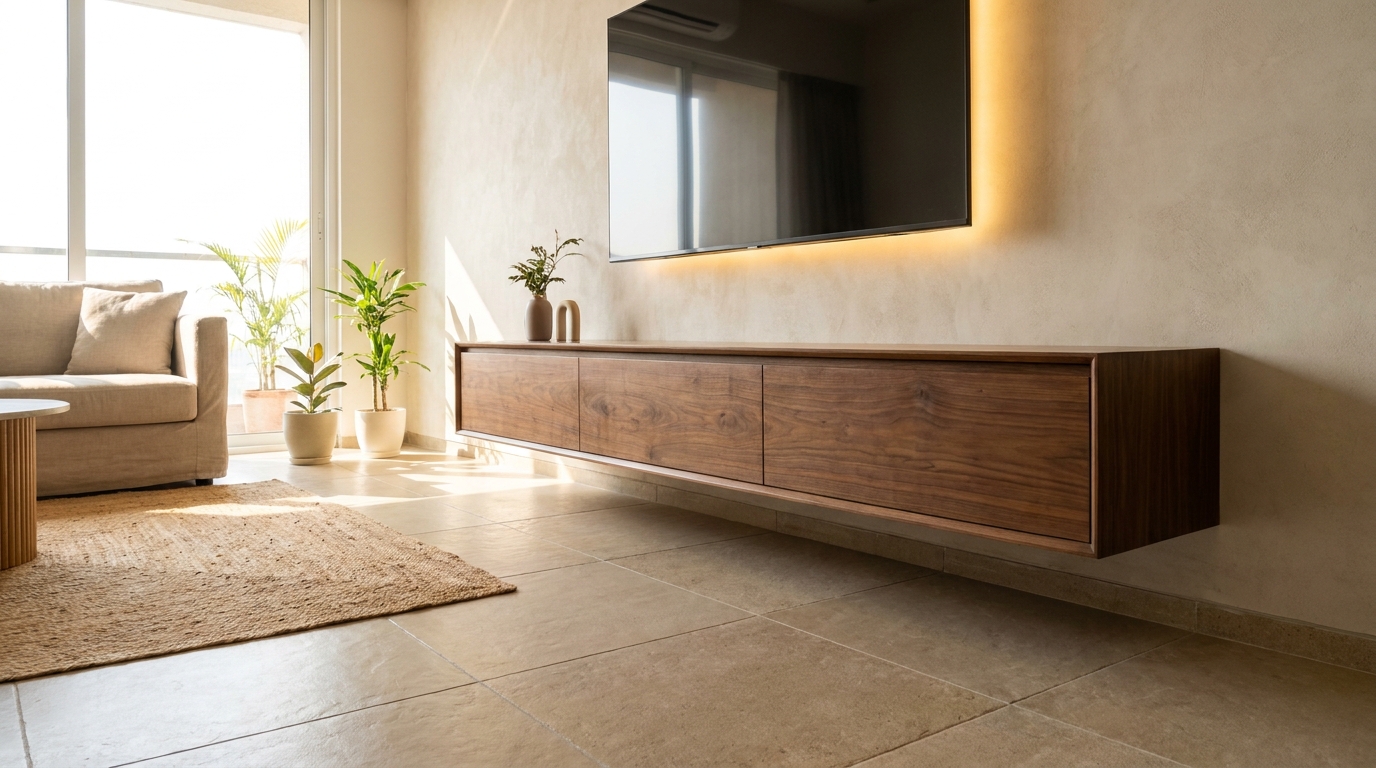
A floating console — mounted to the wall with no visible legs touching the floor immediately makes a living room read as more spacious, since the floor beneath it stays visually open rather than broken up by furniture legs. Paired with a slim LED backlight strip running along the wall behind the TV, it adds a soft glow that makes the whole wall feel considered rather than purely functional, especially in the evening when the television itself is off.
The floating mount needs to be installed into structural wall points rather than a false partition, since it needs to bear real weight worth confirming with the contractor before finalizing placement. Keep the backlight on a separate dimmer switch from the room's main lighting, since the effect works best as a standalone accent rather than competing with overhead light. A warm white LED strip (2700K to 3000K) reads far more intentional than a cool white one, which can look more like task lighting than ambiance.
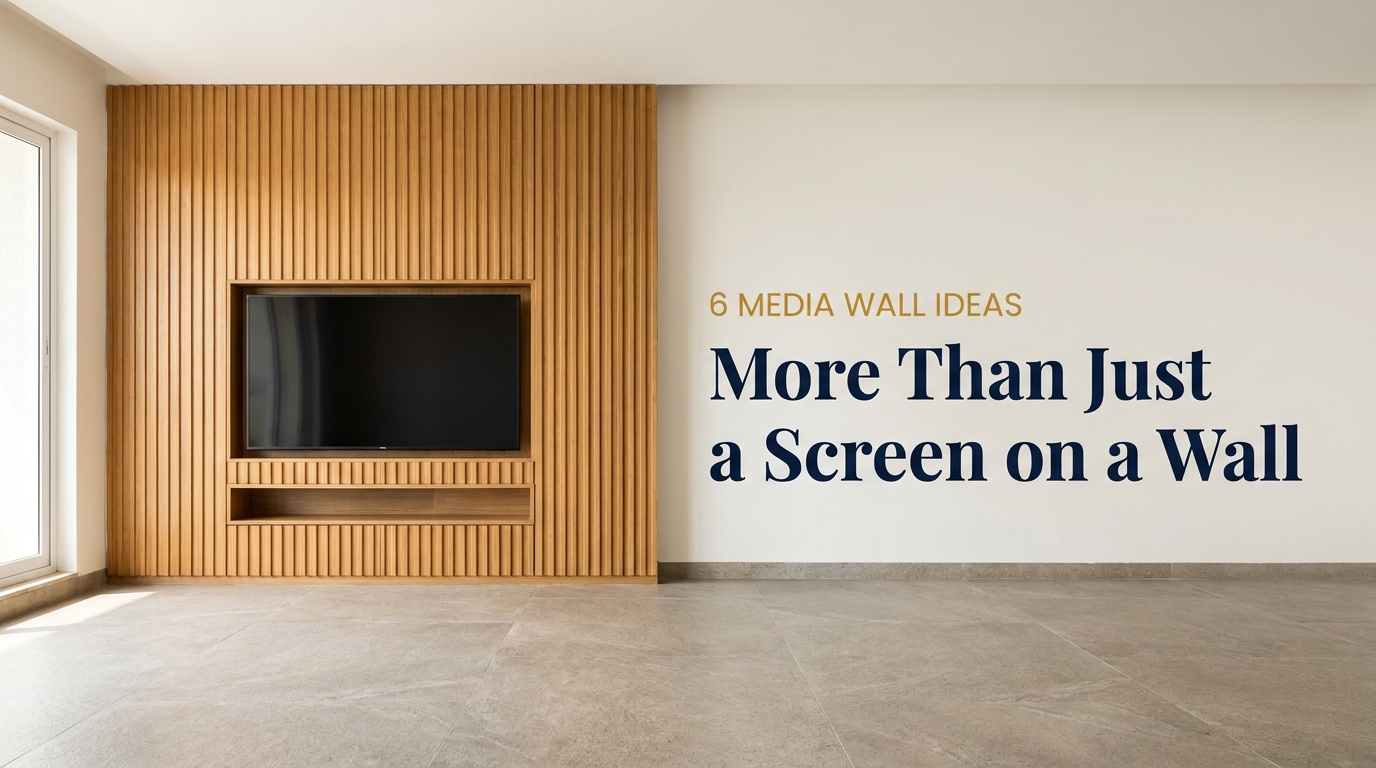
2. Fluted Wood Panel Wall with Recessed TV
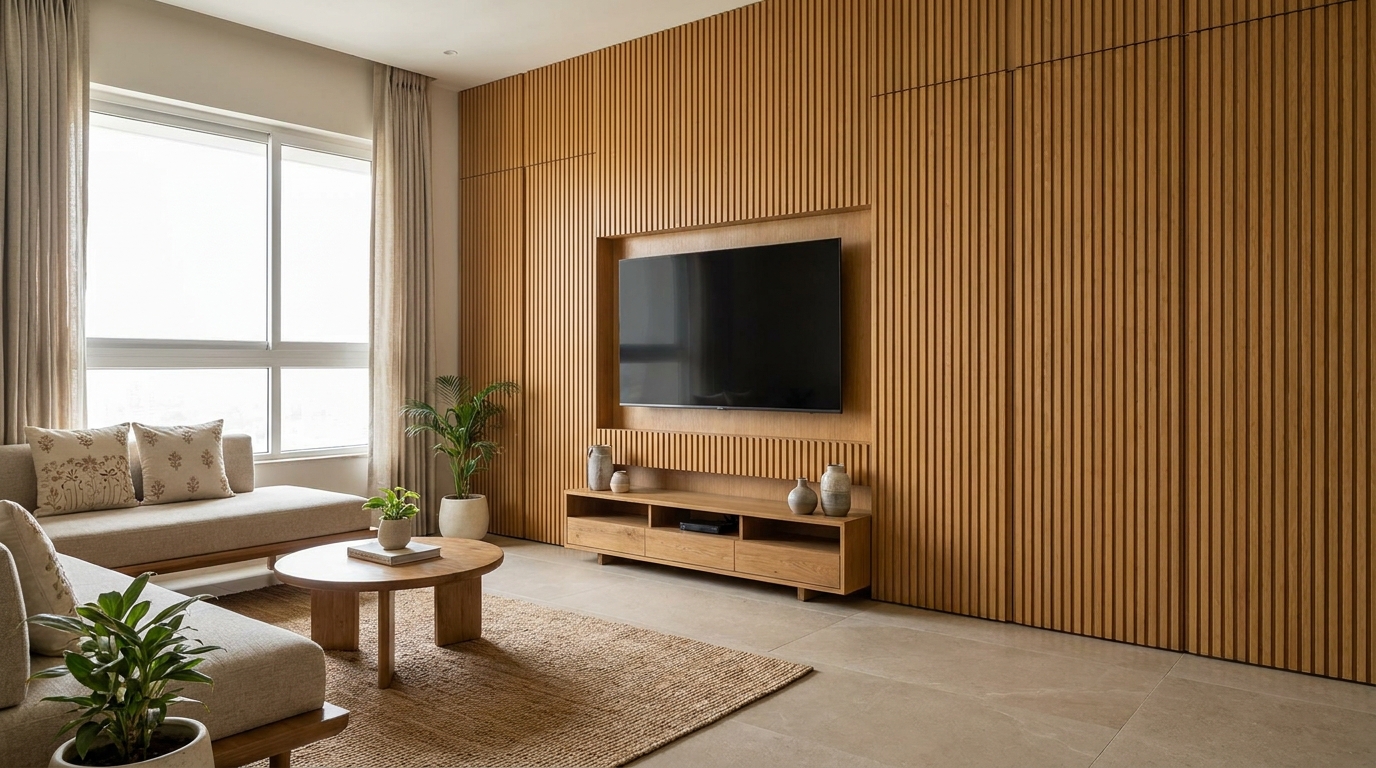
A fluted wood panel wall treats the television as one element within a larger textured surface, rather than the single dominant object mounted on a plain wall. The vertical ridges of the fluted panelling add genuine depth and material interest to what's usually the flattest wall in the room, and when the TV is recessed slightly into the panel rather than simply mounted on top of it, the screen reads as integrated into the wall design instead of interrupting it.
This requires more precise carpentry than a standard console, since the panel needs to be cut and fitted around the exact TV dimensions and mounting bracket. Budget for slightly higher labour cost relative to a simple console setup, but the material cost itself (engineered wood veneer panelling rather than solid wood) keeps this from being prohibitively expensive. It works particularly well in living rooms where the TV wall is also the first wall visible from the entryway, since it gives visitors something more considered to look at than a screen.
3. Natural Stone Cladding Accent Wall
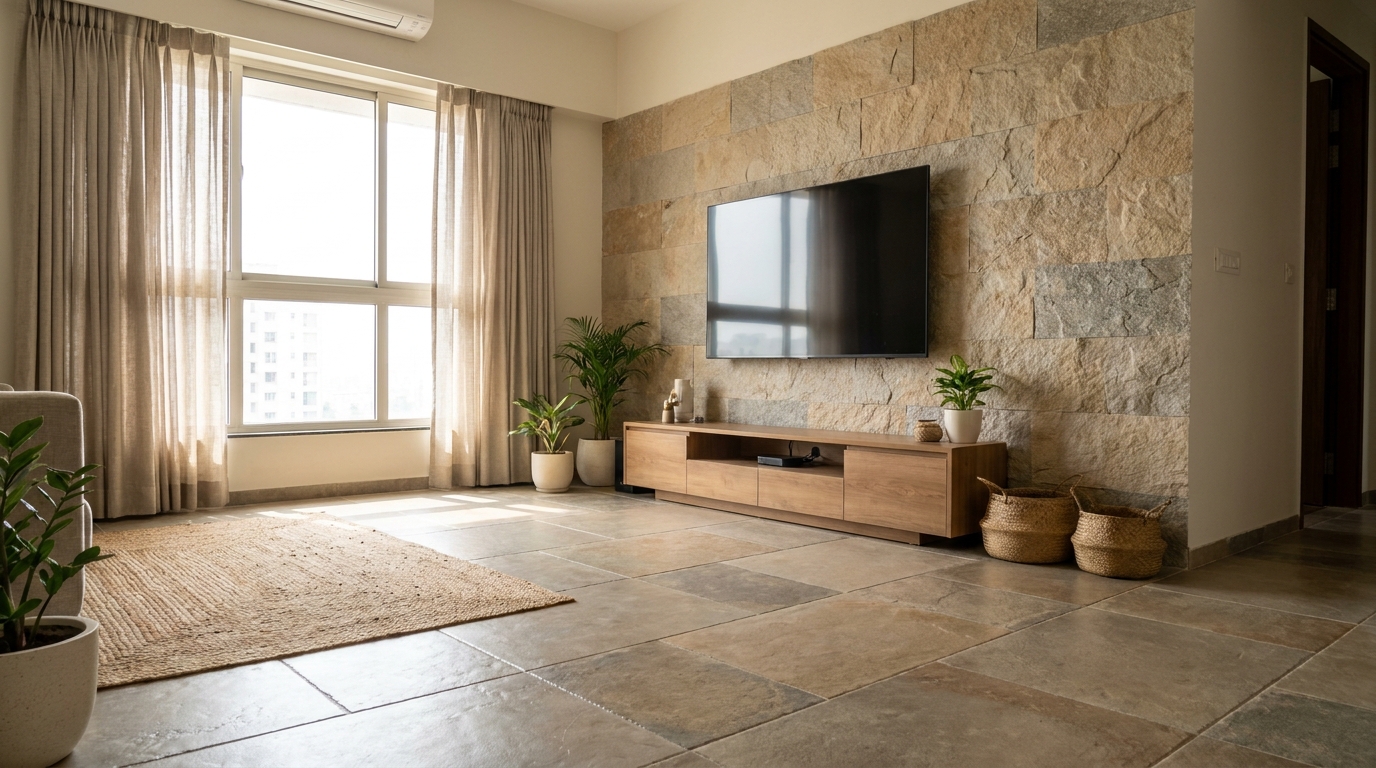
Stone cladding thin slabs or tiles of natural or engineered stone applied to a feature wall brings a material weight and texture to the TV wall that no laminate or paint finish can replicate. Unlike a painted accent wall, which relies entirely on colour for its impact, a stone-clad wall changes how light falls across the room throughout the day, since the natural variation in the stone's surface catches and scatters light differently than a flat painted surface would.
This is a heavier installation than most other options here, requiring the wall to be structurally assessed before installation and typically needing professional fitting rather than a DIY approach. Engineered stone veneer, which mimics the look of natural stone at a fraction of the weight and cost, is a practical middle ground for apartments where a full natural stone installation isn't feasible. Either way, keep the cabling and TV mount plan finalized before the stone goes up, since retrofitting cable routing into a finished stone wall is far more disruptive than doing the same on plaster.
4. Asymmetric Open Shelving Media Wall
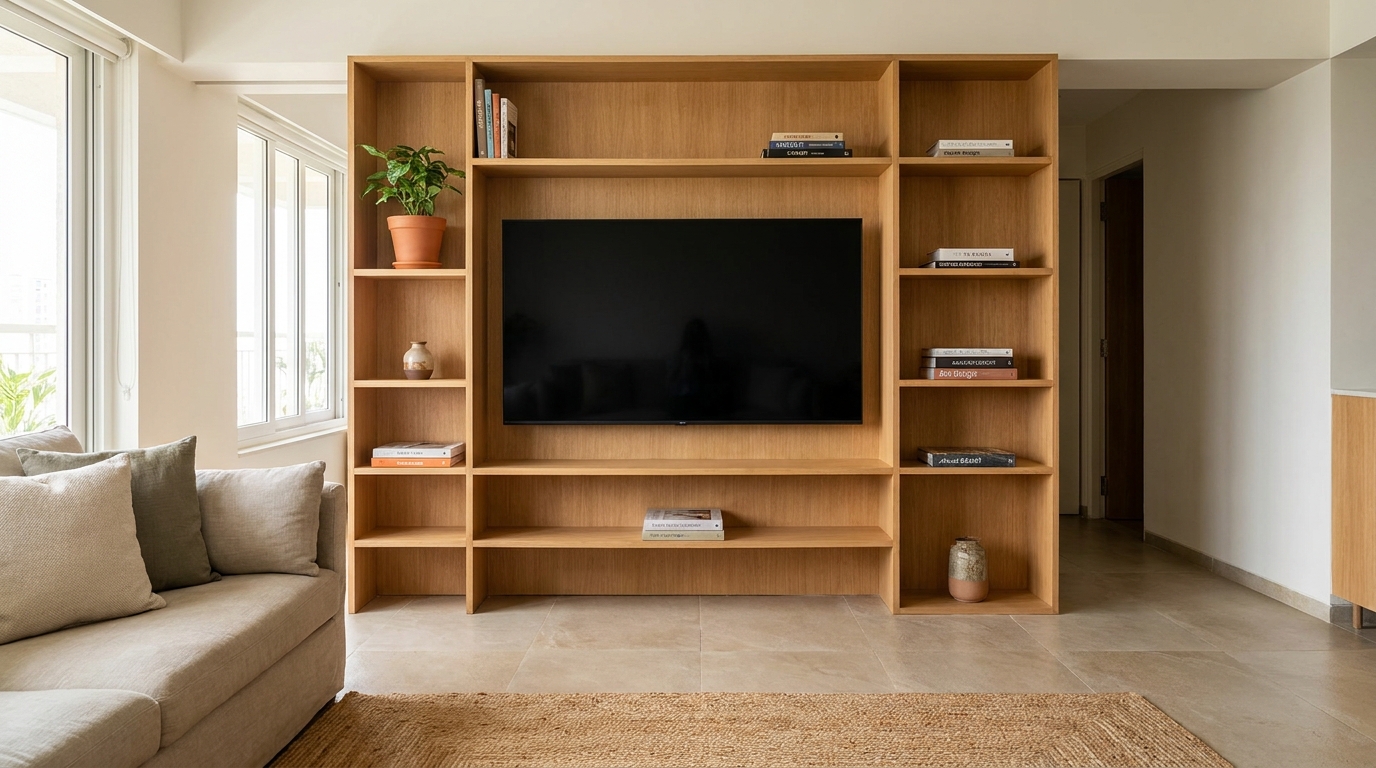
An asymmetric open shelving unit where shelves of varying widths and heights are arranged around the television rather than in a uniform grid turns the media wall into a display surface for books, plants, and objects, not just a mount point for a screen. This works particularly well for households that actually want visible storage for records, books, or curated objects, rather than hiding everything behind closed cabinet doors.
The asymmetry needs to be planned deliberately rather than left to chance a good asymmetric layout still follows an underlying visual rhythm, typically anchored by the TV as the fixed central point with shelving cantilevering outward in a considered, uneven rather than random pattern. This is a moderate-cost option relative to fully custom carpentry, since much of the visual interest comes from the arrangement itself rather than expensive materials, though it does require more design planning time upfront than a simple straight-shelf unit would.
5. Hidden TV Behind a Sliding Art Panel
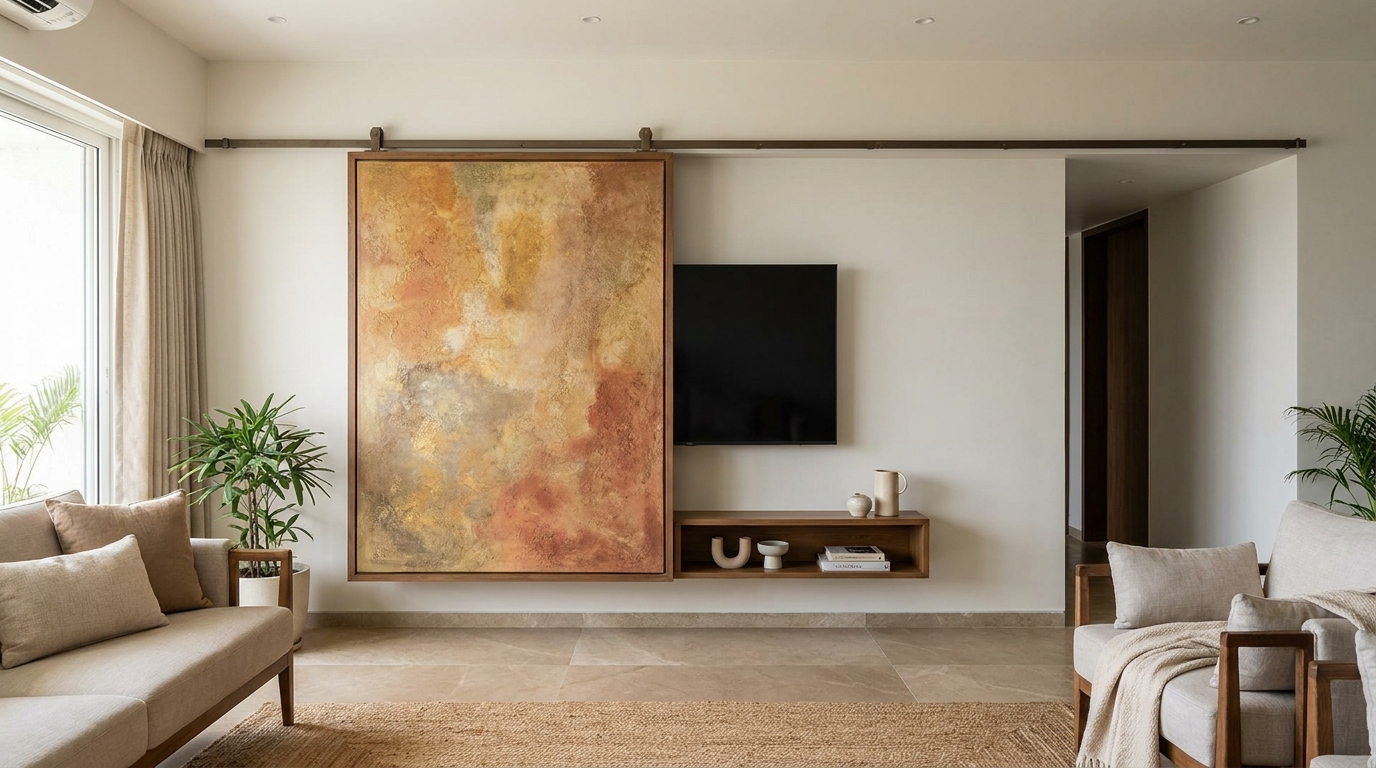
For households that don't want a large black screen dominating the room when the television is off, a sliding art panel a framed print or fabric panel mounted on a track directly in front of the TV conceals the screen entirely behind what reads as simply a piece of art on the wall. Sliding the panel aside on its track reveals the television when needed, and slides back to restore the wall to a clean, gallery-like appearance the rest of the time.
This needs a slightly deeper wall recess or standoff mount to accommodate both the TV and the sliding panel track without either bumping into the wall, so it's a plan-ahead detail rather than a retrofit-friendly option. The panel artwork itself is worth choosing with some care, since it functions as the room's primary visual focal point for most of the day a large-format abstract print or a fabric panel in a tone that complements the room's palette works better than a small, busy piece that gets lost at that scale.
6. Minimalist Wall-Mounted TV with LED Cove Lighting
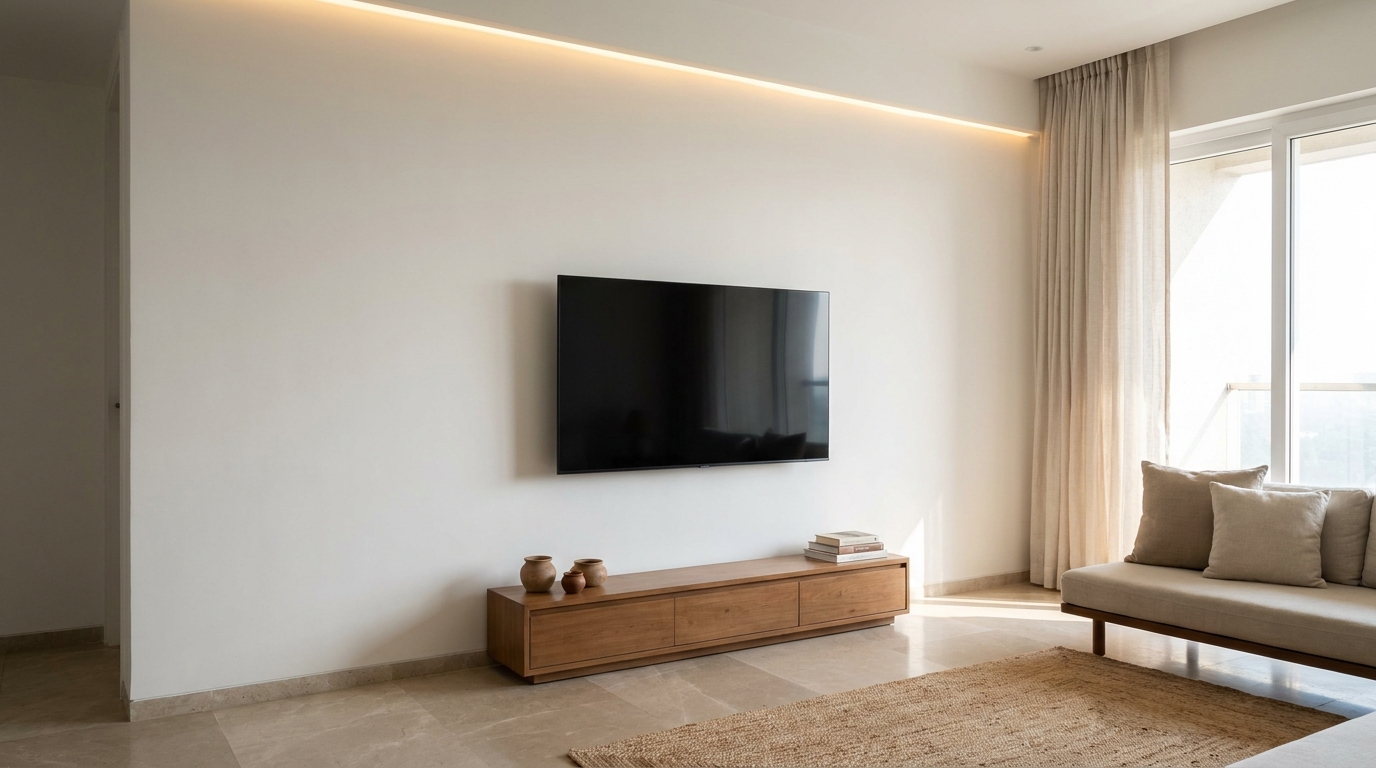
For households that want the simplest possible media wall without sacrificing the sense that it was designed rather than defaulted into, a minimalist wall-mounted TV paired with a recessed LED cove running along the ceiling edge above it achieves a considered look with the least amount of carpentry or material cost of any option on this list. The cove lighting draws the eye upward and softens the transition between wall and ceiling, which makes the whole wall feel more finished even with nothing else added to it.
This is the most budget-friendly option here, since it requires no custom panelling, cladding, or joinery just a clean paint finish, a properly mounted TV bracket, and a false ceiling detail to house the cove lighting. It's a particularly good fit for rental apartments or households not ready to commit to a heavier structural media wall, since it delivers a meaningful visual upgrade over a bare wall without any of the higher-cost, harder-to-reverse choices further up this list.
Closing Thought
None of these six ideas require rethinking the living room's layout every one of them works within the same footprint a standard console-and-screen setup already occupies. The difference is entirely in how much thought goes into the wall itself, which, given how much time a household spends facing it, is one of the more worthwhile places to spend a little extra design attention.
Want a real estimate for your home?
Share your home in 2 minutes. We'll match you with verified designers in your city and give you a BOQ-level estimate before any work begins.
Share your home →