6 Home Library and Reading Nook Ideas for Apartments That Don't Have a Spare Room
Six ways to build a real reading space into an Indian apartment without needing a spare room from window seats to balcony daybeds.
A home library sounds like something that needs a dedicated room floor-to-ceiling shelves, a rolling ladder, a fireplace in the corner. For most Indian apartments, that's simply not the starting point, and treating it as the only version of "a reading space" is exactly why so many households with genuine book collections end up with those books stacked in cardboard boxes in a storeroom instead of anywhere they'd actually be read.
The more realistic version of a home library isn't a room at all it's a corner, an alcove, a window seat, a stretch of underused wall. What actually makes a reading space work has very little to do with square footage and almost everything to do with three things: a comfortable place to sit for longer than ten minutes, light that doesn't strain the eyes, and books that are visible and reachable rather than boxed away. This photo story covers six ways to build a genuine reading space into an apartment that was never designed with one in mind, using space that's usually sitting empty or underused already a blank wall, a balcony corner, a bedroom alcove rather than requiring a room reassigned entirely to the purpose.
1. Wall-to-Wall Built-In Bookshelf with a Window Seat
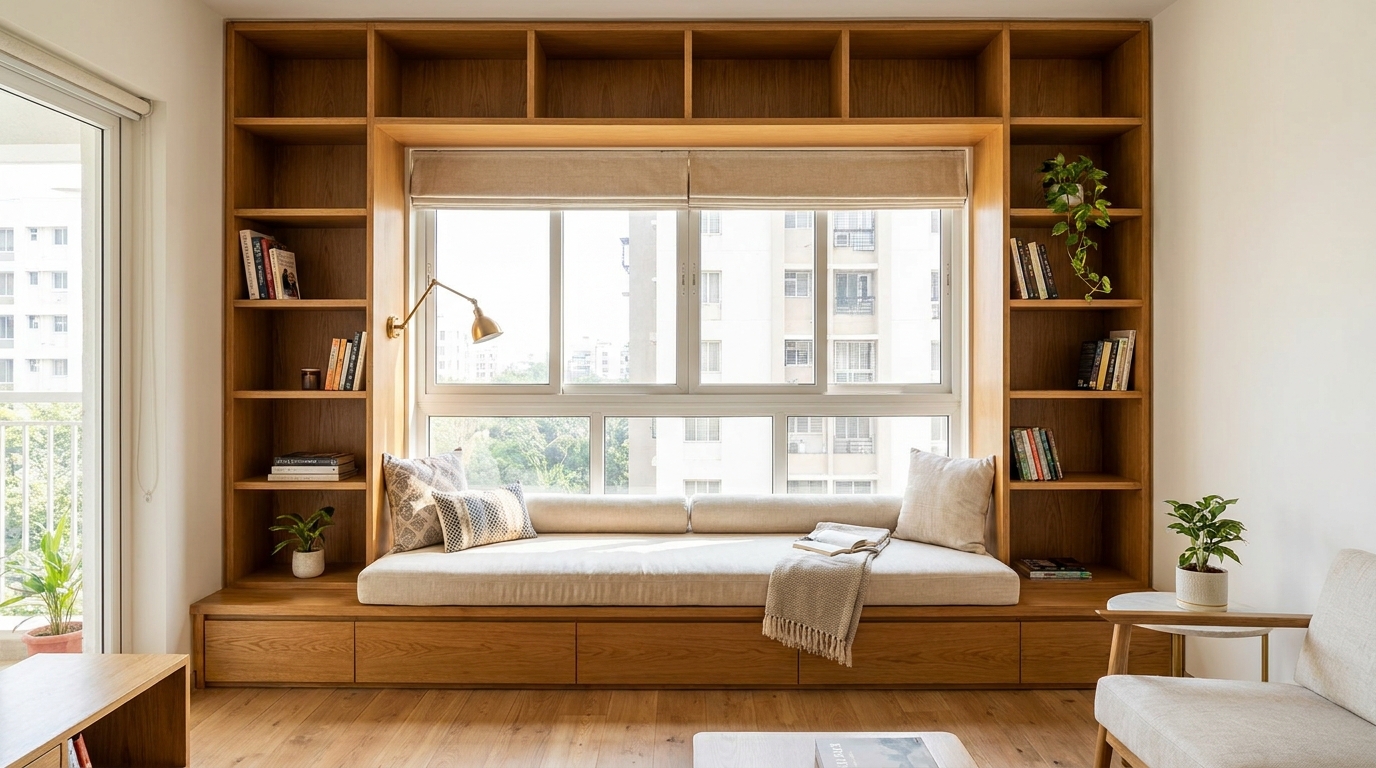
A window is one of the most underused pieces of real estate in most Indian living rooms it gets a curtain and not much else, even though the natural light pooling in front of it is exactly the kind of light a reading space actually needs. Building a cushioned window seat into the base of a floor-to-ceiling bookshelf, running the full width of the window, turns that stretch of wall into the single most functional reading spot in the entire home, without taking up any floor space that wasn't already effectively dead space behind the curtain.
The shelving itself should be planned in modules of varying depth and height some shallow shelves for paperbacks, a few deeper cubbies for larger art books or decorative objects, and open sections left intentionally empty for whatever the household adds over time. The window seat cushion needs a genuinely supportive foam core, not decorative padding, since the whole point is a spot someone will actually sit in for an hour, not just admire from across the room. Built-in storage beneath the seat itself lift-up lids or pull-out drawers reclaims even more utility from a stretch of wall that would otherwise just be a windowsill.
This is a carpentry-heavy project, since it needs to be custom-built to the exact window dimensions and wall depth, which puts it at the higher end of cost for anything on this list. But because it does double duty as both storage and seating, it often works out more space-efficient, rupee for rupee, than buying a separate bookshelf and a separate armchair would.
2. Balcony Daybed Reading Corner
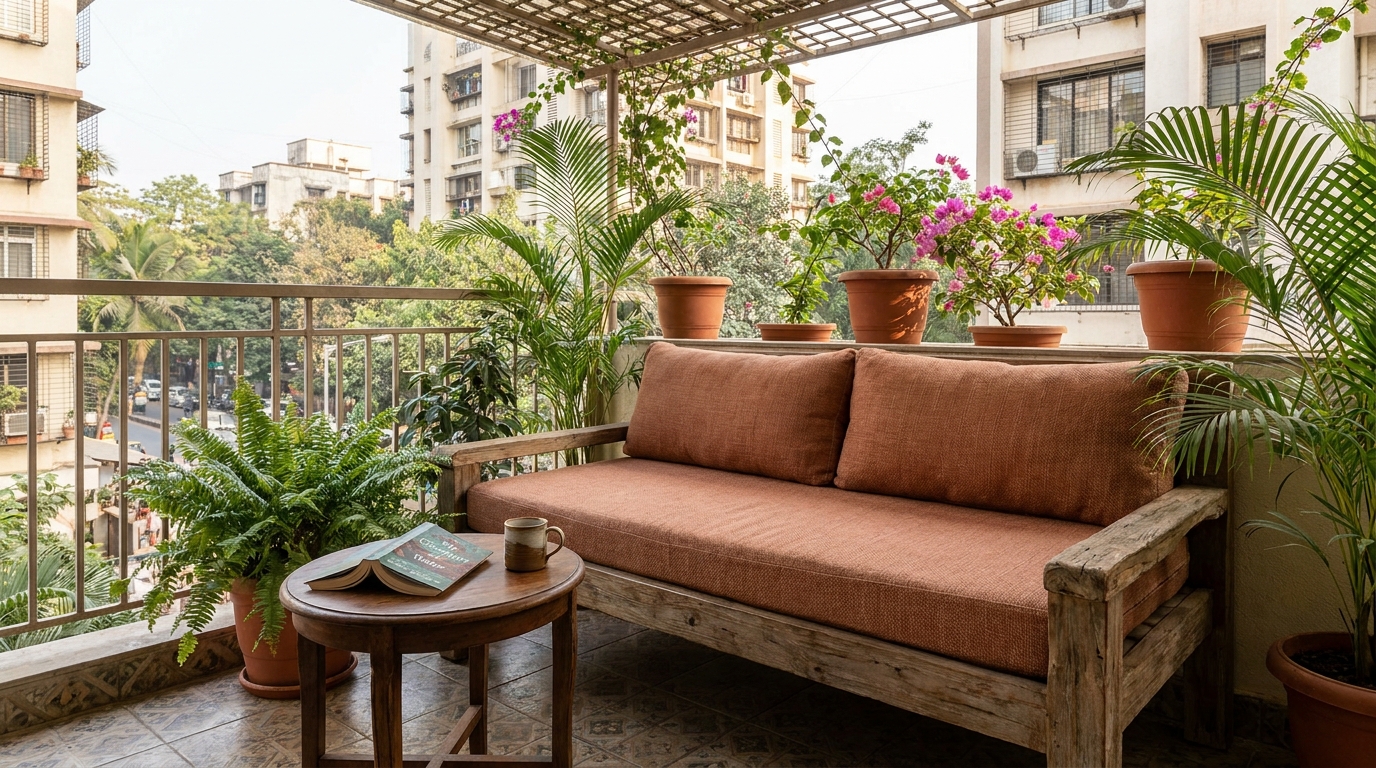
For apartments with even a modest-sized balcony, converting a corner into a daybed reading nook takes advantage of natural light and outdoor air in a way no indoor spot can fully replicate. A low daybed frame narrower and lower than a standard bed, sized to fit the balcony's actual footprint paired with a few weather-resistant cushions and a small side table for a cup of chai and whatever's currently being read, turns an often-empty balcony into genuinely usable square footage rather than a spot that exists mainly to dry laundry.
Material choice matters more here than almost anywhere else in the home, since balcony furniture is exposed to sun, monsoon humidity, and temperature swings that indoor pieces never face. Powder-coated metal or treated teak frames hold up considerably better than untreated wood, and outdoor-rated fabric (quick-drying, UV-resistant, mildew-resistant) on the cushions avoids the fading and mustiness that ordinary indoor fabric develops within a single monsoon season outdoors. A simple retractable shade or a well-placed potted plant for partial shade extends the hours the space is actually comfortable to sit in, particularly through Delhi NCR's harsher summer afternoons.
This is one of the more budget-accessible ideas on this list, since it doesn't require any structural work — a well-chosen daybed frame and a few cushions can transform the space in a single afternoon, without touching walls, flooring, or wiring.
3. Vertical Ladder-Accessible Shelf Corner
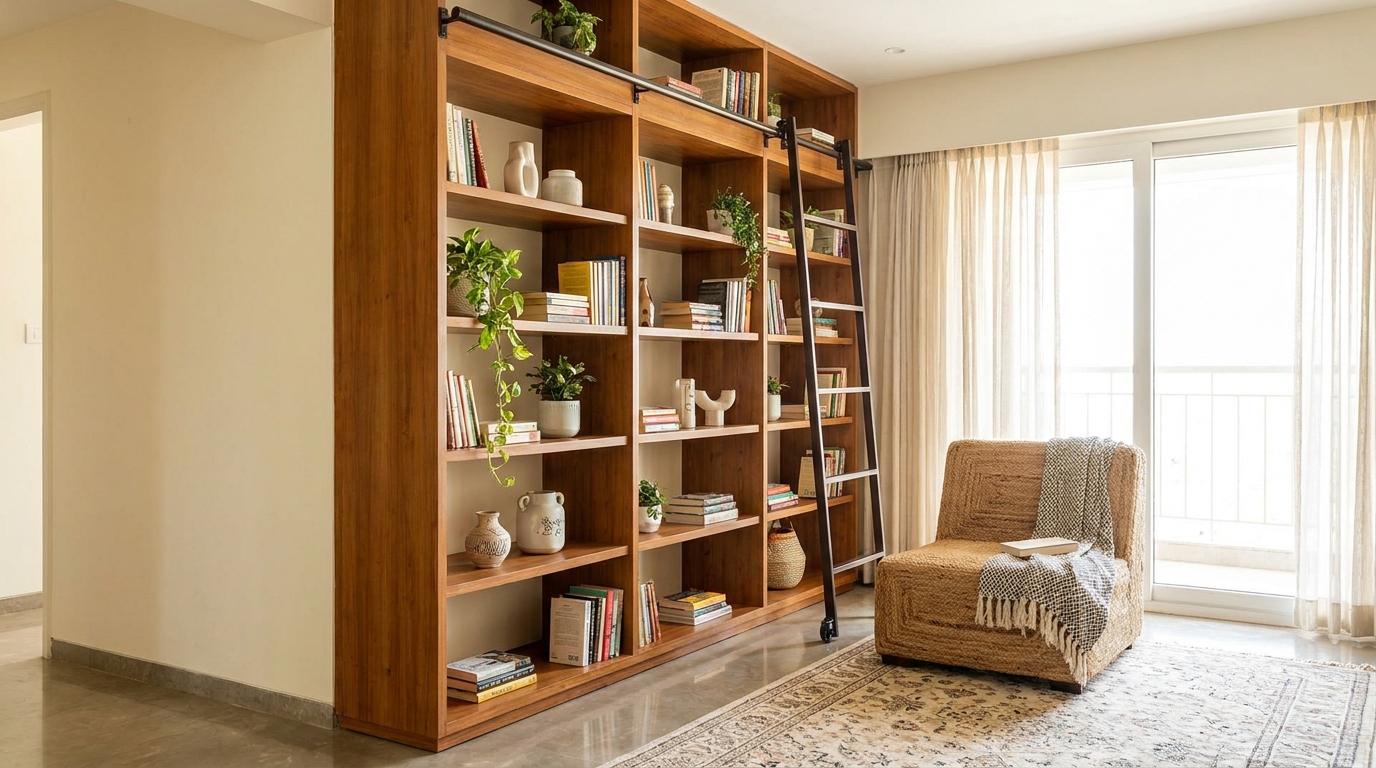
In apartments where floor space is genuinely too tight for a window seat or a dedicated corner, going vertical rather than horizontal solves the problem differently a tall, narrow shelving unit running close to the full ceiling height, paired with a small rolling or fixed library ladder, turns even a single unused wall segment barely a metre wide into meaningful book storage and a small reading footprint at its base.
The ladder itself does more work than its size suggests beyond making the top shelves genuinely accessible rather than purely decorative, it gives the whole corner a sense of intention and craft that a plain tall shelf wouldn't have on its own. A compact stool or a single well-chosen accent chair at the base of the unit, just large enough for one person, completes the reading spot without requiring any additional floor area beyond what the shelf itself already occupies.
Because this approach uses vertical space rather than floor footprint, it's one of the more practical options for genuinely compact 1BHK or 2BHK apartments where every square foot of floor is already accounted for elsewhere. The ladder hardware (a sliding rail system) adds a moderate cost above a simple fixed shelf, but it's a one-time hardware cost rather than an ongoing expense, and it turns what could be an awkward, hard-to-reach top shelf into one of the room's most distinctive design details.
4. Multipurpose Living Room Reading Corner
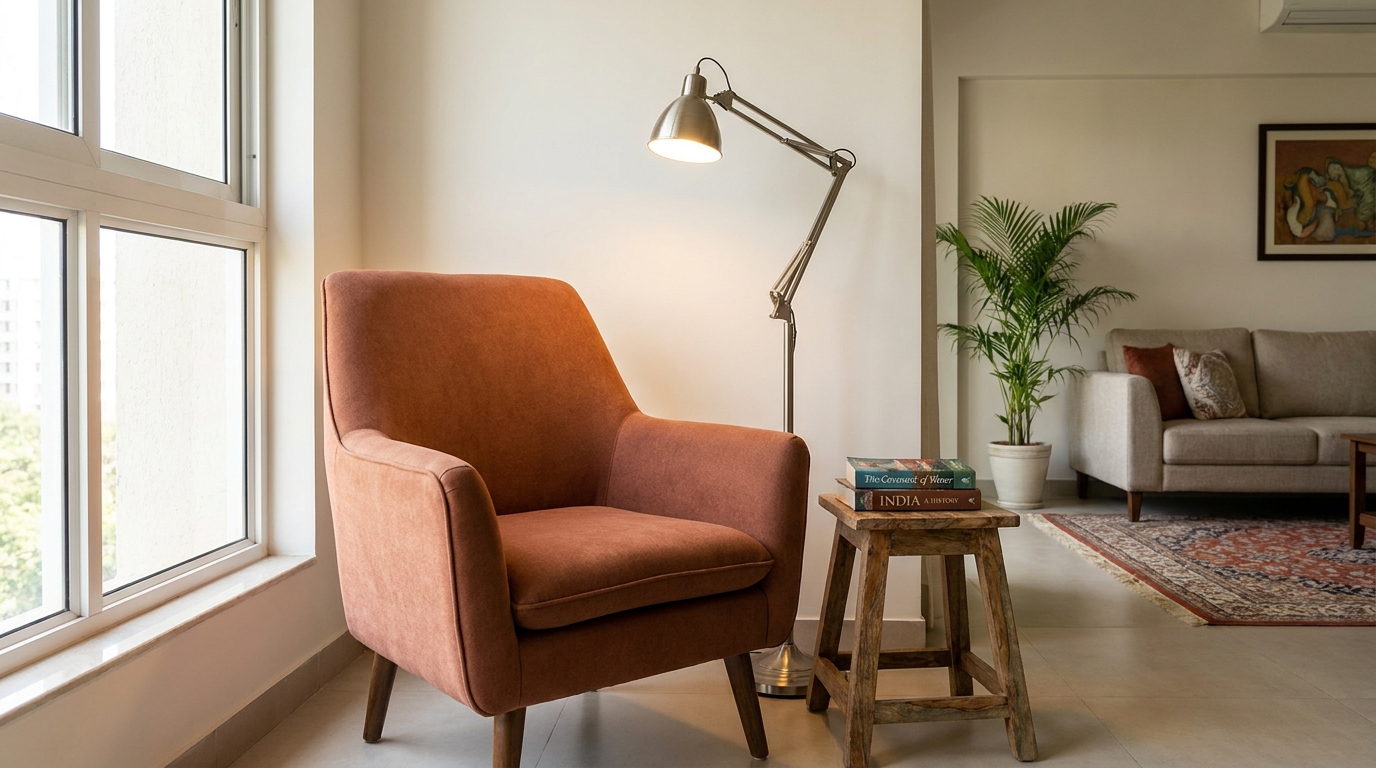
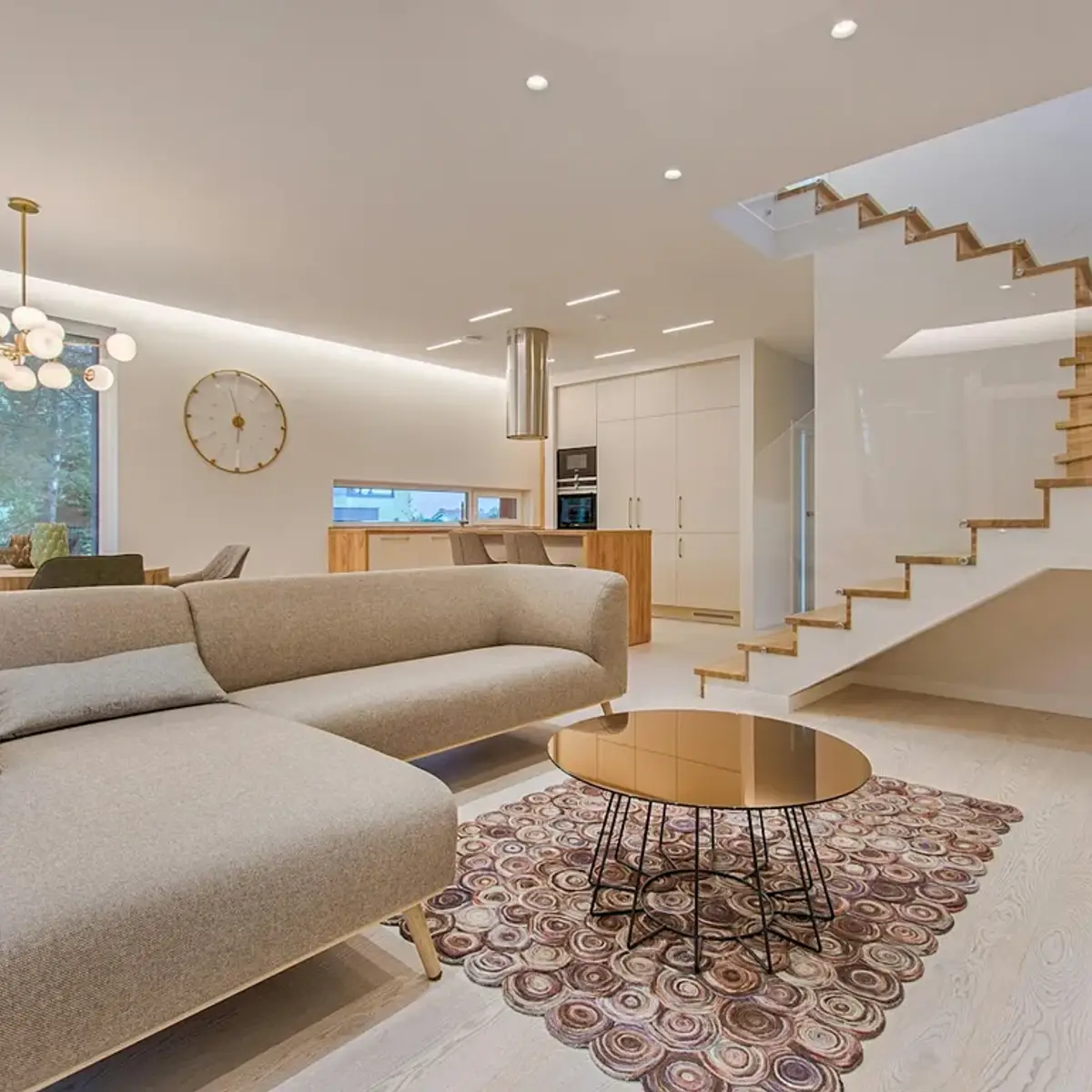
Not every household has a wall or window to dedicate entirely to a reading nook, and for many, the more realistic solution is carving out a corner of the existing living room that already does other things without requiring it to become a single-purpose space. A well-chosen accent armchair, angled slightly away from the main seating arrangement to signal a distinct zone, paired with a floor lamp positioned specifically for reading light and a small side table for a stack of current books, creates a genuine reading spot within a room that's still very much a shared, multi-use living room.
The key design move here is the floor lamp's positioning and quality a warm-toned, adjustable-height reading lamp placed directly beside the chair, angled to fall across the shoulder rather than glaring into the eyes, makes a bigger functional difference than almost any other single choice on this list. General room lighting, even if warm and pleasant, is rarely positioned or bright enough for genuinely comfortable reading, which is exactly why a reading corner needs its own dedicated light source regardless of how well-lit the rest of the room already is.
This is the lowest-cost, lowest-commitment option on this entire list no carpentry, no structural change, just a considered arrangement of furniture already commonly found in most living rooms. It's a strong starting point for a household unsure whether they'll actually use a dedicated reading space enough to justify a bigger investment.
5. Bedroom Alcove Reading Nook
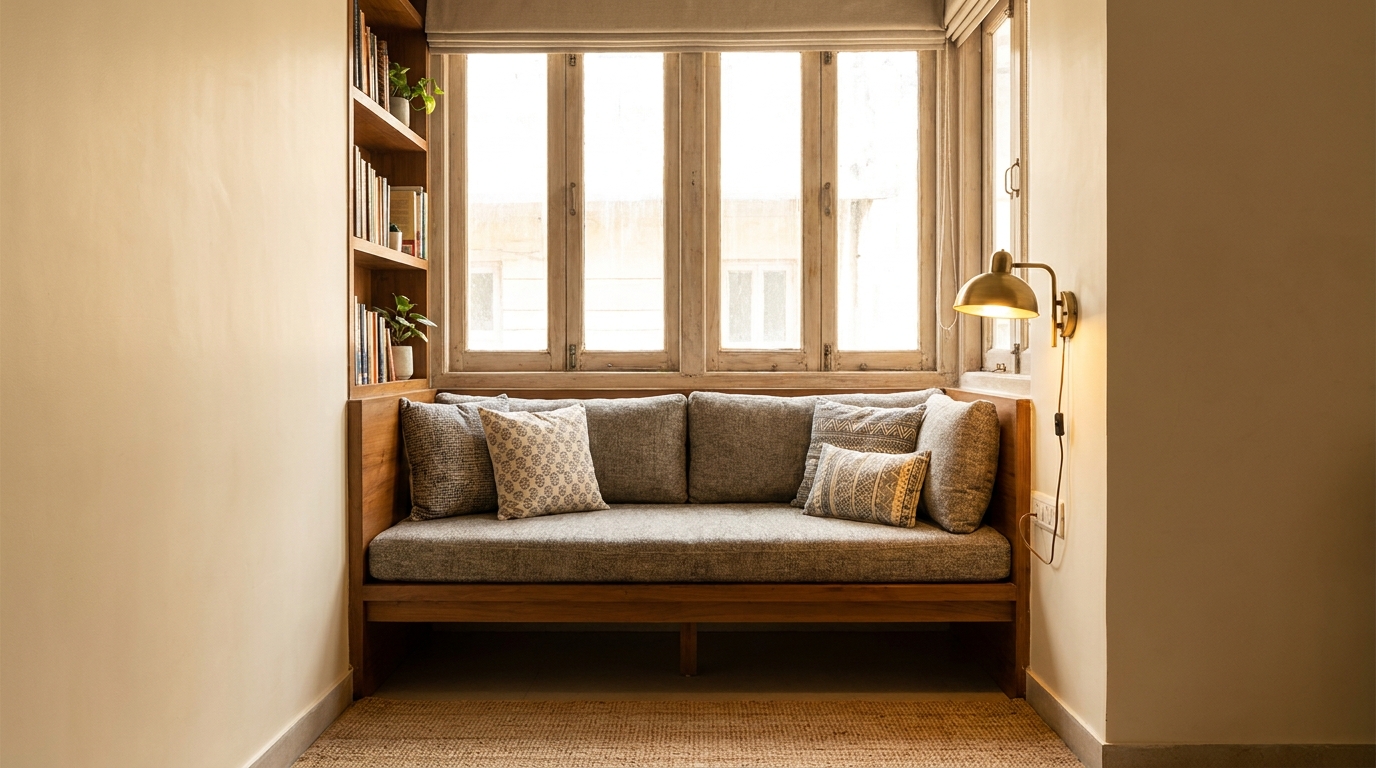
Many Indian apartment bedrooms have a shallow architectural alcove or recessed section sometimes original to the building's layout, sometimes created by a wardrobe that doesn't run the full length of a wall that ends up serving no real purpose beyond collecting clutter. Fitting that recess with a built-in bench seat, a slim bookshelf along the side walls, and a wall-mounted reading light turns unused architectural negative space into a private reading spot that doesn't compete with the room's main furniture arrangement at all.
Because an alcove is already a defined, bounded space, the design work here is more about fitting the nook precisely to its dimensions than about carving out new territory. A bench seat with a hinged lid doubles as storage useful in a bedroom where every bit of storage tends to be at a premium and slim, shallow shelving along the alcove's side walls holds a curated rotating selection of books rather than an entire collection, which suits the more intimate, personal scale of a bedroom reading spot compared to a living room one.
This tends to be a moderate-cost project, since the bench and shelving need custom fitting to the alcove's specific dimensions, but the footprint itself already exists structurally, so there's no cost associated with creating the space only furnishing it well. It's particularly well suited to a household member who reads primarily before bed and wants a spot that's genuinely separate from the bed itself, rather than reading propped up against pillows every night.
6. Home Library-Cum-Study Combo Room
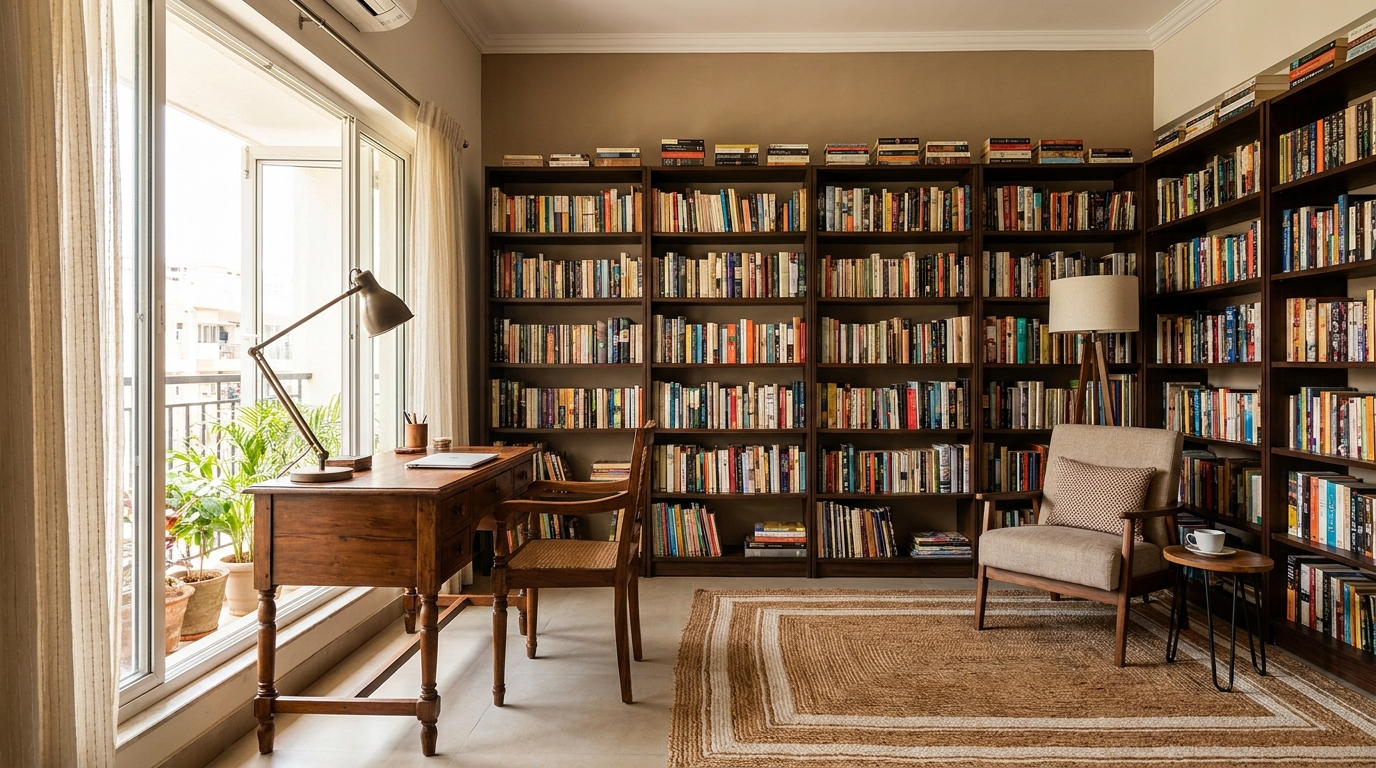
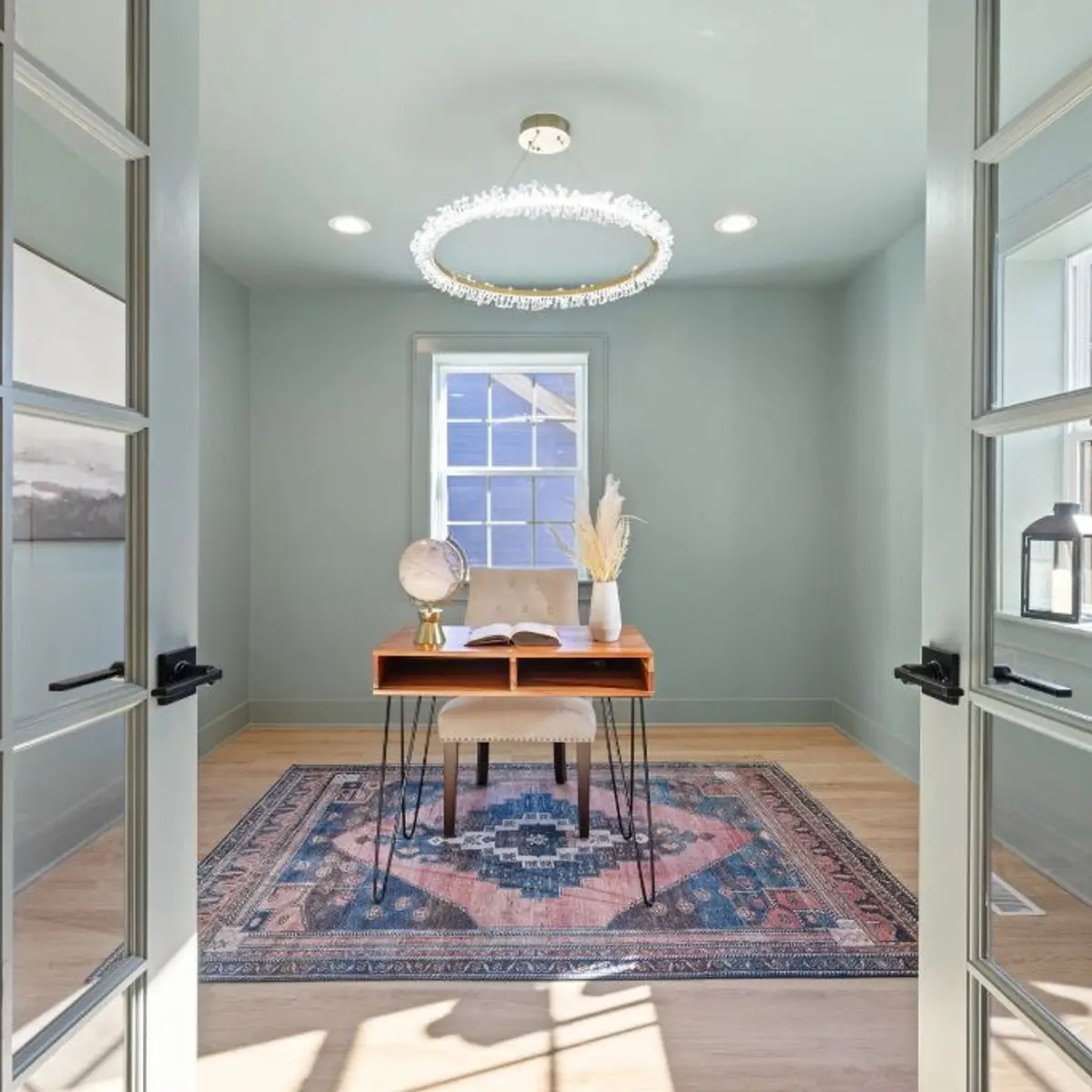
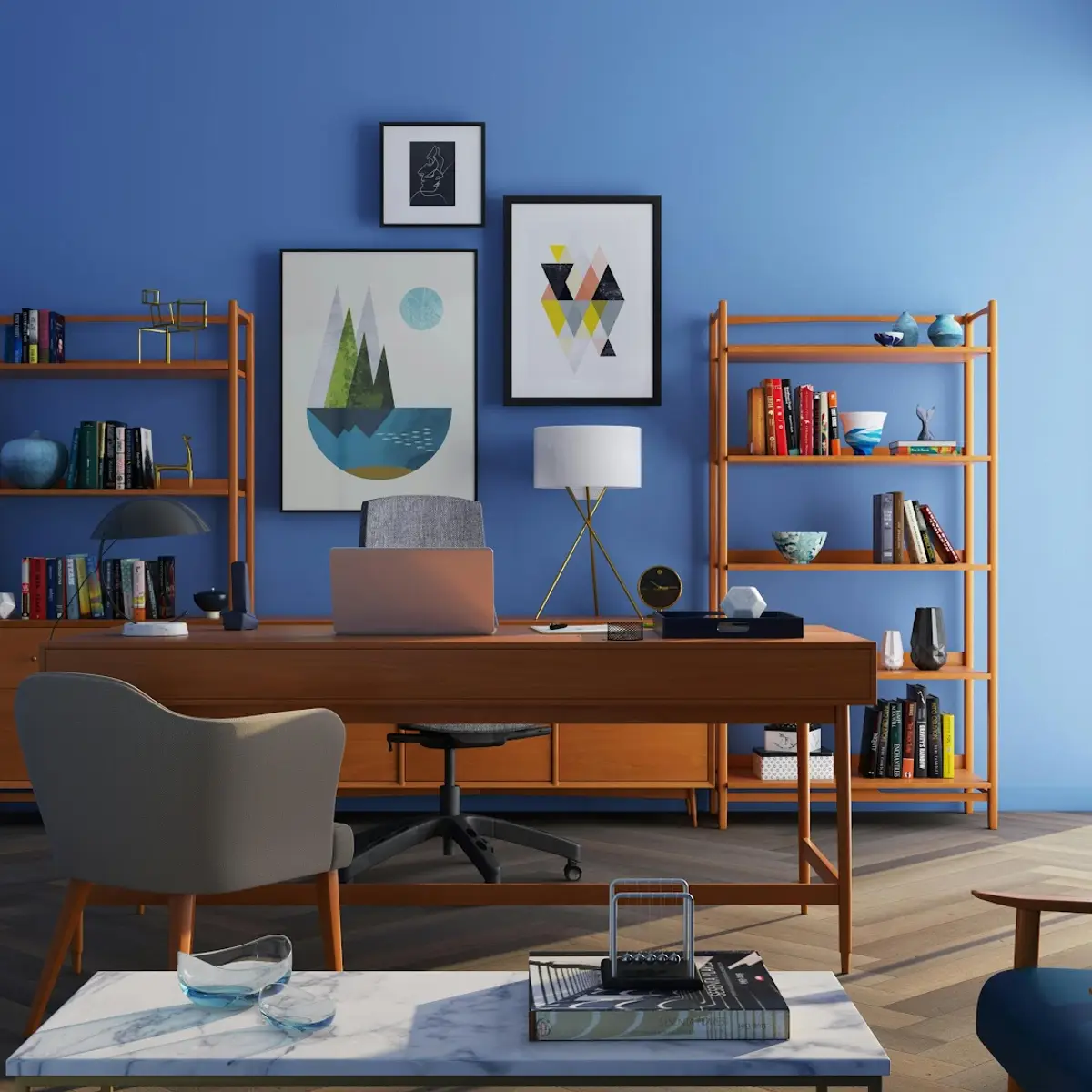
For households that do have a spare room, a home office, or an underused formal dining room, combining a genuine home library with a study or work desk in the same space makes more practical sense than dedicating a full room to either function alone, since most households don't actually use a spare room intensively enough to justify a single-purpose design for it. Floor-to-ceiling shelving along one or two walls houses the book collection, while a proper desk and task lighting occupy a separate zone within the same room, with a comfortable reading chair positioned as a clear third zone distinct from the desk.
The success of this combined approach depends heavily on keeping the zones visually and functionally distinct, even within one room different flooring treatment or a rug can mark the reading zone apart from the desk zone, and lighting should be zoned separately as well, so working under bright task lighting doesn't spill uncomfortably into the softer, warmer light meant for the reading chair. Acoustic considerations matter too if the room doubles as a work-from-home office during the day, since a space meant for focused calls needs to feel distinct from the more relaxed, informal character the reading zone is meant to have in the evening.
This is the most ambitious project on this list in terms of both cost and planning, since it involves full custom shelving, a proper desk setup, and considered lighting design across a full room rather than a single corner. But for a household with a genuinely underused spare room, it often makes more sense than either a rarely-used formal library or a purely functional home office on its own combining both gets meaningfully more daily use out of the same square footage.
Closing Thought
None of these six ideas require a spare room dedicated purely to reading, and only one of them assumes a spare room exists at all. What they have in common is treating an already-underused piece of the home a windowsill, a balcony corner, a shallow alcove, an awkward tall wall as genuinely usable space, rather than leaving it as the kind of area that just exists between the rooms that actually get lived in. A reading space doesn't need square footage set aside for it specifically; it mostly just needs light, a comfortable seat, and books that are visible enough to actually be picked up.
Want a real estimate for your home?
Share your home in 2 minutes. We'll match you with verified designers in your city and give you a BOQ-level estimate before any work begins.
Share your home →