7 Things Your Home Office Needs That Nobody Tells You About
Seven overlooked home office essentials that have nothing to do with the desk or the chair.
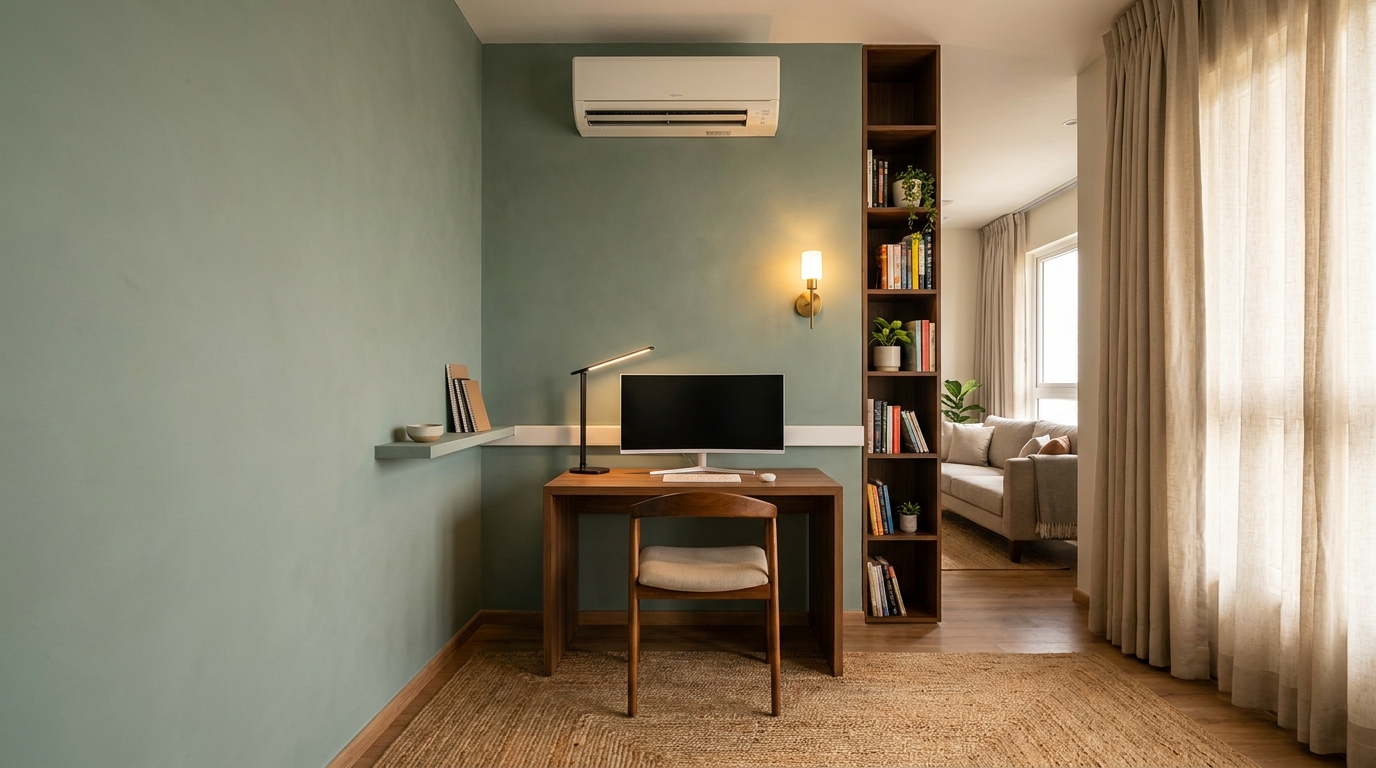
Most home office advice stops at "get a good chair and a desk at the right height." That's the floor, not the ceiling. The real problems in Indian home offices the ones that quietly drain productivity, create daily frustration, and make every video call a minor embarrassment are almost never talked about. Here are seven of them.
A Dedicated Cable Wall (Not a Cable Drawer)
Every home office has a cable problem. Most people solve it with a drawer, a box, or a velcro tie that gets undone the second anything needs to be plugged in or out. The cable drawer becomes a tangle within a week.
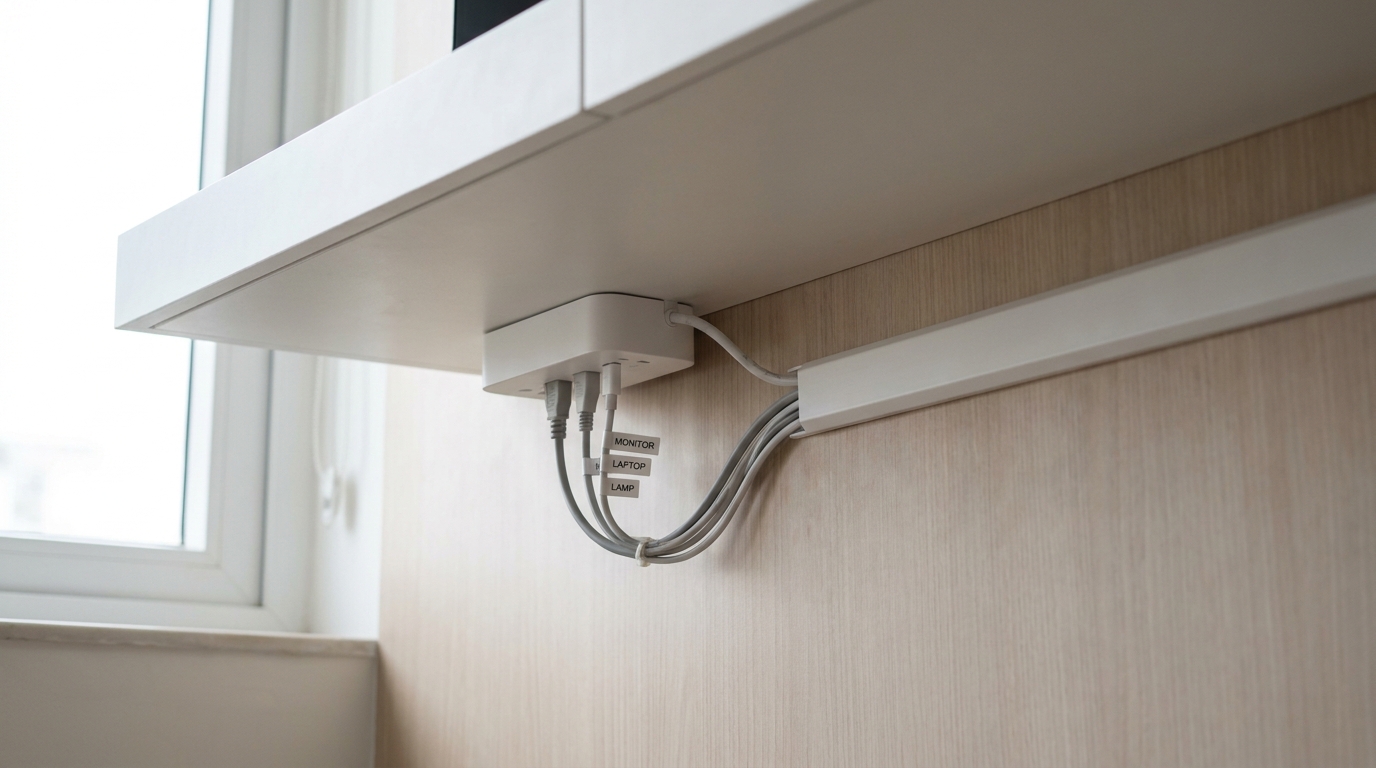
The actual solution is a dedicated cable wall a single section of the desk or the wall behind it where every cable is routed, labelled, and fixed in place permanently. Cable raceways along the wall edge, a fixed power strip mounted under the desk surface, and individual cable labels at both ends. It takes one hour to set up properly and never needs to be solved again.
This is also the only cable solution that holds up in Indian apartments where load-shedding and inverter switchovers mean plugging and unplugging happens more frequently than in other contexts.
A Sight Line Break Between Your Work Zone and Your Living Space
In most Indian apartments converted to include a home office, the desk faces into the room which means while you're working, your direct sightline hits the unmade bed, the kitchen counter, or the living room sofa. Your brain never fully switches into work mode because the visual cues for "home" are constantly in peripheral vision.
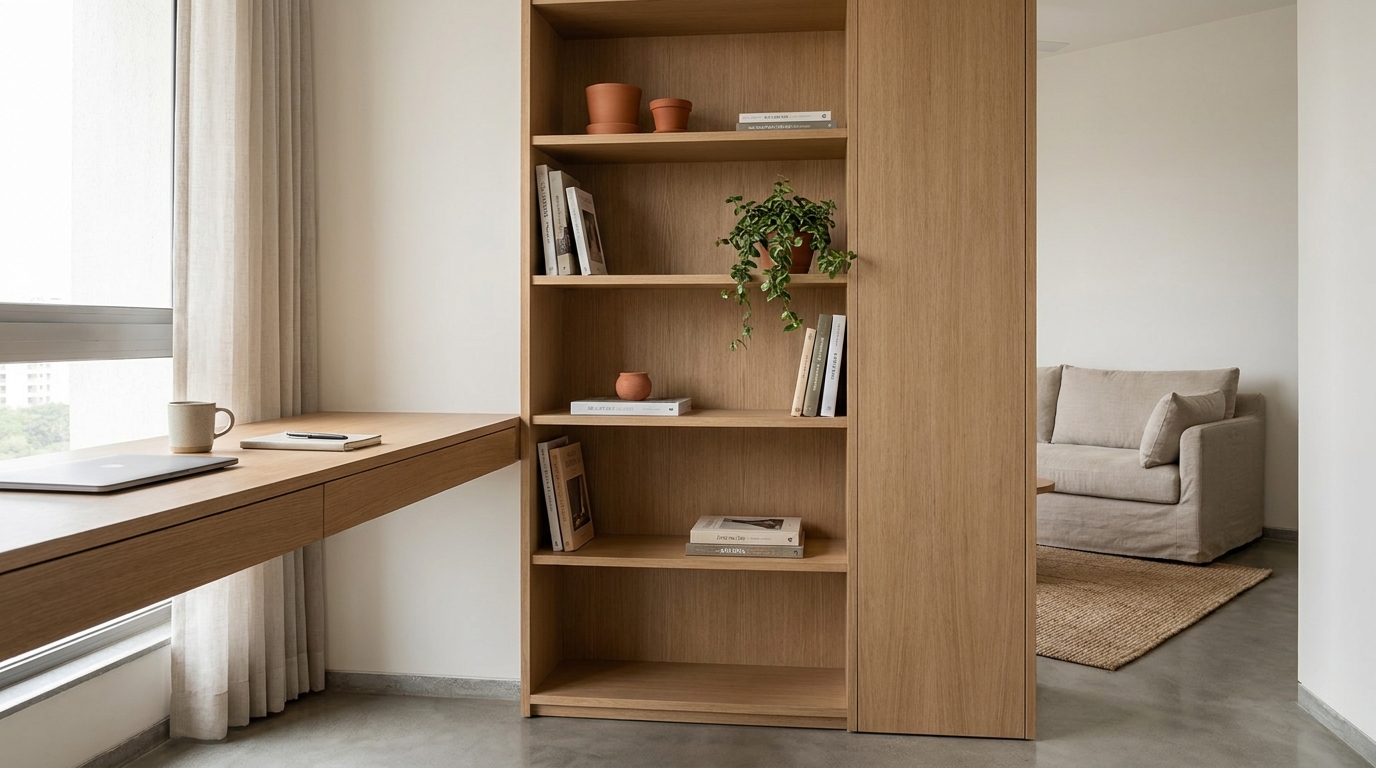
A sight line break doesn't require a wall. A tall open bookshelf positioned perpendicular to the desk, a sheer curtain on a ceiling-mounted track, or even a large indoor plant in a floor pot at the right position anything that creates a visual boundary between the desk zone and the living zone is enough. The goal is to make the view from your chair feel like a workspace, not a bedroom.
A Video Call Background That Works — Built In, Not Staged
Most Indian home offices are set up for in-person productivity, not for how they appear on a 1080p camera pointed at a wall. The wall behind the desk chair is the most visible and most neglected surface in any work-from-home setup.
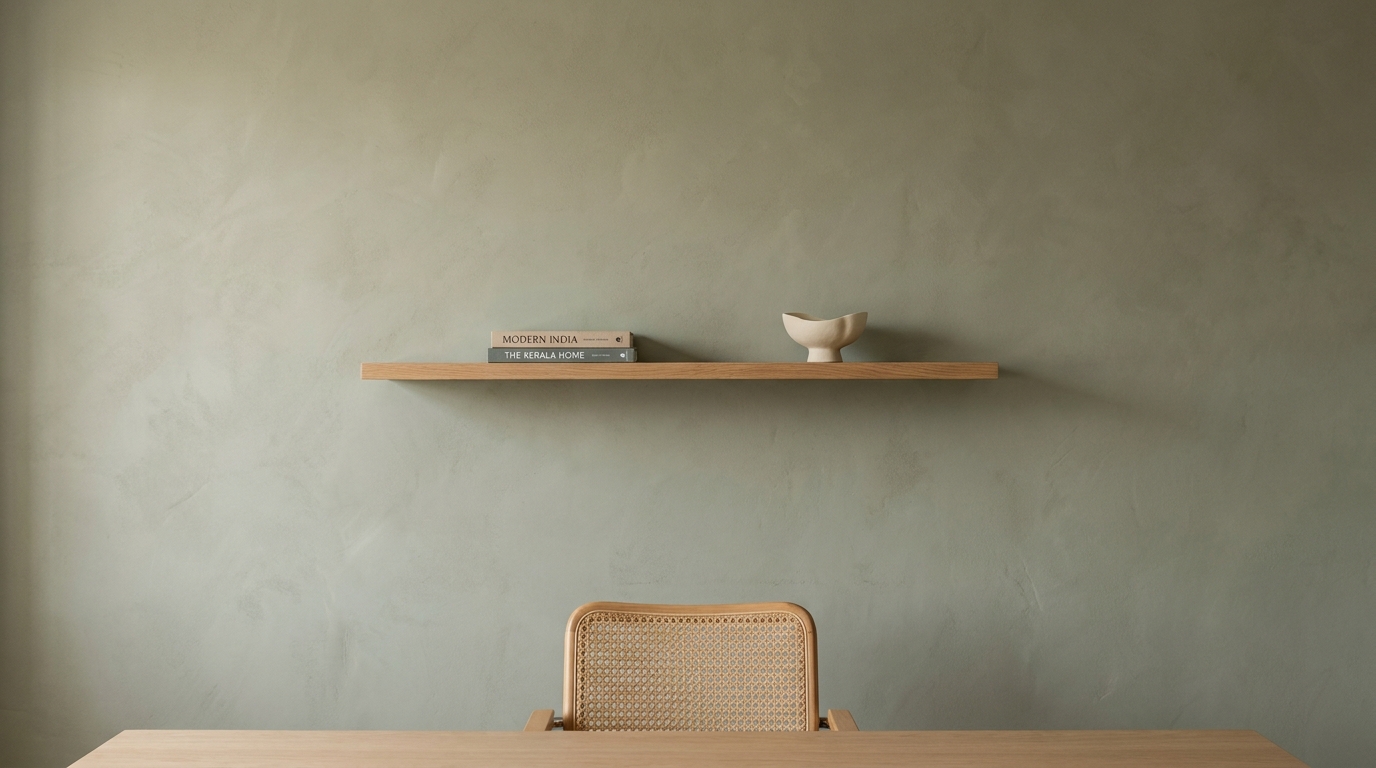
A considered video call background doesn't mean a ring light and a fake blur. It means the wall behind your chair has one of three things: a clean matte painted surface in a neutral tone with one intentional shelf or artwork, a textured wallpaper or lime wash finish that reads as considered on camera, or a built-in shelving unit styled deliberately not stuffed with random files and objects.
In Indian apartments, this wall is often the back of a wardrobe, a bare off-white developer wall, or a storage unit that was never meant to be seen on camera. Treating it as a designed surface takes one decision and changes how every call is perceived.
Acoustic Control — Not Soundproofing, Just Absorption
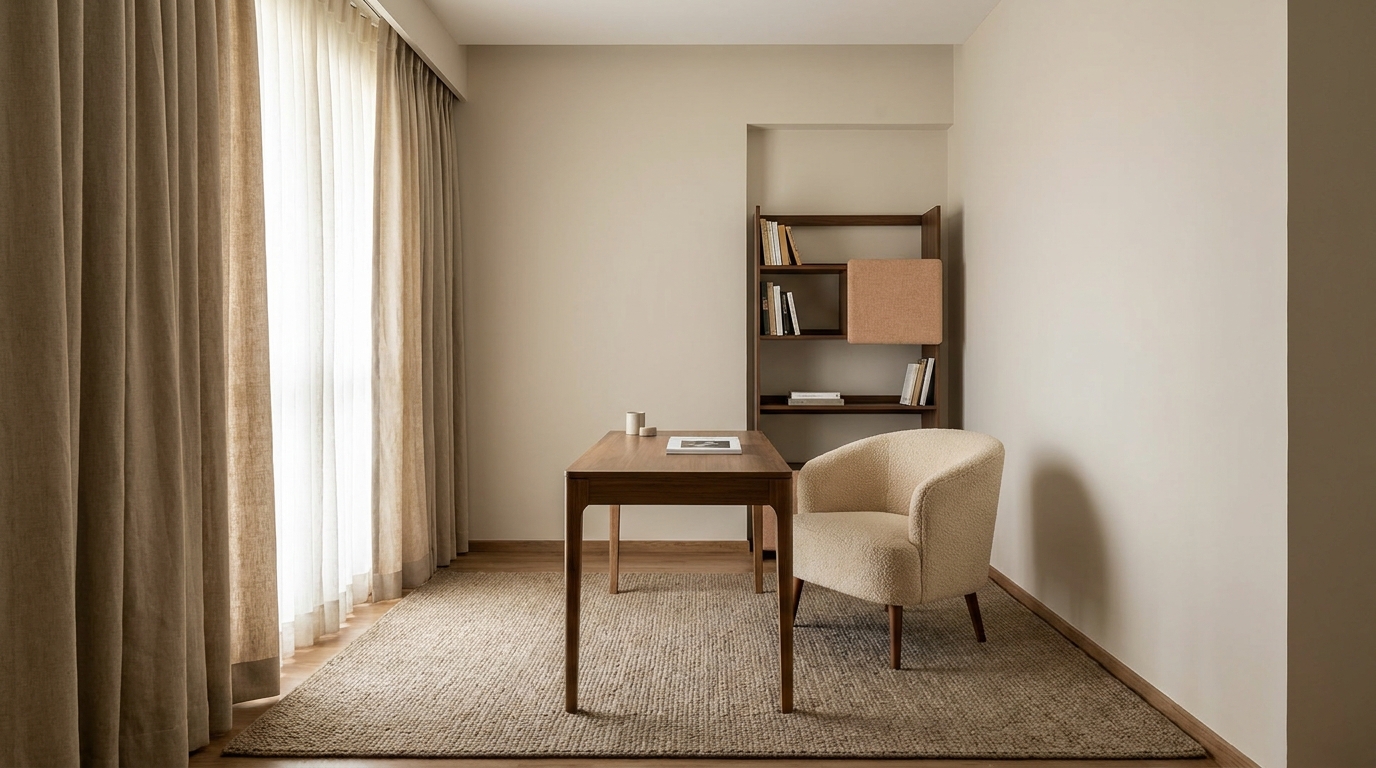
Indian apartments are not built for silence. Thin walls, hard floors, street noise, neighbors, and the general acoustic reality of high-density urban living mean that sound is a constant home office variable. Soundproofing the full treatment is expensive and invasive. What most home offices actually need is absorption, not proofing.
Soft surfaces absorb sound and reduce echo: a large rug under the desk chair, curtains instead of blinds on the window, a fabric upholstered chair rather than a hard mesh one, and one wall with a bookshelf or fabric panel. None of these require construction. Together they reduce the echo that makes a home office feel like a bathroom and makes your voice on calls sound hollow and unprofessional.
Task Lighting That's Positioned for Your Screen, Not Your Room
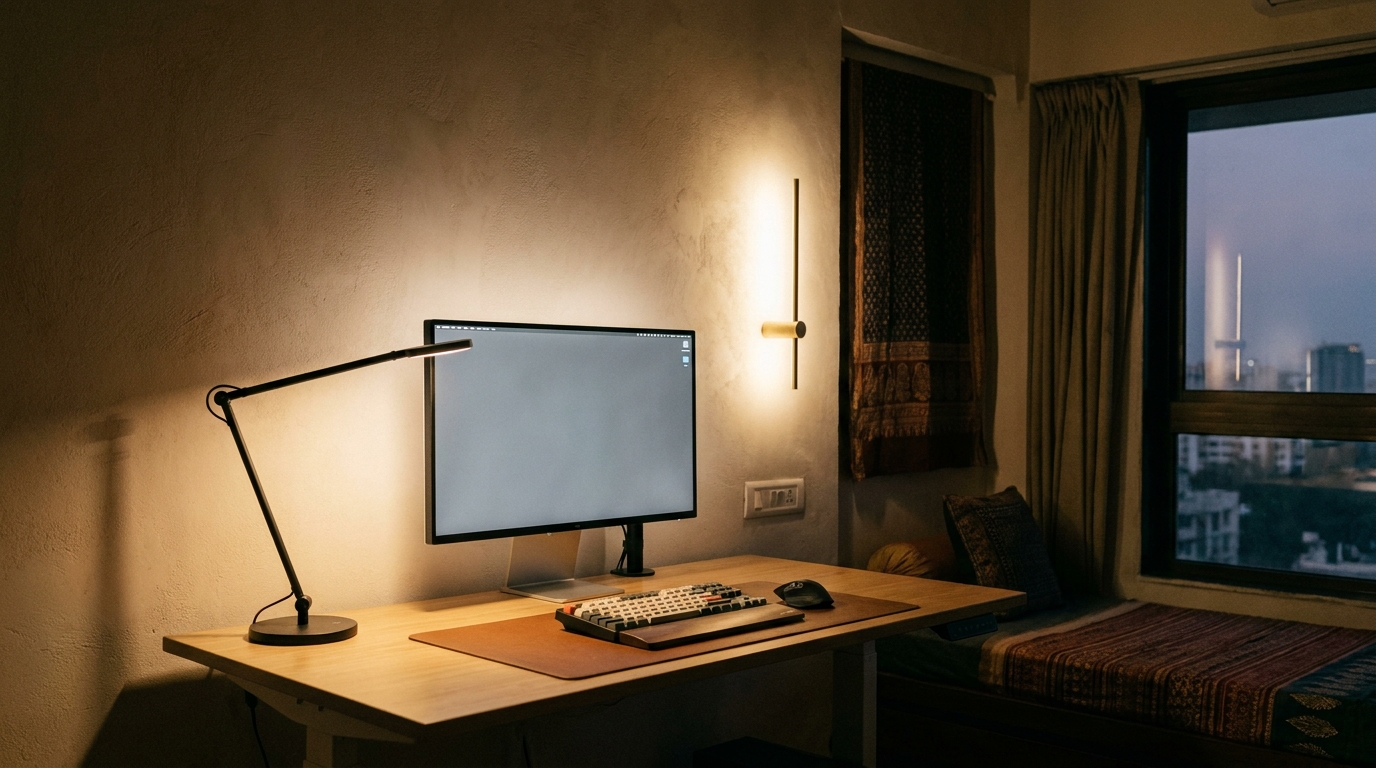
Most home offices are lit by an overhead ceiling light designed for the room, not for a person sitting at a specific desk position looking at a screen. The result is either glare on the monitor, shadows on the keyboard, or the face appearing as a dark silhouette on video calls.
Task lighting for a home office needs two things: a desk lamp positioned to the side of the monitor (not behind or above it) so it illuminates the workspace without creating screen glare, and a separate fill light or wall-mounted light positioned in front of the desk at roughly face height to eliminate the harsh under-shadow that ceiling lights create on video calls. Neither requires rewiring both are plug-in solutions. The combination makes both the work and the calls noticeably better.
A Thermal Zone Separate From the Rest of the Apartment
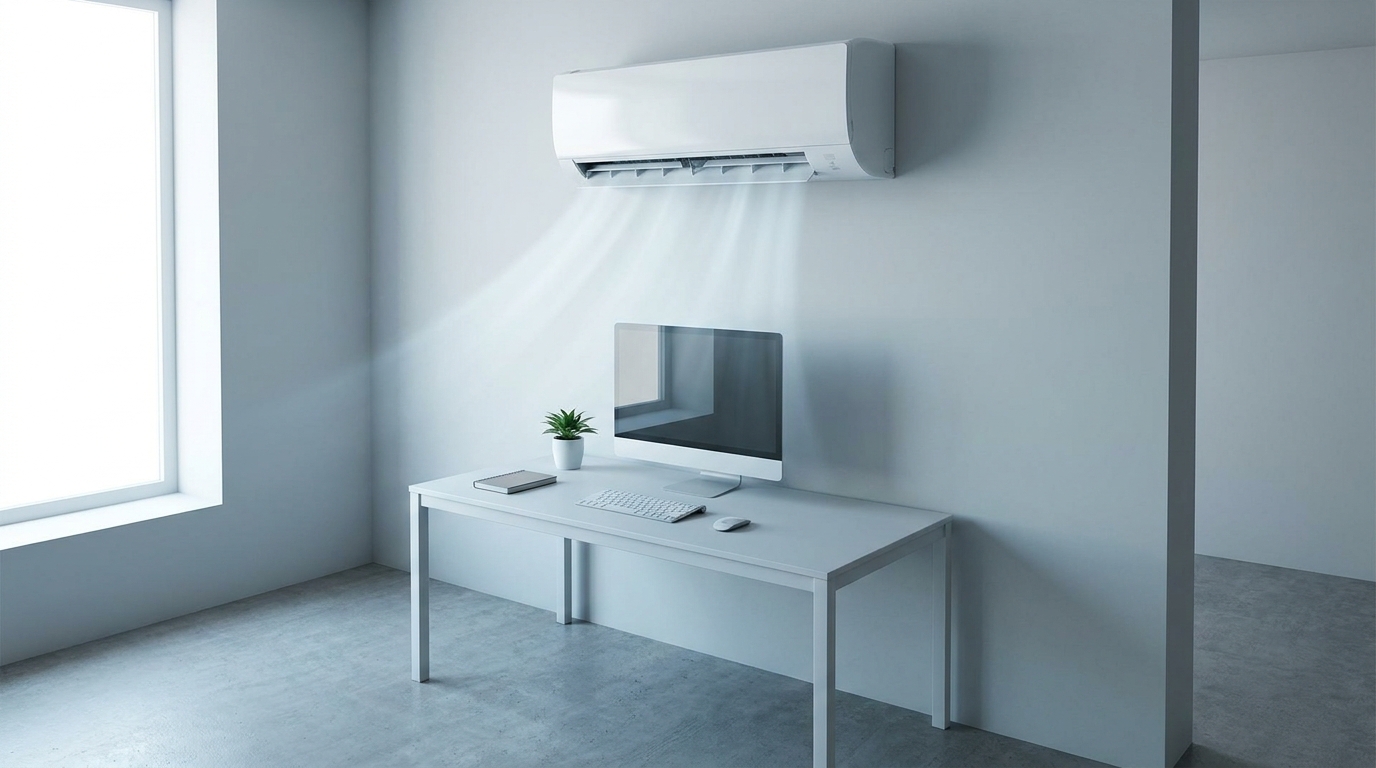
In Indian summer, most apartments run air conditioning in the living room and the bedroom. The home office often a converted corner or spare room — either doesn't have a vent, has a vent that's too far away to be effective, or has to share cooling with the rest of the apartment in a way that means one zone is always too cold or too warm.
Thermal comfort is one of the highest-impact variables in sustained work performance. A home office that runs 3-4 degrees warmer than the living room because the AC split doesn't reach it will cost far more in productivity than it saves in electricity. Before finalising a home office location in a new apartment, check which zones the existing AC units cover and position the desk within the effective cooling radius not adjacent to it.
Storage That's Within Arm's Reach — Not Across the Room
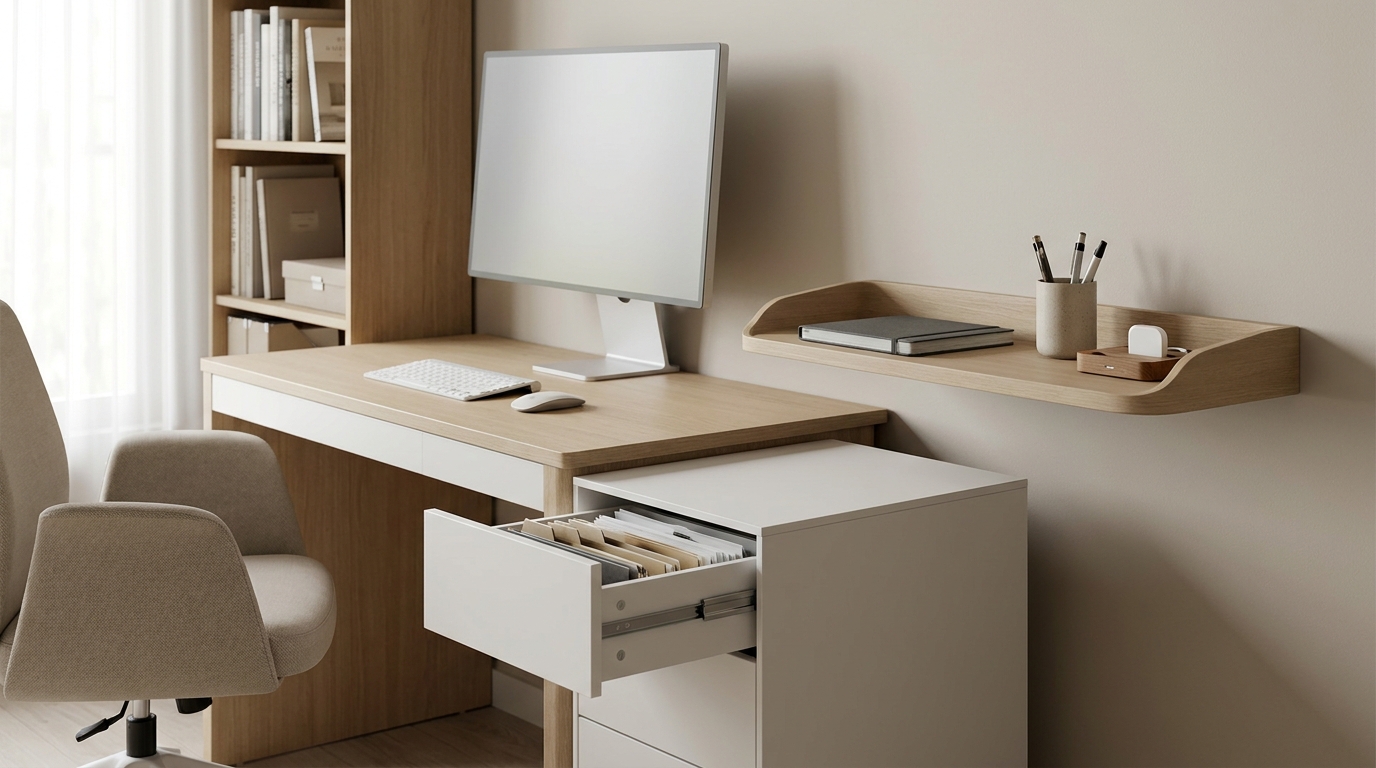
Most home office storage is planned for the room, not for the person sitting at the desk. A bookshelf on the far wall, a filing cabinet in the corner, a printer on a side table three feet away all technically in the office, none of it actually within arm's reach while seated.
Ergonomic storage means everything that gets used more than once a day is reachable without standing up: a shallow wall shelf at desk height within arm's reach, a small caddy on the desk surface for pens and chargers, a drawer unit directly under the desk surface for documents. The things used weekly can be further away. The things used multiple times a day should require zero movement from the seated position.
In Indian apartments where the home office is often a tight corner rather than a full room, this radius-based storage planning is what separates a workspace that flows from one that creates ten small interruptions a day.
None of these seven things are expensive or complicated they're sequencing and placement decisions that need to happen before the desk is fixed to the wall and the cables are routed. That's exactly the kind of planning a good designer maps out from the first site visit, matched to your apartment's actual layout and your specific working pattern.
Want a real estimate for your home?
Share your home in 2 minutes. We'll match you with verified designers in your city and give you a BOQ-level estimate before any work begins.
Share your home →