Interior Designer vs Contractor vs Design-Build: Who You Actually Need
A decision tree by project type and budget — who does what, what goes wrong when you pick the cheaper wrong one, and who carries the liability when something leaks.
The short answer: hire an interior designer when the job needs decisions — layouts, looks, materials across multiple rooms. Hire a contractor when the decisions are already made and the job is execution — a repaint, a bathroom retile, a wardrobe you have already specified. Choose a design-build firm when you want a full home done under one contract and one warranty. As a 2026 rule of thumb: single-trade work under ₹5 lakh rarely justifies a designer; a full 2 or 3 BHK above ₹10 lakh almost always does, either as designer plus contractor or as design-build. Picking the cheaper wrong one is how ₹15 lakh homes end up looking like ₹8 lakh homes.
Who actually does what
The confusion exists because all three will say yes to your project. Their jobs are different.
- A contractor owns labour and execution: masons, carpenters, electricians, painters. He builds what a drawing tells him to build. Without a drawing, he builds what he built last time.
- An interior designer owns decisions: space planning, material and colour selection, working drawings, and (if supervision is in the fee) checking that the contractor built what was drawn.
- A design-build firm owns both under one contract — design studio at the front, execution teams or factory at the back.
| Contractor only | Designer + contractor | Design-build firm | |
|---|---|---|---|
| Best for | Single-scope jobs, repairs | Full homes, custom work | Full homes, less involvement |
| Typical 3 BHK cost (2026) | ₹8–15 lakh (execution only) | ₹15–30 lakh incl design fee | ₹15–35 lakh all-in |
| Design cost | None (you are the designer) | ₹65,000–3.75 lakh | Inside the price (~5–10%) |
| Who supervises | You | Designer (if in scope) | The firm |
| Who owns defects | Contractor, per trade | Split — see liability below | One party, one warranty |
| Risk profile | Wrong decisions, cheap by accident | Coordination gaps | Opaque material margins |
The decision tree, by project
Repaint, one bathroom, or a single wardrobe
Contractor. The scope is knowable, the finishes are pickable in a showroom, and a designer's fee would be 15–30% of the whole job. Spend the saved money on better material grades instead. If you want the room to look designed, generate the look first — an AI design of the room from HeyBuddy's design tool gives your contractor the visual target and material list a designer would have handed him.
Modular kitchen or full wardrobes only
Either a design-build modular brand or a designer-specified contractor job. This is the scope where the gap shows: a contractor's default kitchen and a designed kitchen cost nearly the same to build, but differ completely in loading, lighting and layout logic.
Full 2 or 3 BHK
You need design and you need execution management; the only question is whether they come from one firm or two. Separate designer plus contractor gets you an independent advocate checking the builder's work; design-build gets you one throat to choke. Both are legitimate. What is not legitimate is a contractor "who also designs" for free — that design is a copy of his previous site, and you will live in it for fifteen years.
What goes wrong when you pick the cheaper wrong one
Contractor-only on a full home fails quietly. Nothing collapses; the home just accumulates defaults — the same brown laminate everywhere, switchboards centred on walls that later get wardrobes, no lighting plan beyond one tube per room, a kitchen counter at the height of the last flat he did. The rework you eventually order costs more than the design fee you avoided.
Designer-only with no supervision fails loudly. Beautiful drawings, and a contractor interpreting them alone: mitred edges become taped edges, the drawn 2,400mm wardrobe becomes 2,200mm because the board cut easier, and the two parties blame each other with you as messenger. If you hire design and execution separately, buy supervision — as visits in the fee or a percentage model. The fee structures are compared in what interior designers charge.
Design-build chosen on price alone fails invisibly. One contract means nobody independent is checking material grades, and the margin lives in the difference between the plywood you were shown and the plywood that arrived. Counter it by having the quotation itemised to brand and grade, and verifying deliveries against it.
Liability: who carries what
This is the part nobody discusses until something leaks.
- Contractor carries workmanship liability per trade — but only for what is written. A verbal "he said he'd waterproof it" is worth nothing; the quotation line is the liability.
- Designer carries design liability: a wardrobe that blocks a window, a passage the sofa cannot pass through, a kitchen triangle that fails. Designers do not warranty execution unless supervision is contractually theirs.
- Design-build carries both, which is its real product: a single warranty (typically 1–10 years on woodwork in 2026) with no gap to fall between.
- You carry the gaps: anything unspecified, any cash-paid undocumented work, and any change you ordered verbally on site.
The instrument that assigns all this is the quotation and its annexures. Before signing with any of the three, read it line by line — how to read an interior design quotation covers the sections and the red flags.
When you genuinely need both
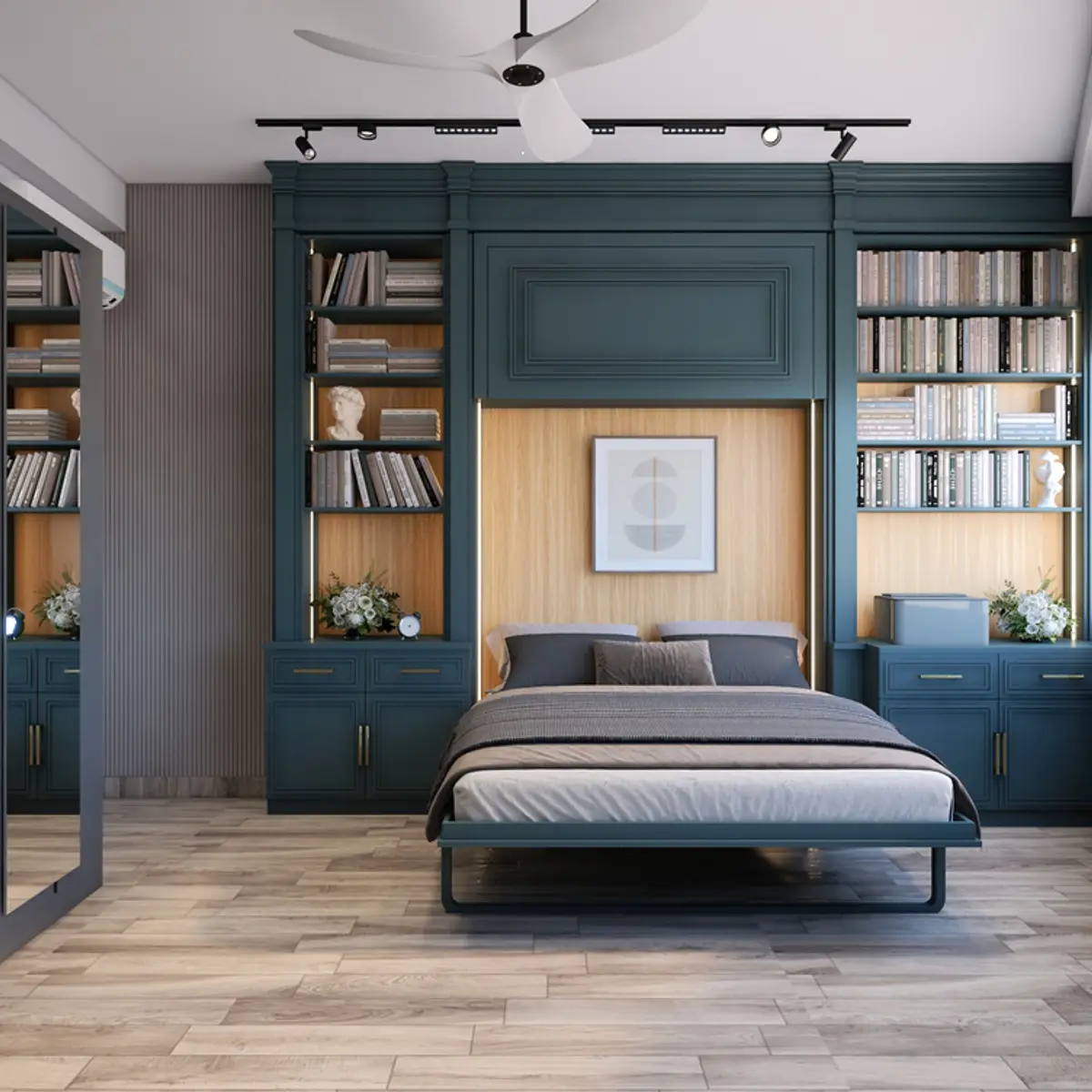
Designer plus contractor as separate parties makes sense when your home needs custom work a factory line will not do — arches, jaali partitions, restored old furniture, odd-shaped rooms — or when you already trust a contractor and want professional decisions layered on top. It costs a design fee and more of your own coordination time; it buys you an independent expert whose incentive is the outcome, not the margin on boards.
Start by deciding the scope honestly, get a neutral cost baseline for it, and then interview accordingly. Verified interior designers in Bangalore list portfolios and specialisations, so you can shortlist people who have actually done your kind of project — a designer who does luxury villas is the wrong hire for a rental-flat refresh, whatever the fee.
Frequently asked questions
What is the difference between an interior designer and a contractor?
A designer makes the decisions: layouts, materials, colours, working drawings, and optionally supervision of the build. A contractor executes decisions: his teams do the civil, carpentry, electrical and painting work a drawing describes. A design-build firm combines both under one contract. The practical test: if your project still has open questions about how things should look or be arranged, you need design input from somewhere.
Is a contractor cheaper than an interior designer?
For the same scope, yes — you skip the design fee, which runs ₹65,000–3.75 lakh on a typical 3 BHK in 2026. But the comparison only holds for single-scope jobs where decisions are simple. On full homes, contractor-only projects tend to accumulate expensive rework and resale-hurting defaults, so the saved fee is often spent anyway, just later and with worse results.
Can a contractor design my home interiors?
He will offer to, usually free. What you get is a rearrangement of his previous projects — familiar laminates, standard boxes, no lighting or space plan. For a rental or a strict-budget refresh that can be acceptable. For a home you will live in long-term, get the design from a designer or generate a full-home concept with materials first, then hand the contractor a target to build.
Who is responsible if interior work fails after handover?
Whoever's paper covers it. Contractors warranty workmanship per their quotation lines; designers carry responsibility for design errors, not build quality; design-build firms warranty the whole job, typically 1–10 years on woodwork in 2026. Undocumented work, cash payments and verbal changes fall on you. Insist every scope, grade and change order exists in writing before and during the project.
Want a real estimate for your home?
Share your home in 2 minutes. We'll match you with designers in your city and give you a BOQ-level estimate before any work begins.
Share your home →